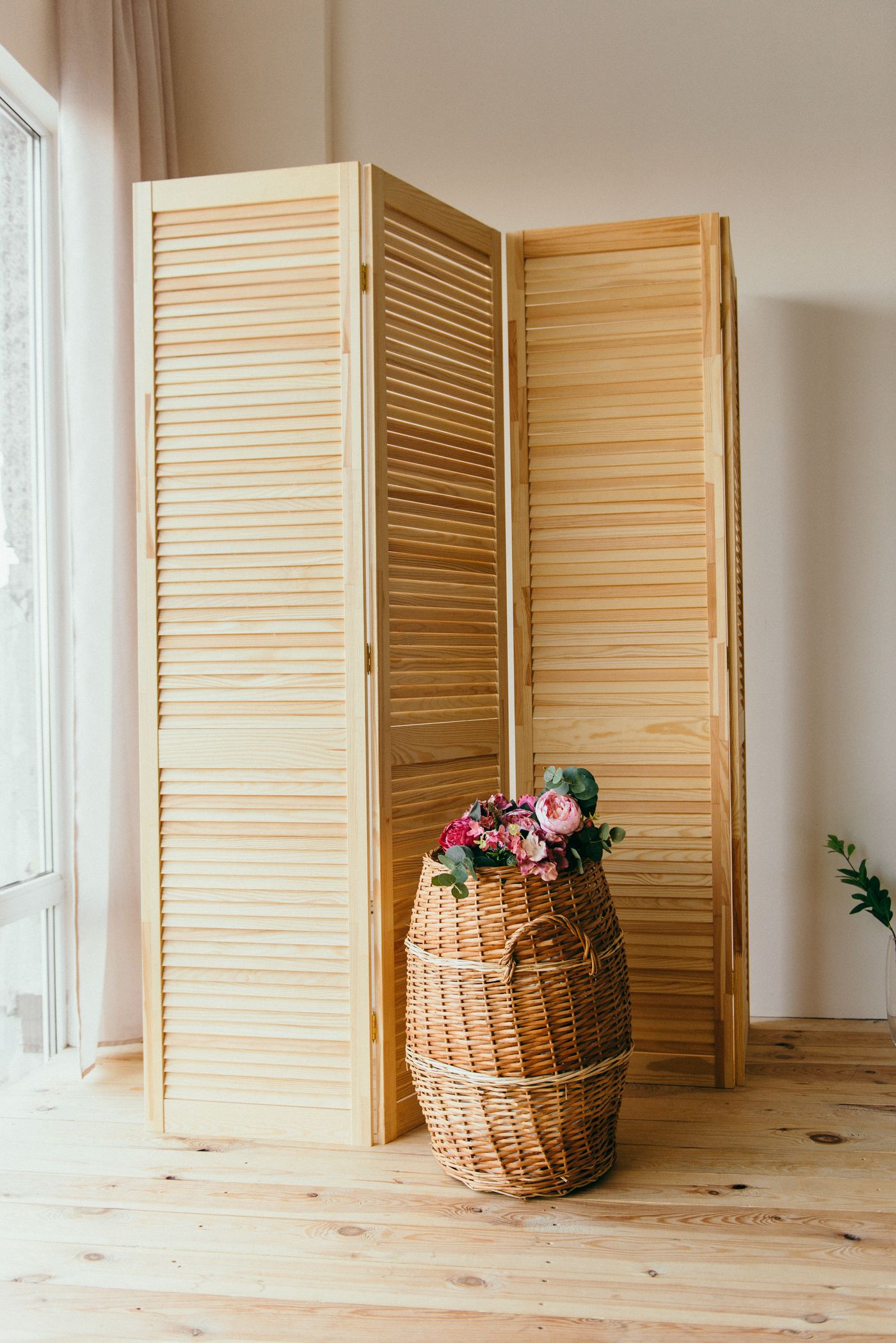
A folding screen belongs in a small rental only when its open position, folded position, and storage route all work. Test those three states before choosing a finish or pattern. The screen should create a useful visual boundary while leaving doors, daylight, ordinary movement, and required access available.
Houzz’s fall 2026 report describes personal, layered interiors with an emphasis on livability. A freestanding screen can contribute character, but the application here is practical rather than a claim that every room needs another object. In a tight space, an existing furniture arrangement may already provide enough separation.
Start by naming the problem. Hiding a temporary work surface from the sofa, creating a more private dressing position, and screening stored household items are different jobs. A panel that solves one may make another part of the room less usable.
Define the view you want to interrupt
Stand or sit where the unwanted view actually occurs. Identify what you need to conceal and how much of it must disappear. You may only need to interrupt a direct sightline, not divide the full width of the room.
Repeat the check from the other ordinary approach. A screen that looks effective from a carefully chosen seat may leave the same items exposed from the doorway. Choose the view that matters most and accept the limits, or reconsider the format if several incompatible views need blocking.
Our shared-bedroom privacy guide discusses the broader distinction between a visual boundary and complete privacy. A decorative folding screen does not automatically provide sound isolation or a secure private enclosure. Agree how people will respect the boundary instead of expecting the object to do all the work.
Check the model's standing requirements
Read the setup instructions for the exact screen. The usable footprint may depend on the panel angle, feet, base, and opening limits. Do not plan to stand it nearly flat against a wall unless the maker permits that configuration.
Mark the real footprint of the approved open arrangement using an appropriate temporary method for your floor. Include feet and projections, not just the width visible in a product photograph. Do not attach anything to the rental surface without checking that both the method and the tenancy permit it.
Assess stability and household suitability through the product’s directions. A light-looking screen is not necessarily easy or appropriate for everyone to move. Where children, pets, or frequent contact are part of the room, make those conditions part of the product choice before purchase.
Walk the route with normal furniture in use
Test the room with chairs pulled out, cabinet doors open, and the ordinary places occupied. A screen may leave a generous-looking route through an empty room while narrowing the space needed by someone sitting at a desk.
Keep required exits and access clear. Do not put a temporary visual solution across a route that must remain available. If the only workable position depends on everyone remembering to move the screen before opening a door, it is not a dependable everyday arrangement.
Consider whether the screen creates a hidden corner where bags and other objects will accumulate. A new boundary can make a drop spot less visible without making it more organized. Give the area a real purpose and a simple closing routine instead of treating concealment as extra storage capacity.
Observe daylight and the real window routine
Look at the room during the times it is normally used. A solid panel can alter the way light reaches a work surface or sitting area. Check the result in ordinary weather rather than choosing solely from a bright listing image.
Operate the curtains, blinds, handles, and permitted window openings. Leave room for their normal movement and maintenance. A screen should not make routine ventilation or window cleaning so awkward that the household stops doing it.
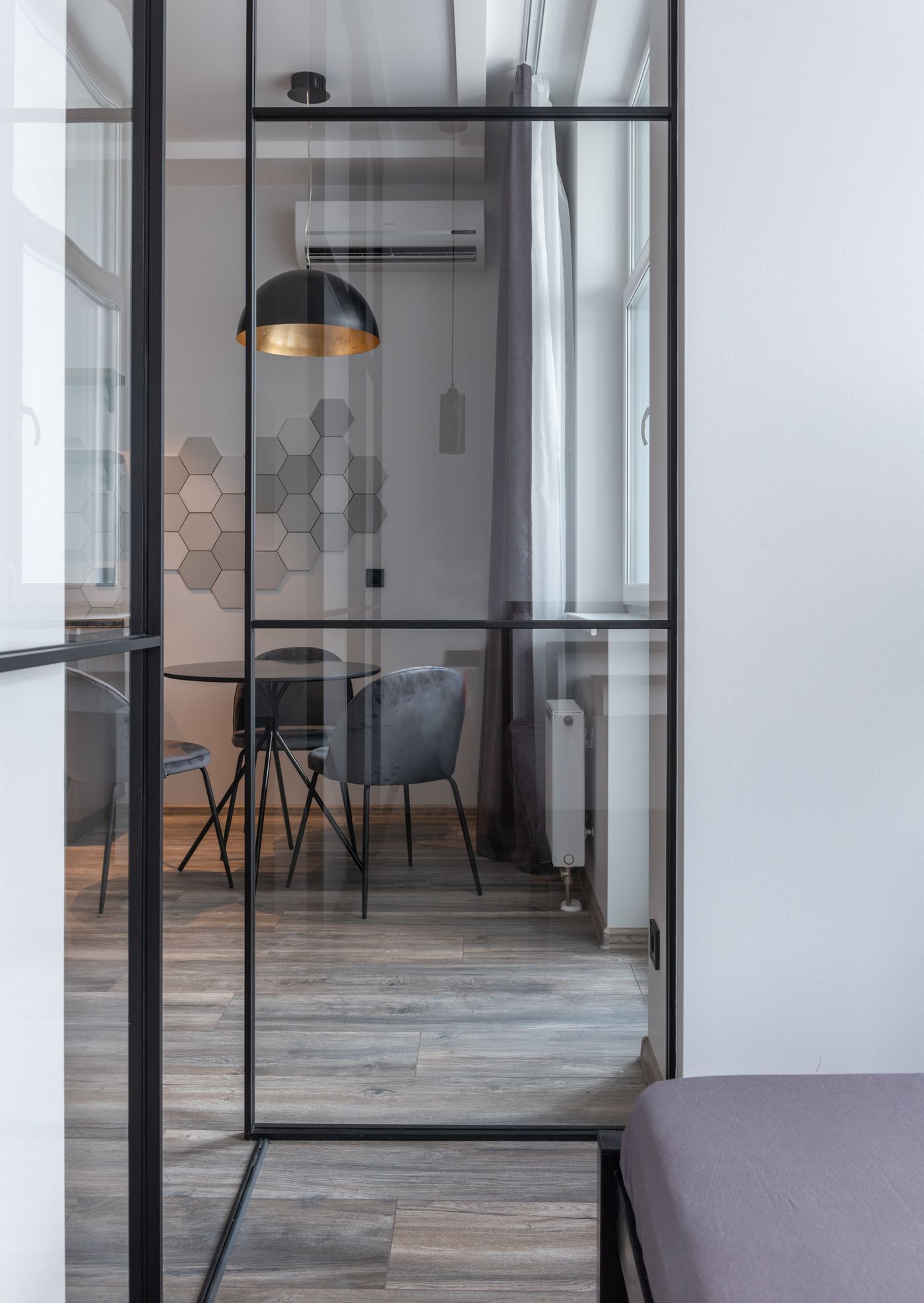
The photograph of a permanent glass partition shows a different format, not an installation idea for this rental trial. A folding screen does not offer the same construction, fixings, or enclosure. Compare each option on its actual requirements rather than borrowing the appearance of a built-in room division.
Check delivery and the route into storage
Measure the product’s stated package and assembled dimensions separately, and establish which parts arrive assembled. A folded panel may be narrow but tall, or awkward to turn around a small landing. Include your actual stairs and doorways in the decision.
Our furniture-delivery route survey helps connect those measurements to the home. Ask the seller about missing dimensions before ordering. Do not assume that an item fits because each individual panel appears smaller than the entrance.
Choose a storage position before choosing the screen. Check the folded thickness, height, and the support the maker requires. Avoid relying on a gap beside a wardrobe that already holds household equipment, or a position that requires balancing the folded item against a frequently moving door.
Decide how often the room will change
An occasional screen can be useful for a specific session if setup and closing remain manageable. An object moved twice a day creates a different workload. Include the effort of clearing its route, positioning its panels, and returning it safely to storage.
If moving it requires two people, make sure the household can actually support that routine. Do not describe a large screen as portable merely because it is freestanding. Portability involves the real weight, grip, route, and handling instructions.
Keep the number of transitions realistic. A rental room that already converts between work, meals, and guests may benefit more from one simple furniture change than from an additional daily screen operation. The best visual boundary is one the household can maintain without repeated friction.
Choose a finish after the footprint works
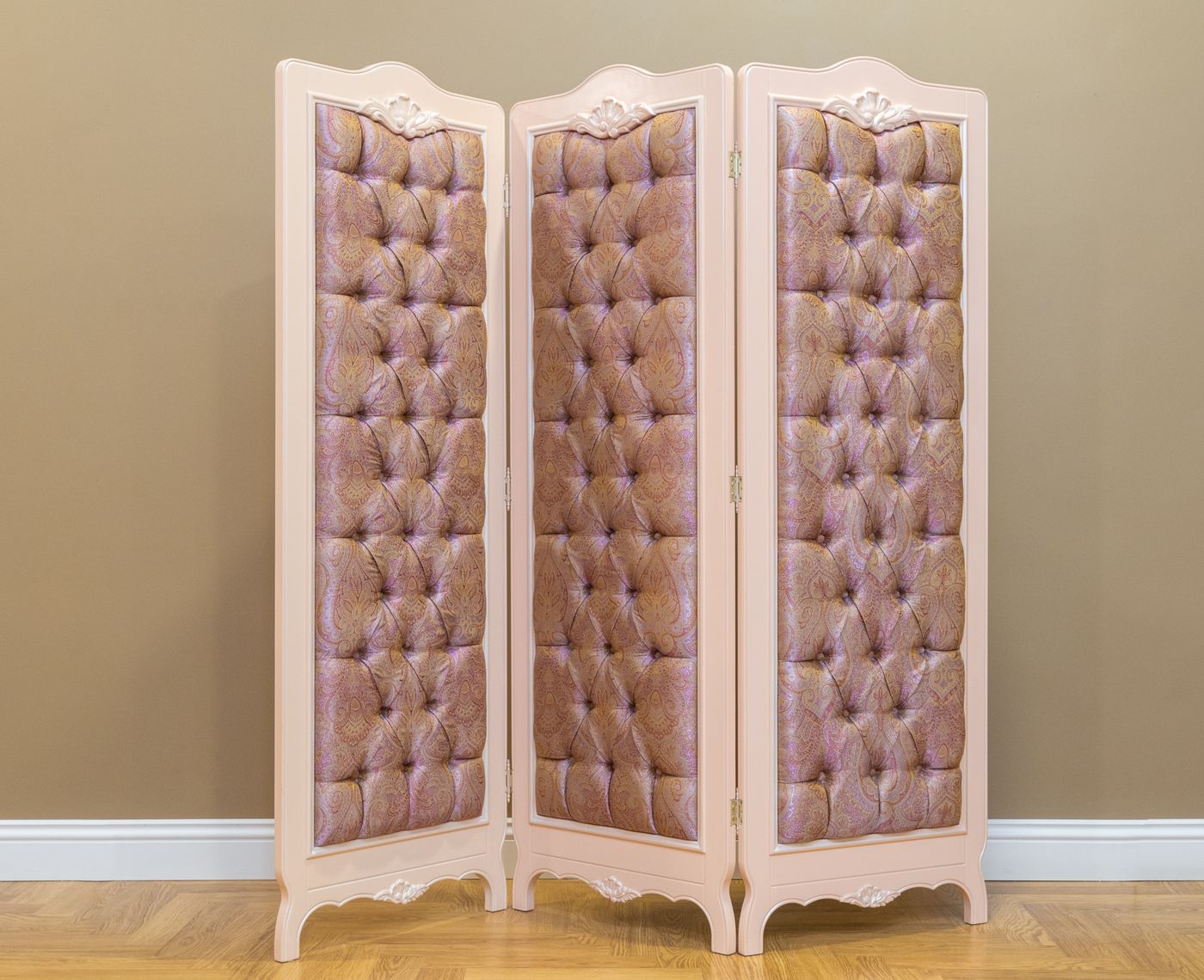
A wood, woven, upholstered, or patterned panel can connect with an existing room detail. Choose one visual relationship you enjoy rather than building a new matching collection around the screen. Let the rest of the room keep its useful furniture.
Check how much of the screen is genuinely opaque from the views that matter. A woven panel may offer a different result from a solid one, and strong backlighting can change what is visible. Ask for the information you need rather than inferring privacy from a staged photograph.
Consider care and handling. Deep upholstery, delicate woven details, and plain coated panels can require different routines. Follow the exact product instructions and preserve access to both sides if cleaning or inspection requires it.
Compare a smaller intervention
You may be able to move the work surface, rotate an existing chair, or close an appropriate storage door instead. Our over-the-door organizer guide covers one alternative storage format with its own fit limits; it is relevant when the actual problem is an exposed collection rather than a missing room boundary.
For guests, our temporary guest-sleep-zone guide considers the surrounding household arrangement. A screen can be one element of that plan, but it does not replace a suitable sleeping setup, agreed access, or the guest’s practical needs.
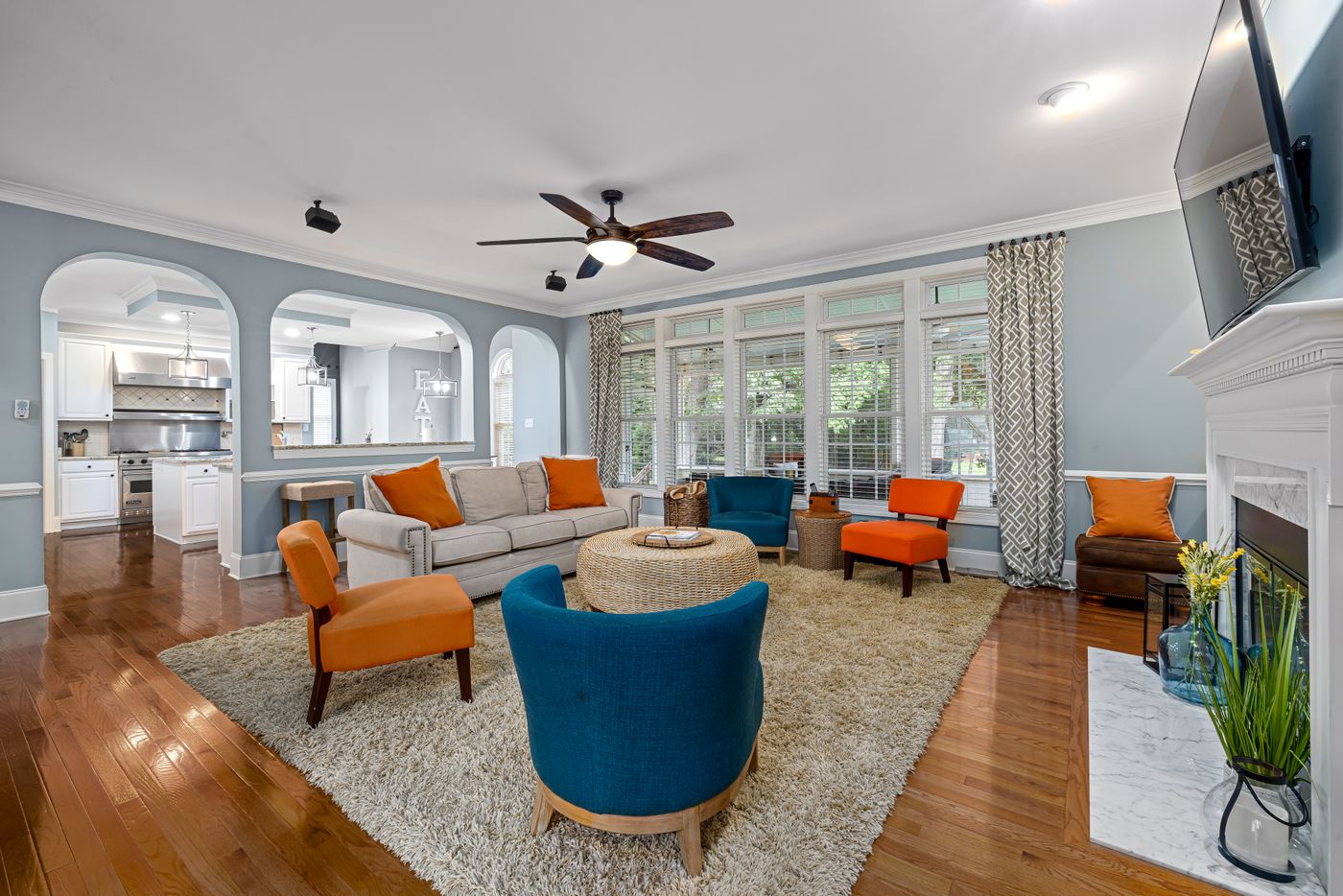
If none of the smaller changes solves the specific sightline, return to the screen with a clear brief. You now know the required coverage, workable footprint, storage position, and frequency of use. That makes comparing products more useful than searching for a screen that merely looks compact.
End the trial with both room states working
Use the room with the screen open, then close it according to the instructions and restore the ordinary layout. Check that the stored state does not obstruct another household task. A successful trial proves both the activity and its ending.
Keep the screen only if it improves the view or privacy you actually needed while leaving the room comfortable to use. If it creates more movement, storage, and cleaning work than it removes, another arrangement may be the better choice. The room should gain a useful boundary without losing the flexibility that made a rental screen appealing in the first place.
Explore related household decisions in our Small-Space Living hub.
Sources and editorial scope
Editorial research checked October 16, 2026. Trend-report dates and limitations are stated in the article; these are editorial applications of published signals, not verified October keyword rankings. Practical household guidance; illustrations do not document a tested household or authenticate a pictured material.