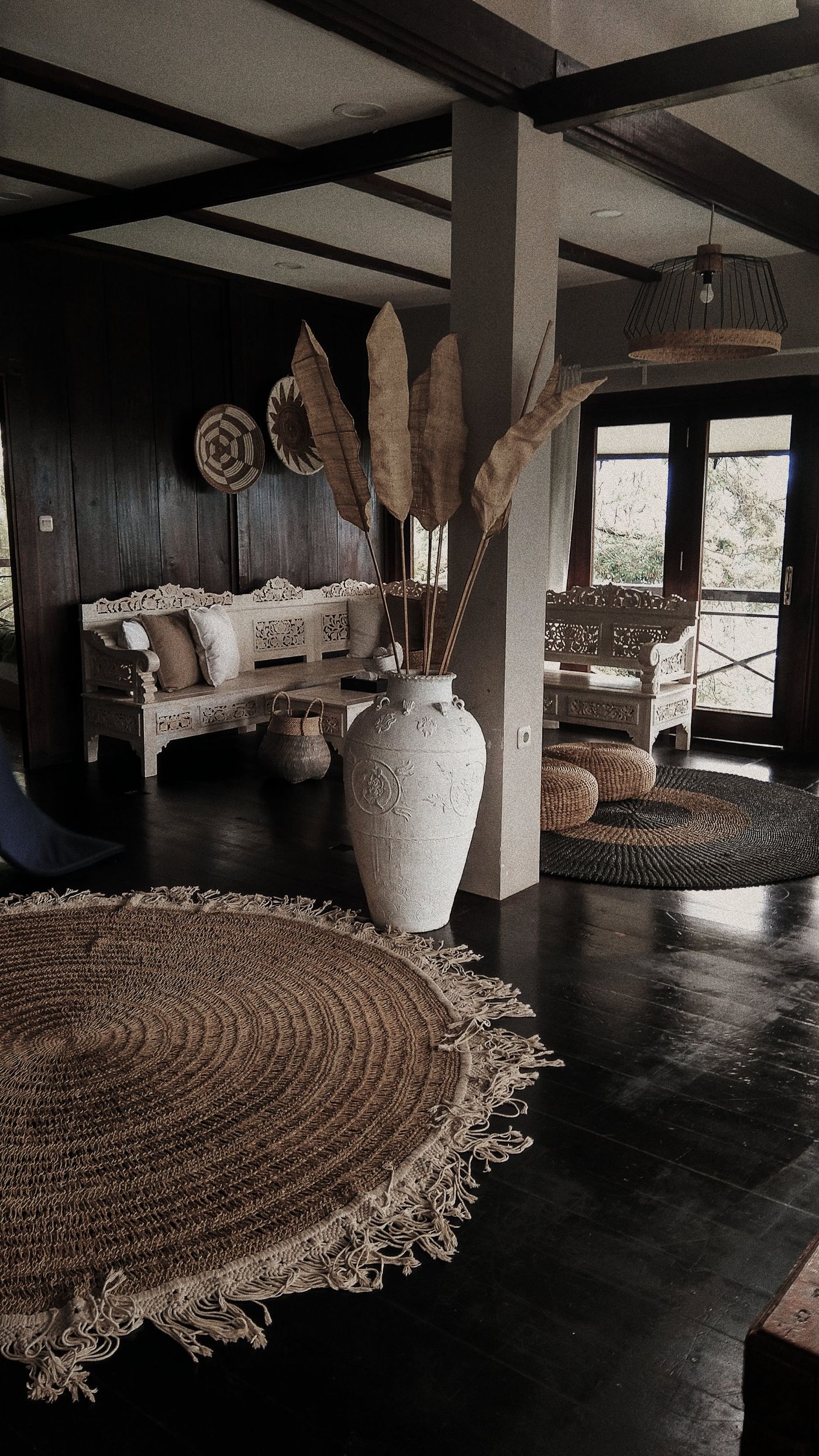
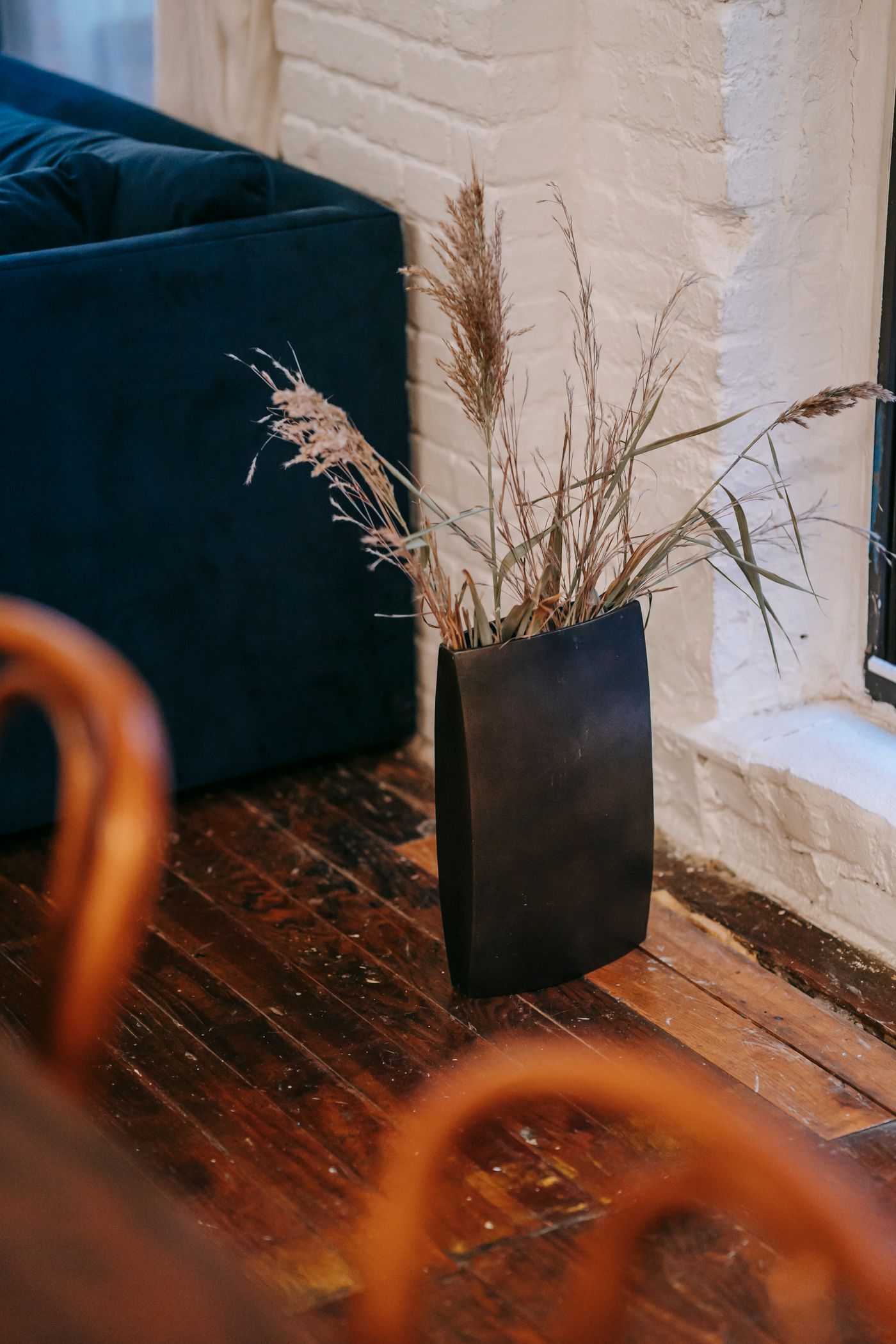
A floor vase occupies more than the circle under its base. Its body may widen above the floor, a handle can project sideways, and stems can extend into a route that looked clear when the empty vessel was first placed. In a small rental, the complete display needs to fit the room while people are using it.
Houzz’s Fall 2026 report describes expressive natural materials and interiors with collected character. A ceramic or other suitable vessel can contribute to that look, but the report does not make any particular vase a practical choice for a narrow room. This guide evaluates placement and everyday access; it does not certify stability, authorize wall or floor alterations, or establish that a decorative vessel can hold water.
Define the display before measuring the gap
Decide whether you want an empty sculptural vessel, an arrangement of appropriate dry stems, or a vessel intended by its maker for another stated use. Those are different setups. Do not assume a decorative vase is watertight or that a liner, filler, or arrangement suggested for another model is suitable for yours.
Identify the actual object and its instructions. Note material, outer dimensions, base shape, handles, and any use or placement restrictions. Keep uncertainty visible when a secondhand piece has no reliable product record. An appealing silhouette does not establish construction or care requirements.
Consider whether a floor display is necessary at all. A smaller suitable tabletop object may provide the desired material or color without occupying a walking route. Start with the role in the room rather than deciding that every empty corner needs a tall vessel.
Measure the widest occupied shape
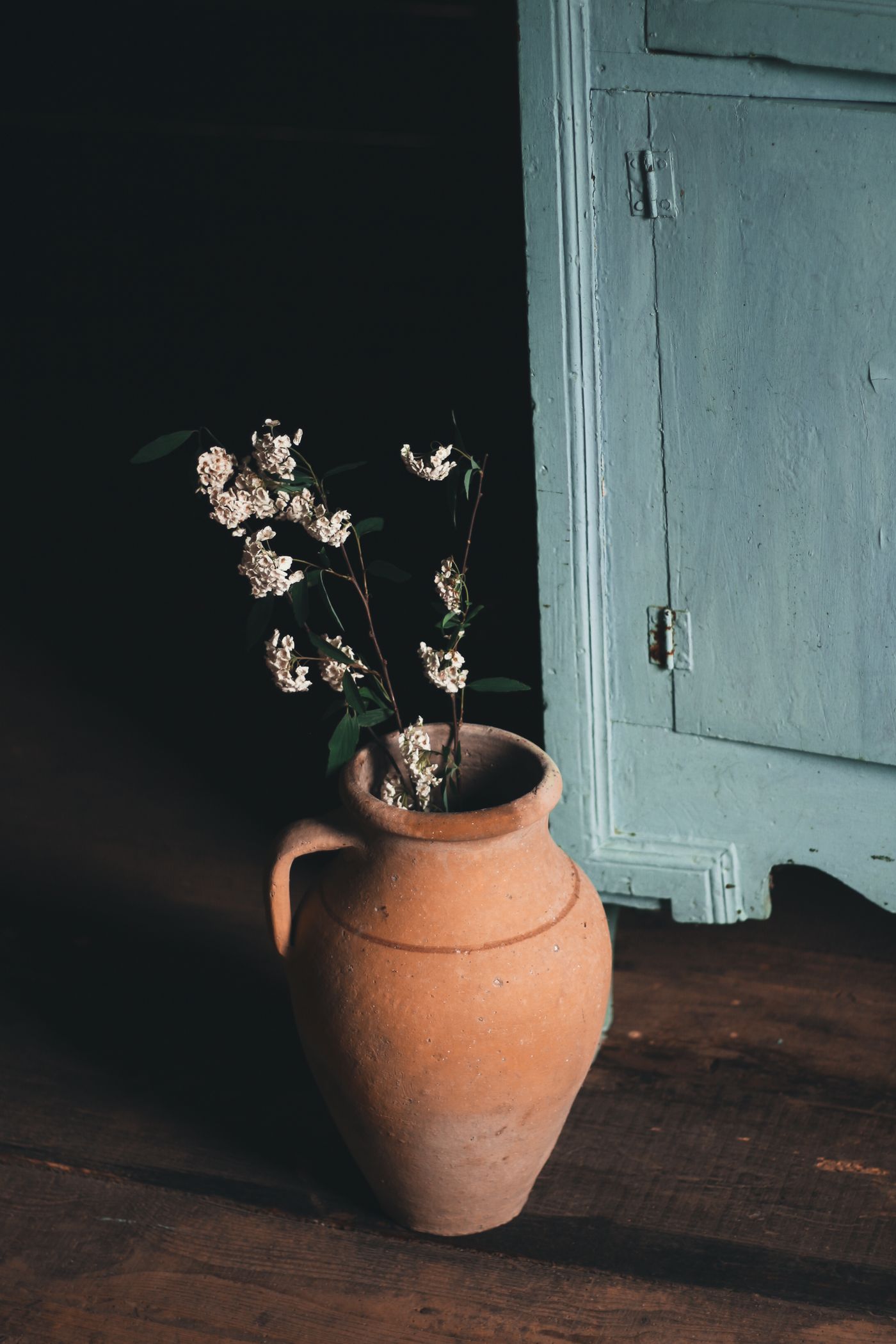
Record the full width and depth of the body, including handles or other projections. Then consider the arrangement at its widest point if stems will be used. A narrow base measurement cannot describe a bulbous vessel or a display whose branches reach toward a chair.
Mark out the proposed envelope through an appropriate reversible method that does not damage the rental surface. This can rule out an obviously unsuitable gap, but it cannot test the actual object’s stability, weight, or material compatibility. Confirm those separately using the maker’s guidance and the real room conditions.
Check the route by which the object would enter and leave the room. Planning a furniture delivery route offers a related principle: the destination is only one part of fit. A large awkward vessel must also be moved through the home using an appropriate handling method, without assuming that a narrow doorway can accommodate it.
Evaluate the room while seats and doors are in use
Place existing furniture in its ordinary occupied positions. A chair pulled out for sitting can reach into a corner that appears unused in a styled room photograph. A door, cupboard, or drawer may need the same air space the vase would occupy.
Keep normal routes and required exits clear. Do not ask household members to turn sideways around a fragile object as the permanent solution. A display that works only while a dining chair remains tucked in has not yet been assessed in the room’s real configuration.
Choosing whether a small living room needs a coffee table considers another object whose footprint should be justified by use. Apply that same question here: does the vase improve the room enough to earn the complete space it occupies, including the clearance needed around it?
Check the supporting surface and household activity
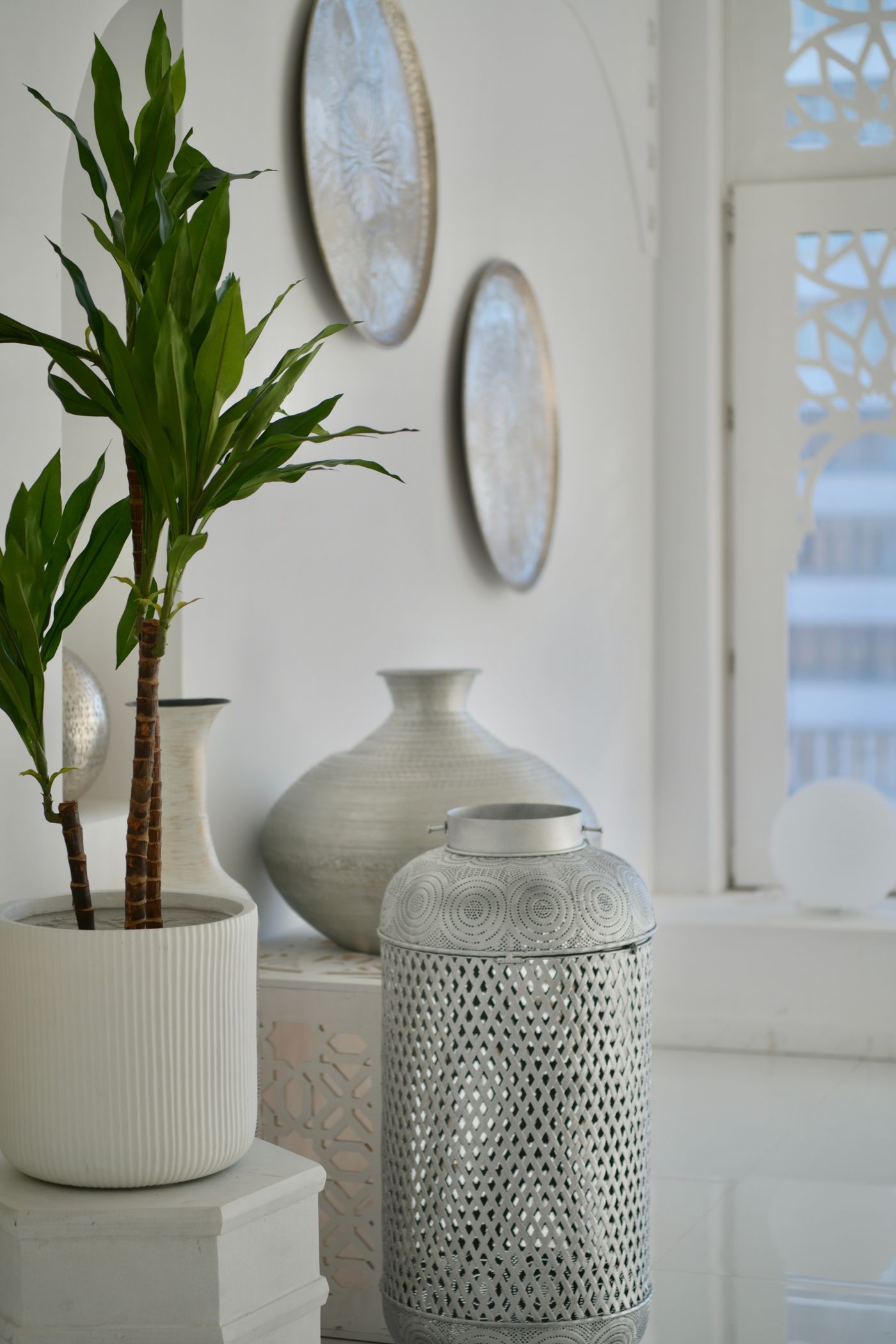
Follow the vase maker’s requirements for a suitable stable support surface. A rug edge, uneven area, soft underlay, or improvised pedestal may change how the object sits. Do not compensate with unapproved ballast, adhesives, or attachments simply to make the chosen corner work.
Consider children, pets, cleaning equipment, moving curtains, and people carrying bags or laundry through the area. A display can be clear of feet while remaining within the normal path of a shoulder, a swinging bag, or a vacuum hose. These are ordinary room movements to assess before placement.
If the actual object is fragile, heavy, unusually tall, or uncertain in construction, seek appropriate handling and placement advice. This room-planning guide does not establish a tip-resistance rating or safe loading for any arrangement. A different location or a smaller object can be the sensible conclusion.
Keep the display separate from heat and building services
Respect the clearances and access requirements for nearby heaters, electrical equipment, vents, outlets, and other building features. Stems or foliage should not be allowed to conceal or obstruct equipment that must remain accessible. The fact that a vase is decorative does not remove those existing requirements.
Do not use the display to hide an unresolved household problem, such as a damaged socket or a damp area. Address the underlying issue through the appropriate route. A rental restriction may also limit what can be moved or altered to create the desired display spot.
Making rental bathroom changes within practical limits discusses another room where attractive additions need to coexist with existing conditions. For a floor vase, keep the same discipline: understand the surface and permissions before introducing attachments or additional materials.
Assess cleaning access before committing to the corner
Imagine the next ordinary floor-cleaning session. Can the area around the base be reached without striking the vessel, and can the object be handled appropriately when movement is needed? A location that requires a difficult lift every few days may not suit the household routine.
Follow separate instructions for the vase and the floor. Do not assume that a floor cleaner can be sprayed over the display, or that a damp base can return immediately to a moisture-sensitive surface. Choose any protective accessory only when it is suitable for both materials and does not compromise the object’s placement.
If the arrangement uses dry plant material, obtain the relevant care information for those materials as well. This article does not identify decorative stems, verify their household suitability, or prescribe a cleaning method for them. Keep the arrangement manageable rather than filling the vase until it becomes difficult to inspect or move.
Leave room for the rental to change use
A living area may become a guest space, a hobby area, or a temporary working zone. Decide where the floor display will go during those changes before it arrives. The alternate location must be suitable; simply moving a fragile object into the hallway does not solve the space conflict.
Accounting for working floor space is relevant when an object must coexist with temporary activities. A vase that fits beside a closed storage unit may still occupy the area needed when furniture is assembled, a drawer is open, or the room performs another ordinary task.
Compare a smaller or raised alternative honestly
A smaller vessel on an existing appropriate surface may provide the same material accent without consuming floor space. That surface still needs to support the object and its intended use, but the comparison is worth making before buying a large display.
Do not automatically purchase a pedestal or new side table to rescue an unsuitable floor vase. That turns one decorative decision into another furniture footprint. An object you already own, a simpler arrangement, or leaving the corner open can all meet the room’s broader needs more effectively.
Keep any trial limited to a safe, appropriate arrangement using the real object and its instructions. A photograph of a successful display elsewhere cannot confirm that your floor, route, household activity, and particular vase will behave the same way.
The useful result is a display whose whole shape fits, whose supporting surface is suitable, and whose care and movement remain practical. If those conditions are absent, the empty corner is useful room space rather than a decorating failure.
Explore related household decisions in our Small-Space Living hub.
Sources and editorial scope
Editorial research checked October 17, 2026. Trend-report dates and limitations are stated in the article; these are editorial applications of published signals, not verified October keyword rankings. Practical household guidance; illustrations do not document a tested household or authenticate a pictured material.