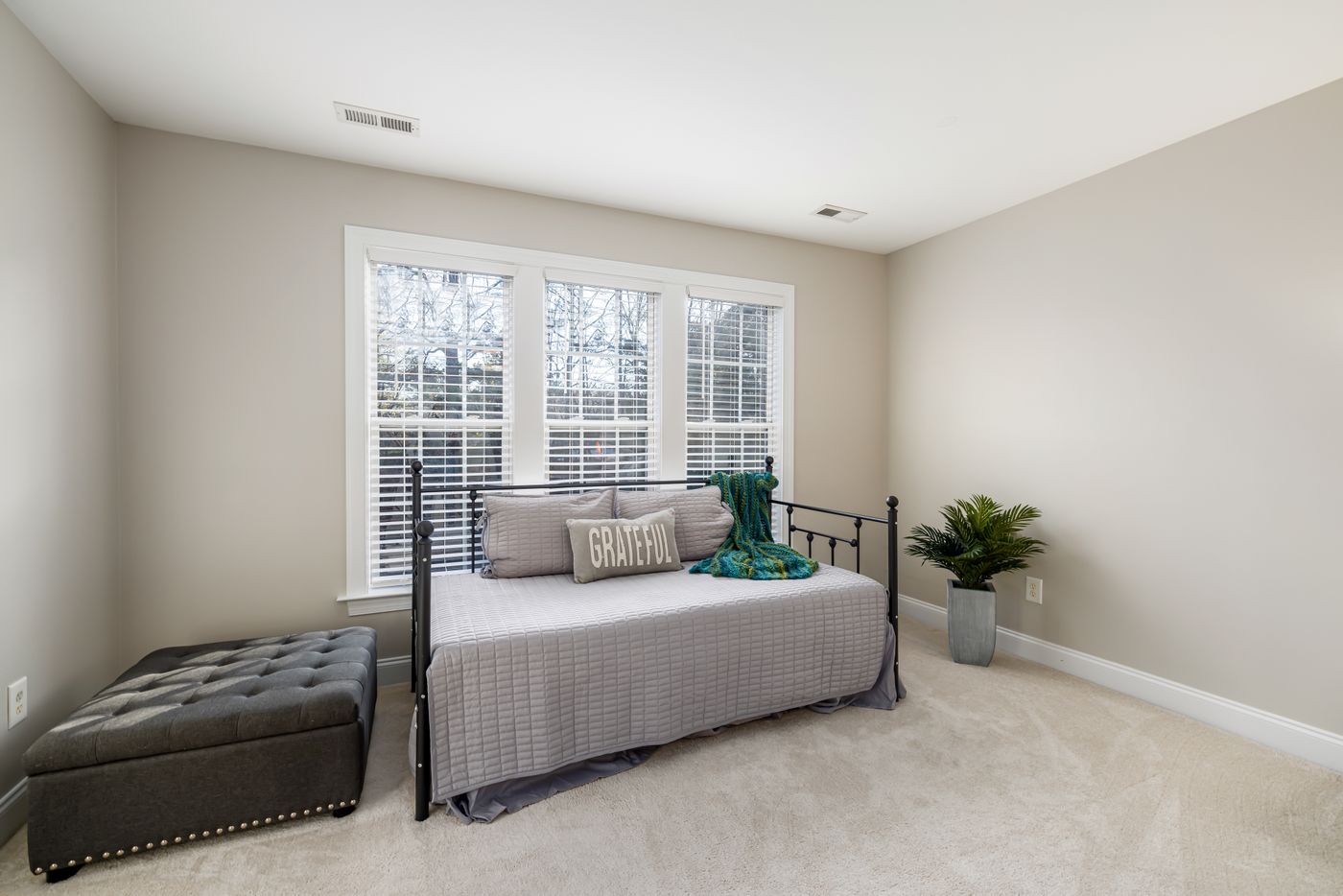
A daybed can make one room serve as a sitting area and a sleeping space, but its two uses do not happen simultaneously. Bolsters move, bedding appears, someone needs access to the mattress, and the things left on the seat need somewhere else to go. Those transitions deserve as much planning as the frame’s floor footprint.
Houzz’s Fall 2026 report discusses adaptable interiors and familiar, layered furnishings. A daybed can support that approach when its conversion routine fits the household. This guide concerns a conventional daybed in a small rental, with attention to permitted placement and daily use; it is not an assessment of every trundle, folding mechanism, or product advertised as a sleeper.
Define who sleeps there and how often
Start with the real use. A primary bed that doubles as daytime seating has different demands from occasional guest accommodation. Decide who needs access, what comfort and support requirements must be met, and whether the intended frame and mattress are appropriate according to their manufacturers.
Do not assume a daybed becomes a suitable primary bed simply because a standard-size mattress appears to fit. Check the exact frame’s mattress requirements, support system, limits, and assembly instructions. If the room is for someone with particular mobility or access needs, assess those needs directly rather than relying on a staged product photograph.
The guest sleep-zone guide helps define temporary sleeping use before furniture is selected. Here, take the next step and write down the daybed’s actual day-to-night sequence. If you cannot describe where each removed item goes, the second function is still an idea rather than a workable arrangement.

Measure the complete occupied footprint
Use the frame’s full outside dimensions, not just the mattress size. Include projecting ends, legs, and any specified clearance. Drawers or a trundle, if present on the exact model, need their own operating space and compatible floor conditions. Do not assume an open area beneath a frame is approved storage.
Measure the ordinary room with doors, closets, windows, and other furniture in use. Keep required routes and access available in both modes. A daybed that technically fits between two walls can still make the closet difficult to open or leave someone unable to approach the bed in the way they need.
Check delivery before purchase. The furniture delivery-route survey considers turns, openings, and the journey to the room. Separate that question from final placement: a frame may reach the apartment but still be unsuitable for its intended corner, or suit the corner while arriving in a package that cannot negotiate the shared access route.
Try the seating depth in real terms
A mattress designed for sleeping may create a deeper seat than the sofa you expect. Bolsters or back cushions can change the sitting position, but they also consume space and become objects to move at night. Avoid buying an oversized cushion collection before checking whether the basic seating arrangement is comfortable for the intended users.
If you can inspect the exact furniture appropriately before buying, assess it in the configuration you would actually use. Otherwise, treat seating comfort as unresolved and review the purchase and return conditions. A published mattress width does not tell you whether someone can sit comfortably with their feet supported.
Keep the required frame and mattress instructions intact when adding accessories. Decorative cushions should not be treated as structural supports or used to justify a setup that conflicts with the product guidance. A good dual-purpose arrangement begins with a suitable bed and then evaluates seating, rather than disguising an unsuitable bed as a sofa.
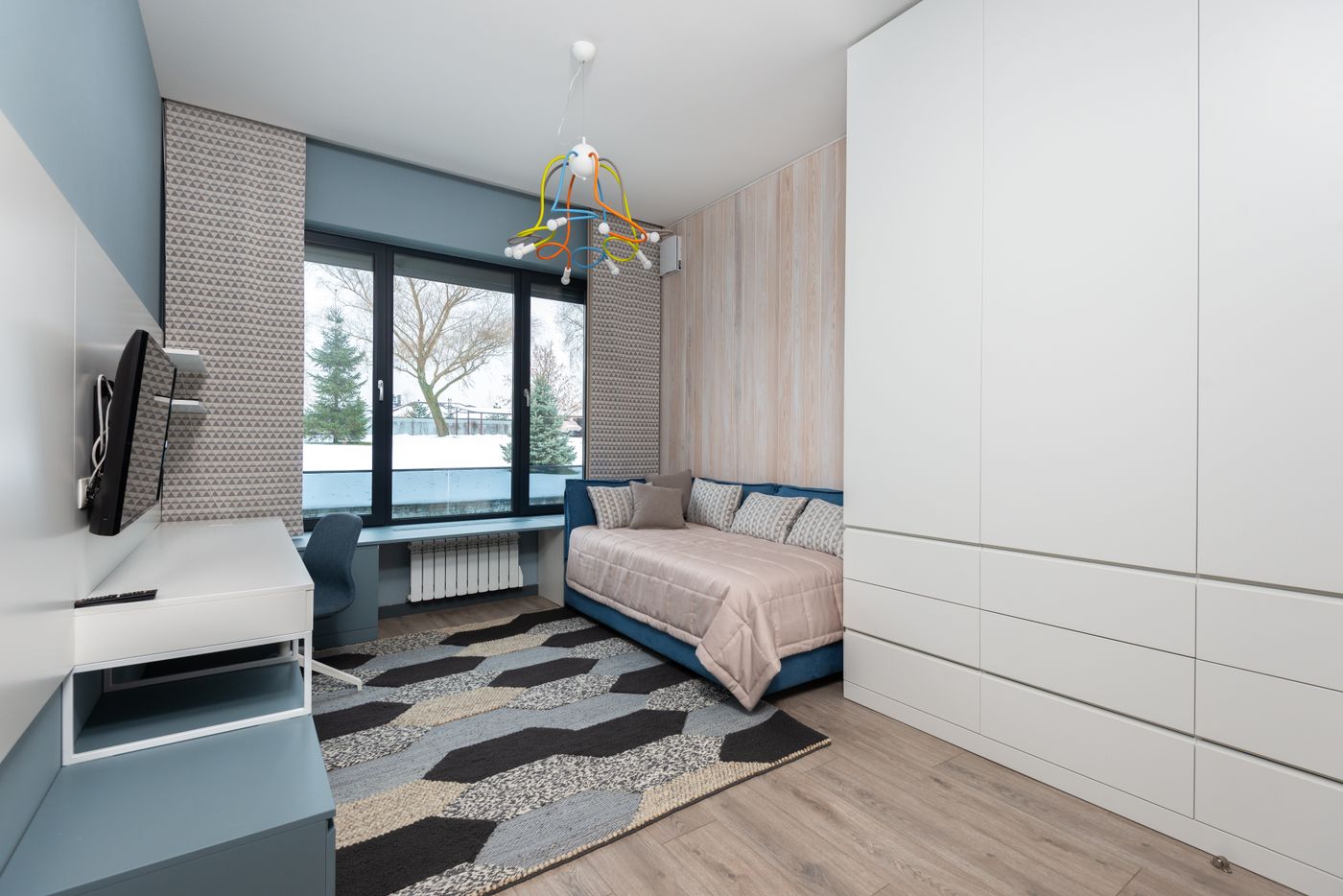
Assign a daytime place for sleeping items
Decide which bedding remains on the mattress and which items are put away. Follow the care and use needs of the actual bedding and mattress. A decorative daytime cover can simplify appearance, but it adds another textile to remove, store, and clean; it is not a free transformation.
Choose an appropriate location for clean, dry bedding without sealing damp textiles away. Keep the set identifiable and easy to retrieve. If the only available solution involves unpacking several unrelated closet bins every evening, reduce the accessory layers or reconsider the furniture arrangement before adding more storage.
Our capacity ceiling guide can help account for the complete set of objects involved. In this case, the useful capacity includes the things temporarily removed during conversion. A daybed does not save as much usable space as its listing suggests if the surrounding room becomes a permanent overflow area for pillows and folded covers.
Assign a nighttime place for seating items
Plan where bolsters, cushions, and daytime textiles go while someone sleeps. Keep them out of essential routes and off unsuitable surfaces. The location should remain available on an ordinary busy evening, rather than depending on an empty dining table that is usually covered with work or family activities.
Try the movement before you buy extra accessories. Place appropriately sized household items in the proposed storage position and walk through the transition without using them as substitute furniture or structural supports. This simple space rehearsal can reveal that a narrow shelf or closet opening cannot accept the pile you imagined.
If conversion requires another person’s room or possessions to move every night, discuss that dependency. A shared rental needs an arrangement the affected people can actually maintain. Reducing the cushion count may be a more useful improvement than adding a decorative chest that creates another delivery, placement, and access problem.

Keep the room usable after the bedding is down
Check the sleeping arrangement with the normal doors, lights, outlets, and personal items in use. Keep access to needed controls and everyday belongings practical without trailing unsafe cords or leaning across unstable furniture. Follow the relevant product and building guidance for placement and electrical equipment.
Consider the morning routine as well as bedtime. Where will a person stand to make the bed, retrieve clothing, and return the cushions? The bedroom door-swing guide addresses one specific interference that is easy to miss when measuring only the frame. Check closet operation and other necessary routes in both configurations.
For a shared sleeping area, discuss privacy and timing directly. The shared-bedroom privacy guide can help frame that conversation. A daybed can change the physical arrangement, but it cannot establish consent, quiet hours, or the amount of personal space each household member needs.
Compare it with the simpler alternatives
Keep an existing suitable bed when the seating function is occasional and another comfortable seat already fits. A daybed purchase is easier to justify when both functions are genuinely needed and the conversion is manageable. It is weaker when the room is being rearranged mainly to imitate a compact-room photograph.
Compare a conventional daybed with the exact alternatives relevant to the household. A sofa bed, futon, or folding guest arrangement can have different support, operation, storage, and comfort implications. Do not rank the categories universally; inspect the actual models and include their full operating footprints and purchase terms.
For a furnished rental, establish what changes and furniture storage are permitted before removing an existing piece. Keep any required original items identified and protected. The replacement plan should include restoration or ownership responsibilities where relevant, rather than leaving those decisions to moving day.
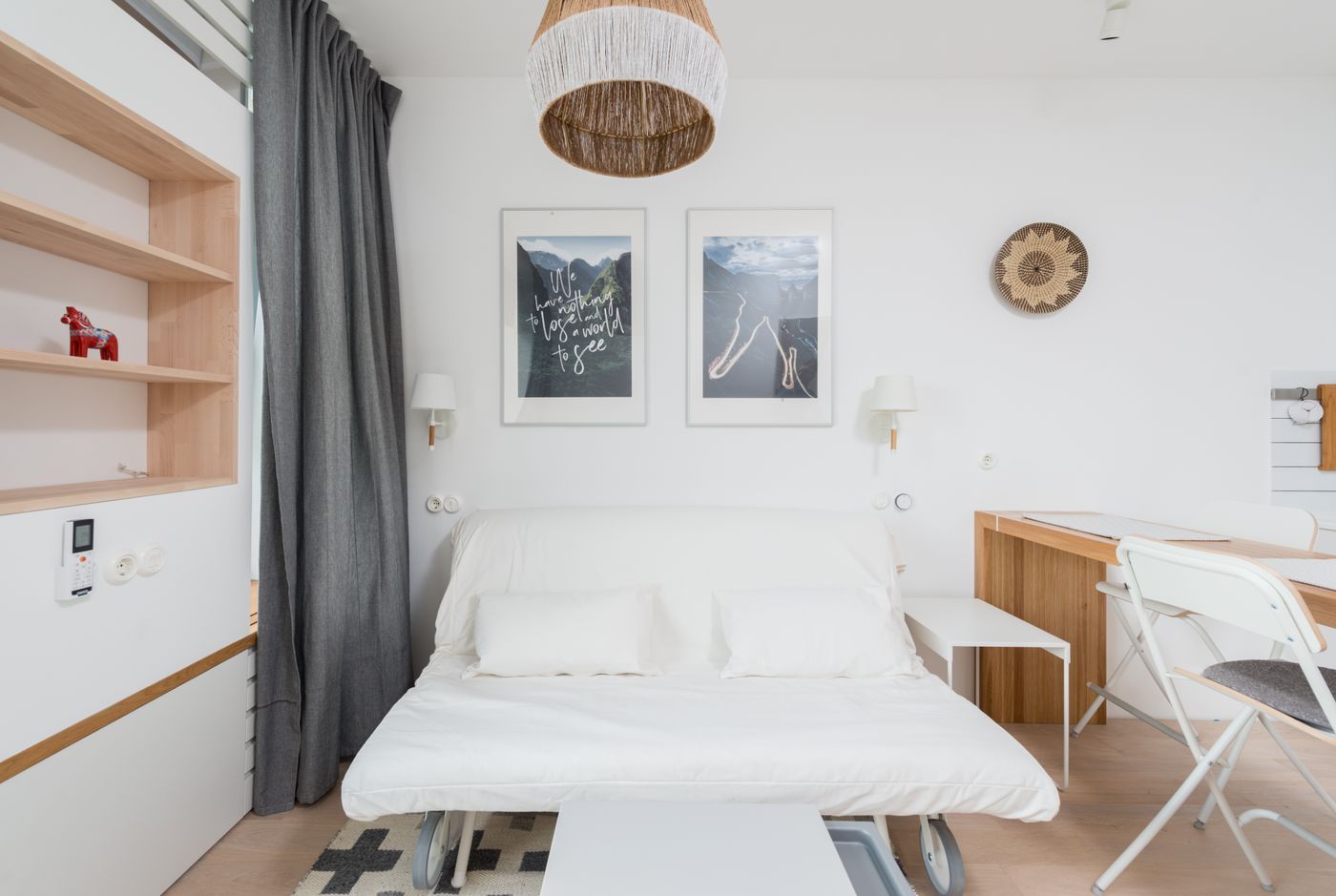
Rehearse a normal evening and morning
Write a short sequence: clear the seat, move the specified cushions, arrange bedding as directed, sleep, then reverse the process. Put a destination beside each object. If the routine requires a new storage solution for several categories of things, reconsider whether the arrangement is still the compact option you wanted.
Use the first ordinary week to observe friction rather than immediately adding accessories. A missing bedside landing place, inaccessible closet, or inconvenient cushion pile is a specific problem that can be addressed. The successful daybed arrangement is one whose two uses remain comfortable and repeatable when the room is lived in, rather than only when everything has been cleared for a photograph.
Explore related decisions in our Small-Space Living hub.
Sources and editorial scope
Editorial research checked October 20, 2026. Published trend reports are context for these editorial applications, not verified live keyword rankings. Practical household guidance; photographs do not document a tested household or authenticate pictured materials.