Laundry changes when the washer is downstairs rather than inside your apartment. A load is no longer just a machine cycle: it is a trip, a period of waiting, a transfer, and another trip carrying clean clothes. If one stage has no plan, the basket sits by the door or a finished load remains in the shared room. A compact apartment needs a routine built around those handoffs, not a larger hamper collection. If you are working on the same space, How to Dry Laundry in a Small Apartment Without Letting Clothes Take Over the Room covers the next decision in more detail.
The plan below applies to a shared building laundry room or a nearby self-service laundry, with adjustments for each location’s actual rules. It does not assume you can reserve machines, leave supplies there, or leave a load unattended. Check the operating hours, payment method, posted instructions, and building requirements before designing the routine. You may also find Create a Repeatable Video-Call Position in a Shared Room useful for a closely related small-home problem.
Work backward from the return trip
Begin by deciding what happens when the clean laundry reaches your apartment. Where can the basket land without blocking the entrance? Which clothes need hanging immediately? Where will the empty transport bag live? Those questions are easier to answer before the first load is packed than when you return with damp towels and a tired child.
Choose a small clear landing surface or a temporary floor spot outside the walkway. It should support the handoff to drawers and hanging storage rather than become a second long-term hamper. If your routine involves folding at the laundry location, the home destination may only need to support sorting clothes by person.
Our guide to family laundry handoffs covers the final put-away stage. Here, the extra task is protecting that stage from the fatigue and logistics of transporting the load.
Pack one complete trip, rather than a loose pile
Prepare the laundry, an appropriate detergent quantity, the payment method, and any approved machine-use essentials together. Follow product labels when handling detergent. Keep it in a secure, clearly labeled container, out of children’s reach; do not use food or drink containers for laundry chemicals.
If you choose premeasured supplies, use packaging intended for that purpose and follow its safety instructions. Convenience should not make the contents ambiguous. Take only what the trip needs rather than moving your entire household supply cupboard to the shared room.
Keep a short reusable departure list in the transport bag. Its job is to prevent a missing payment card or forgotten delicate-item bag from forcing another trip. Remove things you never use from the list after a few visits. A checklist works best when every line protects a real handoff.
Sort according to the actual care labels
Sorting at home reduces the decisions you must make beside occupied machines. Follow the garments’ care instructions and separate items that cannot share the intended settings. Do not use this article as a substitute for those instructions, or assume a large mixed load is safe because it saves a journey.
Then group the sorted items into transport units you can comfortably carry. A basket’s capacity is not the same as your practical carrying limit, especially on stairs. Check handles, the opening of the stairwell door, and whether you can manage the load without leaving another bag unattended.
If you use a wheeled carrier, confirm that it works with the route and the building’s rules. Wheels help only when the lift, thresholds, storage space, and turns accommodate them. A trolley that must be carried down several flights may add equipment without removing the hardest part of the trip.
Check the room before committing your time
Learn the room’s typical availability through your own visits, without assuming a universal quiet hour. Work shifts, weekends, and building occupancy can change the pattern. Choose a primary window and a realistic backup rather than planning the entire household around one hoped-for machine.
At arrival, read the machine instructions and check the drum for forgotten items or obvious problems. Report a machine issue through the posted process instead of improvising a repair. Do not add products, change settings, or move another person’s belongings in ways the location does not permit.
If the machines are all occupied, decide whether waiting fits the rest of your day. Taking the load home may be more manageable than starting a task that will overrun school pickup or a work meeting. A backup window is useful precisely because it lets you make that decision without treating the day as a failure.

Make waiting an intentional part of the trip
Use the machine’s displayed estimate as a planning aid, not an exact promise. Set a reminder that gets you back in time to check the load and follow the room’s rules about attendance. A timer cannot tell you whether the machine has paused, whether the clothes are ready, or whether an unexpected fault occurred.
If you stay in the shared room, choose a waiting activity that packs away quickly. If you are permitted to leave, pick an activity nearby that will not trap you in a long queue or require a complicated return. The purpose is to make the wait usable while preserving the next handoff.
Families bringing children need a separate plan for supervision. The laundry room is equipment space, not a play area. Use the location’s safety instructions and keep children away from machines and laundry products. If the visit is too difficult to manage safely with children, change the timing or arrange appropriate help rather than adding more tasks to the same trip. You may also find How to Organize a Tiny Laundry Area With No Cabinets useful for a closely related small-home problem.
Transfer and collect without leaving a mystery load
Have the next stage ready before the wash finishes. Remove items that need a different drying method according to their labels and use dryer settings suitable for the rest. An earlier decision about air drying is much easier than discovering at home that several garments cannot go into the dryer you have just paid to use.
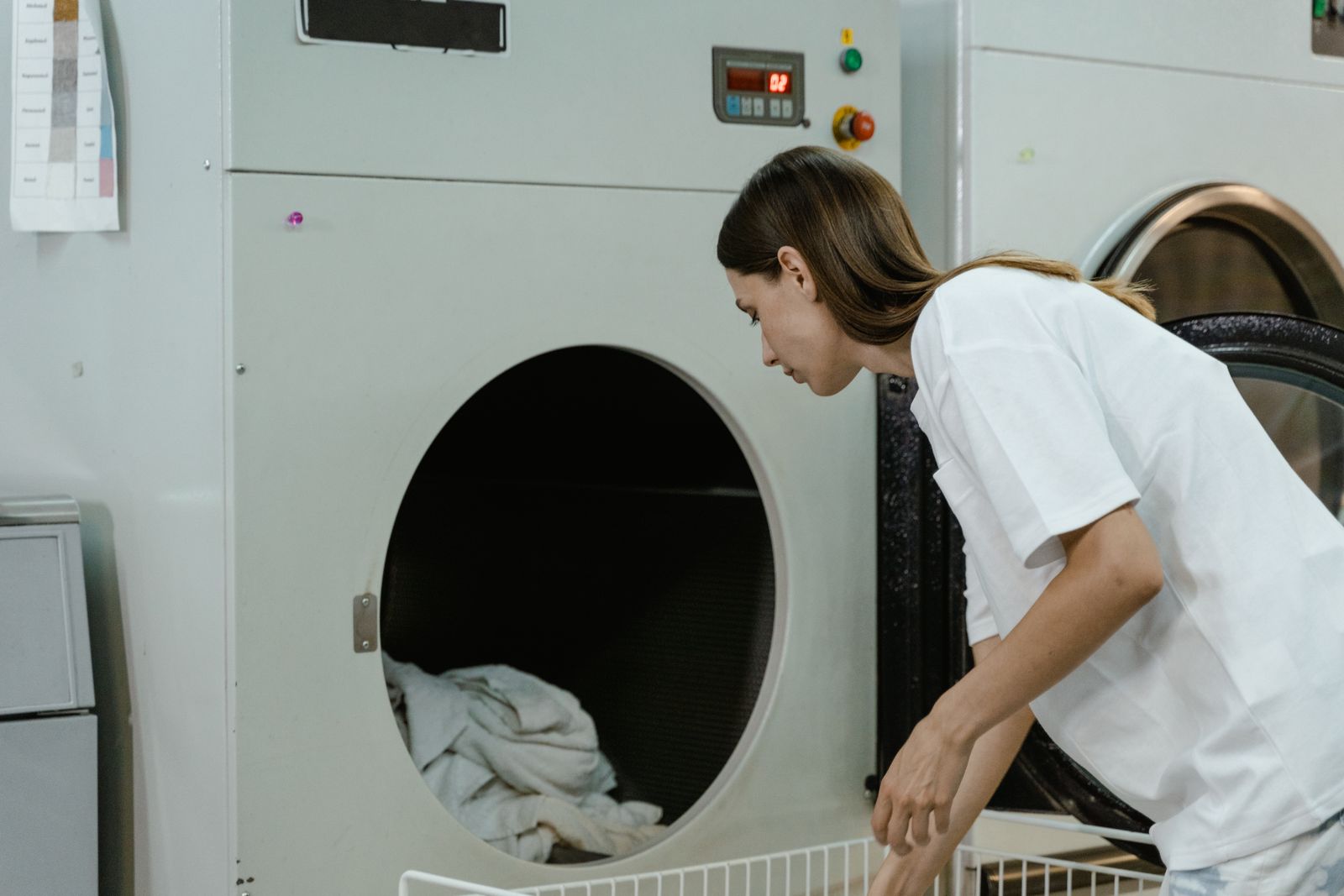
Stay responsive to the room’s operating rules and other users. Prompt collection matters because a shared machine is a resource someone else may be waiting for. Avoid treating a completed load as a reservation for the equipment while you finish unrelated errands.
Check the drum, door area, and nearby floor before leaving. Small socks and garment bags are easy to miss. A quick final scan is more efficient than trying to determine later whether the missing piece disappeared at school, in the apartment, or at the laundry location.
Keep the clean return separate from the dirty departure
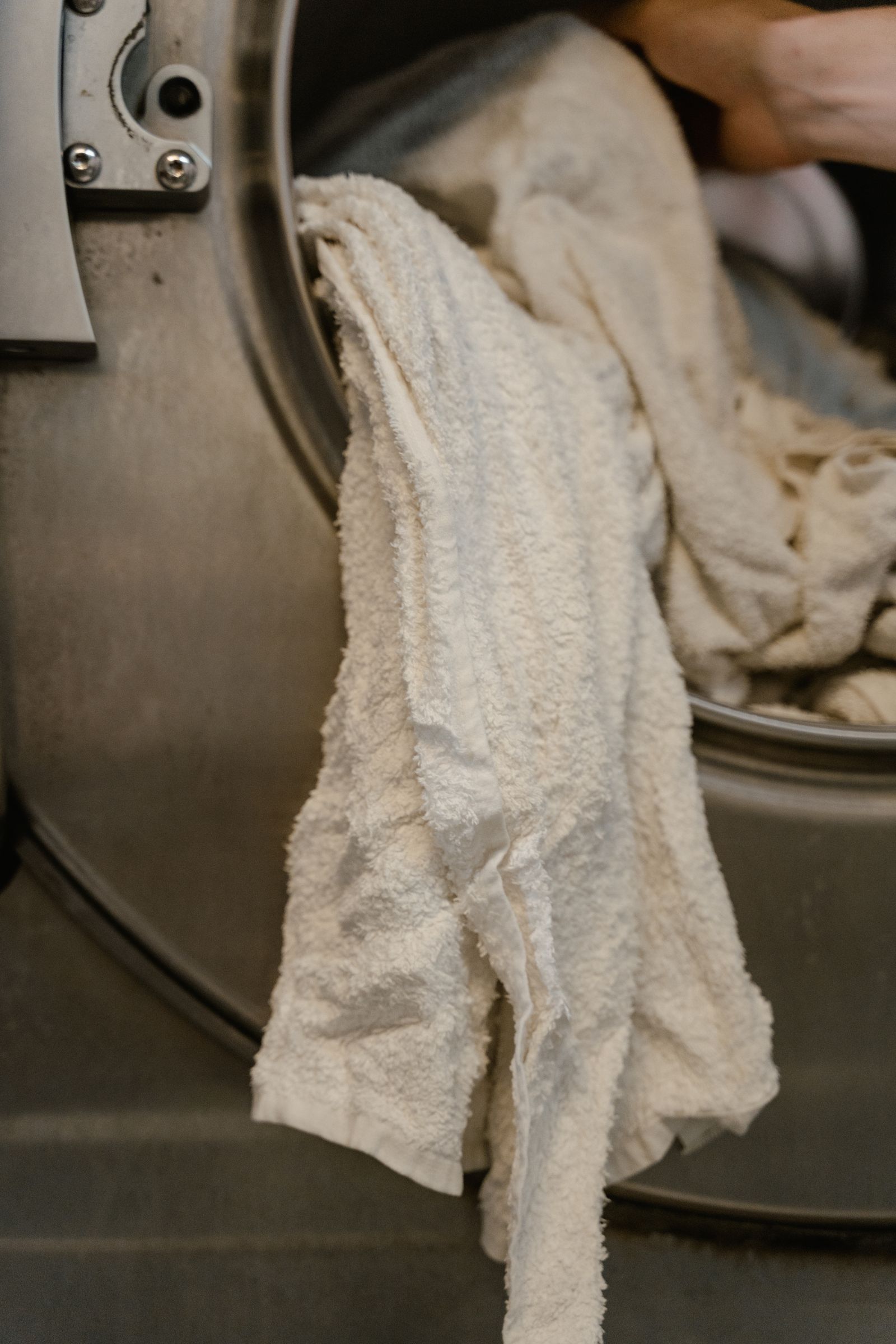
Use a clean transport surface for the washed clothes. That may mean cleaning a reusable basket appropriately, using a clean liner intended for the carrier, or choosing a separate clean bag. Make the distinction visible so another household member does not place a dirty shoe bag into the freshly washed load.
Before packing, check that the clothes are dry enough for the intended transport and storage. If some pieces remain damp, keep them separate and finish drying them promptly using their care instructions. A closed bag is a transport tool, not a drying method.
In an apartment without a permanent drying area, our guide to air drying in a small apartment can help plan the exception load. Decide where that temporary setup goes before using the laundry room, especially when rain or room use limits your usual option.
Compare the whole cost of the routine
Count the expenses that actually apply: machine charges, transport, detergent, and any optional services. Also count the time spent carrying, waiting, and finishing the clothes. This is a planning exercise, not a prediction that one location or schedule will always be cheaper.
For example, a location with a lower wash price may require a longer trip or a separate drying journey. A larger machine may suit bedding occasionally but be unnecessary for a small routine load. Compare the finished, put-away laundry rather than just the posted price of starting a washer.
Change the weakest handoff first
After two or three trips, identify where the routine stalled. Forgotten payment suggests a trip-kit problem. Damp clothes accumulating at home suggest a drying-plan problem. A clean basket living in the entrance suggests the final destination is missing. Each issue calls for a different change. If you are working on the same space, How to Reset a Small Apartment After a Trip Without Living Out of a Suitcase for a Week covers the next decision in more detail.
Do not automatically purchase a bigger basket. A larger load may make carrying, drying, and put-away harder. The best system is the smallest complete trip your household can finish reliably, with a backup window for the days when shared machines are unavailable.
Explore Small-Space Living for planning around apartment constraints, Laundry Area ideas for the home setup, and the guide to keeping laundry from taking over when the transport stage is working but the apartment still holds unfinished piles.