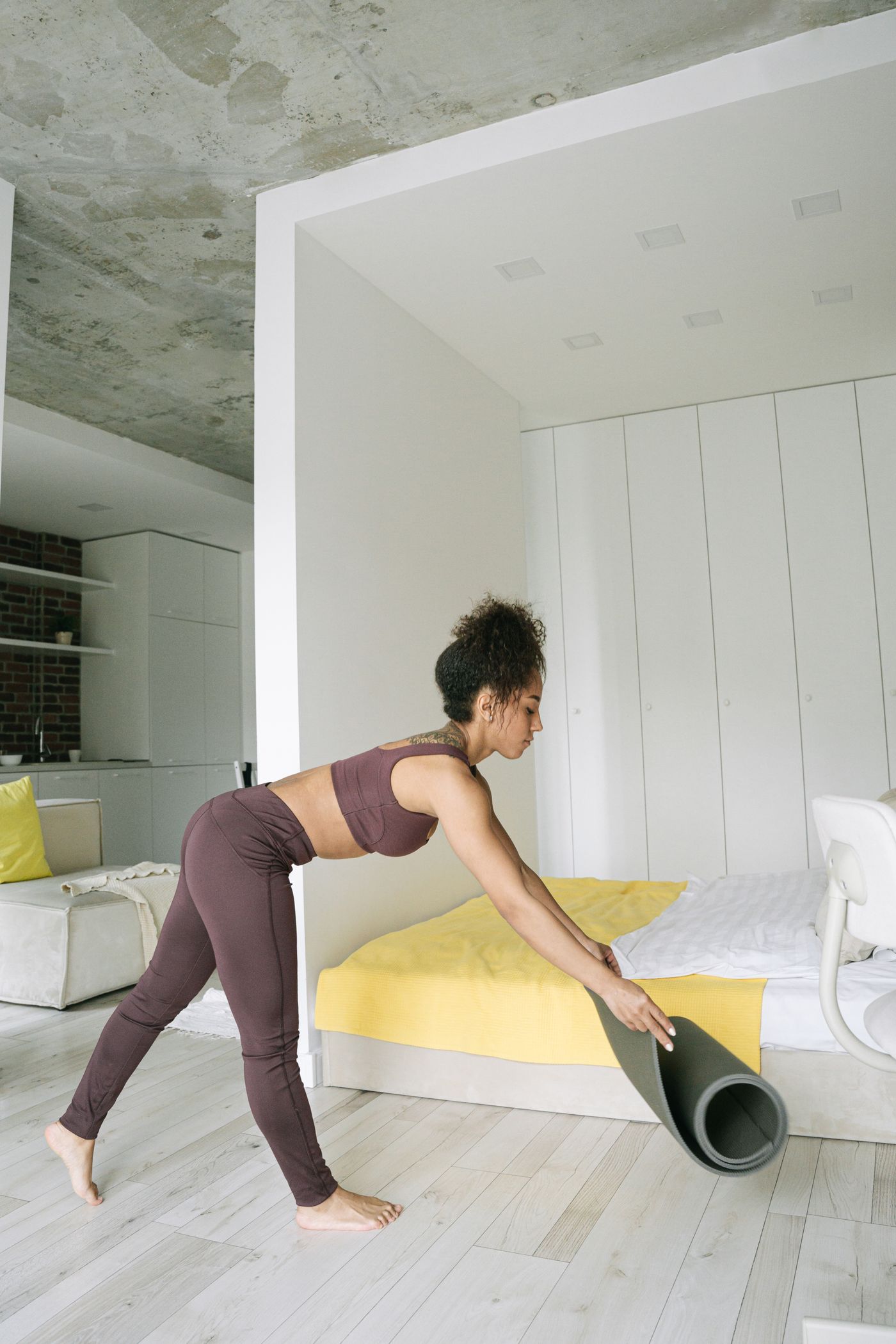
A yoga mat may fit between a sofa and a bed while the routine you want to follow does not. The mat’s rectangle is only the starting footprint. Arms, legs, props, a screen, and the route for entering and leaving the area can extend beyond it, especially in a rental where furniture and fittings have limited flexibility.
Plan the floor space around your existing, appropriate routine and equipment instructions. Then rehearse the room setup and return before treating the gap as a permanent practice area. This article concerns household layout and storage; choose movement instruction and personal suitability separately with an appropriate qualified source.
Houzz’s fall 2026 design report discusses homes supporting changing routines and wellness-related uses. A temporary mat space is an editorial application for a modest rental. The report does not establish a universal clearance, prescribe exercise, or show that a particular mat will make a narrow room suitable.
Define the activity before measuring the floor
Choose the actual routine you intend to follow rather than planning for a generic picture of yoga. Review its space, equipment, and movement requirements from your appropriate instruction source. A seated session, a standing sequence, and work using props may occupy different areas.
List only the items that routine needs: a suitable mat, specified props, a stable viewing position if used, and any other required support. Do not add a full collection of equipment just because a blank corner appears available. The complete session should still be easy to prepare and put away.
Decide whether the room is available for the whole intended period, including setup and return. If someone will need to pass through it, agree on a layout that preserves the necessary route. A private rented room and a shared apartment living area present different access questions.
Our temporary guest-zone guide considers another use that occupies a room for a limited period. The useful shared principle is to plan when the space changes purpose and what must remain available while that happens.
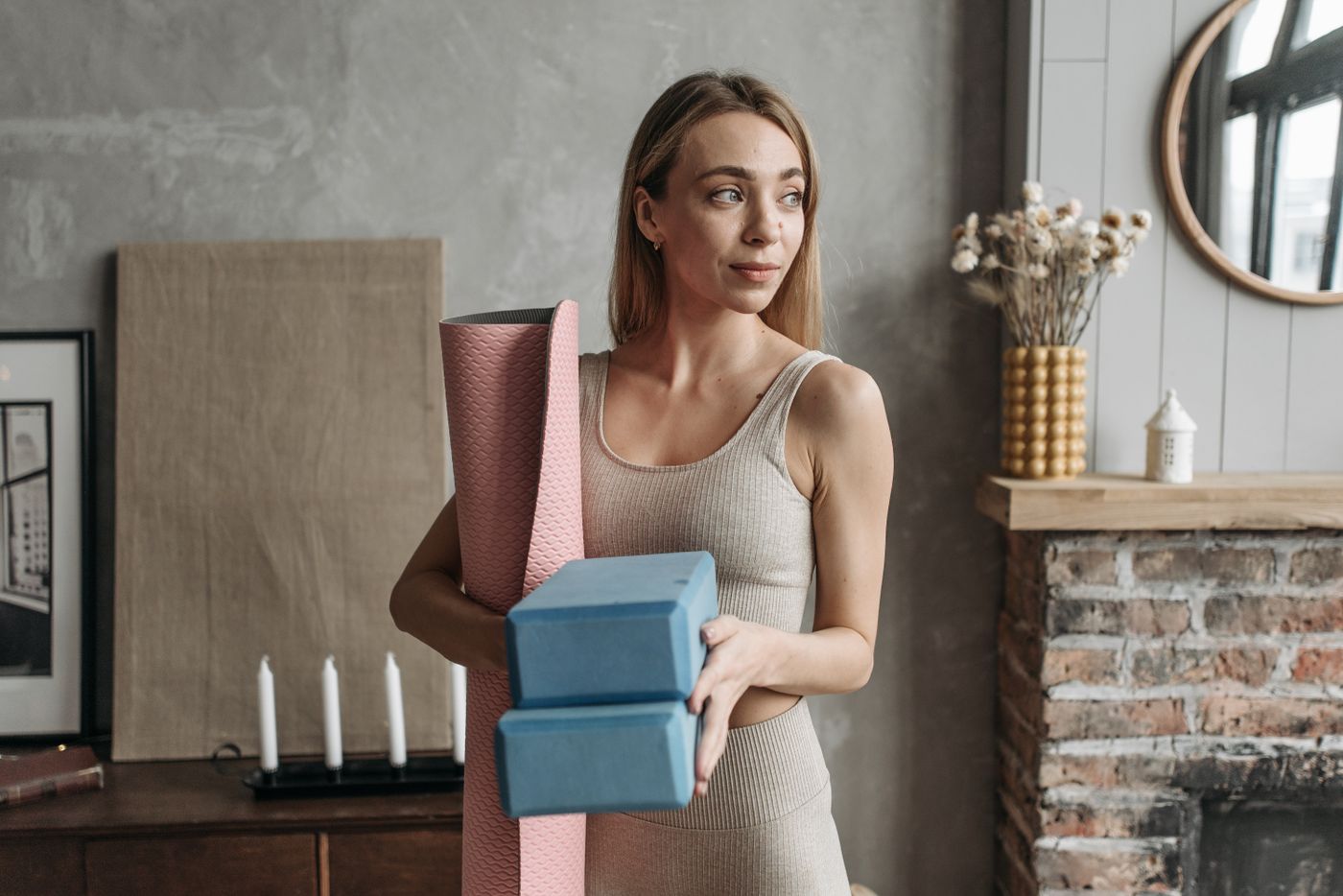
Check the mat and the movement envelope separately
Place the mat in its intended orientation on a suitable floor, following its instructions. Measure the actual mat rather than assuming every product has the same size. Look at the whole outline and nearby furniture, including projecting feet, handles, and sharp or fragile objects.
Compare the routine’s movement needs with the area around the mat. Do this through the instruction source’s requirements and an appropriate controlled assessment, not by forcing a movement near an obstacle to see whether it fits. The room needs to support the routine, rather than the routine being distorted to suit the remaining gap.
Include overhead and side conditions where relevant. Sloped ceilings, hanging fixtures, and an open cupboard can affect a floor area that looks clear from above. The required clearance depends on the activity and users; this guide does not invent one number for every body, room, and movement.
Check nearby doors in the normal occupied-room arrangement. The door-swing planning guide helps distinguish an empty-looking floor patch from space already needed by a moving door. Keep required exits and household access clear throughout the session.
Choose a floor position by suitability as well as appearance
Follow the mat and flooring instructions regarding suitable surfaces. An attractive rug, a freshly treated floor, or a layered decorative mat may not provide the intended conditions. Do not assume that adding more layers automatically improves grip, cushioning, or stability.
Inspect the area for loose objects, grit, moisture, and damage before use. Complete any needed floor care through the floor’s approved method and allow it to reach the required condition. Keep cleaning products and their residues separate from the mat’s own care requirements.
Avoid solving a tight layout by pushing furniture into an unstable temporary position. If a chair or table must move, give it a proper landing place where it does not block another route. Our storage plan for folding furniture is useful when the room relies on a temporary furniture changeover.
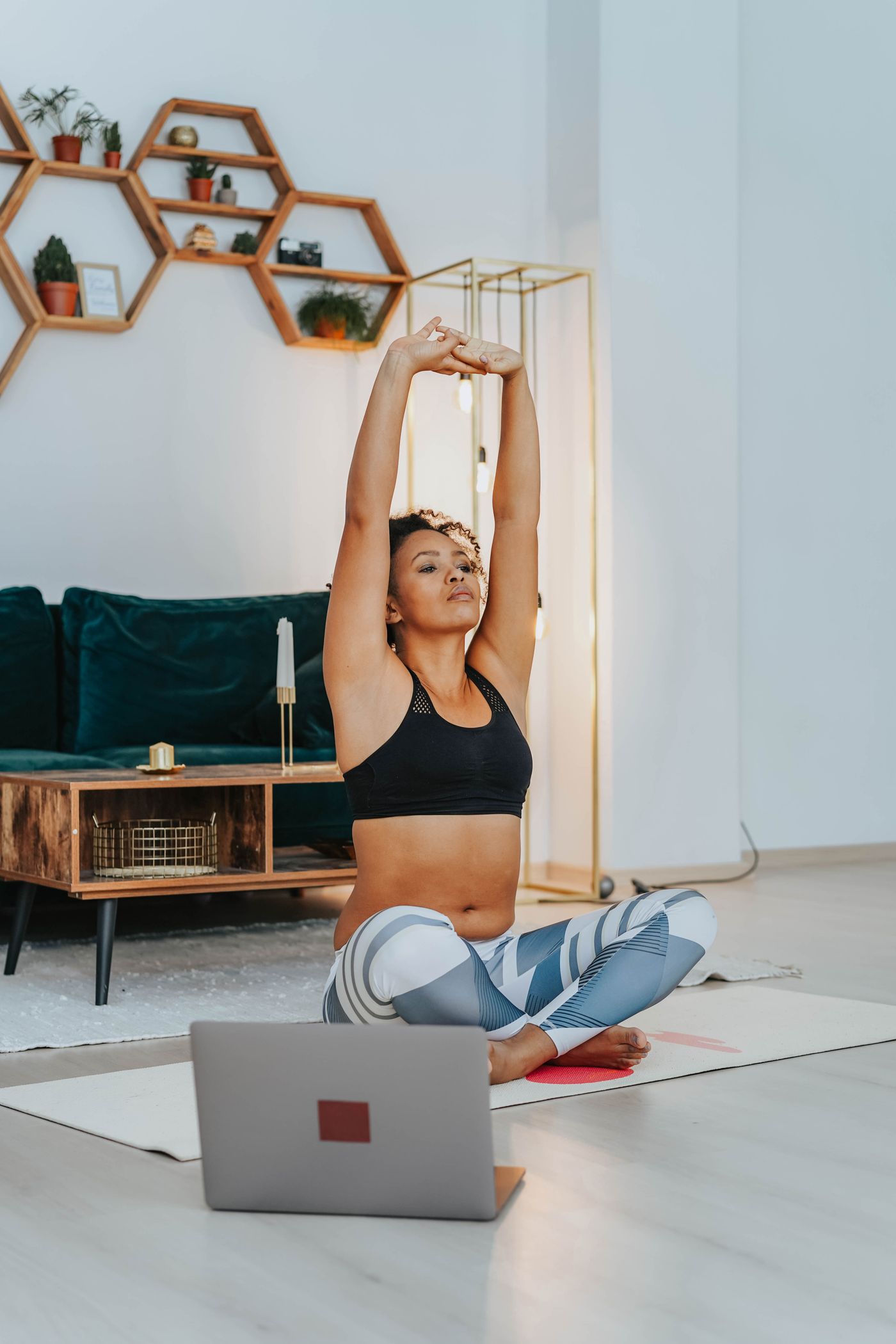
Put the viewing device where it does not create another obstacle
If you follow a class or recording on a device, use an appropriate stable position that suits the equipment and your instruction. Keep the device, cable, and stand out of the active movement and approach routes. Avoid balancing a screen on stacked boxes to reach a preferred viewing height.
Check whether you can begin and end playback without stepping over equipment or moving a prop into the walkway. Download or prepare permitted content through your usual service when useful, so the session does not begin with a prolonged search while the room is already rearranged.
Consider light and household sound during the planned time. A bright reflection or a loud shared television can make the chosen position less useful. Agree on a realistic arrangement with other occupants instead of assuming the temporary mat gives one person control of the whole apartment.
This is a space-planning check, not a recommendation about exercise duration, intensity, or instruction quality. If the routine’s requirements cannot be met in the room, choose another appropriate routine or location through a qualified source rather than treating a visible mat as proof of suitability.
Give props a working position and a storage position
Keep only the props required for the chosen session in the activity area. Place them where the instruction permits and where they will not spread into the access route. The remaining supplies can stay in their ordinary home until needed.
Choose storage based on actual equipment instructions and the space available. A rolled mat may fit upright or horizontally depending on its design and condition; a heavy item needs an appropriate supporting location. Do not hang equipment from an unverified adhesive hook simply because that avoids floor storage.
If the practice space requires moving several household objects every time, count those actions honestly. A smaller appropriate setup or a different time may work better than buying more storage. The clear-working-floor approach helps account for both the active footprint and the objects displaced while a task happens.
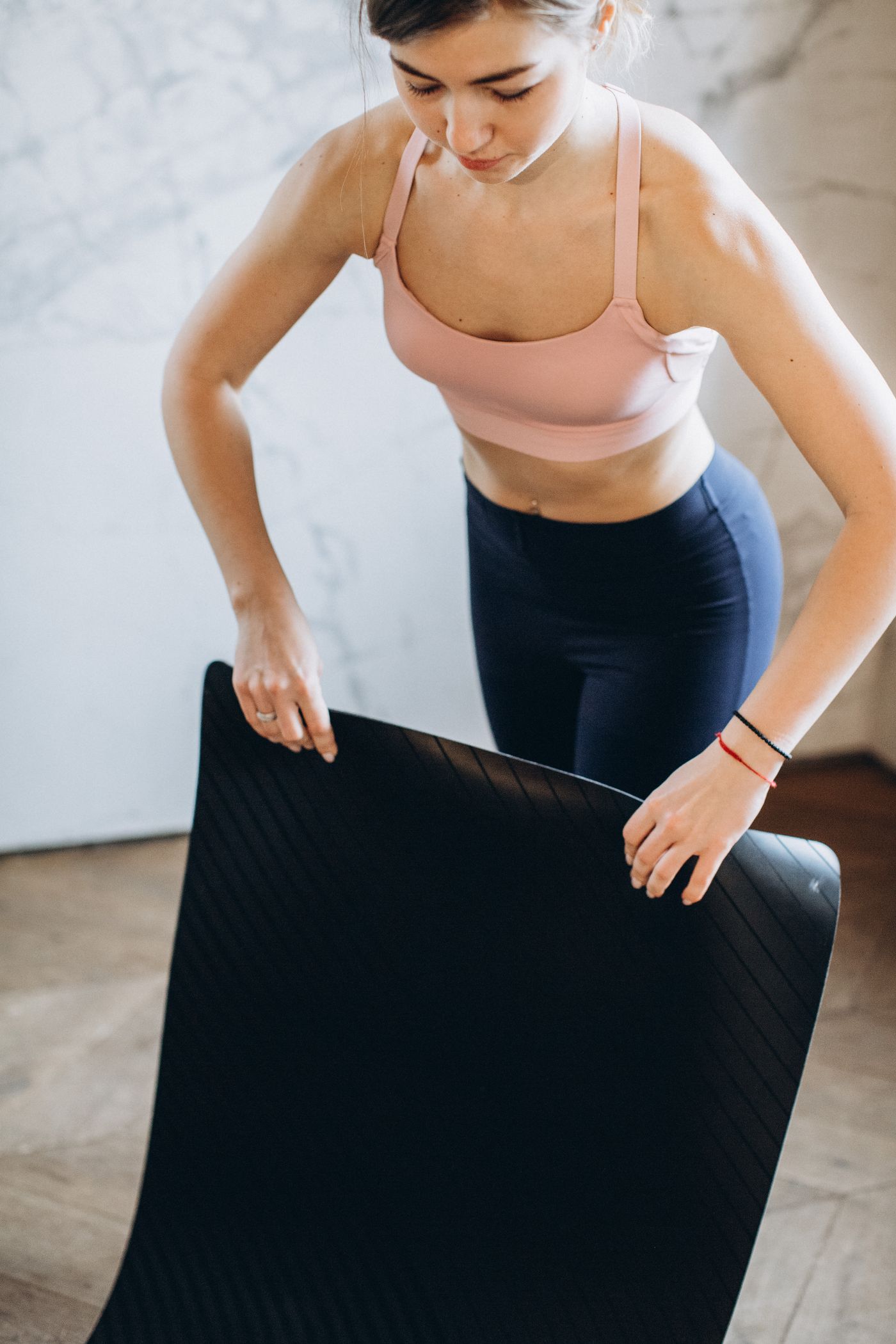
Rehearse the changeover with no session in progress
Move through the complete sequence once: clear the agreed area, place the mat and equipment, position any viewing device, then return everything. Notice whether the process blocks a door, strands a chair in another room, or requires a second person to lift something.
Use the rehearsal to simplify the setup. A storage position closer to the room or one fewer unnecessary accessory may remove more friction than a new product. Keep the normal room state understandable so another occupant does not inherit a half-rearranged space.
After actual use, follow the mat’s care and drying instructions before storage. Avoid closing damp equipment inside a bag just to make the room appear finished. The return period belongs in the plan, especially when the space is needed promptly for another household purpose.
Keep a layout that is practical to repeat
Record the few decisions that make the arrangement work: mat orientation, suitable equipment position, where the chair temporarily goes, and the time the room is available. You do not need a complicated diagram or a permanent studio to preserve those choices.
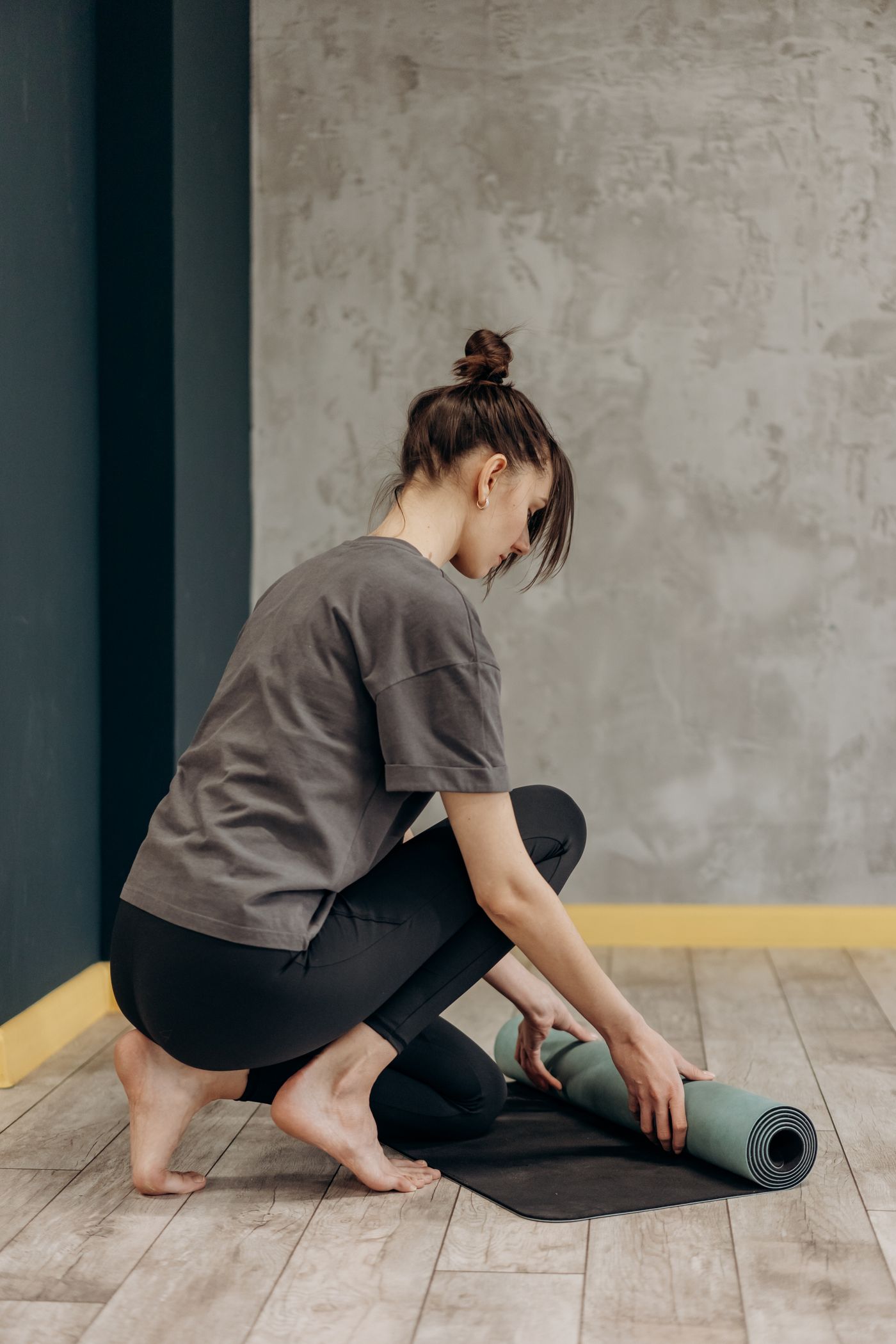
Reassess if the routine, equipment, users, or furniture changes. The useful result is a temporary space whose activity requirements and household access both make sense, followed by a reliable return to the rental’s normal arrangement. If those conditions cannot coexist, the layout needs a different plan before the next session.
Explore related household decisions in our Small-Space Living hub.
Sources and editorial scope
Editorial research checked October 17, 2026. Trend-report dates and limitations are stated in the article; these are editorial applications of published signals, not verified October keyword rankings. Practical household guidance; illustrations do not document a tested household or authenticate a pictured material.