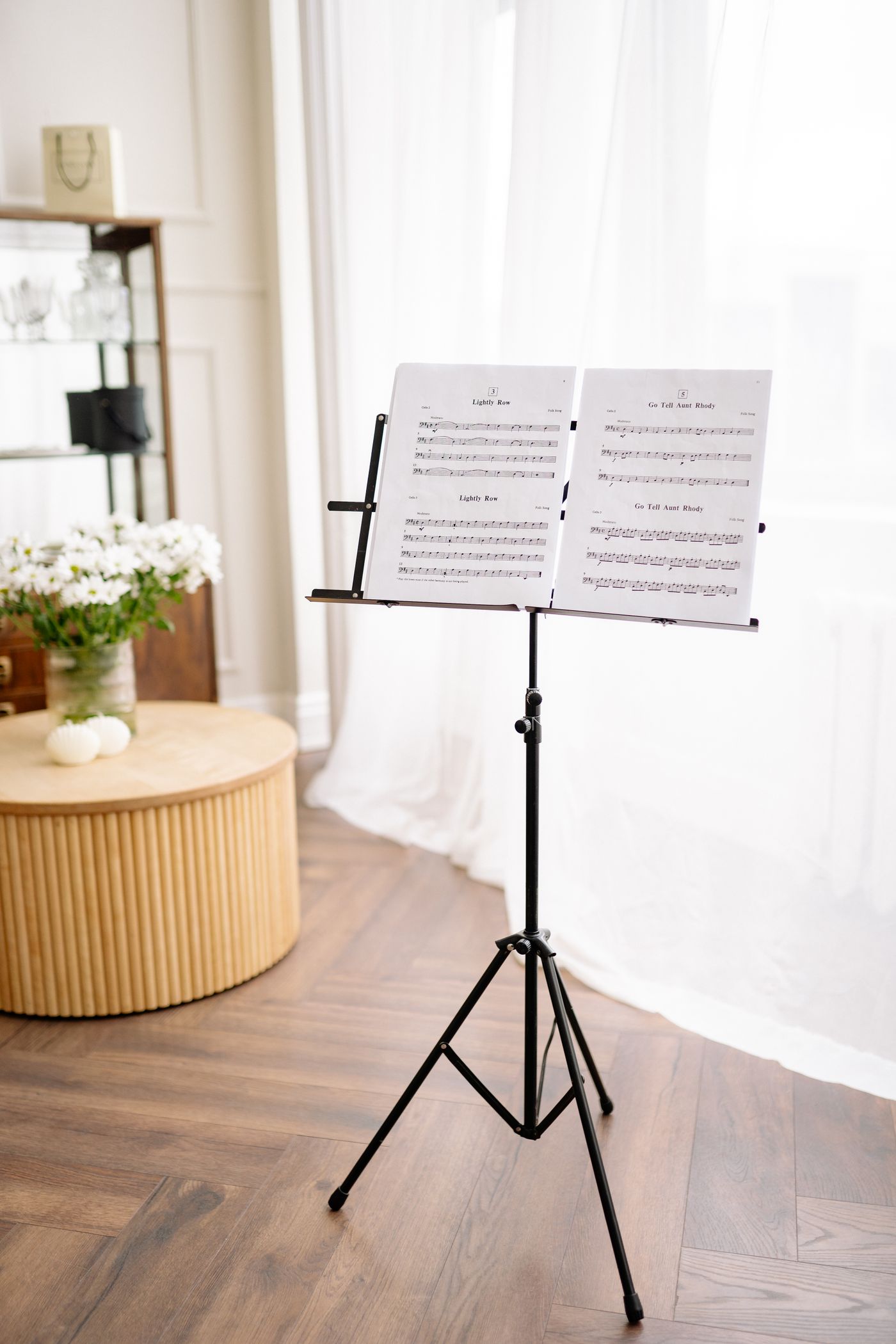
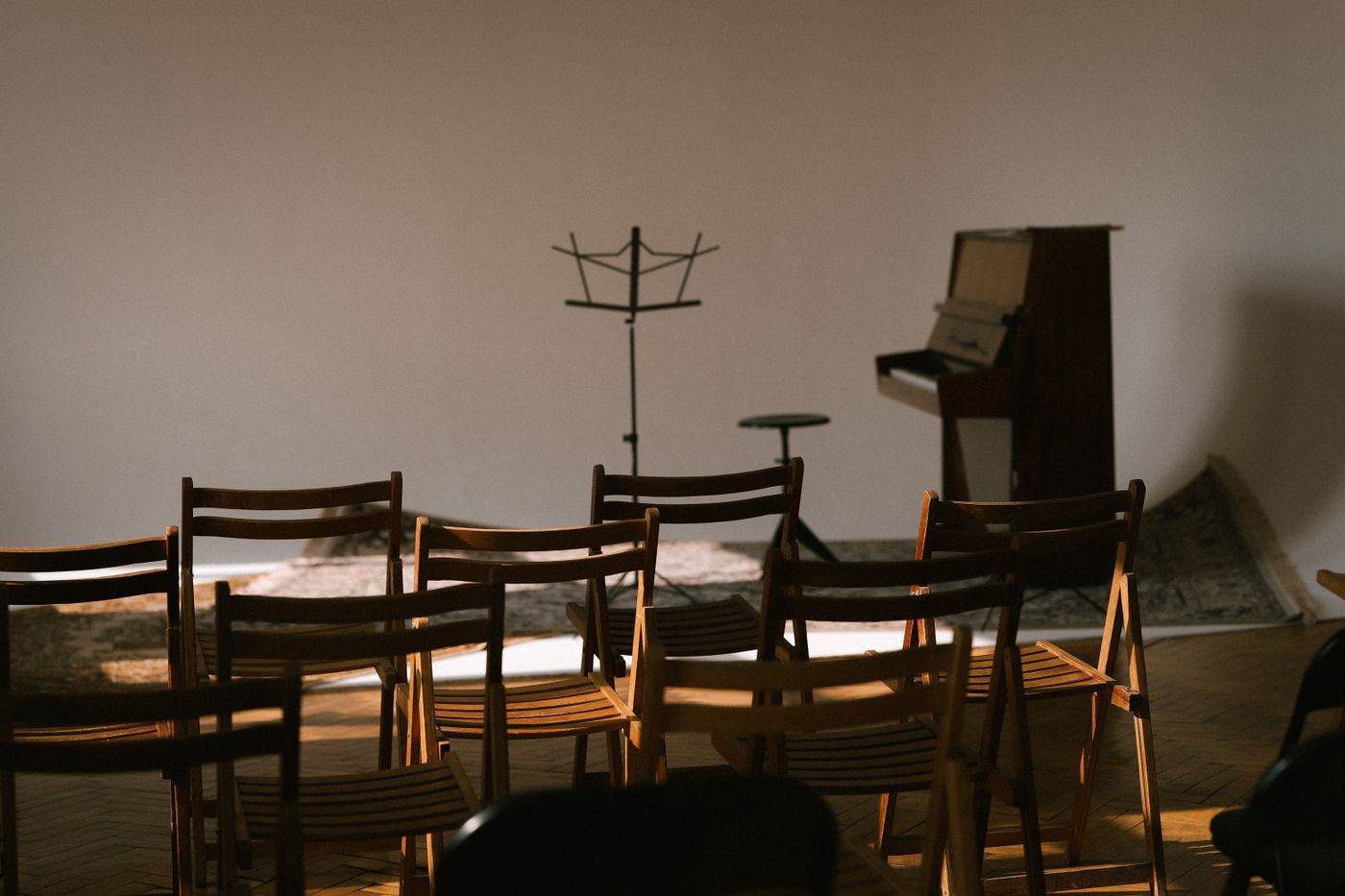
A folding music stand can look almost weightless in a product photograph. In use, its feet extend across the floor, the score occupies space in front of the player, and a chair or instrument adds another working envelope. In a rental room, those combined dimensions matter more than the narrow bundle left after folding.
Pinterest’s Fall 2026 creator report highlights hands-on, screen-free hobbies. A practical place for music is one editorial application of that signal; it does not establish that folding stands are a currently measured search trend. This guide considers the room arrangement for an appropriate stand and instrument. Follow their manufacturers’ setup, load, and use instructions rather than treating a room layout as equipment guidance.
Choose the playing position before placing the stand
Start with how you actually use the instrument: seated, standing, at a keyboard, or with another setup specified by your teacher or instrument guidance. A spot that accommodates a folded stand may not allow ordinary playing movements. Place an existing suitable chair or stool where you can use it without leaning into a door route.
Account for an instrument’s body, case, bow or other accessories where applicable, without placing delicate equipment in a walking path. Do not improvise an unstable chair or support to make the corner work. If the necessary space is unavailable, choose another permitted arrangement or a different time when the shared room can be cleared.
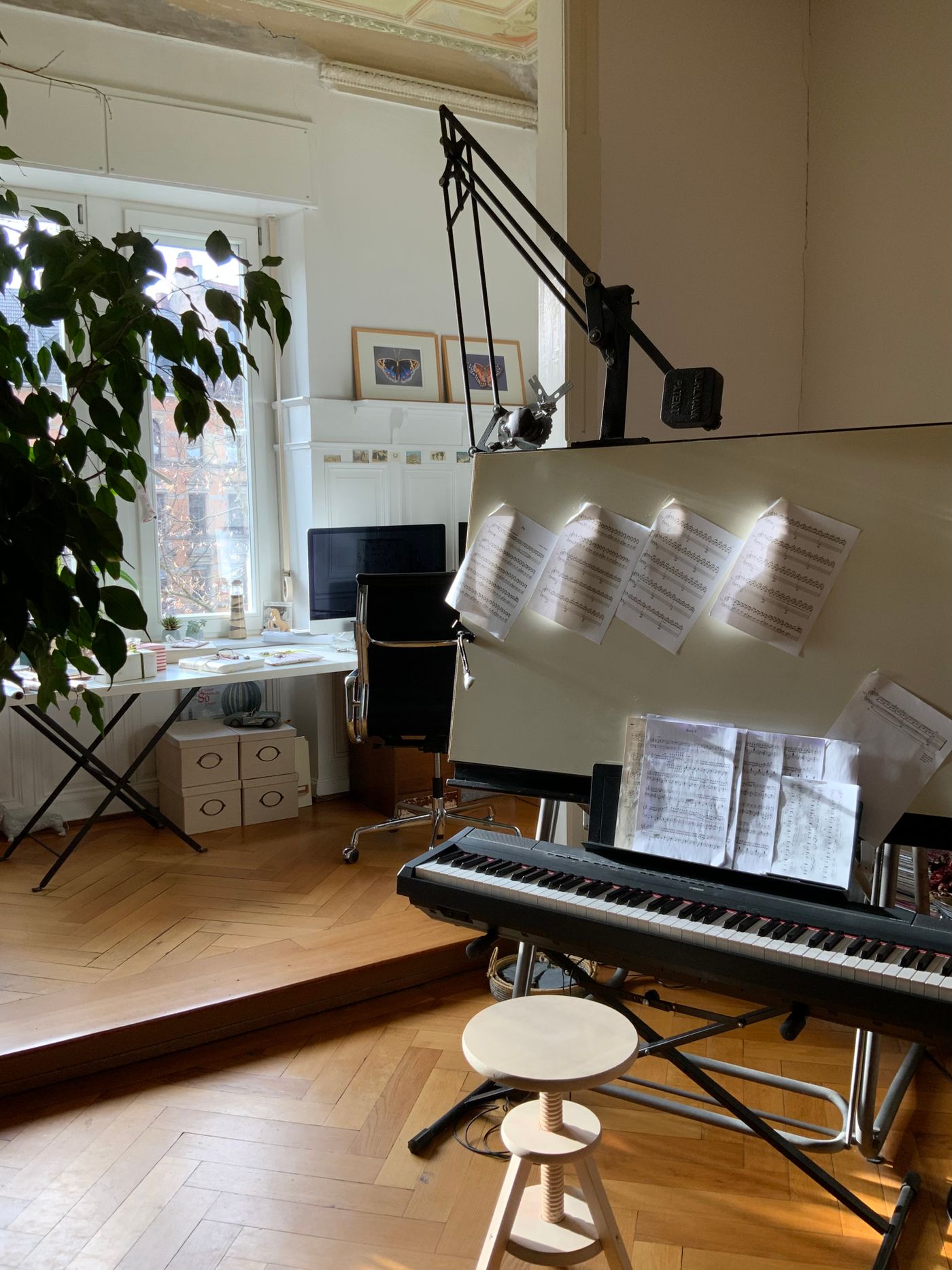
For keyboard users, planning a digital-keyboard practice corner considers the instrument area in more detail. A separate stand still needs its own fit check; adding it to the corner should not remove the access that made the original layout workable.
Measure the open footprint, including the feet
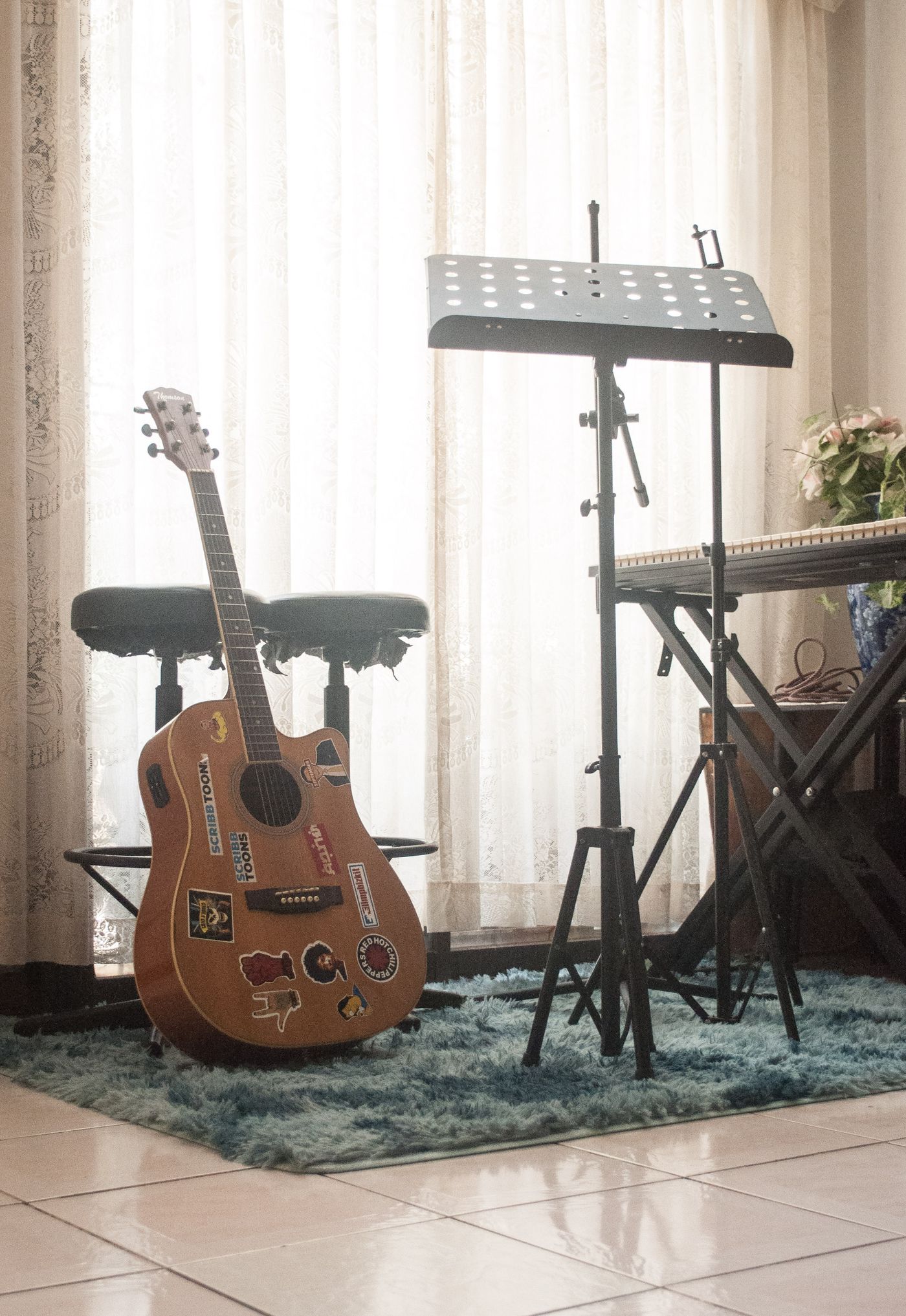
Set up the stand only as its maker directs. Observe the complete footprint rather than measuring the central pole. Tripod feet can extend toward a doorway or under the front edge of a chair even when the score tray appears to fit neatly in an empty gap.
Look at the floor from the room’s normal entry point. Can someone see the feet, and can they pass without stepping over or around them? Do not rely on everyone remembering a stand that appears only for practice. A temporary object can still create a recurring obstruction.
Keep the stand on a suitable, stable surface. A thick rug edge, sloping floor area, or improvised platform is not corrected by adding weight unless the manufacturer specifically provides that method. Follow the actual stand instructions and stop if it cannot be positioned appropriately in the chosen place.
Fit the score to the task without overloading the tray
Use the maker’s stated load and format limits. A stand intended for loose pages is not automatically appropriate for a heavy bound anthology, tablet, light, and accessories together. If the load information is unclear, obtain it before choosing the stand for that combination.
Put the score at a position you can use from the intended playing posture, with guidance from your music instruction as needed. The room should allow page turns without the stand being pushed against another object. Keep moving pages away from a heater, fan, or open window that makes them difficult to control.
If you use permitted page retainers, verify that they suit the stand and do not damage the music. Avoid balancing extra objects on the tray to hold pages down. This article does not establish a safe equipment load or a universal reading height; it asks whether your documented setup can work within the available room.
Check light at the score and the player
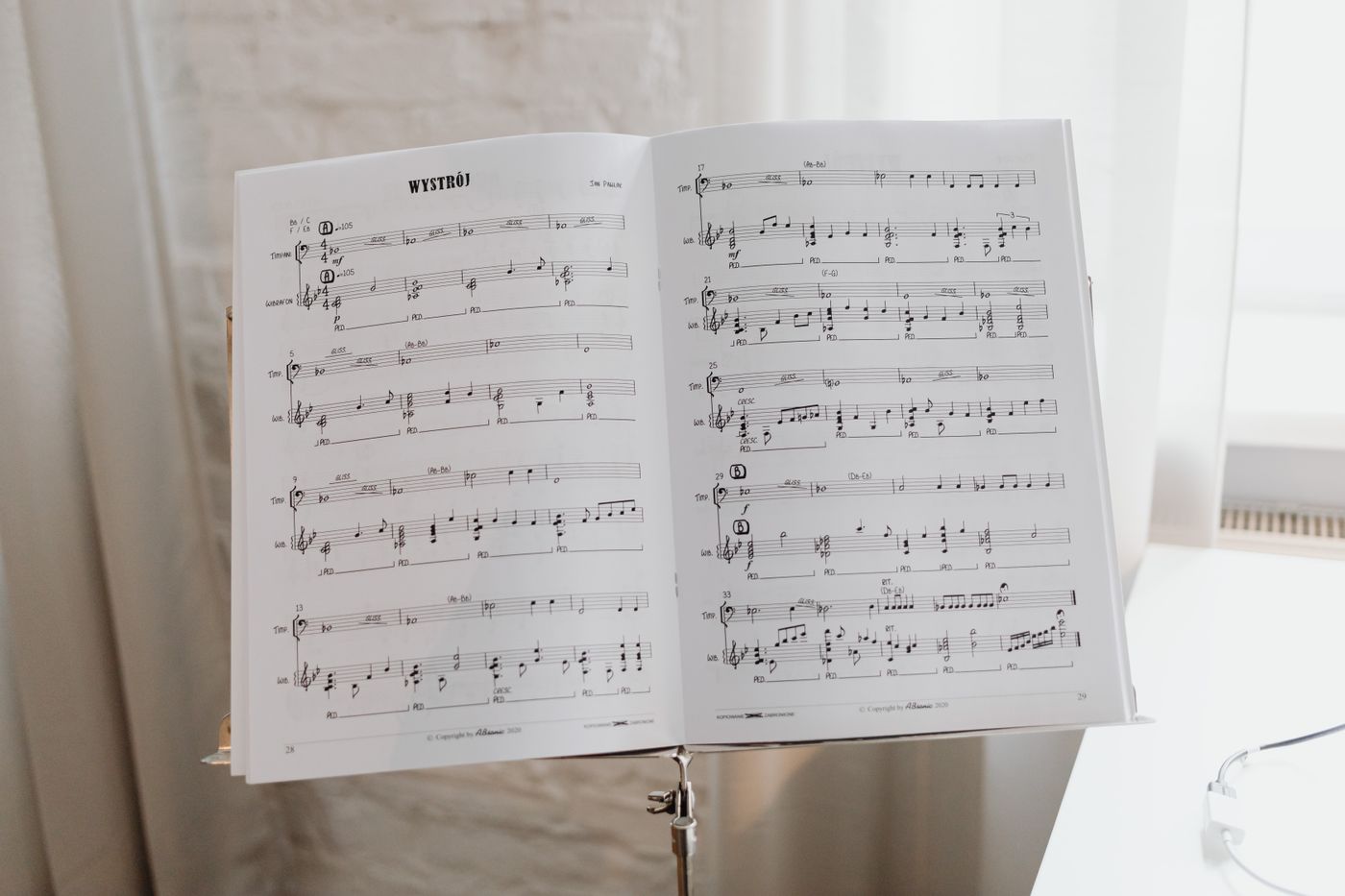
Try the chosen location at the time you normally practice. Daylight in a listing photograph does not show whether your room has useful evening light. Read a representative page from the playing position and notice shadows cast by your body, the instrument, or nearby furniture.
If a suitable existing lamp works, place it according to its instructions with its own stable support and permitted clearances. Keep cables out of walking and playing routes. A plug-in accessory does not become appropriate merely because it clips onto a stand. Confirm compatibility and the complete load before adding anything.
A darker corner may need a different room arrangement rather than another device. Choosing whether a small living room needs a coffee table provides one example of questioning furniture that occupies useful space. You may be able to free a workable practice position by changing a genuinely optional object, with agreement from others using the room.
Rehearse ordinary access while the setup is occupied
Have the player sit or stand in the intended position with the appropriate equipment safely supported. Then assess the normal route past the area without squeezing through. Check whether the chair moves backward into the stand, whether a door can open normally, and whether another person can reach the storage they need.
Do not ask someone to repeatedly step over a tripod foot as a normal household arrangement. If the room works only while nobody else enters, agree on a suitable temporary use period and keep required exits clear. Shared access should be part of the plan from the beginning, rather than a favor negotiated after everything is assembled.
Where privacy or competing activities matter, the discussion of shared-room boundaries can help separate uses without treating the stand as a permanent room divider. A music stand supports music; it is not a reliable barrier to movement, sound, or another person’s workspace.
Plan where the music goes when practice pauses
Loose pages left on a folded stand are easily separated from their sequence. Give the current music a suitable folder or case and keep the order clear. Borrowed, licensed, or purchased music should be handled according to its terms; having a shared room does not imply permission to copy or distribute it.
Keep instruments, accessories, and scores in their appropriate storage rather than treating the stand as a rack for everything. A bag hung on a tripod or a jacket draped over the tray changes the intended use and load. If the stand must remain assembled briefly, leave it only in a suitable location where room access remains clear.
Other household activities may require the whole setup to move. Planning a temporary guest zone in a shared room addresses one such change. Identify the stand’s storage destination before a guest arrives, so folding it does not simply transfer an obstruction to the hallway.
Fold and return the stand as a complete routine
Follow the maker’s folding sequence, remove items first, and keep hands clear of moving joints. Do not collapse a stand while its tray still supports a score or device. If the mechanism binds or a component loosens, stop and follow the appropriate maintenance or support guidance instead of forcing it closed.
Store the folded stand where it cannot roll, fall, or be pulled out accidentally. A supplied case may be useful, but check the complete packed dimensions and where it can be retrieved without unloading other possessions. Keep the music linked to the practice routine while allowing each item the storage its construction requires.
Buy only after the full arrangement has a home
Before choosing a new stand, write down the required open footprint, score format and documented load, playing setup, storage dimensions, and any rental restrictions. Compare those requirements with the actual model rather than with a general description such as compact or portable.
If the suitable setup cannot fit, a shared permitted practice area or a different compatible score support may be a better option. Storing folding furniture by its actual packed dimensions offers a related principle for returning temporary equipment, but the stand-specific foot clearance and load limits still need their own answers.
A good result gives the player a usable score position and gives the room back afterward. The stand’s folded size matters only when its working arrangement also fits the people, equipment, and access the rental must accommodate.
Explore related household decisions in our Small-Space Living hub.
Sources and editorial scope
Editorial research checked October 17, 2026. Trend-report dates and limitations are stated in the article; these are editorial applications of published signals, not verified October keyword rankings. Practical household guidance; illustrations do not document a tested household or authenticate a pictured material.