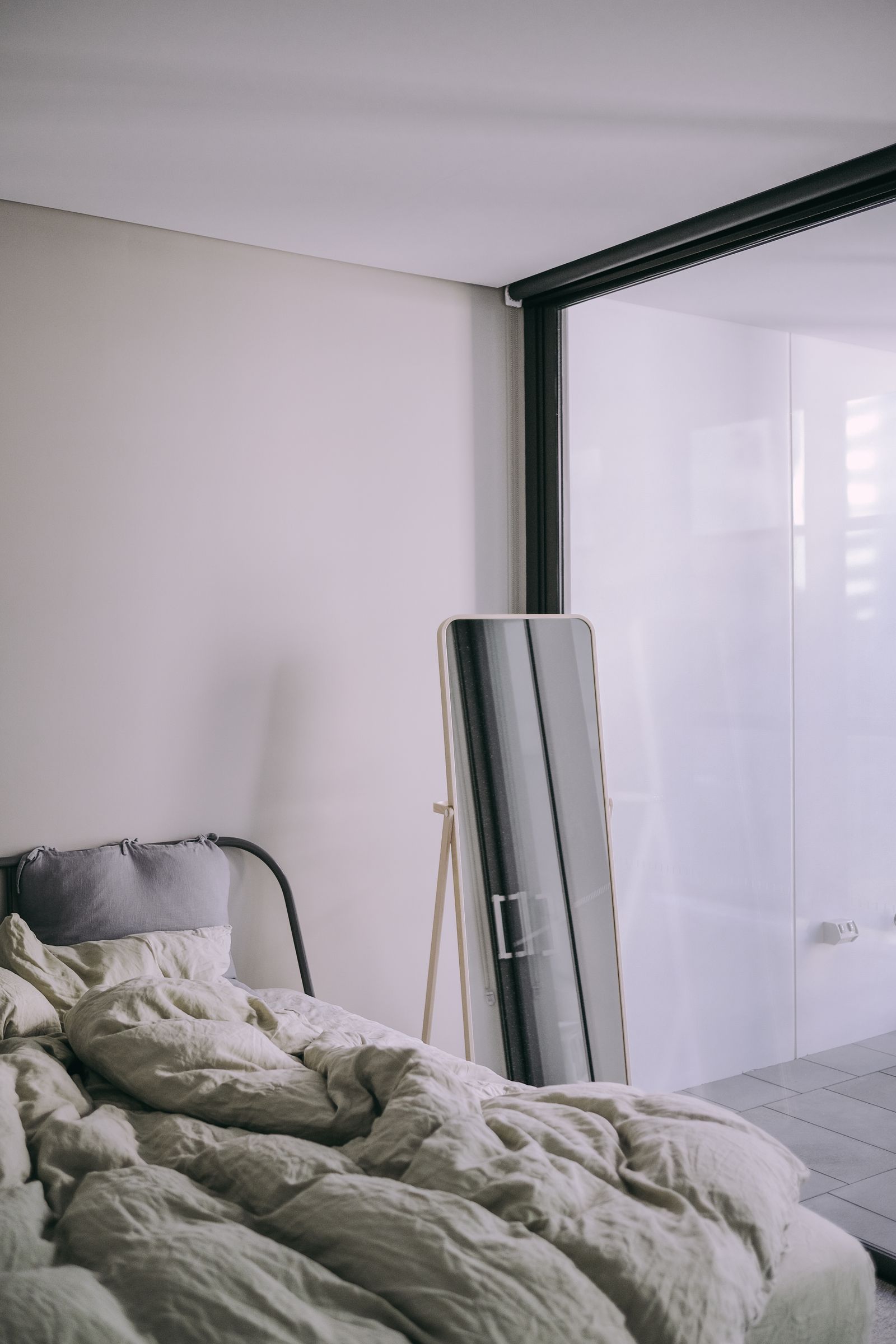
A full-length mirror needs two kinds of space: somewhere for the mirror to stand or mount as intended, and somewhere for a person to use it. A narrow wall can appear available while the usable standing position overlaps a bedroom door, an open wardrobe, or the only route around the bed. Choosing the mirror by its width alone misses half of the arrangement.
Before buying, work out the viewing position, the room’s moving parts, and the support required by the actual product. A mirror can help with dressing without becoming a daily obstacle. The aim here is placement in an occupied small bedroom, not a promise that reflective surfaces will make a room look a particular size. Use the bedroom hub for the room’s other needs while you test this one addition.
Name the mirror’s main job
Decide who will use the mirror and for what ordinary task. Someone checking an outfit before leaving may need a different position from someone using it while sitting to dress. Ask the intended user where they naturally stand or sit now. Include the time of day: a location that works in bright afternoon light may be inconvenient during the morning routine.
Do not begin by reserving the most photogenic wall. A decorative focal point and a practical dressing position may overlap, but neither guarantees the other. If you already have a suitable mirror elsewhere in the home, try whether that location completes the task comfortably. Keeping it there may be the useful no-purchase option, especially when the bedroom has very little spare floor or wall space.
Map the bedroom while it is in use
Open the bedroom door, wardrobe doors, drawers, and any fold-out furniture through their normal movement. Note the space each actually occupies. Include handles and protruding edges, not just the closed cabinet face. A mirror positioned beside a wardrobe can conflict with the very door you need to open before using it. Make these observations with the furniture in place rather than relying on the empty room’s measurements.
Check the route from the doorway to the bed and from the bed to the clothing storage. Walk it with the items people normally carry, such as a laundry basket, without setting up a mirror in an unapproved position for the experiment. Consider whether someone else needs to pass while the mirror’s user is standing there. The small-bedroom clutter guide can help if the route is already crowded before you add anything.
Separate viewing space from the product footprint
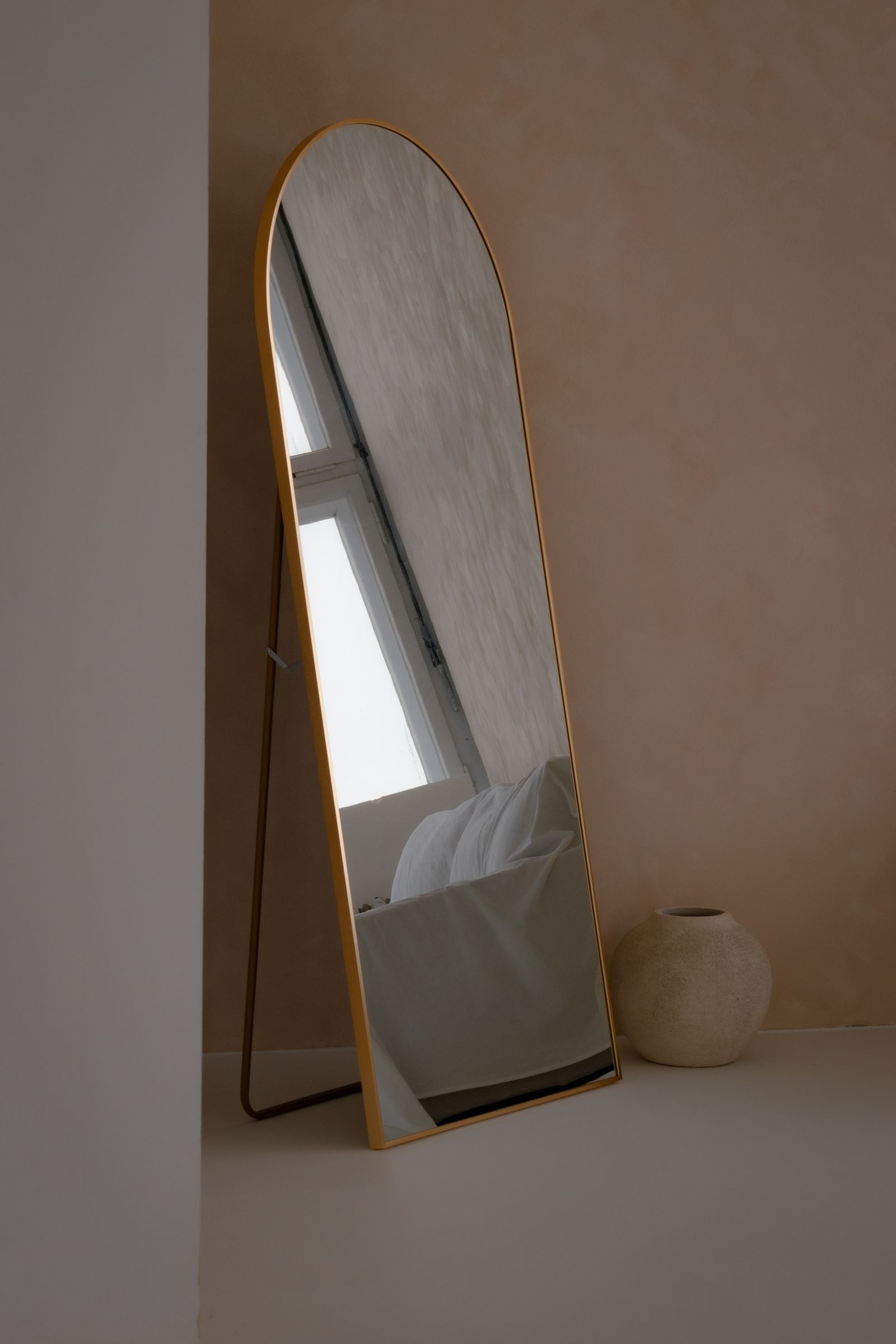
A freestanding mirror’s footprint includes its intended stand or base when deployed, which may extend beyond the frame. A wall-mounted mirror still needs an appropriate wall position and a person-facing area. Obtain the exact product dimensions, support details, and mounting instructions. Do not assume a frame sold in several sizes has the same base or installation requirements across the range.
Mark a candidate frame outline and the complete base area using a method that will not damage the room’s surfaces. A paper outline can represent shape while you consider the room, but it cannot establish that a wall or attachment will support the mirror. Keep the outline separate from the support decision. If the product requires installation, follow its complete instructions and resolve the actual wall and permitted fixing method before purchase.
Next, identify the user’s likely viewing position in relation to that outline. Try the position with ordinary clothing and the intended seating or mobility equipment, where relevant. Avoid prescribing a universal step-back distance: the specific mirror, person, angle, and room determine what can be seen. The question is whether the required view is available without moving the bed or blocking an essential route.
Use only the support the mirror is designed for
Some mirrors are intended for wall installation; others have a designed freestanding support, and some offer more than one permitted arrangement. Follow the directions for the exact model. A photograph of a frame leaning against a wall is not an installation instruction. Do not copy a styled room’s apparent support, balance a mirror on loose furniture, or improvise an attachment because the frame fits the gap.
For a rental, confirm the permitted installation with the property owner and the relevant product instructions. Adhesive permission for a light decoration does not establish suitability for a mirror. If you cannot resolve a supported, permitted position, change the product or keep the existing mirror elsewhere. Small-room convenience is not a reason to leave a heavy object in an unresolved arrangement.
Check dressing access in the same trial
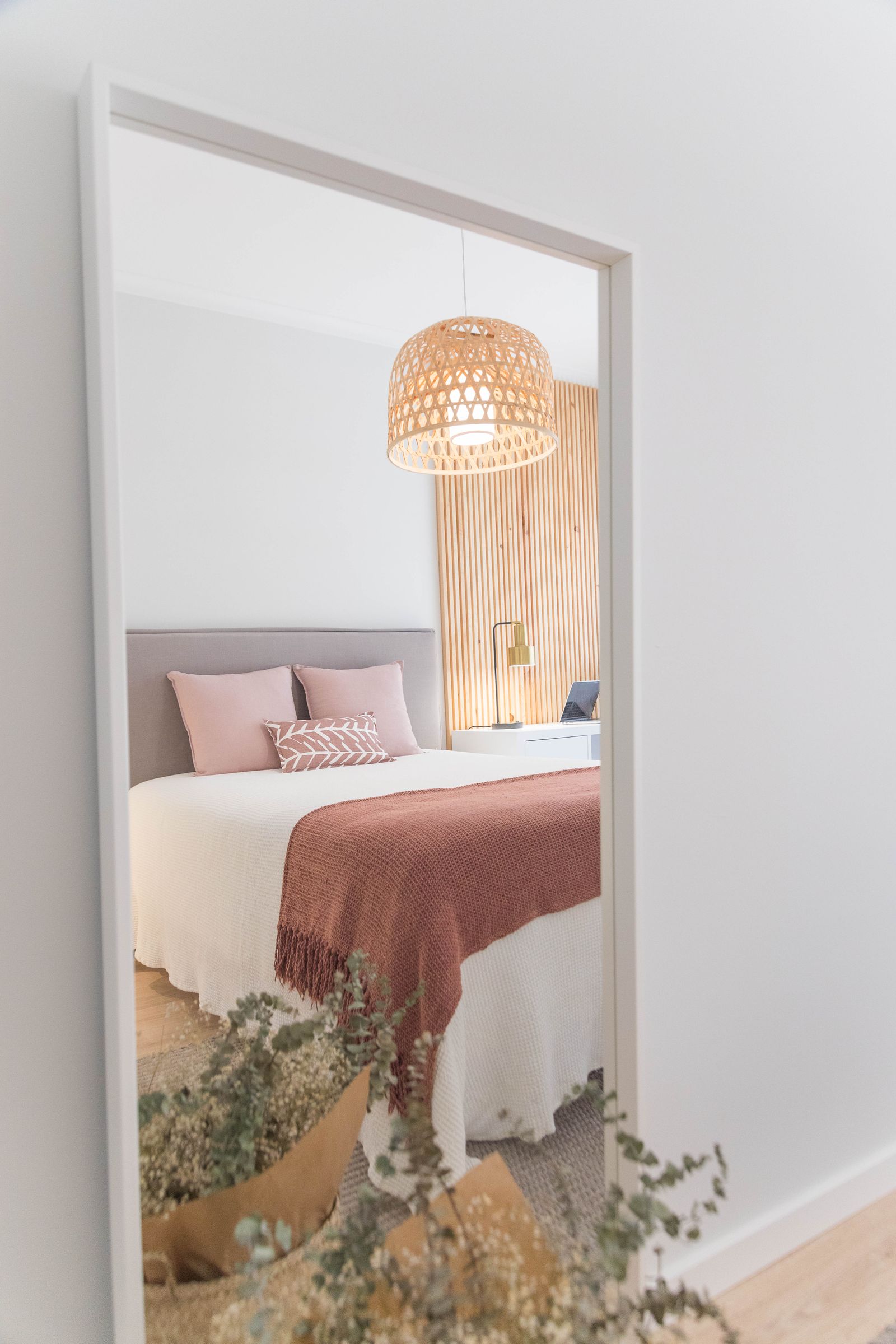
Simulate the complete dressing task: retrieve a garment, use the viewing position, put away what you did not choose, and leave the room. A mirror that looks convenient when the wardrobe is closed may require you to close a door after every garment. Decide whether that action is realistic for the owner. You may prefer a less central wall that leaves clothing access available throughout the task.
Include the lower storage you use most. A freestanding support can occupy space in front of a bottom drawer even when the frame itself sits to one side. Look at the user’s reaching and turning area as well as furniture movement. The bedroom storage comparison covers broader furniture choices; avoid changing the whole storage arrangement just to accommodate an impulse mirror purchase.
Look at the light from the user’s position
Stand or sit at the intended viewing point during the time you expect to use the mirror. Notice whether you can see the details you need or whether a bright reflected window makes the position uncomfortable. Repeat with the room’s ordinary evening lighting. These observations are a placement check, not a claim that one orientation is universally flattering or that a mirror creates additional light.
If the position needs better lighting, consider the existing light controls first. A curtain adjustment or a permitted change to a movable lamp’s location may be enough. Keep any lamp supported according to its directions, and include cords in the room’s route check. Do not solve a mirror placement problem by introducing an unstable light or a cable crossing the walking path.
Inspect the reflection from the doorway
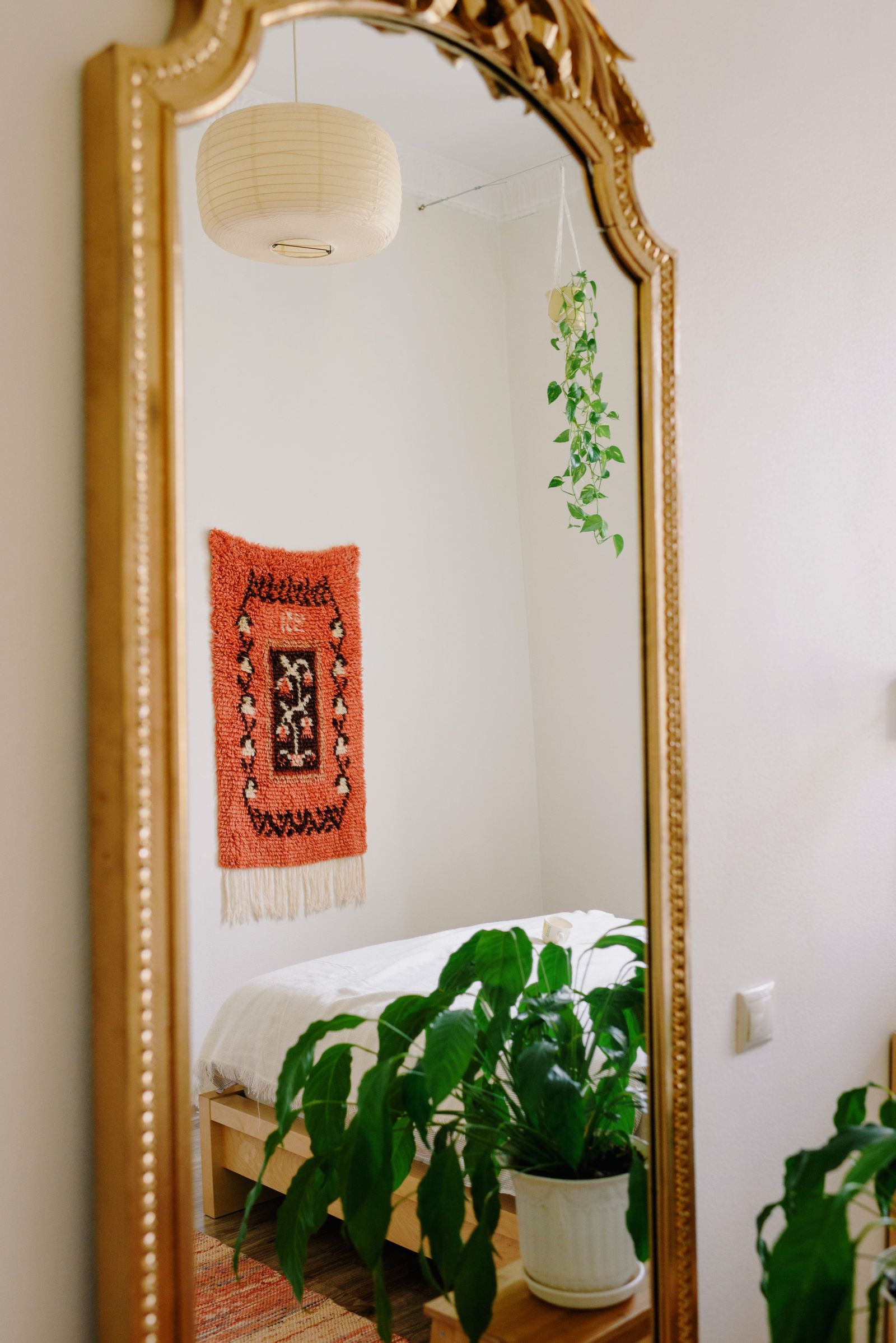
Look toward the proposed mirror from the bedroom doorway and other normal household positions. A reflection can expose a dressing area or show belongings you would rather keep private. Ask the room’s users whether that view is acceptable. Do not assume that everyone shares the same comfort with a mirror facing the bed, a shared doorway, or a neighbor-facing window.
For a shared bedroom, test the reflection while the other person’s normal activities are represented. If privacy depends on keeping a door closed, confirm that the household can actually maintain that condition. Sometimes shifting the mirror to another permitted wall resolves the issue; sometimes the better arrangement is a separate dressing location. Privacy belongs in the initial choice, not as an afterthought once a large frame is installed.
Include cleaning and nearby belongings
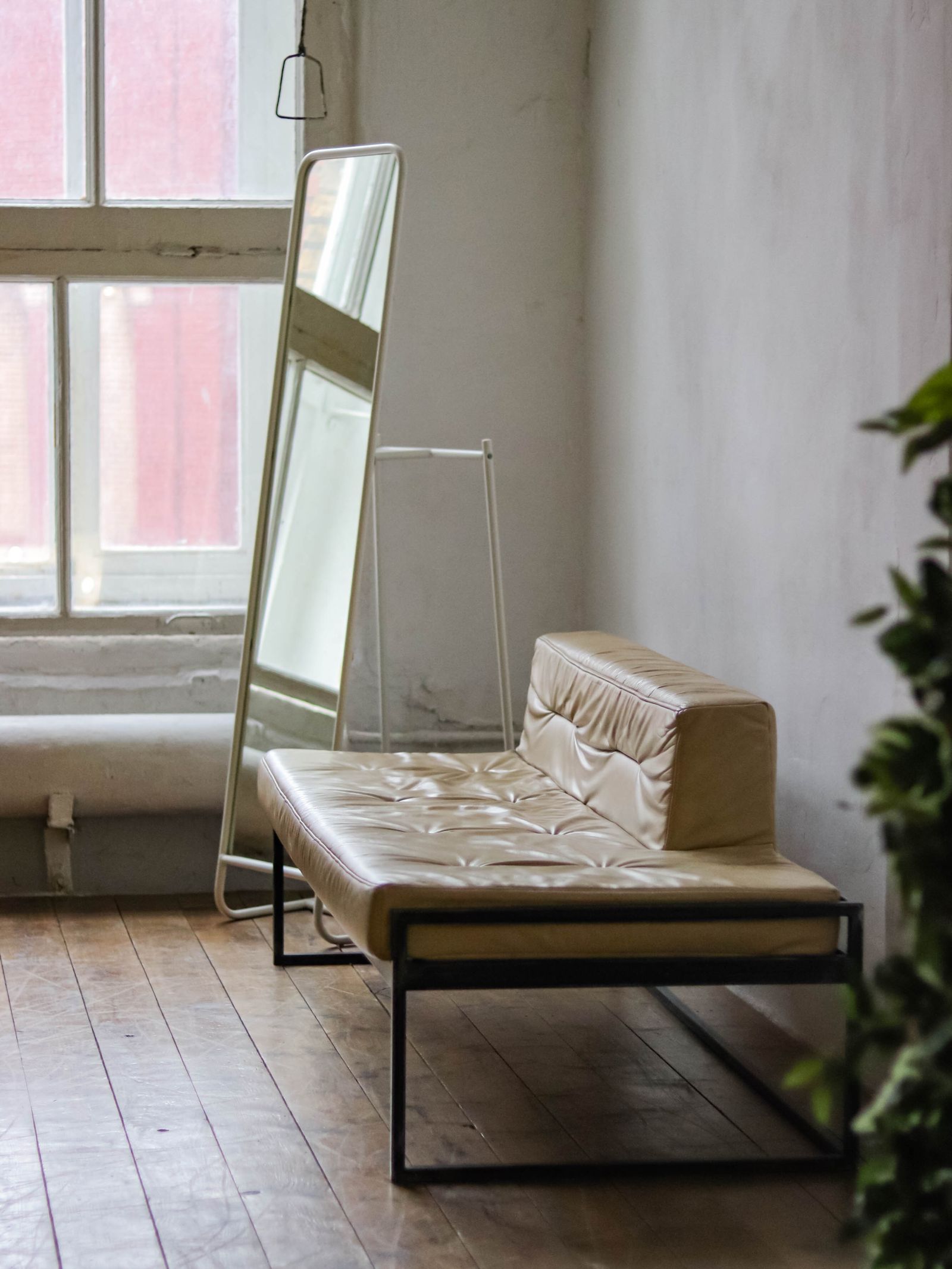
Check whether the chosen location allows the care method specified for the frame and glass. You should be able to access the necessary surfaces without dismantling unrelated furniture or moving a large mirror casually. Follow the exact care instructions rather than using a cleaner suited to another material. Consider how dusting the nearby shelf, opening curtains, or changing bedding will interact with the mirror’s support.
Keep a mirror base from becoming a holding area for bags and slippers. A clear outline or established nearby home for those belongings can preserve the footprint without daily reminders. If clothes regularly land there, use the bedroom floor reset to address that behavior. A mirror cannot solve overflow from clothing storage, and hiding the pile in a reflected corner does not remove the obstacle.
Compare two feasible positions before choosing
Make a short comparison of the strongest candidates. Record the permitted support, complete footprint, usable view, wardrobe access, route, light, and privacy. Do not award a location points simply because it is nearer the door. Any unresolved support requirement or blocked essential movement should send you back to another arrangement before aesthetic preferences settle the choice.
| Question | What to observe in each position |
|---|---|
| Can the product be supported here? | Exact instructions, actual surface, and permitted installation |
| Can the user complete the dressing check? | Required view from a comfortable standing or seated position |
| Does the room still function? | Doors, drawers, occupied routes, and another person’s access |
| Is the reflected view acceptable? | Light and privacy at the relevant times |
For example, a wall beside the wardrobe may offer a short trip but conflict with an open door. A second wall may require a few more steps while keeping both the clothing access and the exit usable. Compare the whole task instead of the shortest distance alone. If neither works, a suitable existing mirror outside the bedroom may remain the better arrangement. You may also find How to Deep Clean a Small Bedroom Without Losing a Whole Day useful for a closely related small-home problem.
Work through two common small-bedroom situations
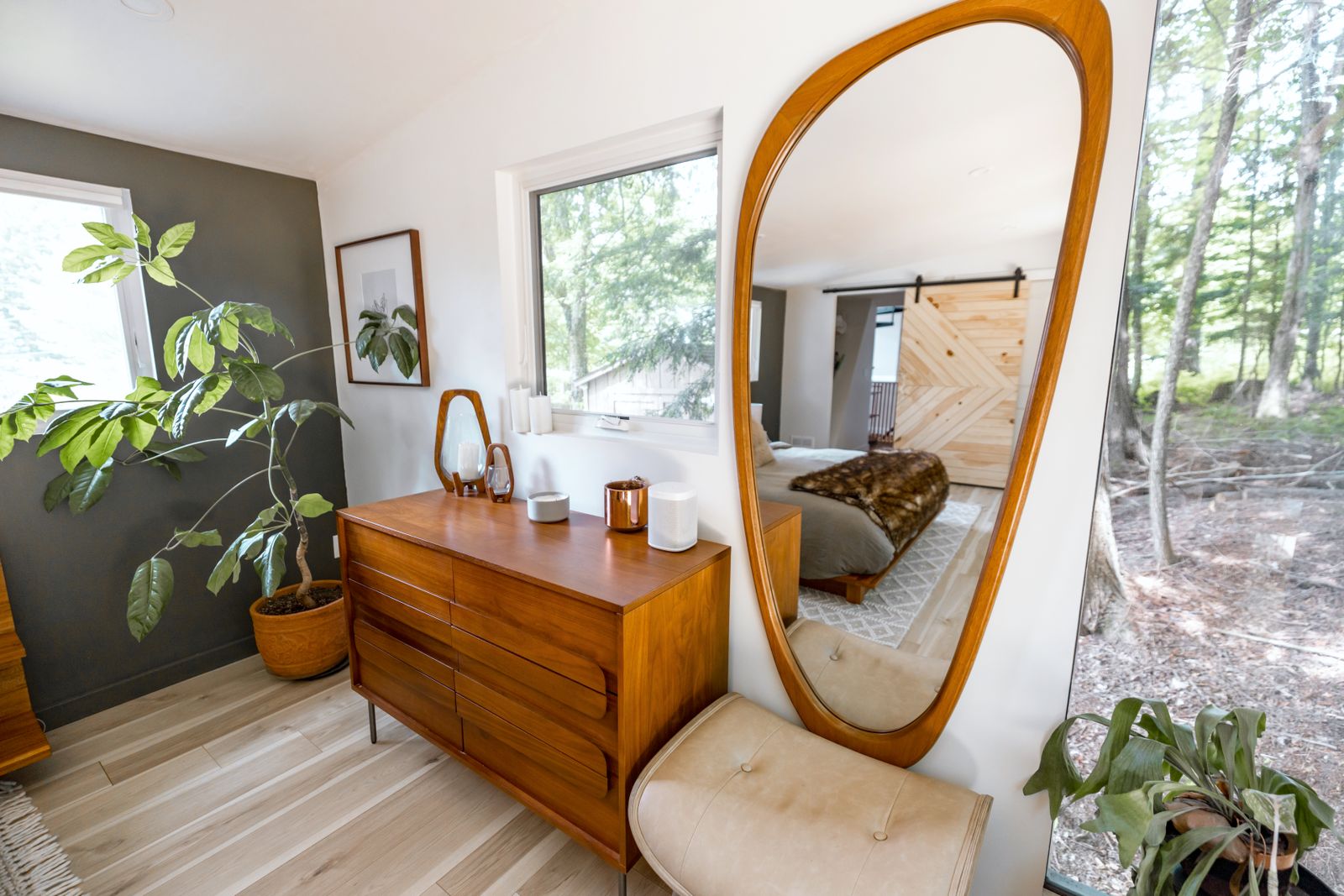
In a bedroom with a narrow gap beside a wardrobe, the first candidate may appear to use no extra space. Open the wardrobe and represent the mirror’s intended support, then check the viewer’s position. If dressing requires closing the wardrobe repeatedly or standing in the doorway, the nominally spare gap is not completing the task. Compare a second permitted location even if its wall is less decorative. The change may preserve the everyday clothing route without adding storage or replacing furniture. For a related step-by-step approach, see How to Store Jewelry and Small Accessories in a Small Bedroom Without Losing Pieces.
In a room shared by two people, one may dress while the other is still resting or working. Consider whether the mirror’s viewing position occupies the other person’s access and whether its reflection changes the privacy they expect. Agree on the practical routine before choosing the frame. A shared mirror does not have to be centered between two beds if that compromises both users’ movement. A suitable position elsewhere can serve both people when their actual use is occasional.
For each situation, write the reason a candidate succeeds or fails in plain terms: “wardrobe stays accessible,” “view requires blocking the exit,” or “reflection exposes the dressing area.” Those observations are easier to reuse than a general rating of how spacious the room feels. If you later compare another mirror, test its own support and size against those requirements rather than assuming the earlier decision applies unchanged.
Recheck after the room changes
Once the mirror is installed or deployed as instructed, repeat the normal dressing and route checks. Confirm that its real support footprint matches the space you planned. Review the position again if you replace furniture, change the room’s users, or add a new daily activity. The Small Space Living hub can help coordinate those other uses without asking a mirror to carry the whole design.
A successful position lets the intended user see what they need, preserves clothing access and household movement, and meets the product’s support requirements. Keep those observations with your room decisions if you plan another change. The mirror earns its place through a complete, comfortable dressing task, with the bedroom still usable afterward.