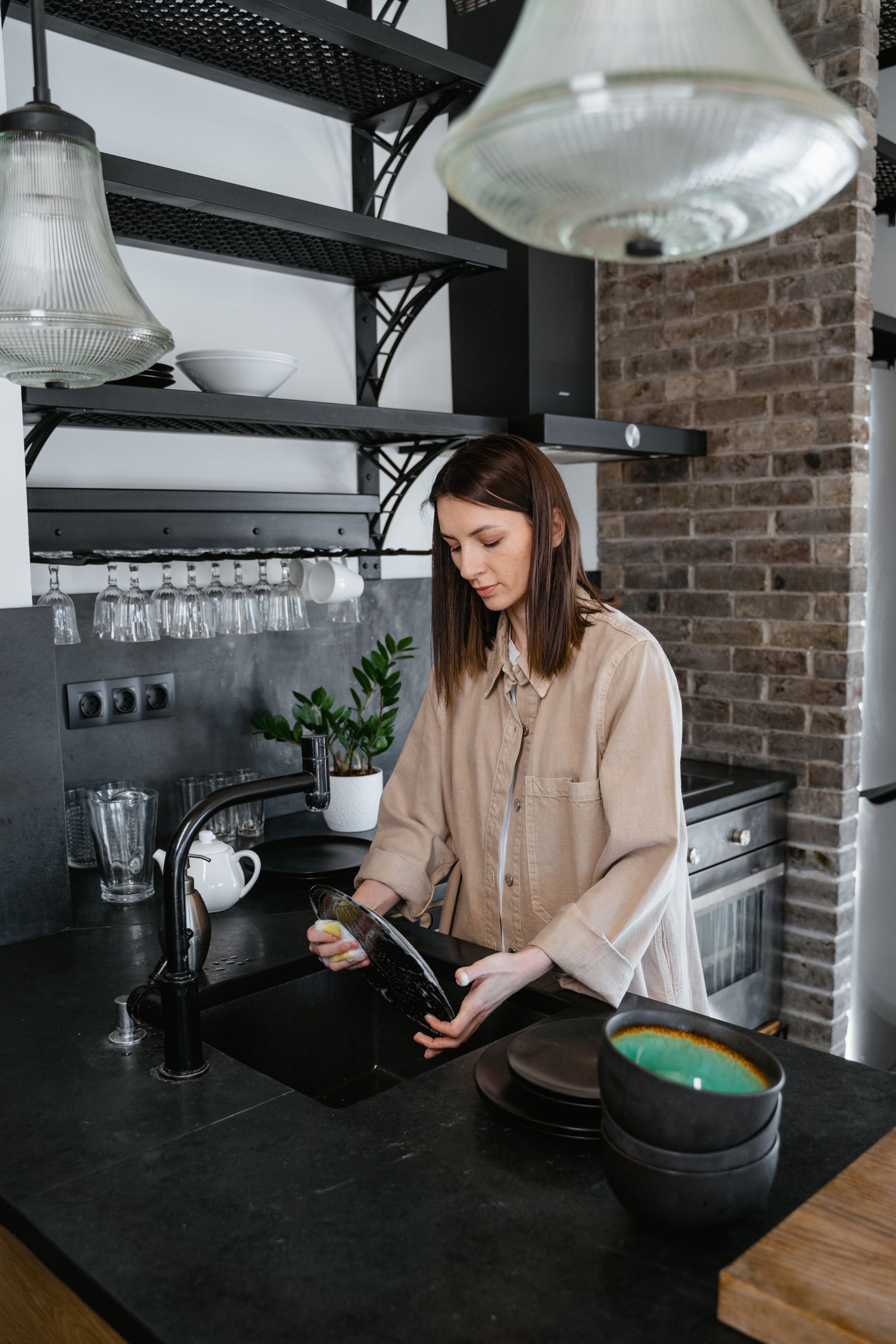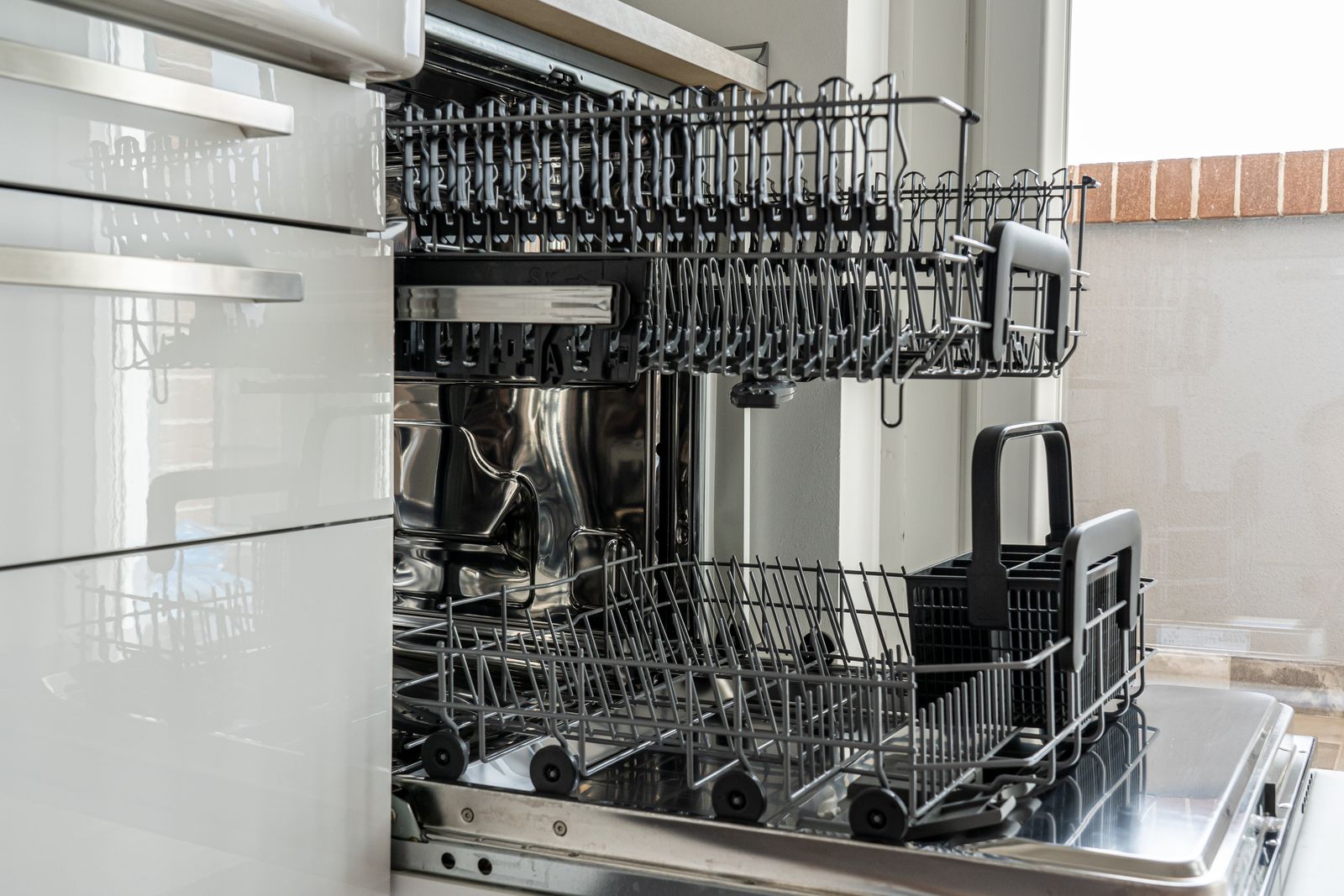
A dishwasher can be correctly installed while the surrounding kitchen becomes difficult to use. A bin creeps into its door space, a cart interrupts the route from the sink, or the loaded lower rack leaves nowhere comfortable to stand. The appliance’s closed front does not show its working footprint.
Observe the complete loading and unloading process before buying kitchen storage or moving a freestanding item nearby. Keep the appliance operating as its maker intends. Most planning improvements come from changing the surrounding movable objects and the order of tasks, while preserving the installation and its required access.
Look at the door, racks, person, and route
With the appliance in a safe condition for the check, follow its normal opening and rack movement. Use its instructions for operation, loading, and any model-specific restrictions. Do not stand, sit, or lean your weight on the door or use it as a temporary shelf.
Notice the door’s full open position, the rack’s permitted extension, and where you stand to reach the contents. Add the space occupied by the dishes you carry and the route to their destinations. This is the footprint that a nearby cart or stool must accommodate.
Check adjacent cabinetry separately. A drawer, cabinet door, or pull-out bin may open into the dishwasher’s area. Identify whether those items need to be used at the same time or whether a sensible sequence resolves the conflict. Do not force two moving parts together because the kitchen looks tidy when everything is closed.
If the appliance appears unstable, damaged, or incorrectly installed, resolve that with the responsible installer or service provider. Moving a kitchen object is not a repair for an installation problem.
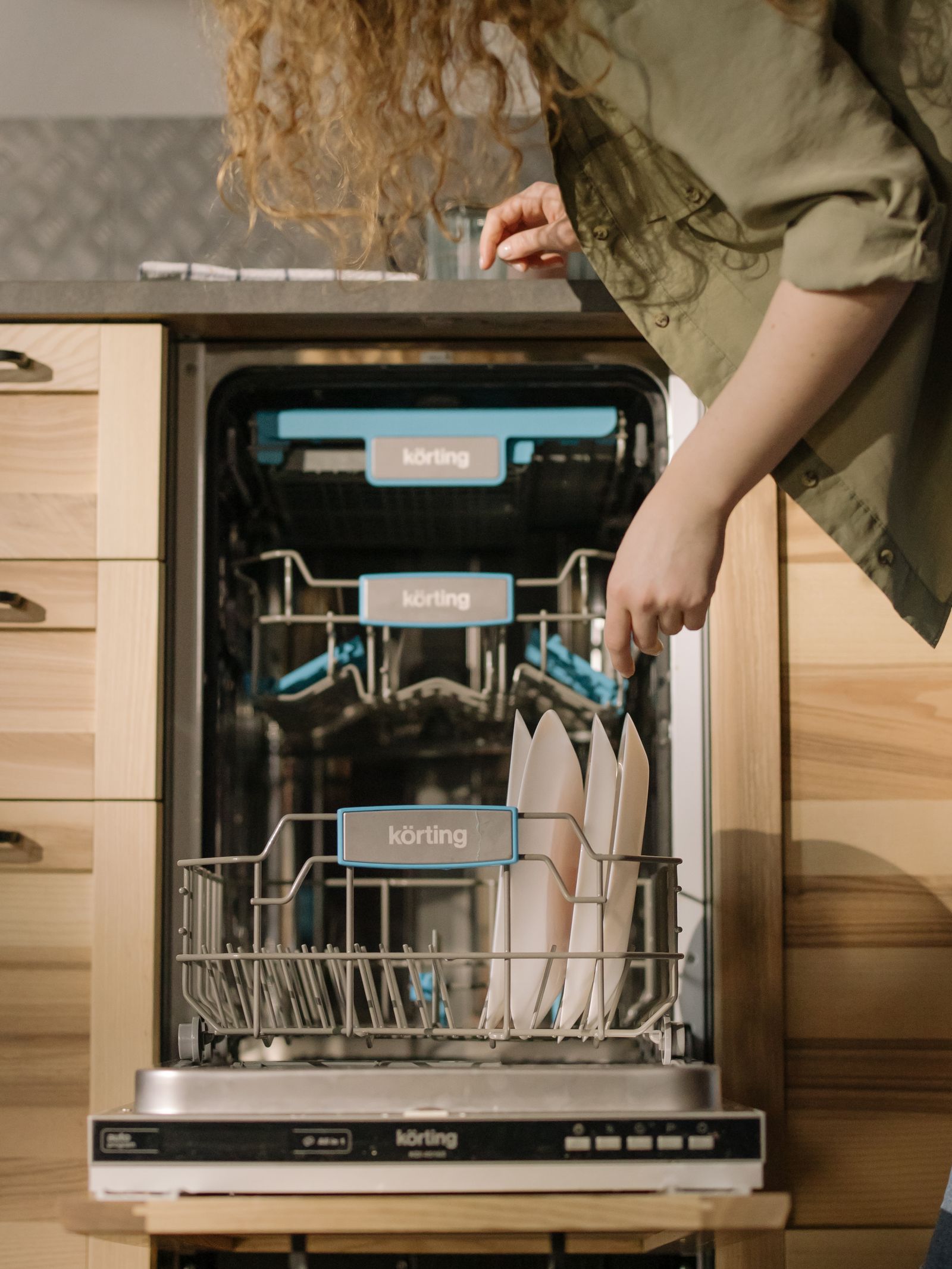
Trace the last meal’s actual loading path
Think through a meal that left dishes in several places. Where were loose scraps handled? Where did items wait? Who carried them to the machine? Did the same person have to walk around an open door repeatedly?
Choose a sensible staging position within your existing kitchen. It should not obstruct the appliance, occupy a hot cooking area, or mix used items with equipment that is ready for food preparation. Keep it only as large as the actual short-term task needs.
Load items according to the exact appliance and dishware guidance. Do not assume that every object used at the meal belongs in the machine. Separating items with other care requirements at the beginning prevents them from becoming surprise leftovers when the dishwasher is already full.
The guide to kitchen zones by task versus category can help connect this path to cooking and storage without redesigning the whole kitchen around one appliance.
Choose which household movements need to happen together
In a small kitchen, loading can conflict with making tea, reaching the refrigerator, or passing through to another room. Identify the combinations that occur regularly. A late-night solo cleanup needs a different plan from a family kitchen with several people moving at once.
Where practical, agree on a short loading period when other kitchen tasks pause or use another safe route. Keep the door closed when the appliance is not being actively loaded or unloaded, following its operating directions. Do not leave it open as an unattended holding area in a circulation route.
If there is no suitable alternative route, give priority to maintaining necessary access and revise the placement of movable obstacles. Scheduling can reduce ordinary interruptions, but it is not a justification for blocking an essential exit or route.
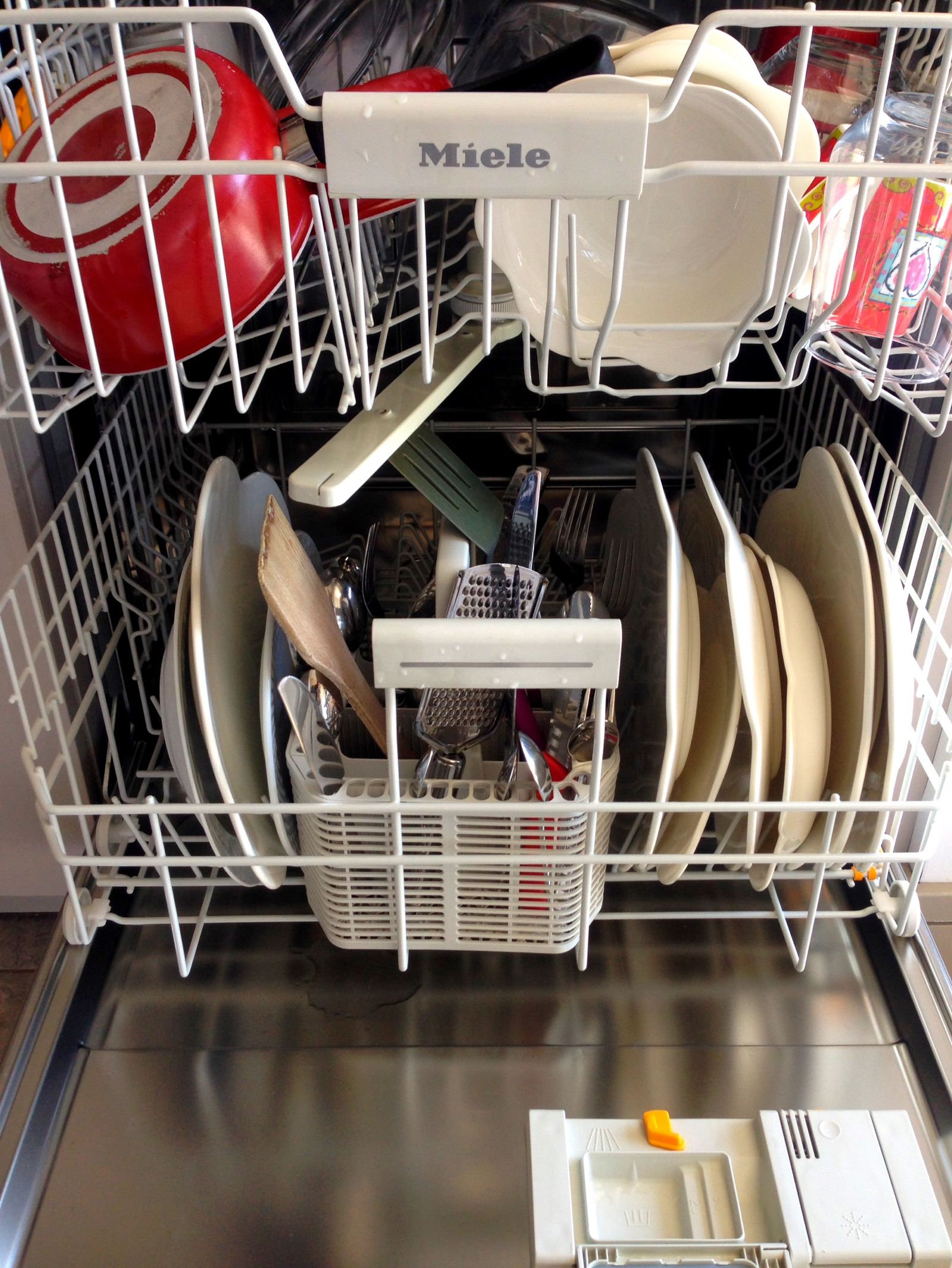
Audit nearby movable objects one at a time
List the objects that have gradually settled beside the appliance: waste bin, recycling bag, pet bowl, stool, folding step, rolling cart, or spare dining chair. Each may have a useful role, but the combined footprint can consume the working space.
Move one object to a plausible alternative position and repeat the loading check. Check its new use as well: relocating the bin should not force someone to carry waste across a clean meal-preparation area unnecessarily, and a moved stool should not obstruct the entrance.
Test a rolling cart in both parked and used positions. A cart that fits when empty may project farther when bags hang from the handle or a board rests on top. Include those ordinary additions in the layout decision.
Choose a stable home rather than a nightly improvisation where possible. If an object must move for a specific task, assign its temporary parking position and its return. “Put it somewhere else” tends to transfer the obstruction to the next person.
For appliances occupying nearby counters, see organizing countertop appliances in a small kitchen. Keep their electrical and use requirements distinct from this floor-level door check.
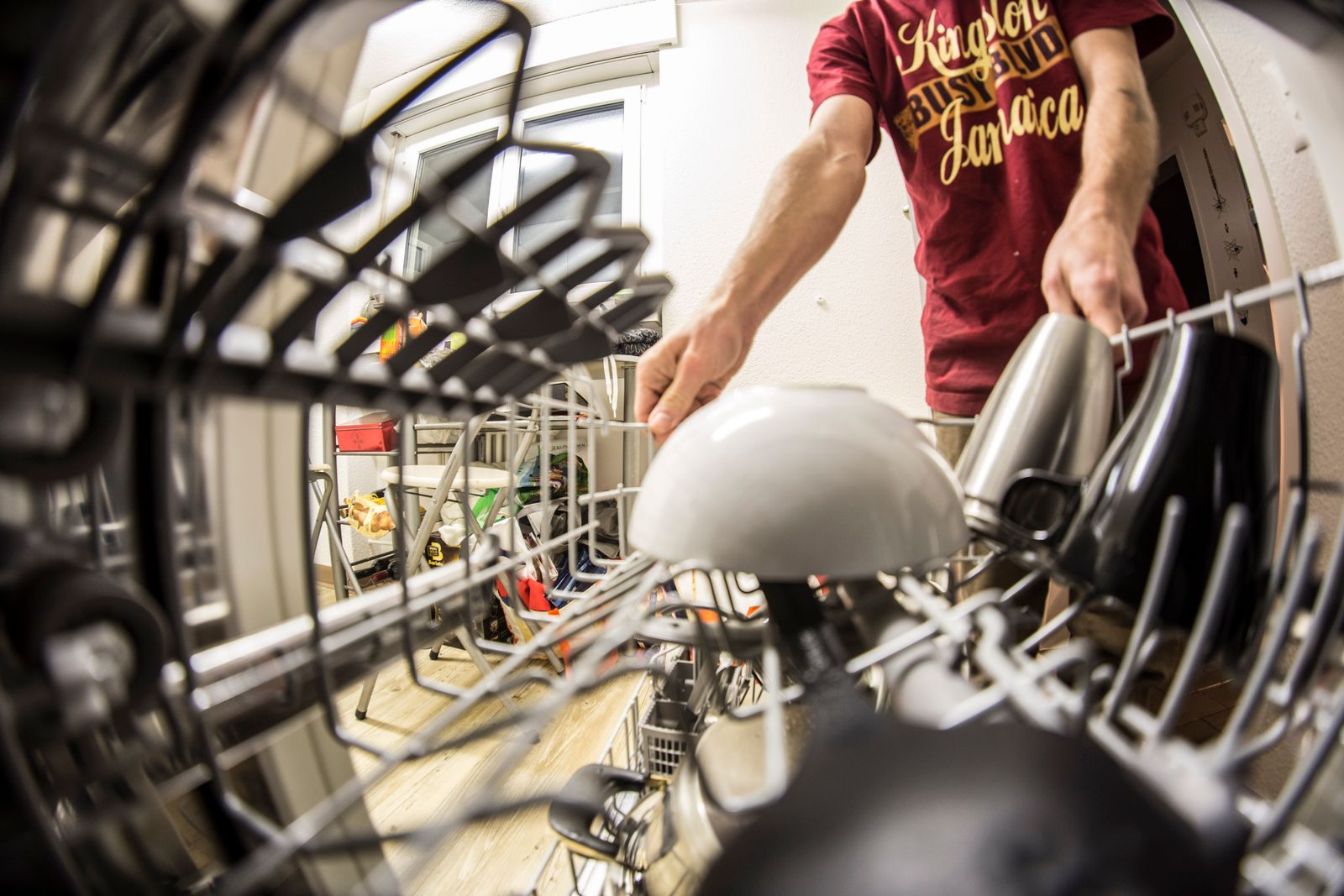
Unloading deserves its own layout check
Clean dishes travel toward cabinets, drawers, and food-storage areas, which may be different destinations from the used-dish staging point. Observe where you stand with a plate or glass and whether the destination can open comfortably.
If a cabinet door conflicts with the dishwasher, consider a safe sequence: remove the permitted items, close the appliance door, then put them away. Use a suitable clean staging surface if needed. Avoid carrying a tall unstable stack simply to reduce the number of trips.
Reconsider which everyday items belong in which accessible cupboard, but keep changes modest. Relocating a whole kitchen category for a tiny improvement can create new cooking difficulties. Start with the items most frequently unloaded into an inconvenient position.
The food-container and lid organization guide can help if mismatched components are extending the unloading task. Door clearance and container ownership are separate issues, so solve each directly.
Check helpers’ positions instead of assigning tasks blindly
If more than one household member helps, agree on where each person works. One can carry suitable items from the table while another handles the appliance. Avoid placing two people on opposite sides of an open door when they must repeatedly reach across each other.
Give children only tasks appropriate to their age, abilities, and supervision. Adults remain responsible for sharp, hot, fragile, chemical, or otherwise unsuitable items and for the appliance’s safe operation. Access to controls does not establish readiness to use them.
A clear endpoint helps: used items have reached their proper care route, the appliance is in its intended condition, and the floor route is released. Tie that endpoint to the after-dinner kitchen reset rather than leaving the machine open until somebody happens to return.
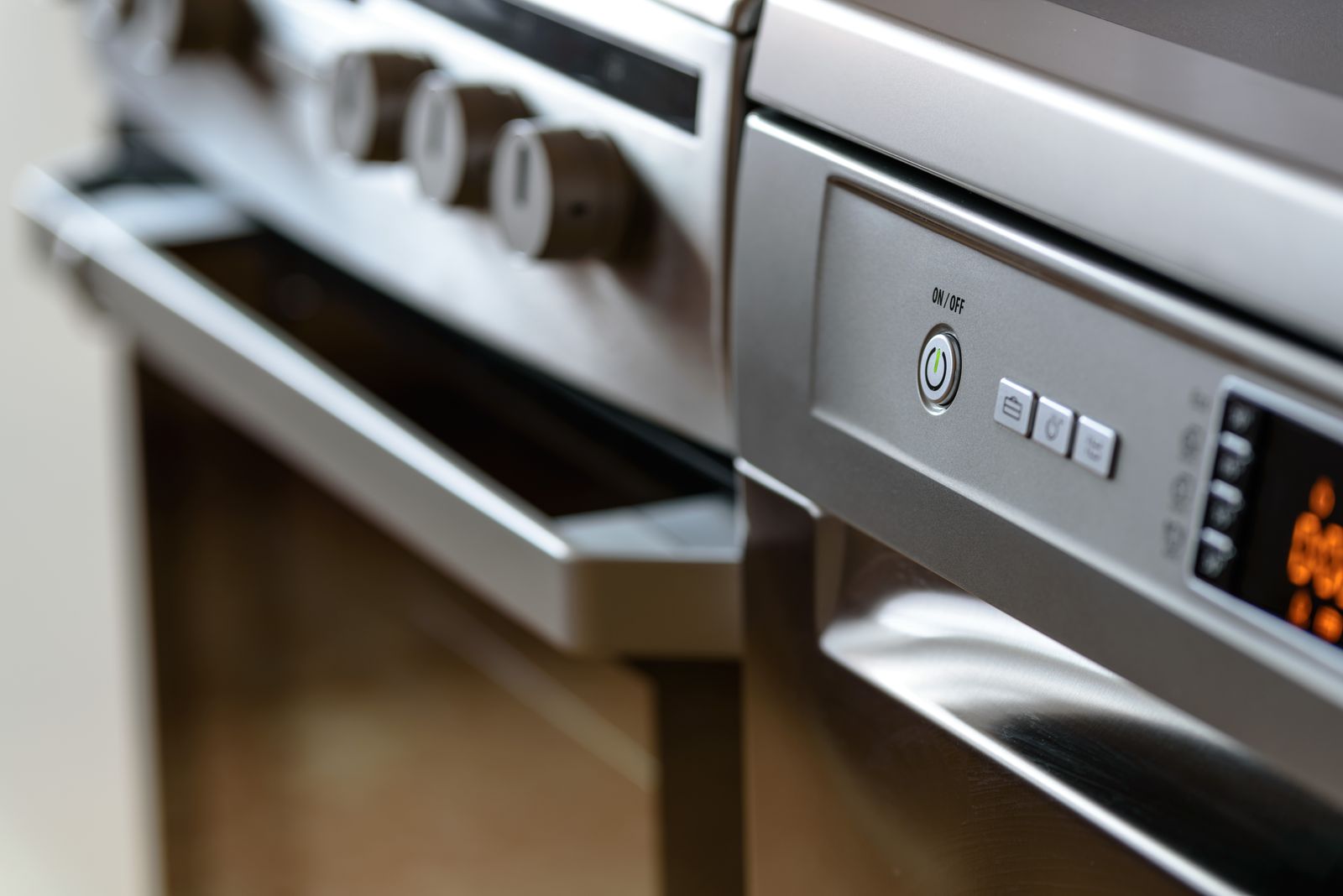
Keep layout changes separate from appliance alterations
Do not change hinges, door supports, hoses, mounting, or the appliance’s location as a household spacing experiment. Installation clearances and connections are model-specific. Consult the exact installation manual and a qualified professional for work affecting the appliance or its services.
In a rental, use the proper maintenance route for appliance concerns and obtain any required permission for building changes. You can still improve the surrounding routine with a revised bin location, a clearer loading period, or a better clean-dish destination.
Before shopping for new movable storage, measure the closed footprint and the operating footprint it would occupy beside the dishwasher. A narrow cart can still be unsuitable if it blocks the person needed to unload the lower rack.
Review a normal week rather than one empty-kitchen test
Try the arrangement through several meals. Include the busier day, the larger load, and the moment someone needs to pass through. Note the specific conflict instead of describing the whole kitchen as “too small.”
If the same object repeatedly lands in the door space, give it a better assigned home or reduce the need for it. If several people keep entering during loading, revise the handoff or timing. These changes address the observed cause without adding more kitchen furniture.
The Small Space Living collection and Kitchen room guide offer related planning ideas. A successful dishwasher layout allows its intended movements, gives the user a workable position, and returns the surrounding kitchen to ordinary use when the task finishes.