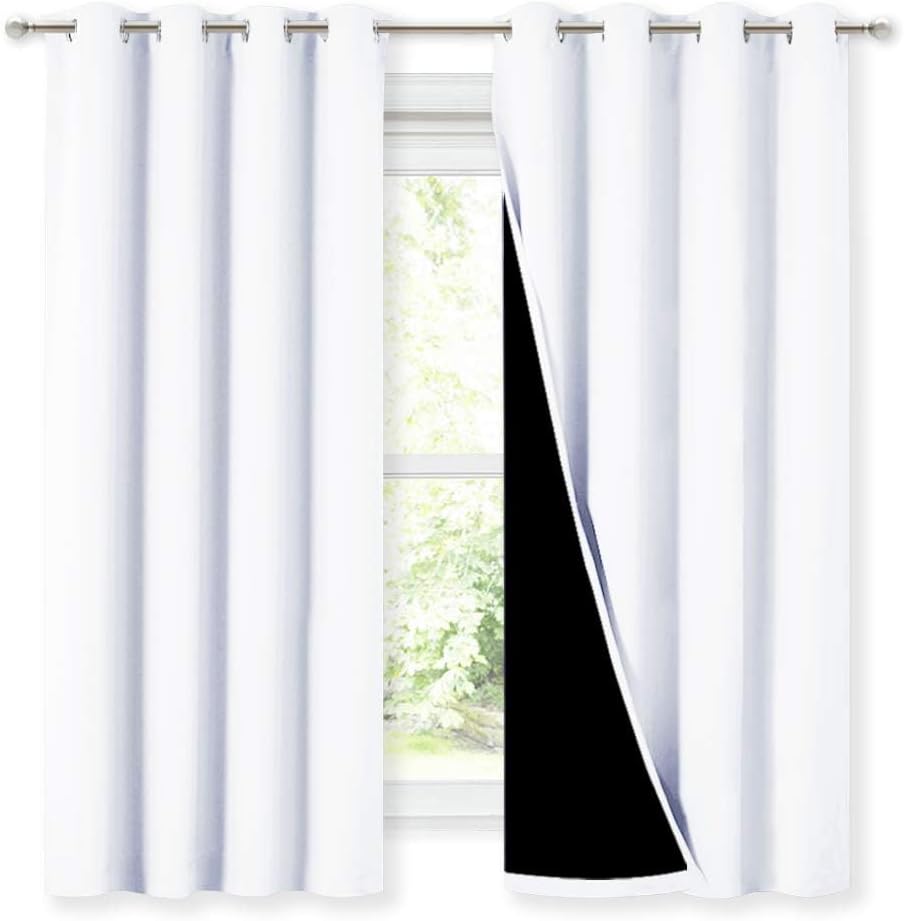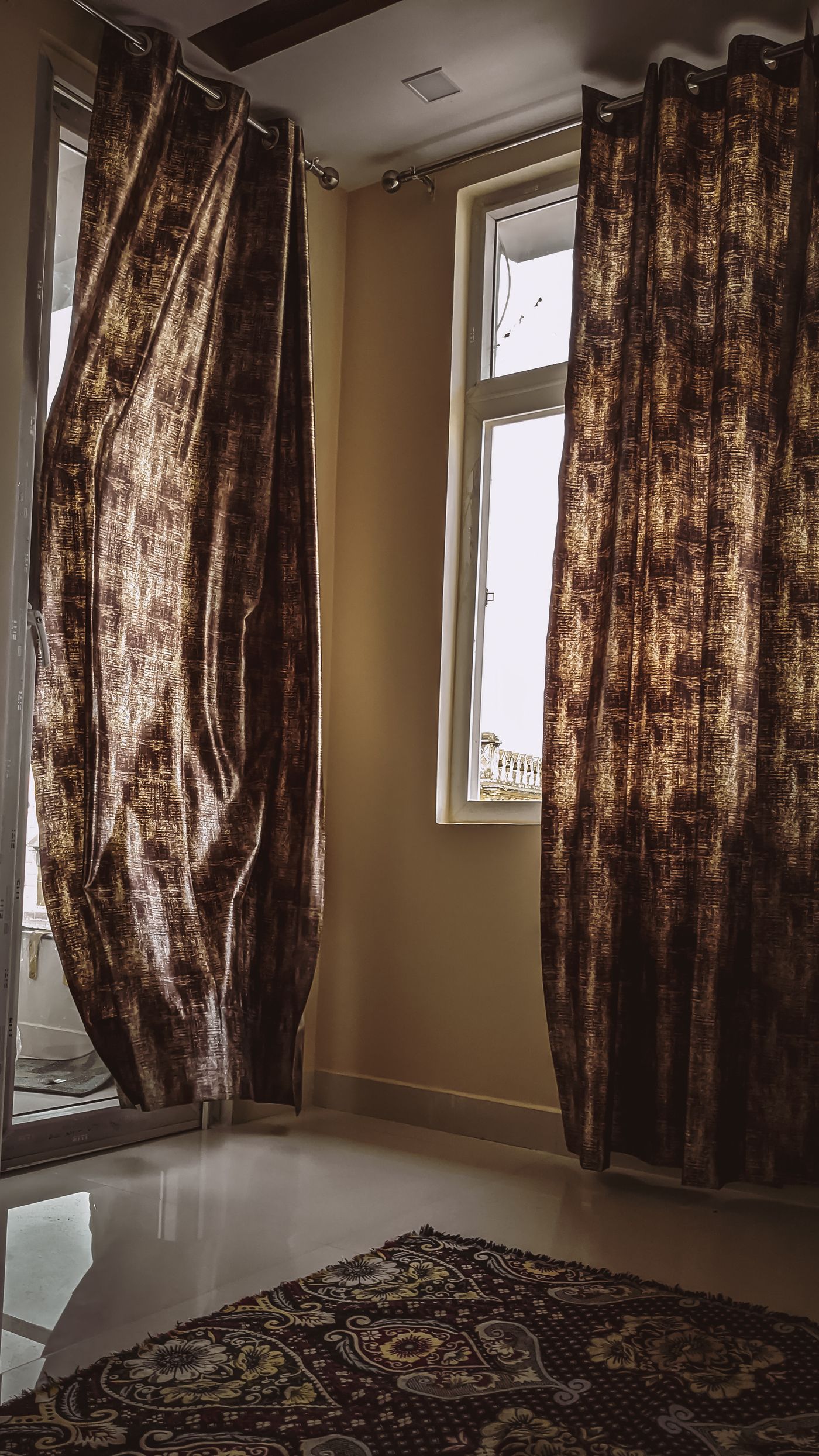
Choose dramatic curtains by checking the window’s working space before choosing the richest fabric. In a rental, the right result depends on permission, compatible hardware, panel weight, and somewhere for the opened fabric to rest. A strong color can create the mood without covering the room in permanent changes.
Etsy’s October 14, 2026 Operatic Drama direction concerns fashion. Applying that rich fabric mood to rental curtains is our interpretation, not evidence of curtain search growth. Its fashion examples do not establish performance claims for home textiles.
You can borrow the feeling through a deep color, generous-looking folds, or one textured panel choice. You do not need historical interiors, elaborate swags, or a pooling hem. Start with the version your particular window, tenancy, and cleaning routine can support.
Observe the window in use
Open the window as you normally would and note the movement of the sash or handle. Check nearby doors, furniture, switches, and anything below the sill. Include blinds or other existing coverings that must continue to work. Do not treat the flat wall view as the only dimension that matters.
Watch the daylight at the times you use the room. A darker curtain may be appealing in the evening but block welcome light if it has nowhere to gather during the day. Try a temporary color sample beside the window while keeping the working opening clear. Its appearance against artificial light may differ from what you see at noon.
If the window has a required access or ventilation role, preserve it. Do not plan a decorative arrangement that requires moving furniture or untangling fabric before the window can operate. Follow the building and equipment requirements that apply around heaters, vents, and other nearby fixtures.

Establish what the rental allows
Check the lease and ask the relevant property contact about any proposed change to hardware or surfaces. Record an agreed method before buying panels that depend on it. Existing holes or brackets do not automatically establish that a new heavier arrangement is approved or properly supported.
If you are keeping the current rod, identify its intended capacity, fixings, and compatible headings. A decorative rod may look substantial without supporting a significantly different load. Include both panels, linings, rings, and other attached parts when assessing the complete arrangement against the hardware maker’s limits.
Avoid treating “no drill” as a universal suitability claim. Tension rods, adhesive fittings, and over-frame systems have specific substrates, dimensions, loads, and installation directions. Our review of rental-friendly double hooks discusses a different household fitting; its limits cannot be transferred to a curtain installation just because both avoid screws.
Measure the closed position and the open stack
Record the dimensions specified by the curtain and hardware suppliers, including how the chosen heading affects the hanging position. Check the distance to the intended lower edge in several places if the floor or existing hardware is uneven. Use the supplier’s measuring instructions rather than a generic width multiplier presented as a guarantee.
Then think about where the fabric goes when opened. Heavy-looking folds occupy lateral space. If the entire stack sits across the glass, the room may remain dark during the day. Where permitted and supported by the hardware, a suitable rod position can help, but do not extend a rod beyond its approved span or supports simply to gain a better photograph.
Mark the proposed opened edge visually with a safe temporary reference that will not damage the surface. Stand at the usual approach and test window-handle access. If the fabric would overlap a frequently opened cupboard, choose a different arrangement before ordering the panels.
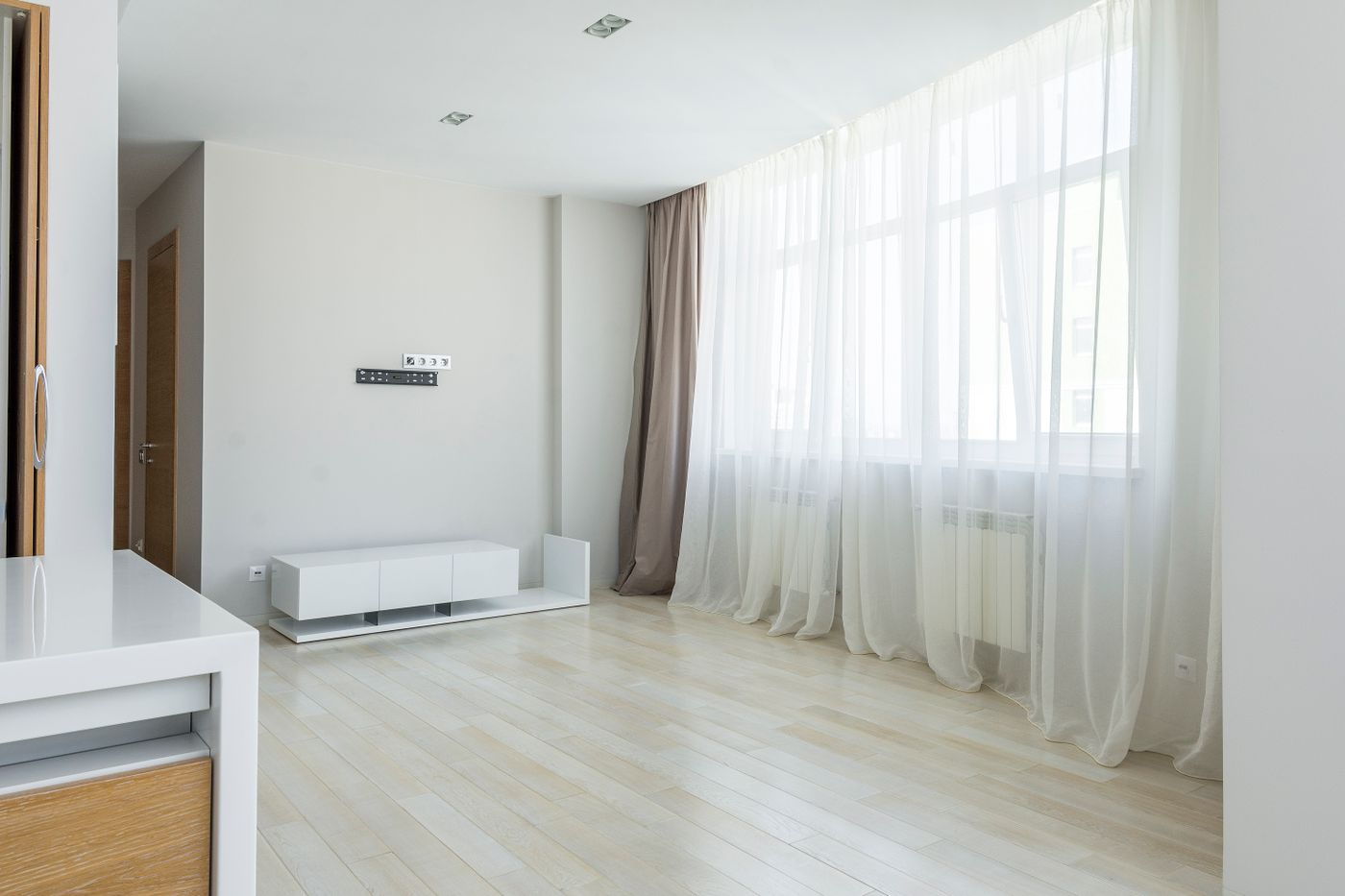
Choose the visual effect separately from the performance
A rich-looking textile does not automatically provide blackout, insulation, sound reduction, or privacy. Check the exact product’s documented construction and claims for any performance you need. Decide which feature is essential and which is simply an appearance preference, then compare the suitable options.
For some rooms, a strong color on a lighter panel will provide enough drama without the bulk of a heavily lined curtain. In others, an existing functional blind can continue handling the practical requirement while an approved curtain adds texture. The two systems still need enough clearance to work independently.
Look at a sample when possible. A fabric’s sheen, pile direction, and apparent color can shift with the light and viewing angle. This can be attractive, but a small online swatch does not show every condition. Avoid assuming that all products called velvet share the same fiber, cleaning requirements, or weight.
Keep the lower edge appropriate to the room
A pooled hem can create a theatrical photograph, but it adds fabric in the walking and cleaning area. For a small working rental room, choose a length that supports your ordinary access needs. The supplier’s instructions and the actual location should guide the final clearance.
Consider the nearby furniture in its moving position. A desk chair can catch fabric that looks clear when the chair is tucked away. A door may drag a panel only during the last part of its swing. Try those movements before deciding that the curtain’s edge is safely out of the way.
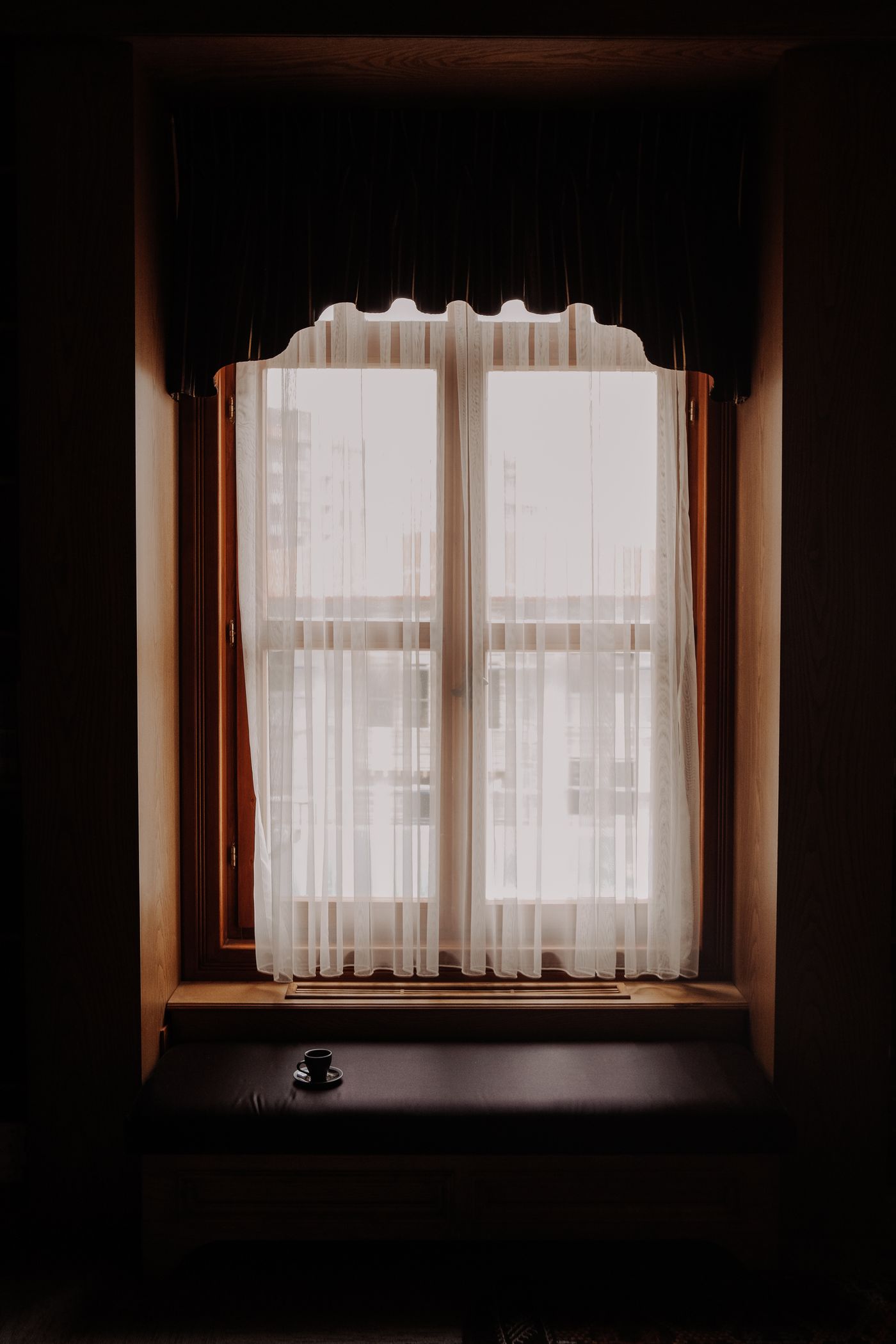
Keep fabric clear of heat sources and required ventilation according to the relevant equipment instructions. Do not use a tied-back position as the only thing preventing an unsafe contact. The arrangement should remain appropriate during normal opening and closing, including when another household member uses it differently.
Add one layer at a time
If a sheer layer is part of the plan, confirm that the hardware is intended for the combined arrangement. Do not hang two systems from a fitting assessed for one. Verify that each layer can move without tangling around the other or trapping a handle.
Start with the functional layer already in the room if it works. Add the decorative element only when you can describe what it contributes: a frame around the opening, color beside a sofa, or an evening change of atmosphere. That keeps the project distinct from replacing every window covering at once.
Avoid treating tiebacks as a solution to unsuitable length, support, or heat clearance. A tieback should support the intended arrangement, with its own safe attachment and practical position. Keep cords and loops managed according to the product’s safety directions, especially where children may be present.

Include the cleaning and removal process
Read the care label before purchase. Ask how the panels will be removed, cleaned, dried, and rehung in this particular home. Our guide to cleaning curtains in a small home addresses the space that process can require. A textile you cannot maintain through an accessible method may be the wrong choice even if its color is ideal.
Clean the surrounding tracks and sill appropriately before rehanging, using our window-track and sill cleaning guide where relevant. Keep surface cleaners away from the fabric unless the textile instructions permit them. Do not assume a method intended for the window frame is also suitable for the curtain lining.

If you will take the panels to another home later, keep the care information and any permitted original hardware together. Record actual panel dimensions and heading type rather than relying on a remembered product name. That small note can prevent buying a second set when the first could work in a future room.
Assess the room after several normal days
Open and close the curtains at the times you normally would. Notice whether you avoid opening them because the stack is awkward, whether fabric repeatedly falls into the chair path, and whether the room has lost too much useful daylight. Address the repeated issue before adding further decorative layers.
Rental improvements work best when they respect the actual surface and the household’s routine. Our guide to rental bathroom storage without drilling applies that principle to a different room; it is useful context for judging a proposed reversible fitting, while the curtain’s own hardware directions remain controlling here.
The finished look can be dramatic and still feel easy to live with. A window that opens, a curtain that moves, and a floor that stays clear give the rich color somewhere practical to belong. Those working details make the theatrical touch sustainable beyond the first styled evening.
Explore related household decisions in our Small-Space Living hub.
Sources and editorial scope
Editorial research checked October 15, 2026. Trend-report dates and limitations are stated in the article; these are editorial applications of published signals, not verified October keyword rankings. Practical household guidance; illustrations do not document a tested household or authenticate a pictured material.