
Window tracks are one of those small-home cleaning jobs that become disproportionately annoying. Dust, pollen, dead insects, hair, city grit, and moisture collect in a narrow channel. Add cleaner too early and the dry debris turns into gray mud that smears from corner to corner. If you are working on the same space, How to Dry Laundry in a Small Apartment Without Letting Clothes Take Over the Room covers the next decision in more detail.
The fastest approach is the opposite of what many people instinctively do: remove as much dry debris as possible before introducing moisture. For the broader setup, How to Store Suitcases and Travel Gear in a Small Apartment is a useful next read.
The dry-first rule
Before spraying anything, open the window as far as it safely allows and inspect the track. Remove loose objects, lift out detachable screens only if the manufacturer design allows it, and place an old towel under the work area if runoff could reach the floor or wall.
Use a vacuum crevice tool, soft brush, or dry microfiber cloth to collect loose dirt. The goal is not perfection. You are simply preventing dust from becoming paste.
What you actually need
- a vacuum with a crevice attachment or a small handheld vacuum,
- a soft detailing brush or old soft toothbrush reserved for cleaning,
- two microfiber cloths,
- a small bowl of warm water with a little appropriate mild cleaner,
- cotton swabs or a cloth wrapped around a blunt tool for corners,
- an old towel to protect nearby finishes.
You do not need a bucket full of solution. In a narrow track, less liquid is easier to control.
Step 1: vacuum from the cleanest section toward the dirtiest
Start with the sill and broad ledges, then vacuum the channels. Work slowly so the nozzle picks up grit rather than blowing it around. A soft brush can loosen compacted debris while the vacuum is held nearby.
If the track contains small drainage openings, do not jab tools into them. Window systems vary, and damaging a weep path can create a bigger moisture problem than the dirt you were trying to remove.

Step 2: damp-clean the flat surfaces
Dampen—not soak—a microfiber cloth. Wipe the sill, frame edges, and accessible parts of the track. Rinse or change the cloth when it becomes heavily soiled rather than redistributing grime.
For painted wood, unfinished wood, specialty metal finishes, or older windows, use a cleaning method appropriate to the material. Test an inconspicuous spot if you are unsure.
Step 3: clean corners with controlled moisture
Window-track corners collect the residue the cloth cannot reach. Dip a small brush in diluted cleaning solution, shake off excess water, and agitate only the stubborn area. Follow immediately with a dry cloth.
I prefer several small passes over flooding the track once. It gives you more control and reduces the chance of water running into trim, wall cavities, or flooring.
Step 4: dry the track before closing the window
Use a fresh cloth to remove remaining moisture. If weather and security allow, leave the window open briefly so the channel can dry. Do not close a visibly wet track and assume it will evaporate harmlessly.
What about black or green spotting?
Surface discoloration can come from many sources, including dirt, mildew, or recurring condensation. If the area repeatedly becomes wet, if growth returns quickly, if the affected area is extensive, or if you suspect water is entering from outside the window assembly, cleaning alone is not the full solution.
Renters should document persistent moisture and contact the landlord or property manager according to the lease and local procedures. Do not cover recurring water damage with decorative caulk or paint without addressing the source.
Condensation changes the routine
In cold weather, interior window surfaces may collect condensation. Wipe standing water rather than leaving it on the sill. Keep curtains or objects from trapping moisture against the glass and frame, and use the home’s ventilation appropriately.
The cleaning goal is not simply a prettier track. It is a dry, inspectable surface where you can notice whether moisture is a one-off event or a pattern. You may also find Where to Store a Vacuum, Mop, and Cleaning Tools in a Small Apartment useful for a closely related small-home problem.

How to clean a sill crowded with plants
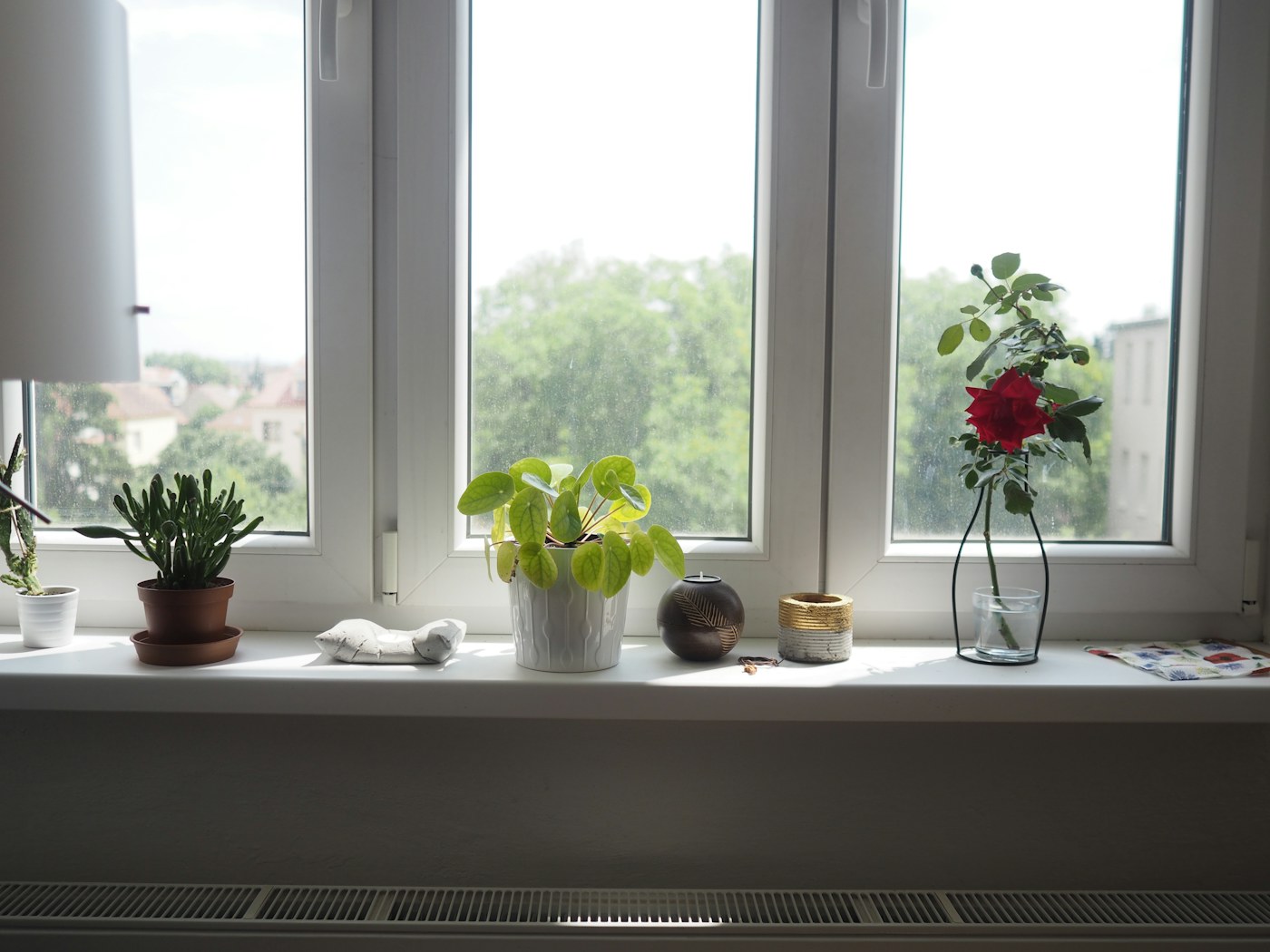
Move every pot before you start. Do not wipe around them. Check saucers for overflow, damp soil, and mineral rings, then clean and fully dry the sill before returning the plants.
If the same spot is always damp under a pot, use a properly sized waterproof saucer and create enough space for air to circulate. A windowsill is a display surface, not a substitute for drainage.
Apartment windows with screens
If a screen is removable by design, vacuum it gently or clean it according to manufacturer instructions before reinstalling. If it is fixed or difficult to remove, do not force clips or bend the frame for the sake of a deep clean.
Clean the accessible screen surface with a soft brush or vacuum attachment and treat inaccessible exterior areas as a maintenance limitation rather than a reason to lean dangerously outside.
Safety rule: stay inside the window opening
Do not lean out of upper-story windows to reach exterior glass or tracks. Do not stand on unstable furniture. For exterior surfaces you cannot reach safely from inside, use building-approved methods or professional service.

How often should tracks and sills be cleaned?
Base the frequency on what you see. Homes beside busy roads, construction, trees, or open windows may collect debris faster. A quick dry vacuum every few weeks during high-dust seasons can prevent the need for a major scrub.
A deeper clean makes sense when seasons change, before installing or removing screens, or whenever condensation has left visible residue.
A three-minute maintenance version
- Vacuum loose debris.
- Wipe the sill with a barely damp microfiber.
- Run the cloth through the main track.
- Dry the surface.
- Return only the objects that belong on the sill.
This small routine fits well alongside a broader seasonal reset. See A Realistic Deep-Cleaning Checklist for a Small Home for the larger sequence.
Do not mix cleaners
More products do not make a window track cleaner. Avoid combining household cleaners, especially products containing bleach, ammonia, acids, or other reactive ingredients. Follow label directions and use ventilation appropriate to the product.
Where this job fits in a small-apartment cleaning order
I would clean window tracks before vacuuming or mopping the room floor. Even with careful technique, grit can drop from the sill. Clean high and contained areas first, then finish the surrounding floor once. For the broader setup, How to Clean Curtains in a Small Home Without Taking Over the Whole Room is a useful next read.
If you are trying to reduce cleaning-tool clutter as well, Cleaning Tools a Small Home Really Needs helps keep the kit compact.
My preferred sequence
Dry debris first, minimal moisture second, dry again, then inspect. That sequence is less dramatic than spraying a dirty track with cleaner, but it is faster, creates less mess, and makes it easier to notice real maintenance issues instead of hiding them under wet grime.
Frequently asked questions
Can I pour water into a window track?
I would not flood a track unless the window manufacturer specifically instructs you to do so. Use controlled moisture so water does not reach unknown cavities, trim, or flooring.
What is the fastest way to remove dry dirt?
A crevice vacuum plus a soft brush is usually more efficient than wet wiping loose dust.
What if dirt is packed into the corner?
Loosen it with a small soft brush, vacuum again, then use a lightly damp cloth or swab. Several small passes are easier to control than one soaked scrub.