
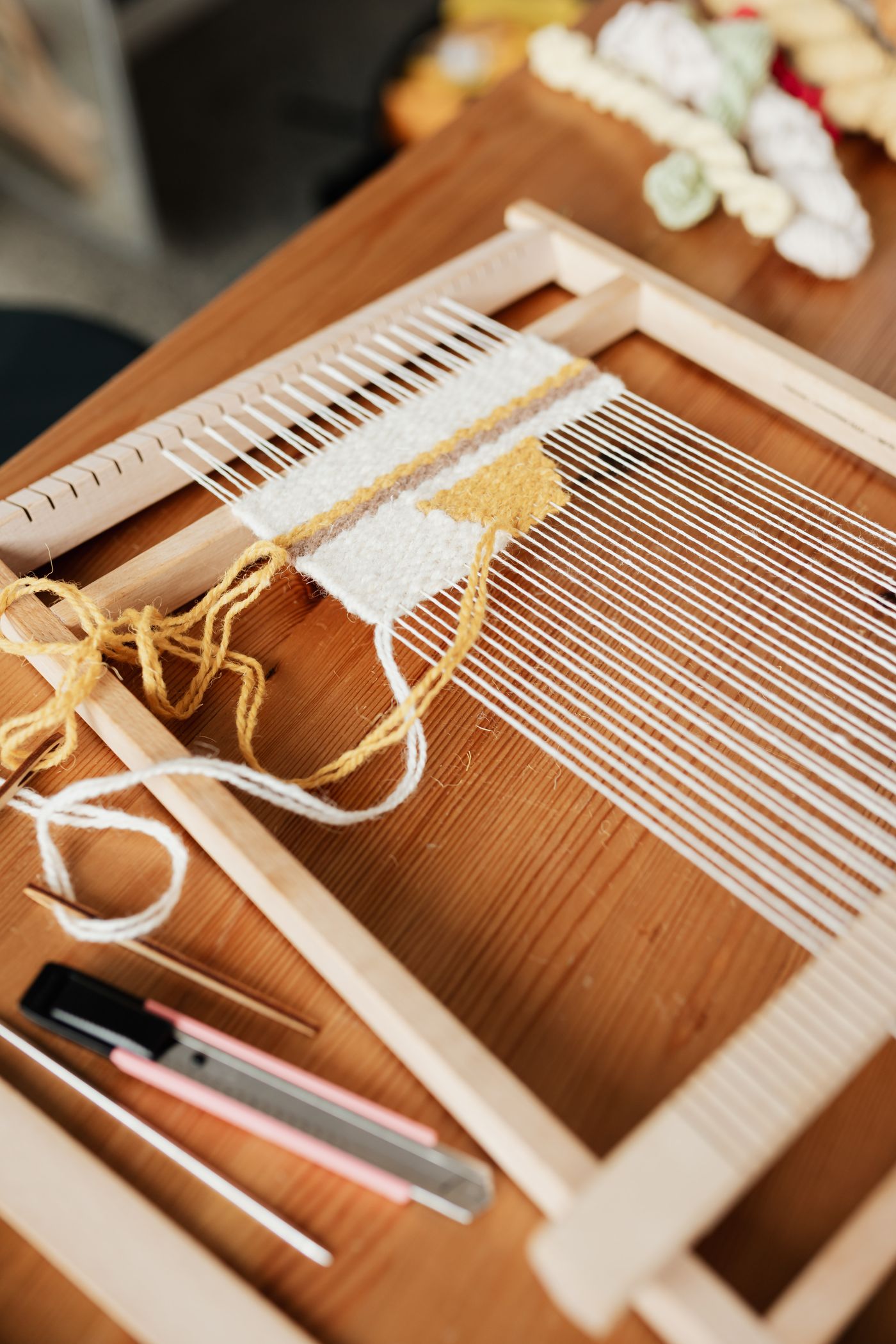
A small loom can fit on a table while the weaving activity does not. Hands need room beside the frame, tools need a landing place, and some operations require access behind or beyond the working edge. Measuring only the wooden rectangle can leave the maker with a project that occupies the whole room once it begins.
Pinterest’s August 2026 hobbies report describes renewed interest in tactile making and traditional media. This guide applies that signal to planning a small weaving surface. It does not teach warping, specify thread tension, or establish that every loom can be used or stored in the same position.
Start with the exact loom and its instructions
Identify whether the proposed tool is a simple frame, a rigid-heddle loom, or another construction. Read the maker’s instructions about support, setup, operation, and moving it. Similar weaving photographs can show equipment with very different requirements, including large workshop looms that are not tabletop substitutes.
Use the complete outside dimensions in the intended working configuration. Include any permitted supports, clamps, projecting parts, or accessories required by that model. A compact product photograph can hide the space occupied beyond its crop, especially where the user’s hands and yarn leave the visible frame.
Keep the choice tied to a project you genuinely want to make. A larger loom does not automatically make a small room more useful or a first session more satisfying. The questions to ask before buying an organizer offer an applicable planning discipline: define the actual contents and task before buying the object meant to support them.
Separate the weaving position from setup operations
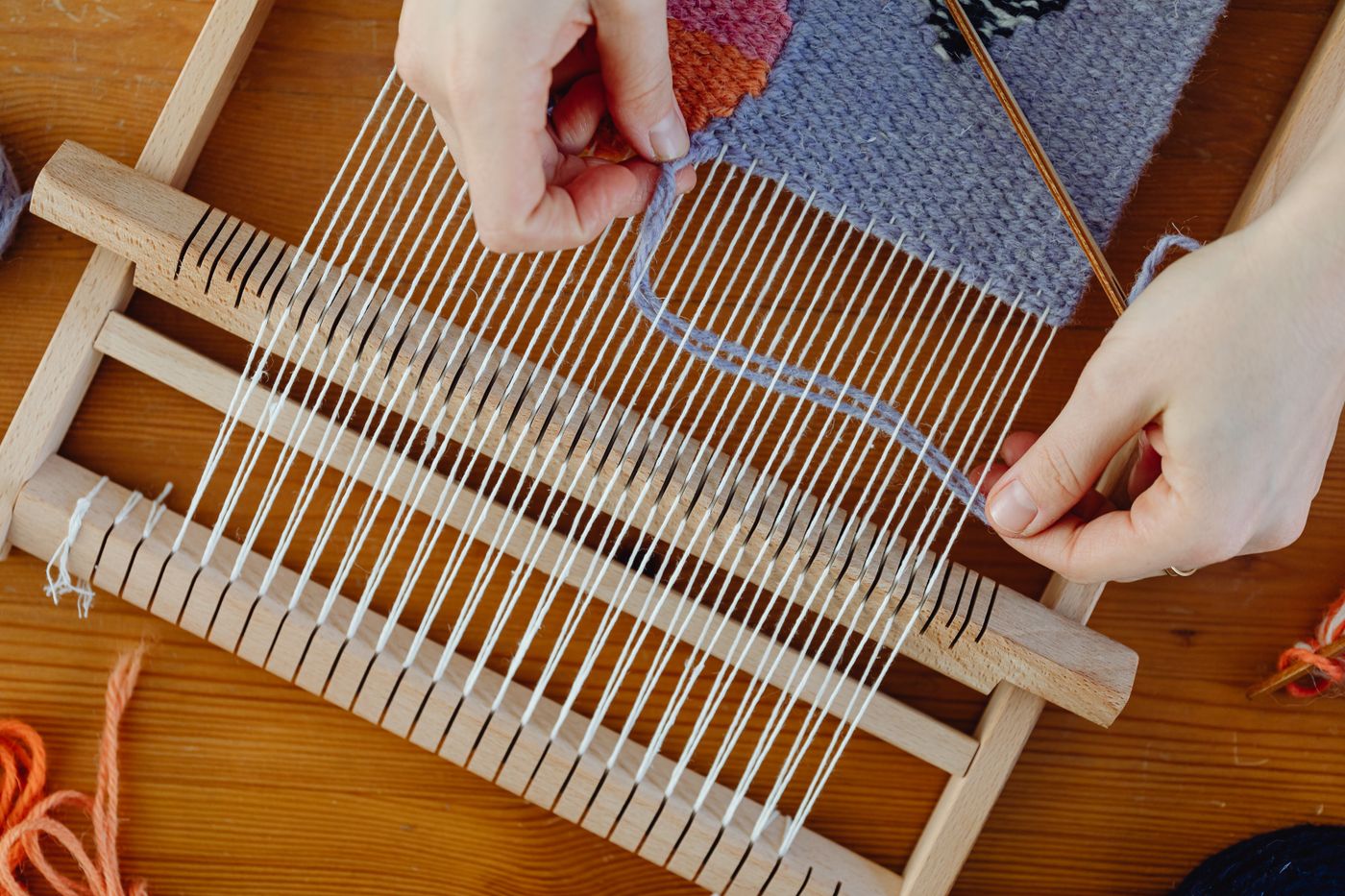
List the operations the actual instructions require before and after weaving. Preparing the loom may need different access from passing a tool through the working area. Finishing and removing a piece can create another temporary footprint that does not appear in a simple storage measurement.
Read the process before reserving a narrow corner. If the maker calls for access to both ends, an arrangement permanently pressed against a wall may not work. Do not improvise a different setup method merely to preserve a preferred furniture layout; choose suitable equipment or an appropriate place for the required operation.
Make a short space plan for each distinct stage. “Setup on the clear shared table, weave at the approved desk position, finish on the same protected surface” is useful only when each location actually suits the equipment and instructions. Identify unresolved stages before committing a project to the loom.
Reserve hand movement around the frame
Check the working position with the intended chair and ordinary surroundings in place. Allow for the movements required by the actual tools and technique, rather than inventing a universal clearance in inches. Leave space to set a tool down without resting it on the developing textile or an unrelated household object.
Consider access to the far side, the view of the work, and the ability to change position comfortably. A surface can be large enough yet placed too close to a wall, cabinet, or doorway for the intended user. Assess individual needs directly rather than assuming the posture in a stock photograph will suit everyone.
The guide to reserving working floor space addresses furniture assembly, not weaving technique. Its useful parallel is that a task occupies more space while happening than its finished object occupies afterward. Keep a workable route through the room throughout the session instead of counting that route as spare project area.
Give tools and yarn a small defined landing place
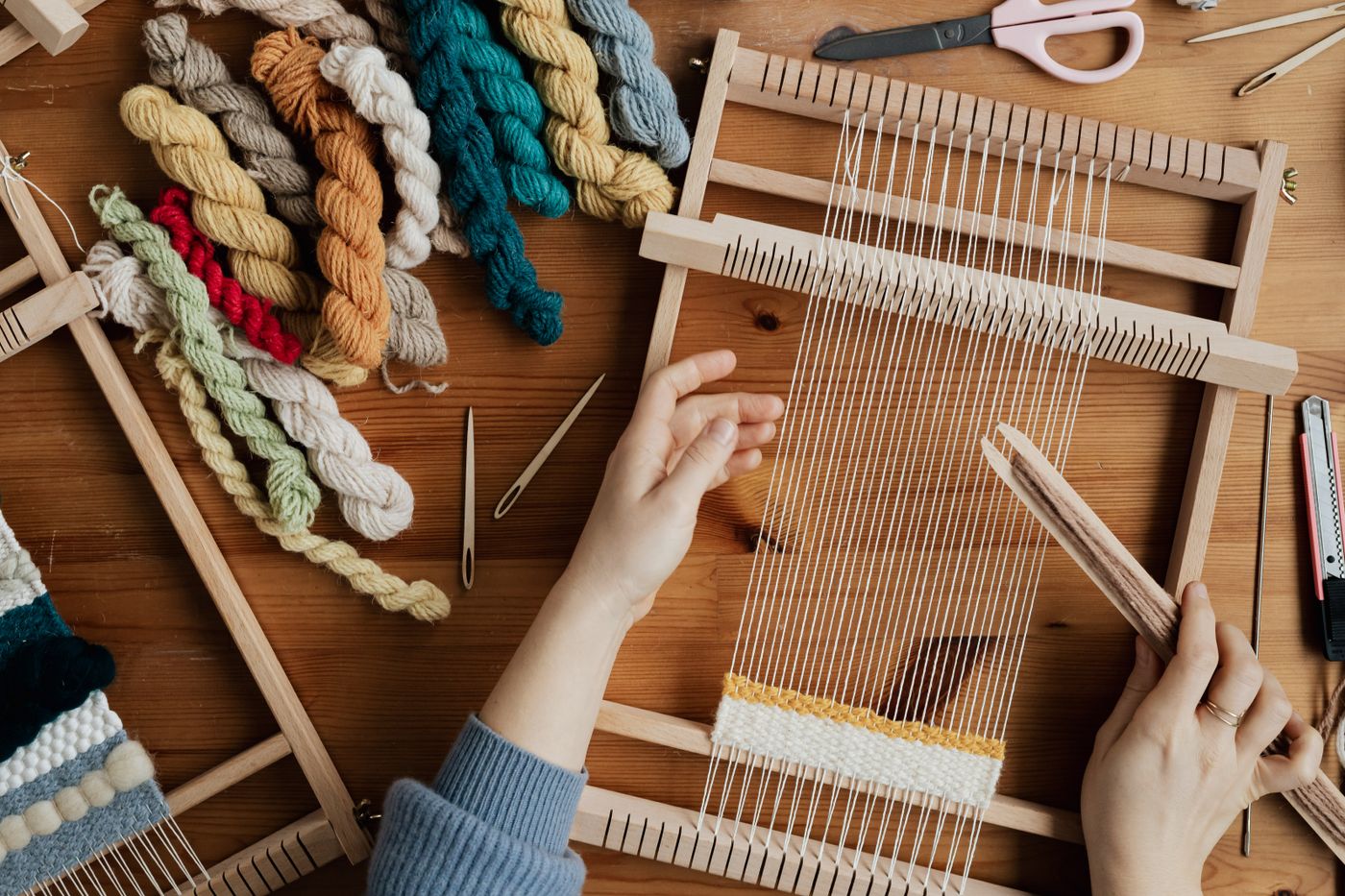
Keep the materials needed for the current stage close enough to retrieve without stretching across the loom. Use appropriate containment for the actual contents, accounting for small parts and tools where children or pets share the home. Avoid letting a decorative basket substitute for an identified collection.
Separate the active project’s materials from the broader yarn supply. Preserve product references and any information the project needs, rather than treating similar-looking strands as interchangeable. A sample or leftover piece can be useful, but it should not silently return to unused stock with its identity lost.
Limit the landing area to what the session actually uses. If every optional color and tool must sit around the frame, the available work surface can disappear before weaving starts. Return alternatives to appropriate storage and bring them out when the project reaches a real decision that requires them.
Plan the pause condition before the first session
Find out how the manufacturer or project instructions say the work can be left between sessions. A partially worked loom may not tolerate casual stacking, leaning, or carrying. The fact that its bare frame is portable does not establish that an active project can be moved in every convenient way.
Give the paused project a suitable undisturbed destination and identify the next step. Keep loose tools and materials appropriately contained separately where needed. Do not cover the work or change its orientation just to make the room look tidy if that conflicts with the instructions or the material’s condition.
For a shared table, the multipurpose table routine can help define when the surface must return to meals or work. If the loom cannot reach an appropriate pause condition by that time, choose a different schedule or workspace. Storage should preserve the actual project rather than require the household to avoid the table indefinitely.
Check the whole route to storage
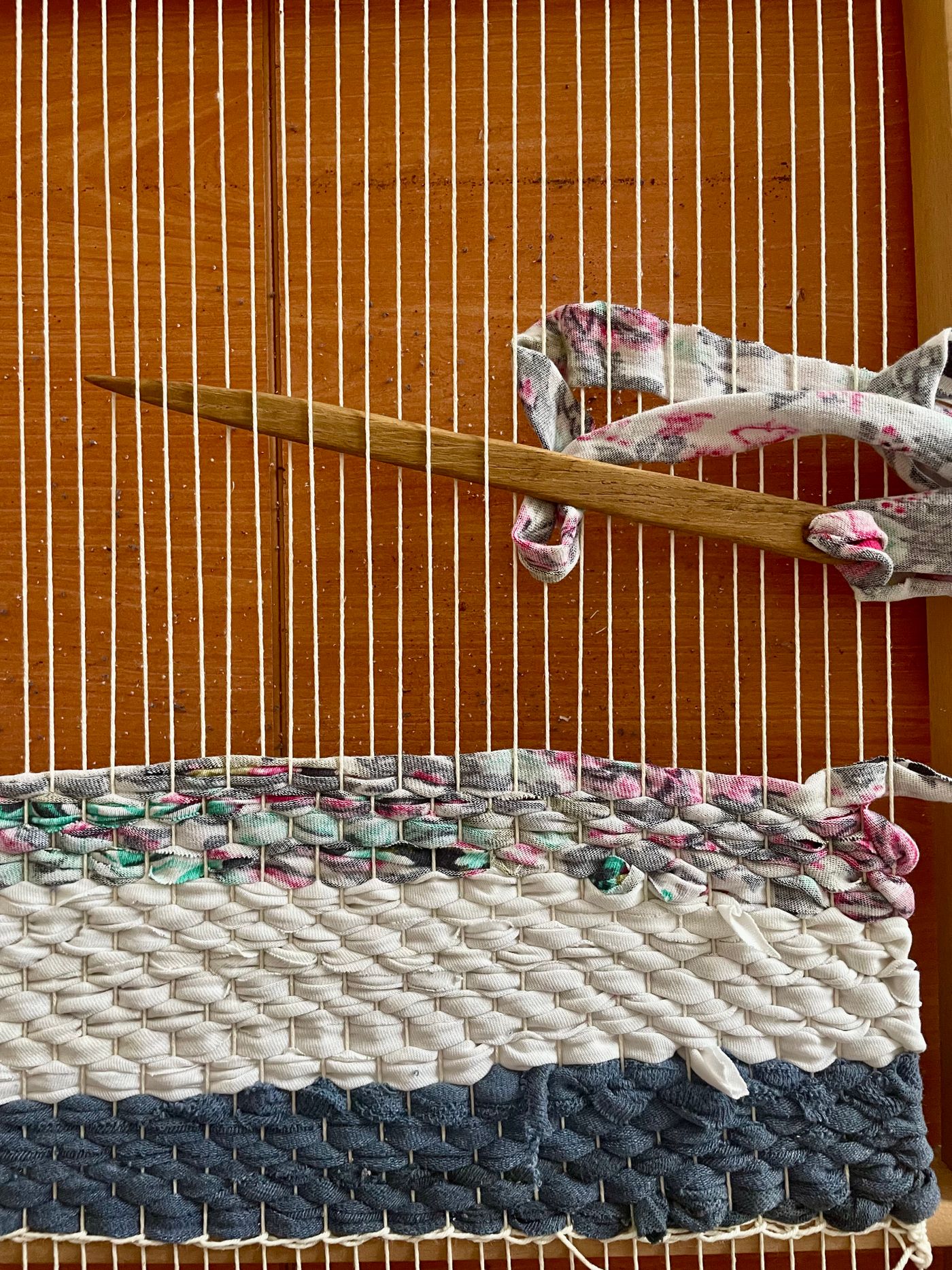
Measure the configured project and its appropriate support, then consider the actual route to the pause location. A frame may fit on a shelf but not pass through a narrow gap in its permitted moving position. Do not force or twist it to fit a route that was measured only for the empty loom.
Keep necessary access available along the route and at the destination. A high shelf is not a practical daily location if moving the project safely requires unsuitable climbing or a difficult overhead lift. Choose appropriate help or another destination based on the actual equipment and user.
The furniture delivery-route survey provides a broader way to think about openings and turns. For a loom, the same question applies at a smaller scale: can the item reach the intended place in the condition and orientation its instructions allow? A final storage rectangle alone does not answer that question.
Finish the project’s ownership routine
Plan where a completed textile goes after any required finishing and care. Keep its material and project information connected while decisions remain. Do not assume an object is ready for a particular use because it has been removed from the loom or because a similar woven item appears in a decorating photograph.
Return tools and remaining stock to their identified places. Record only the project information that helps with care, a future attempt, or an honest handoff to another person. The room does not need to retain every trial strand and abandoned layout as proof that the work happened.
If a project stalls, choose whether to resume, adapt, or release it using a suitable method for the actual materials and equipment. Keep that decision distinct from buying another loom. A second setup can double the space problem without resolving why the first project has no workable next step.
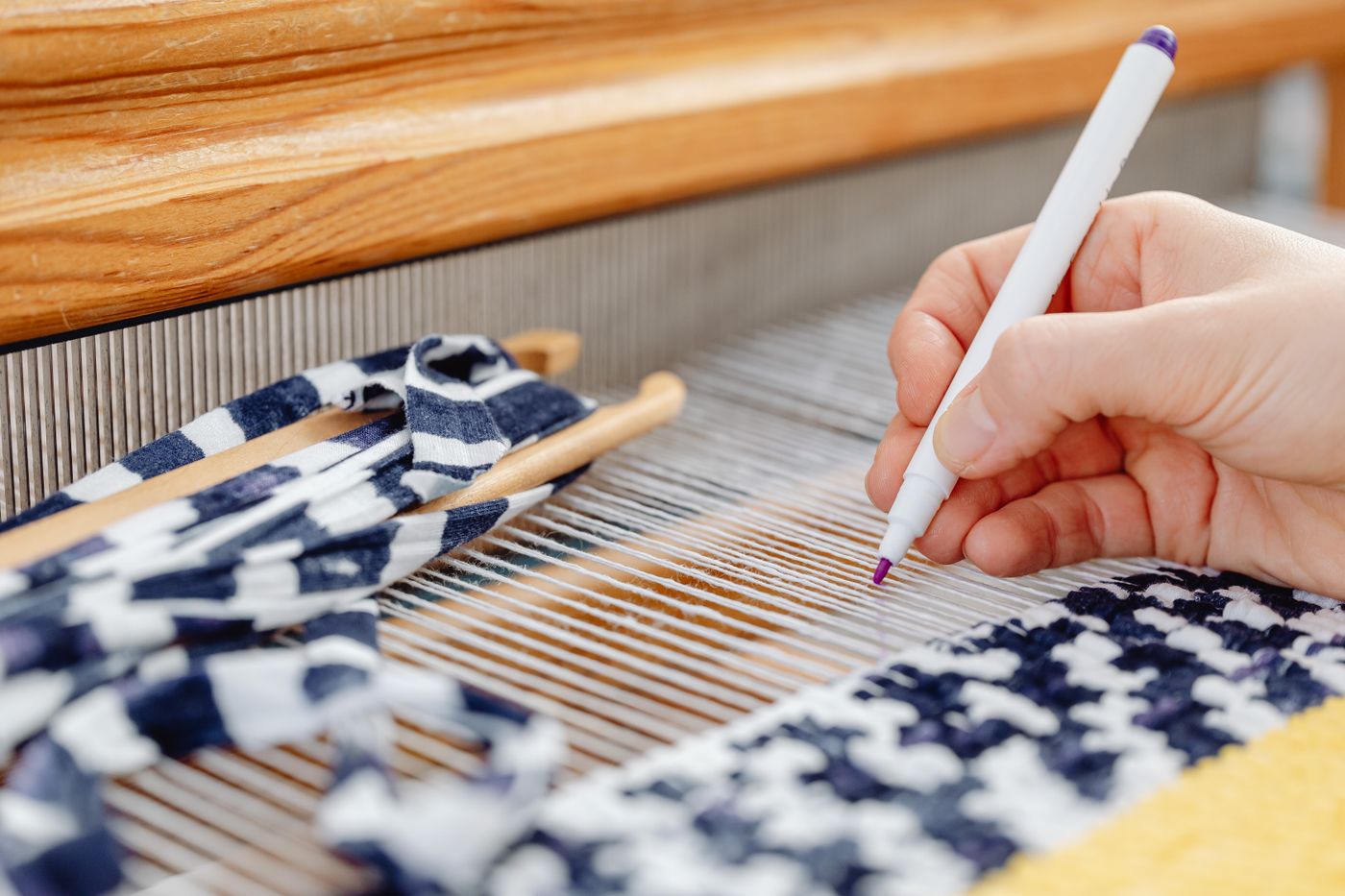
Run one modest project through the complete space plan
Begin with a project whose actual requirements fit the chosen equipment and room. Observe where space becomes awkward: setup access, tool retrieval, the pause location, or the route to storage. Resolve that specific constraint before adding accessories or increasing the project size.
A successful small weaving area supports the whole sequence, including the quiet intervals between making sessions. It can be temporary and still be reliable. The useful measure is whether the person can start, pause, finish, and put away the real project while the room continues to support ordinary household life.
Explore related decisions in our Small-Space Living hub.
Sources and editorial scope
Editorial research checked October 21, 2026. Published trend reports are context for these editorial applications, not verified live keyword rankings. Practical household guidance; photographs do not document a tested household or authenticate pictured materials.
