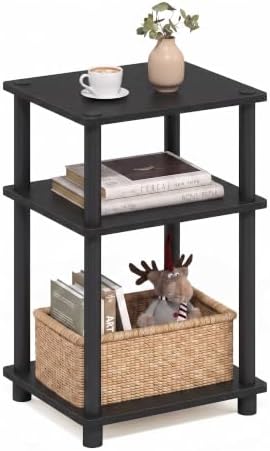
Lend table decor as a clearly identified set with an agreed return, rather than as a handful of objects someone hopes to remember later. Count the pieces, describe their condition, and settle how they may be used before they leave the closet. On return, check the same set before putting it back into ordinary household storage.
Etsy’s October 14, 2026 report includes celebrations with friends and chosen family. Sharing existing table pieces is our practical interpretation of that interest. It does not mean lending is always the right choice: a fragile, irreplaceable, or personally important object can reasonably stay home.
This system suits occasional loans between people who already know each other. It is not a rental-business contract or advice about insurance. Its purpose is simpler: help a friendly arrangement remain friendly while protecting both households from avoidable confusion.
Decide what you are comfortable lending
Choose pieces whose intended use and care you understand. A sturdy modern vase with available instructions creates a different decision from a repaired heirloom or an object with an unknown finish. Do not offer something casually if its condition would make you anxious throughout the other person’s event.
Ask what the friend actually needs. “Something for the table” could mean a flower vessel, a candle accessory, a serving dish, or a purely decorative object. Those roles are not interchangeable. Establish the product’s intended use before allowing food, water, heat, or an attachment to be introduced.
You can lend fewer pieces than requested or suggest another approach. A small matching group may be sufficient for the actual table. Agreeing to lend the whole collection because it feels generous can create a larger transport, cleaning, and return task than either household wants.
Identify the pieces before packing
Use a short description that distinguishes the actual set: three short clear vases, one blue textile runner, or two white ceramic decorative vessels. Include detachable lids, stands, inserts, or other relevant parts. Do not rely on the number of containers if a container holds several separate objects.
A private reference photograph can help both households recognize what left. Keep any personal background information out of it. The photograph records appearance and grouping; it does not establish that a piece is safe for a new purpose or that hidden damage is absent.
Our borrowed-book return system applies the same ownership distinction to another household category. Here, the useful record is the decor set, its borrower, and its return point. You do not need a complex inventory app for an occasional loan, but you do need more than a memory of the general color.

Discuss condition without making it awkward
Point out existing chips, loose details, repairs, or finish wear that affect handling. Describe what you know rather than claiming the item is perfect. If a defect makes use uncertain, keep the piece out of the loan until its suitability has been established.
Explain any meaningful handling limits. An object might be intended for dry display only, need a separate liner approved by its maker, or have a decorative attachment that should not be lifted. Share the actual instructions where available instead of making rules based only on how the piece looks.
Agree what happens if a problem is noticed during the event. A useful starting point is to stop using the affected piece and tell the owner. Do not encourage an improvised glue repair, paint touch-up, or vigorous cleaning attempt to make a mishap disappear before return.
Set a return moment that works for both homes
Choose a specific day or practical handoff arrangement. “When the party is over” can mean the next morning to one person and the end of the holiday season to another. Allow for transport and any appropriate cleaning without leaving the loan open indefinitely.
Check whether you need the pieces for your own event soon afterward. If so, say that before lending. Build in enough time to inspect the return rather than relying on a last-minute exchange in a parking lot while guests are already arriving at your house.
Keep a brief record in the household system you already use. Include the borrower, the identified set, and the agreed return. If the arrangement changes, update the same note. Several separate messages with different dates make a simple loan harder to close.

Pack for the actual journey
Use packaging suitable for the objects, with appropriate separation and support. Keep detachable parts identified and prevent them from moving loose among larger pieces. Do not treat a decorative handle or narrow neck as a reliable carrying point unless the product is intended to be handled that way.
Consider the whole route: from the closet to the door, into the vehicle, and onto the friend’s table. An unpacked collection may fit on a shelf while its protective containers require more space. Agree who is providing transport and who keeps the packaging during the loan.
For textiles, our tablecloth and table-runner storage guide helps preserve the connection between a cloth and the table it fits. Send the correct piece, clearly identified, with its care information. A similar-looking runner may be too long, too delicate, or simply not the item you intended to lend.
Keep the loan separate from a gift
Say plainly that the pieces are being lent and will come back. If one item is a gift and another is a loan, distinguish them before packing. Do not leave the recipient to infer ownership from whether an object was wrapped or included in the same bag.
Children can help count suitable items under appropriate supervision, but they should not become responsible for enforcing an adult agreement. Keep communication between the people making the loan. A child remembering which vase belonged to whom is not a dependable household record.
Our guide to borrowing toys between families covers the same gift-versus-loan question for another kind of set. The decor version still needs its own care and use limits. A rule that works for a washable toy cannot be transferred to a delicate finish or textile.

Make the temporary gap in storage useful
Leave enough room for the pieces to come home. An empty shelf during a loan is temporary capacity, not proof that the household has gained a permanent new storage space. Avoid filling it with another collection that will have no home when the original set returns.
You can leave a small note in the storage position if it prevents repeated searching. Keep that note factual and modest. It should tell you where the items went and when to expect them, without turning an open closet into a public record of another household’s plans.
If the collection already exceeds its intended space, treat that as a separate decision. Our capacity-ceiling approach helps set a realistic boundary. Lending pieces occasionally does not solve owning more decor than you can maintain; it merely changes where some of it spends the weekend.
Receive the return before reshelving it
Check the group against the original description and photograph. Confirm the count and the detachable parts. Give both people a chance to notice an issue while the arrangement is still easy to discuss, rather than discovering a missing lid months later.
Inspect condition appropriately in ordinary light. If an item is damp, dirty, or needs attention, keep it in a suitable temporary position and follow its actual care directions. Do not close damp textiles or vessels into storage simply because the return bag fits neatly on the shelf.
If cleaning responsibility was unclear, settle it before the next loan. Different people may reasonably interpret “return it ready to use” differently. Clear instructions and an agreed division of effort prevent the same uncertainty from repeating.

Close the record and keep the relationship easy
Once the complete set is appropriately ready for storage, return it to its reserved position and mark the loan finished. Release temporary notes and unnecessary reference pictures according to your ordinary record habits. Keep only care information that remains useful for the object.
If something is missing or damaged, describe the specific issue calmly and discuss the next appropriate step. Do not guess at repair methods or demand an identical replacement before establishing what is actually available. Valuable items may require professional advice outside this simple household process.
The successful arrangement ends with both people understanding what happened to the pieces. You may decide that some decor lends easily and other items stay home. That is useful knowledge for future gatherings, and it lets sharing support the celebration instead of leaving a new unfinished task in the closet.
Explore related household decisions in our Home Organization hub.
Sources and editorial scope
Editorial research checked October 16, 2026. Trend-report dates and limitations are stated in the article; these are editorial applications of published signals, not verified October keyword rankings. Practical household guidance; illustrations do not document a tested household or authenticate a pictured material.