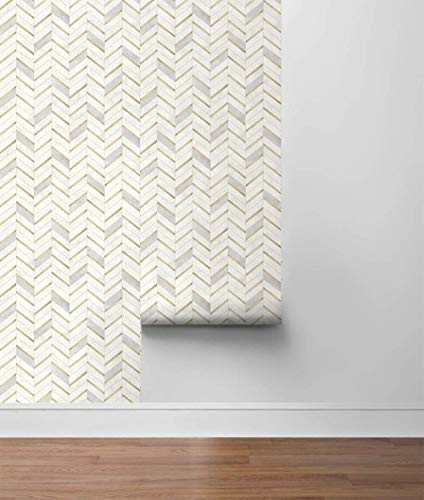
An office can feel different in January without another object being added to the desk. NextWall’s metallic gold and pearl gray chevron wallpaper offers a surface-based change: a printed wall becomes the decorative feature while the work area remains usable. For New Year 2027, the meaningful decision is whether one carefully chosen section suits your wall, your video-call background, and your willingness to install and eventually remove adhesive material.
This is a research-based assessment of pattern NW39205, associated with ASIN B08H5PG7XZ. We examined the matching retailer specifications and gallery; we have not installed the wallpaper or tested it on paint. Peel-and-stick describes a product format. It does not establish that removal will leave every wall unchanged.
Affiliate disclosure: As an Amazon Associate, Small Home Rhythm earns from qualifying purchases.
Know what the selected roll provides
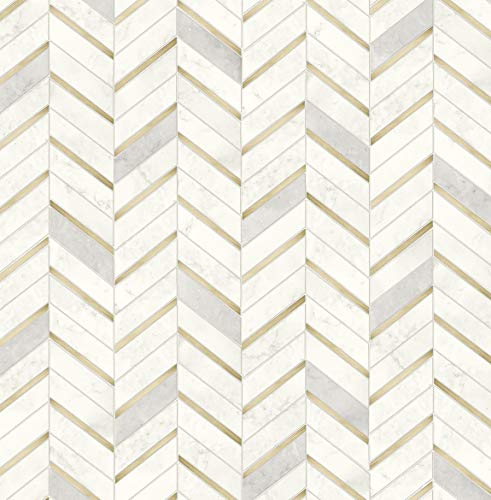
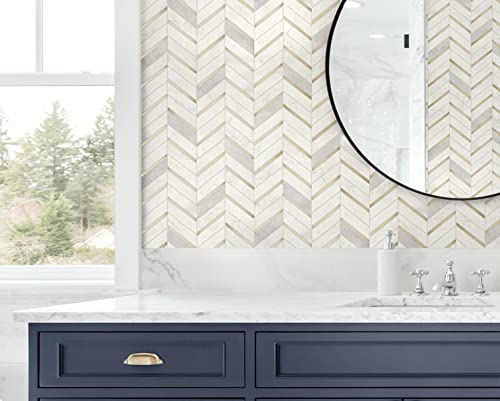
The product is a printed smooth vinyl wallpaper with a faux marble chevron design and metallic accent, rather than real tile or raised stone. The listed roll is 20.5 inches wide and eighteen feet long, with a nominal area of 30.75 square feet before project waste. The design uses a straight match and a stated 20.87-inch repeat.
These figures describe the roll, not the amount of finished wall it will cover in your particular layout. Matching, trimming, edge losses, and unusable remnants affect the result. Do not select a roll count by dividing wall area by nominal coverage alone.
You can check the exact NW39205 gold-and-gray wallpaper on Amazon. Verify that the selected offer is a full roll rather than a sample and that its color and pattern code match the review. We do not claim a current discount, price advantage, or availability.
| Selected listing detail | What to check |
|---|---|
| ASIN | B08H5PG7XZ |
| Pattern | NW39205, metallic gold and pearl gray |
| Roll | 20.5 inches wide by eighteen feet long |
| Nominal area | 30.75 square feet before trimming |
| Pattern | 20.87-inch repeat, straight match |
| Substrate | Smooth flat suitable surface; exclusions in instructions |
Choose a wall the office actually needs
Identify the reason for the visual change before measuring the entire room. Is the plain wall behind your desk missing a focal point? Is the room’s work corner difficult to distinguish from its guest use? Or does the wallpaper merely look appealing in a kitchen supplier scene? The answer helps limit the project to an appropriate section.
A wall behind the desk can leave the working surface available. It also becomes part of your view during long sessions and may appear in video calls. A strong repeating pattern that looks lively in a photograph can feel busy behind a monitor or distract from a person on camera.
Mark the proposed boundaries with temporary paper or a digital planning image of your own wall. Review the section from the doorway, your chair, and the usual camera position. This is a layout exercise you can perform before buying, not a visual test we carried out in a furnished office.
Our guide to a repeatable video-call position can help you establish that camera view first. Decorating a wall without knowing which part appears on screen may create work that does little for the room’s actual use.
Surface compatibility is the first buying gate
The assessed instructions call for a suitable smooth flat surface and exclude several unsuitable substrates, including textured walls, plaster, unpainted drywall, existing wallpaper, and non-stick paint. They also specify a curing period for new paint. Read the current instructions in full rather than treating the word removable as permission to apply the product anywhere.
If you do not know the surface or paint type, identify it before ordering a room-sized quantity. Ask the property owner when necessary. An office refresh in a rental should not begin with the assumption that an adhesive wall covering is permitted because it uses no nails.
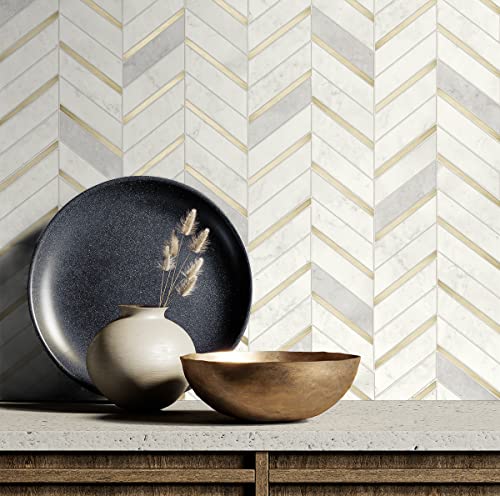
Inspect the wall for imperfections, residue, and repairs. The printed marble effect will not convert an unsuitable surface into one the adhesive can use. Nor should wallpaper be treated as a remedy for a wall problem that needs separate assessment or repair.
Where the manufacturer’s guidance permits a test application, a sample can help reveal an obvious compatibility issue. The time and conditions of that test matter, and an early successful result does not prove long-term removal performance. Keep the limitation explicit when deciding how much of the wall to cover.
If the surface fails the requirements, choose another decorating format. A permitted framed picture or an existing accessory may offer a smaller change with less surface preparation. The right response to unsuitable paint is not more adhesive or an improvised underlayer without instructions.
Measure panels, not just square footage
Measure the intended section’s width and height at several positions. Walls and trim may not form a perfectly regular rectangle. Record outlets, corners, and any breaks that affect panel placement, then plan where the vertical seams will fall.
For an illustrative quantity calculation, a section sixty inches wide and eighty-four inches tall needs three panel widths when using a nominal 20.5-inch roll. Three drops of eighty-four inches already require 252 inches of length before pattern matching and trimming. One eighteen-foot roll contains 216 inches. Although the wall’s area is smaller than one roll’s nominal square-foot figure, one roll would not supply those three uninterrupted drops.
That example is a proposed calculation for a hypothetical wall, not a recommendation for your room. Your actual measurements, repeat alignment, and cutting plan determine the quantity. It explains why area-based estimates alone can be misleading for a modest office accent.
Do not assume offcuts will solve every shortfall. A remnant may be too short for a full drop or begin at the wrong part of the repeat. Keep a cutting plan that considers both panel length and matching instead of trying to repair the quantity calculation after the first pieces are installed.
The retailer recommends purchasing the rolls for one project together to reduce dye-lot variation. If you need more than one, verify the current guidance and code before ordering. A later additional roll may not appear identical simply because the pattern name matches.
Evaluate pattern scale and metallic appearance
The gold accents can connect with a small existing brass-colored object, while the pale gray print may provide a restrained base. That is an editorial styling possibility. We have not measured reflection or established how the metallic effect behaves under your lamps.
View a sample in daylight and under the lighting you use for work. Check the appearance from several angles, including the angle of your video-call camera. A finish that looks subtle straight on may appear different when light strikes it from the side.
Do not add new desk accessories solely to echo every gold line. The wallpaper already supplies a repeating design. Keeping the objects in front of it simpler may be more useful in a compact office than building a coordinated collection around the new surface.
Our guide to a desk without drawers addresses where actual work supplies belong. A newly decorated wall should not conceal an unresolved paper-storage problem or encourage leaving more equipment on the desktop because it looks styled against the pattern.
Keep the project realistic for a shared office
If two people use the desk, agree on the visible area and project timing before installation. Each person’s camera angle, screen placement, and tolerance for pattern may differ. The wall belongs to the shared working arrangement rather than to a single staged photograph.
Plan a clear place for equipment while the project is under way. A wall treatment can require moving furniture and temporarily exposing cables. Do not let that turn into an unplanned full-room reorganization when the intended benefit is simply a more pleasing background.
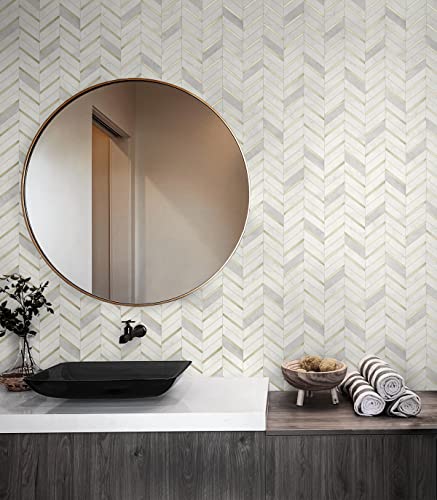
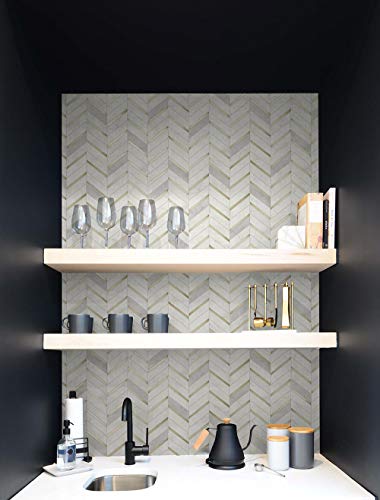
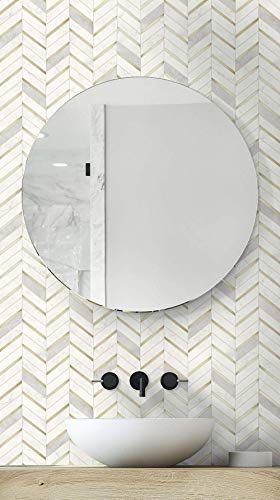
The supplier gallery shows the pattern around cabinets, shelves, and mirrors. These scenes are useful for considering contrast, but they do not establish suitability for every wet, hot, or frequently cleaned location. This review’s application is an appropriate dry office wall under the actual product instructions.
The shared home-office desk guide can help define what must return after the project. Re-establish the working setup before buying additional decorative furniture. A wallpaper refresh has failed its practical purpose if both users lose a dependable place to work.
Installation is an ownership task
Read the delivered instructions before preparing the wall or cutting a drop. The assessed retailer description provides guidance about surface preparation, panel overlap, and new-paint curing, but the current supplied instructions should govern the exact installation. We have not tested an alternative method.
Arrange a suitable clear working area for measuring and cutting. Keep track of the intended top of each panel and its relationship to the previous one. If alignment becomes difficult, stop and reassess rather than stretching the material to make a mismatched seam appear correct.
Do not promise yourself a universal completion time. Room geometry, furniture movement, surface condition, and experience all change the effort. A short online demonstration does not include every task your office may need before the decorative part begins.
If the installation needs repeated improvisation, consider getting appropriate practical help or reducing the project’s scope. A small planned section that follows the guidance can be a more sensible goal than an entire accent wall undertaken to consume the rolls you bought.
Care, later removal, and leftover material
Follow the current cleaning instructions rather than treating vinyl as a finish that accepts any cleaner. The wallpaper’s ability to tolerate wiping does not establish resistance to every chemical, abrasion, or repeated contact with furniture.
Keep spare material labeled with the pattern and purchase details if retaining it for a realistic repair. Store it as directed so it does not become a damaged roll in a cupboard. Retaining a little useful material differs from reserving space for every offcut indefinitely.
Think about the eventual removal situation before applying the first panel. Does the property owner require the original finish restored? Would wall repair alter the total cost of the refresh? We cannot guarantee damage-free removal, and the answer should form part of the decision rather than becoming a surprise when you move.
Who should choose NextWall for New Year 2027?
Consider NW39205 when you have a suitable approved surface, want an intentional gold-and-gray wall feature, and can plan the panel quantity around the repeat. It offers a visual change without adding another object to the desk, but installation and later removal remain real responsibilities.
Skip it for a textured or otherwise excluded wall, when you need guaranteed damage-free removal, or when an existing picture would meet the goal. Choose an adjustable task light instead if poor working light is the actual problem; a decorative finish cannot resolve that need.
After checking a sample, substrate, and cutting plan, view the exact NextWall NW39205 roll on Amazon. For the wider room setup, explore the Home Office guides. The January benefit should be a room that remains practical throughout the year, not simply a stronger background on the day you photograph it.
Explore more practical product decisions in our Buying Guides hub.
Sources and review scope
Matching NW39205 retailer pattern specifications
Source research: October 13, 2026. The matching retailer record and supplier gallery were assessed; direct Amazon detail access was limited. No hands-on testing, live-price comparison, or verified-stock claim.