

An acoustic guitar occupies different space while being played than while standing in a photograph. The neck extends to one side, the player’s strumming arm moves, and the chair must support a useful position without trapping the instrument against an armrest. Test those movements in your rental before assigning a permanent practice corner.
The 2026 Houzz fall report offers context for homes shaped around personal routines. A guitar practice spot is our application of that approach, rather than evidence that a particular instrument or furniture type has newly increased in demand. The practical aim is a session you can begin and finish without moving half the room.
Begin with your existing instrument and chair
Choose the guitar you actually use, including its case and any ordinary accessories. An acoustic instrument cannot be represented fully by the footprint of a small floor stand. Hold it in your normal playing position and check the neck, body, and both arms. If your technique or physical comfort needs specialist guidance, resolve that with an appropriate teacher rather than using a decorating article as posture instruction.
Try a stable existing chair suited to your own playing position. Armrests may interfere with the guitar body or your movement, but removing them is not automatically appropriate for every chair. Follow the furniture’s design and instructions. Avoid buying a stool simply because it looks like music-room furniture; the relevant question is whether your actual seated session is comfortable and controlled.
Test the sweep around the seated player
With the instrument supported as intended, move through ordinary playing and putting-down actions slowly. Check the guitar neck’s clearance from walls, lamps, glass, and nearby furniture. Allow for getting into the chair and standing up afterward. A space can be adequate once you are seated but awkward every time you lift the instrument into position.
Do not test by deliberately bumping the guitar against an obstruction. If clearance looks doubtful, move the furniture or choose another position before playing. The folding music-stand guide addresses a related rental issue: the equipment must work in its open, occupied configuration while leaving the room’s normal route usable. Include the stand here only if you actually read from one.
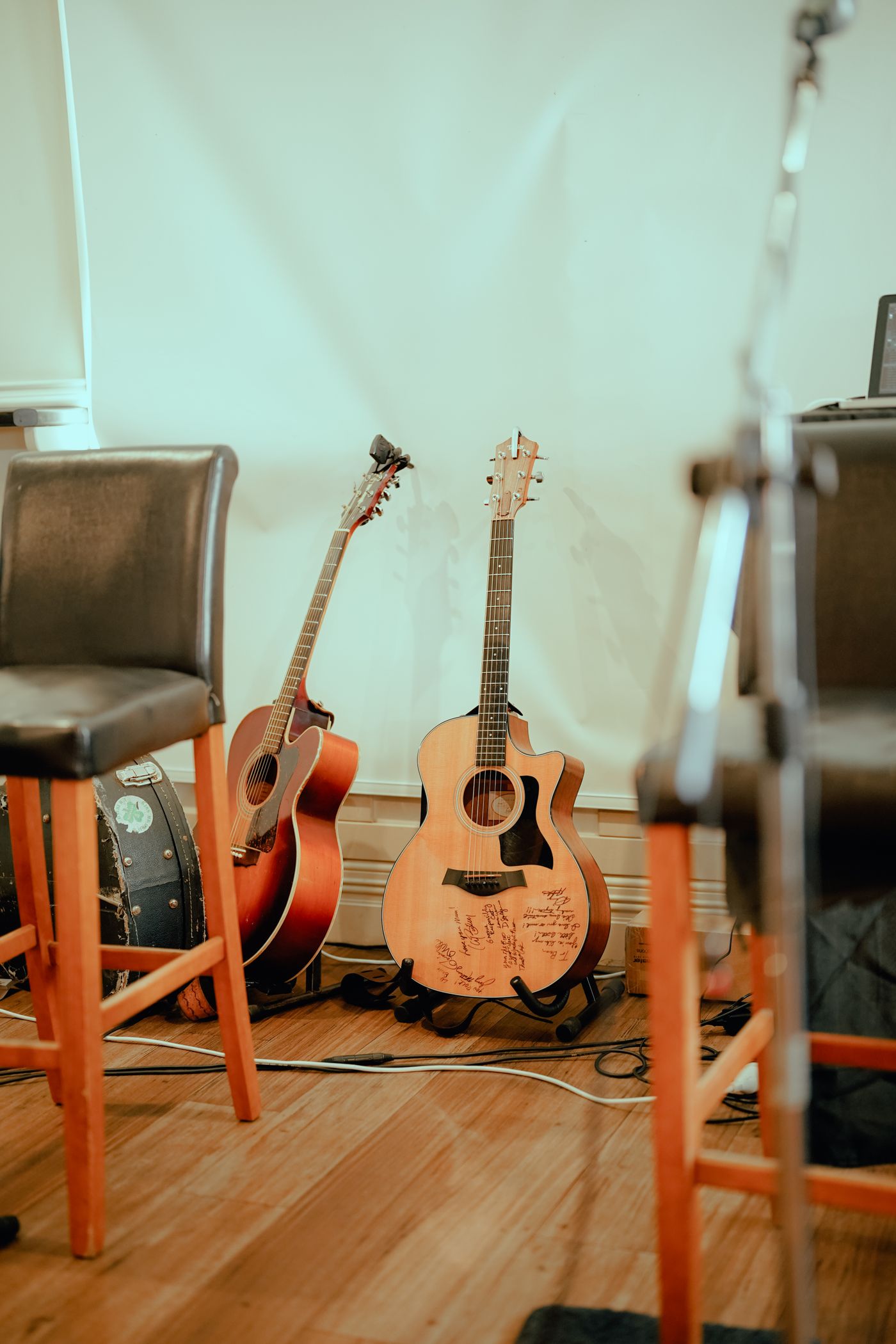
Keep the floor route clear during practice
Inspect the room with the chair pulled out, the case open where you normally place it, and any stand in use. Check doors, drawers, and the path used by other residents. A closed guitar case standing neatly against a wall does not show the floor area required when you open it. Do not let the case become a long low obstacle across a shared walkway.
Choose a case-opening position that the maker’s instructions permit and that supports the instrument appropriately during removal and return. If that position is outside the practice corner, include the short transfer in the trial. It may still be convenient, but it should be intentional. Avoid relying on an unstable chair edge as the place to pause while rearranging the room.
Separate practice access from instrument storage
A stand can make an instrument accessible, but it is not automatically suitable for every guitar finish, shape, household, or storage interval. Check the stand manufacturer’s compatibility information and the guitar maker’s guidance. Do not assume generic padding establishes finish compatibility or that a stand protects the instrument from children, pets, sunlight, or accidental contact.
Fender’s acoustic-guitar care guidance discusses keeping an instrument in its case as protection from ordinary household hazards. Apply care information appropriate to your own instrument and circumstances. This article does not prescribe a humidity range or claim that an open display is equivalent to a controlled storage environment. If your guitar has specific requirements, make those part of the location decision.
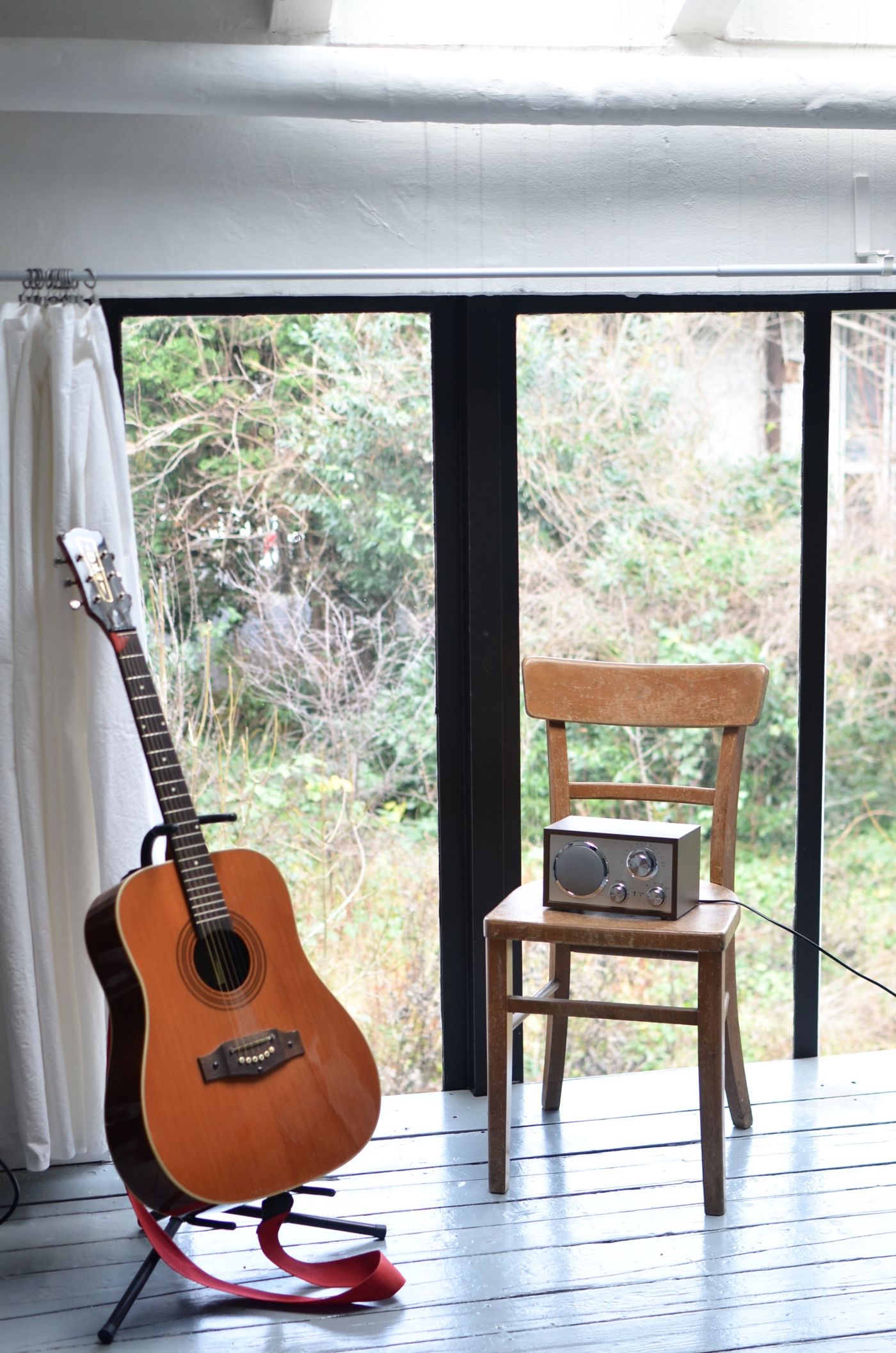
Read the room’s light, heat, and household use
Watch what happens in the proposed corner through a normal day. A spot that looks calm in the evening may receive direct sunlight or sit beside an active heat source earlier. Check the guitar maker’s placement guidance before treating that position as storage. A convenient place for a chair does not necessarily provide suitable conditions for keeping the instrument out between sessions.
Keep the instrument away from a casual drinks position or the place where visitors put bags. Do not use the guitar body as a reminder to keep a route clear; change the route or storage arrangement. If practice happens in a busy shared room, plan when the instrument comes out and when it returns rather than trying to solve every household conflict with a larger stand.
Agree on practice time without promising soundproofing
Talk with the people who share the home about a realistic practice window, length, and room. Check applicable building or tenancy requirements where relevant. The guitar’s natural sound and the household’s tolerance matter more than whether the corner looks quiet. Give others an easy way to raise a scheduling issue before frustration becomes the normal background to practicing.
Soft furnishings may change how a room feels or sounds, but an ordinary rug or curtain should not be sold as verified soundproofing. This layout guide does not establish acoustic isolation between apartments. If transmission is a serious constraint, obtain advice appropriate to the building and activity rather than assuming a decorative purchase will resolve it.
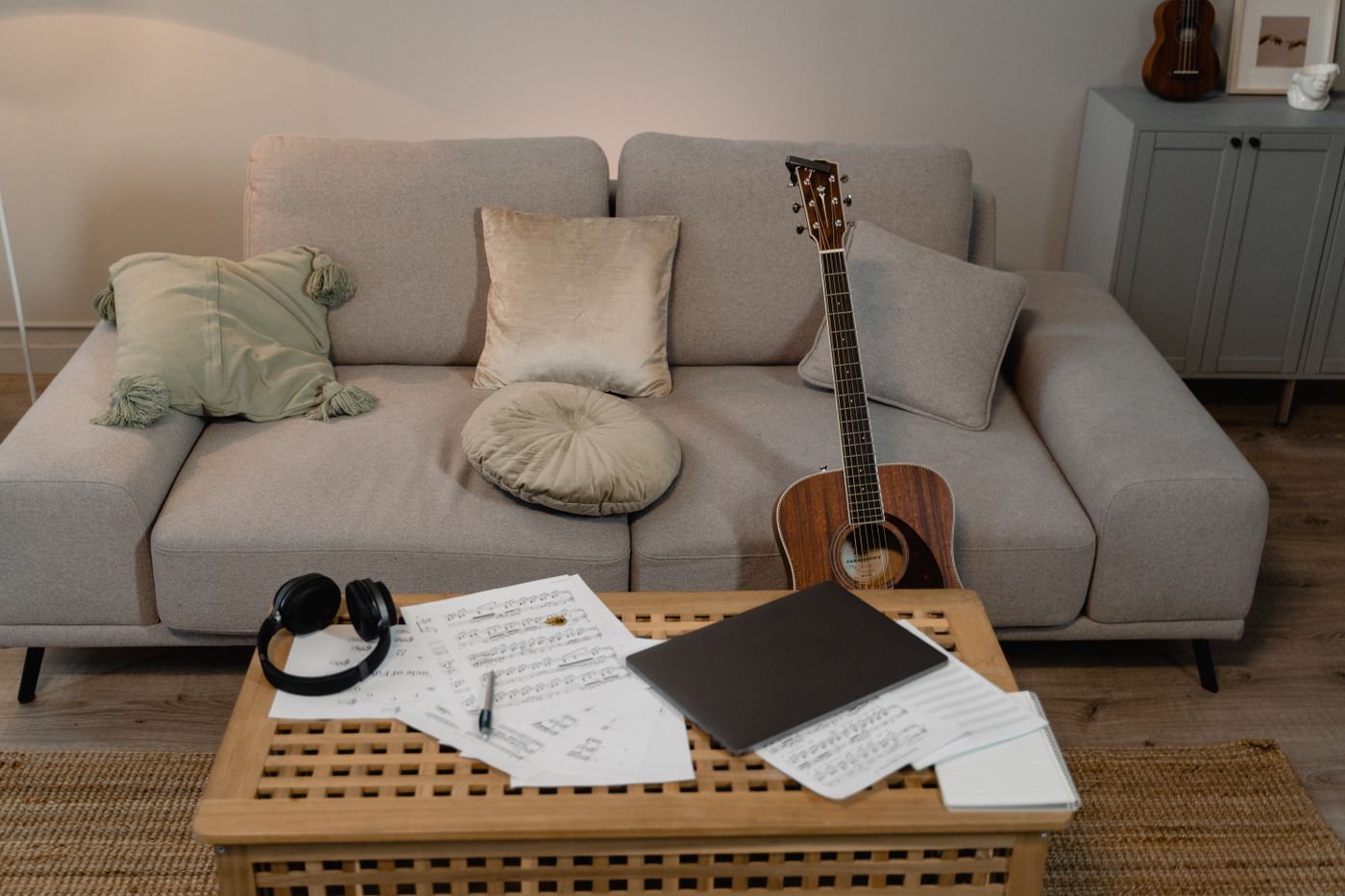
Give accessories a small, specific destination
Keep the tuner, picks, and other regularly used accessories where they can be retrieved without searching an unrelated drawer. Retain any care instructions and keep small items appropriately for the household. Avoid clipping accessories onto the guitar or leaving them against its finish unless the relevant manufacturers permit that use. Convenient does not mean compatible.
Place a notebook or reference material only if it supports your actual practice. A stack of music books on a narrow stool can turn the instrument-return sequence into a balancing task. Use the existing shelf or desk if that works. The digital-keyboard practice layout offers a comparison with a different instrument, whose keys and fixed playing width create their own space requirements.
Rehearse the end of the session
Before making the corner permanent, complete the whole sequence: retrieve the guitar, sit, practice briefly, put accessories away, return the instrument appropriately, and restore the shared room. Check how long the furniture reset takes and whether another person can still use the room afterward. A good playing position can still fail if packing away is consistently inconvenient.
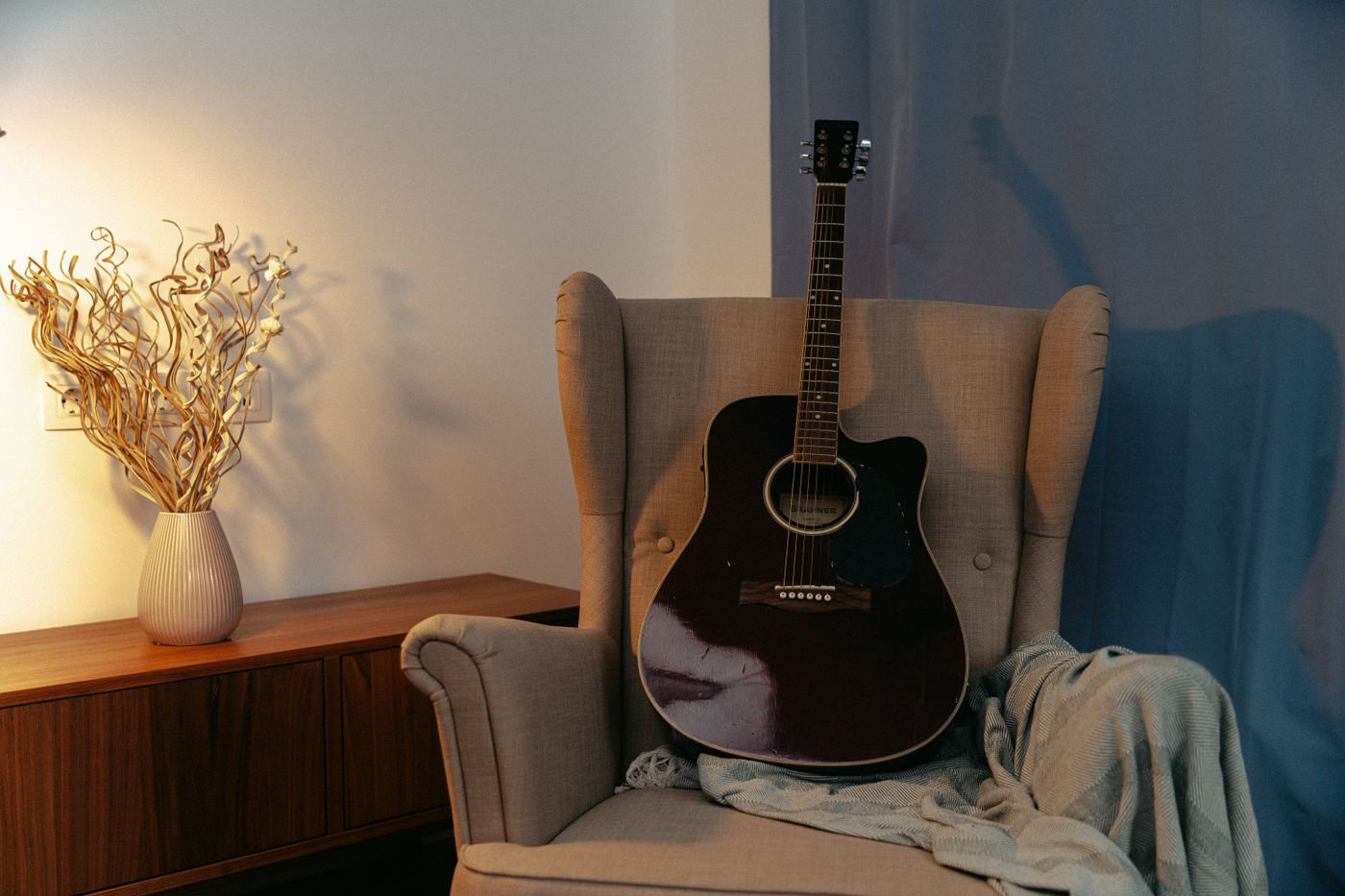
The photograph of a guitar on a chair is staging context, not a recommended storage arrangement. Use the instrument’s appropriate case or compatible support according to its guidance. If the trial keeps requiring an improvised resting place, fix that specific gap before adding decorative objects to the corner. The guitar needs a planned return destination.
Buy furniture only for the problem the trial identifies
If the existing chair and suitable instrument storage work, keep them. If a replacement is needed, record the actual reason and dimensions before shopping. Consider its delivery route as well as its footprint. For a layout competing with another listening activity, the rental vinyl corner guide helps distinguish equipment access from usable occupied space.
The successful practice spot supports the instrument, the player, and the household’s shared use of the room. It may occupy a corner only during the agreed practice window. That flexibility can make a small rental more useful while preserving a hobby you can return to regularly, without turning the entire room into permanent instrument storage.
Explore related decisions in our Small-Space Living hub.
Sources and editorial scope
Editorial research checked October 23, 2026. Published trend reports are context for these editorial applications, not verified live keyword rankings. Practical household guidance; photographs do not document a tested household or authenticate pictured materials.
