
You sit down to write a birthday card and spend the first ten minutes looking for an envelope, a working pen, and the recipient’s address. After writing, the card waits on a desk because mailing it has become a second unfinished task. In a small home, a compact correspondence kit can connect those two stages without creating a permanent stationery station. If you are working on the same space, A Compact Shoe-Care Kit for a Small Entryway covers the next decision in more detail.
The aim is modest: gather enough to write one letter or card, prepare it correctly for the intended mailing service, and send it. The kit is for outgoing personal correspondence. Incoming bills and official records belong in the family paperwork system, where they can receive their own decisions. Keeping that distinction makes the writing kit easier to carry and prevents personal messages from becoming mixed with administrative deadlines.
Choose a real occasion before gathering supplies
Begin with one message you intend to send. A thank-you note, a birthday card, or a letter to someone you miss gives the kit a practical starting point. Decide who will receive it, whether you want to mail or hand-deliver it, and when you need to finish. You can then select materials for that message rather than shopping for an imagined year of elaborate correspondence.
Bring together the cards, writing paper, envelopes, and pens you already own. Separate usable basics from keepsakes and decorative pieces you do not expect to use. You do not need to discard sentimental stationery to make a working kit; it can remain with its owner elsewhere. The active kit should contain items you are comfortable writing on today. Keeping treasured paper there while refusing to use it can make the kit seem fuller than it is.
Pair paper and envelopes before storing them
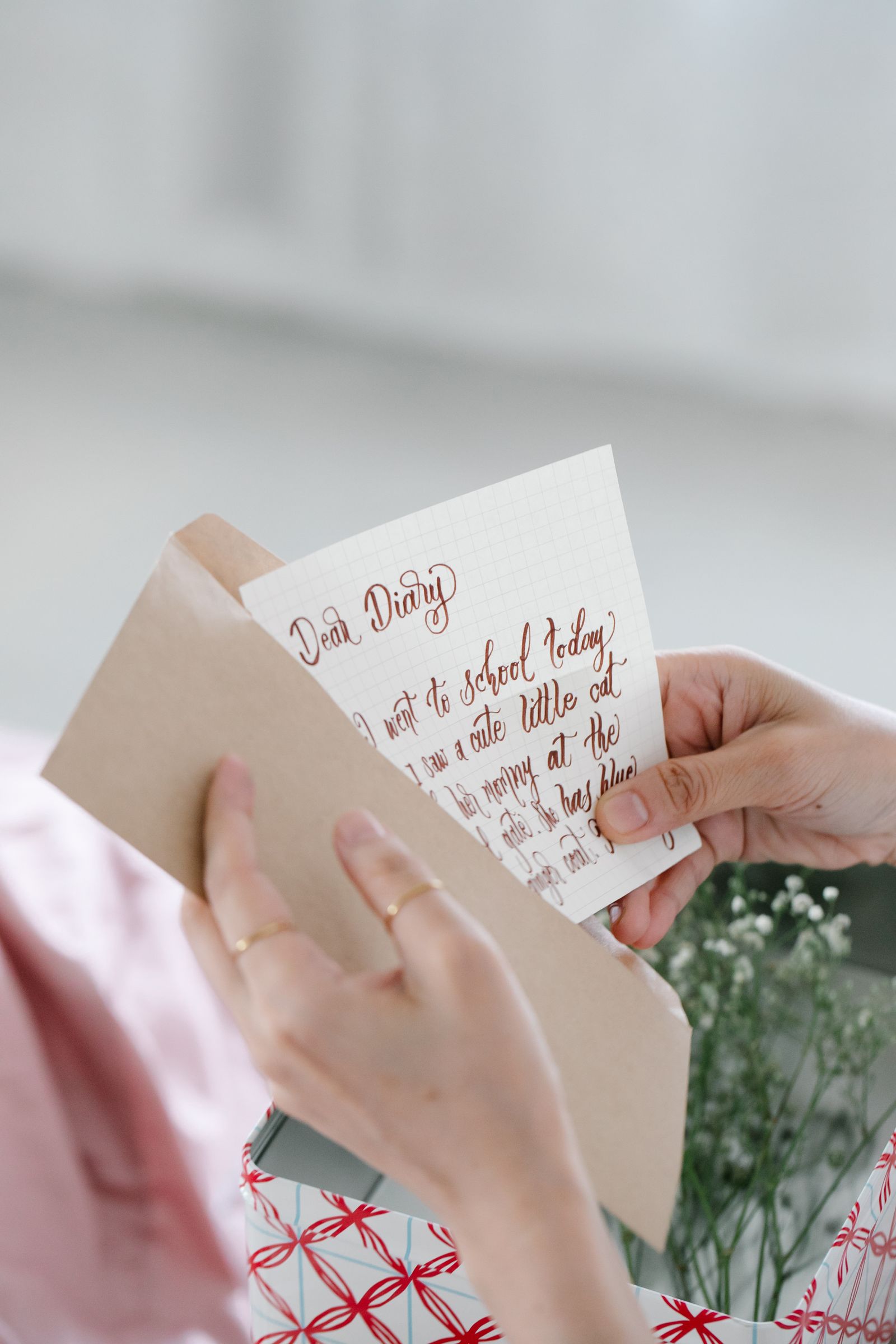
Put suitable envelopes with the cards or sheets they will carry. Check the fit by inserting the actual card, rather than relying on an envelope’s familiar appearance. Leave enough space to insert and remove the contents without damaging them. A greeting card with decorative additions may need a different mailing decision from a plain letter, so avoid treating every item in the kit as interchangeable.
Choose a folder, shallow box, or existing pouch that keeps the selected paper readable and the paired envelopes together. One divider for blank materials and one for the current message may be enough. A tightly packed file that bends cards or makes you unload everything is less useful than a smaller supply stored comfortably. Let the available storage hold your working quantity, with unusual or oversized pieces kept separately and clearly identified.
Include tools that complete the ordinary message
Test a writing pen on the paper you plan to use before starting the final message. Keep a suitable backup if you already have one, and return nonworking pens to their owner’s repair or disposal decision. A pencil for drafting, a small address reference, and whatever sealing method the envelope requires may belong in the kit. Decorative tools should earn their place through actual use rather than through the promise of making letters more special.
Keep tools secure and appropriate to the household. Children who help with cards may use a different selection under adult guidance; adult tools do not become child-ready because they share a stationery pouch. Avoid turning the kit into a craft supply box. If scissors, ribbons, and several adhesives are needed for a particular project, bring those items for that project and return them to their established storage afterward. If you are working on the same space, Organize a Small Mending Kit and Get Repaired Clothes Back Into Use covers the next decision in more detail.
Keep addresses available without displaying them
An address reference can be a private digital contact list or a small paper record stored securely with its owner. Choose whichever you reliably maintain. Confirm an address when you have reason to think someone has moved, and distinguish the recipient’s mailing address from a former home or a contact note. The kit can hold a reminder to check an address without leaving personal details visible on a shared dining table.
If several people use the kit, give them access only to the information needed for their message. A child can write a greeting while an adult handles the address and postal check. Do not copy an entire household contact list onto a decorative wall chart for convenience. A simple record of the occasion and intended recipient can remain outside the private address file if you want a visible reminder.
Make the writing position temporary and comfortable
Take the kit to a supported writing surface where the paper can lie flat and the writer has suitable light and seating. Remove drinks and unrelated objects from the immediate paper area. If the dining table is the available surface, use the multipurpose dining-table guide to agree on the writing window and the next use. A correspondence kit does not require the table to stay reserved until a letter is mailed.
Lay out only the materials for the current message. Keep extra cards and envelopes inside the kit so a short note does not spread into a sorting session. A rough draft can help when you are unsure how to begin, but it need not become a formal writing exercise. Write something specific to the recipient: the moment you appreciated, the news you want to share, or the invitation you actually mean to make.

Define a useful stopping point for an unfinished letter
Sometimes a message needs more thought or you are interrupted. Put the draft and its paired envelope in the current-message section. Add a brief next action, such as “finish the last paragraph” or “confirm the apartment number.” The next writer should not need to decipher whether an envelope is blank, addressed, or already ready to send. Keep a private unfinished message folded or enclosed when the kit is shared.
Limit active messages to the number you can realistically finish. Several half-written cards can make a portable kit just as difficult to use as a cluttered desk. If one message has become emotionally complicated, choose a separate place for it and give yourself time; do not let it hide every ordinary card behind it. The kit should support the next practical action without pressuring you to write on a fixed schedule.
Check mailing requirements for the finished item
For U.S. domestic mail, use the current USPS letter and postcard instructions to check envelope preparation, addressing, postage, and mailing options. The appropriate preparation depends on the actual piece, including its size, shape, weight, and contents. This guide deliberately does not quote a fixed stamp price or assume that every greeting card qualifies for the same postage.
Use the relevant postal service’s instructions for international mail or correspondence sent from another country. Bulky decorations, unusual envelopes, and contents other than paper can change the requirements. Confirm those details before sealing a complicated item. If uncertain, obtain help from the service handling it; a correct mailing decision is more valuable than completing the kit with a stockpile of postage that may not suit your letters.
Give ready mail a specific departure
A sealed, correctly prepared envelope needs a planned route out of the home. Connect it to a real mailing opportunity: the next trip past an appropriate collection point, an available service option, or a hand-delivery visit. Put it with the things for that departure only when that location will protect it and its private information. A pile marked “outgoing” is not a route if nobody knows who will take it.
When another adult agrees to carry it, make the handoff explicit: which envelope, where it is going, and whether it is prepared for that mailing method. Do not assume someone will add postage or correct an incomplete address. For the broader entrance routine, see mail, packages, and returns in a small entryway. Keep correspondence awaiting writing inside the kit rather than mixing it with ready departures.
Handle several cards without losing the message stage
For a group of birthday cards or seasonal greetings, keep the recipient list private and mark the actual stage for each message. Drafted, addressed, prepared, and sent are different states. A check beside a name should mean the same thing throughout the group. If you mark “done” when the wording is finished, do not later treat that mark as evidence that the envelope left the home.
Work in a small group that fits your available writing time. Prepare paired materials, write the personal messages, and check each recipient before sealing. Avoid a large assembly line if it makes private messages or envelopes easy to mix up. Before handing over a group for mailing, confirm that each finished piece is correctly prepared for its own contents and destination.
If several family members sign one card, keep a clear place for the current card and a named person responsible for its final check. An unsigned card awaiting another person should not be placed with ready outgoing mail. Let the last signer know what remains to be done; they may be adding a message without agreeing to address or mail the envelope. That small distinction prevents a shared greeting from becoming an assumed responsibility.
Finish with a small replenishment decision
After sending a message, return unused tools and paired materials to the kit. Remove rough drafts according to your privacy preferences. If you want a record, note the recipient and occasion in your private list; you do not need to retain every discarded wording attempt. Check only the supply that was consumed. One missing envelope is a reason to resolve an envelope shortage, not automatically a reason to buy a large stationery assortment.
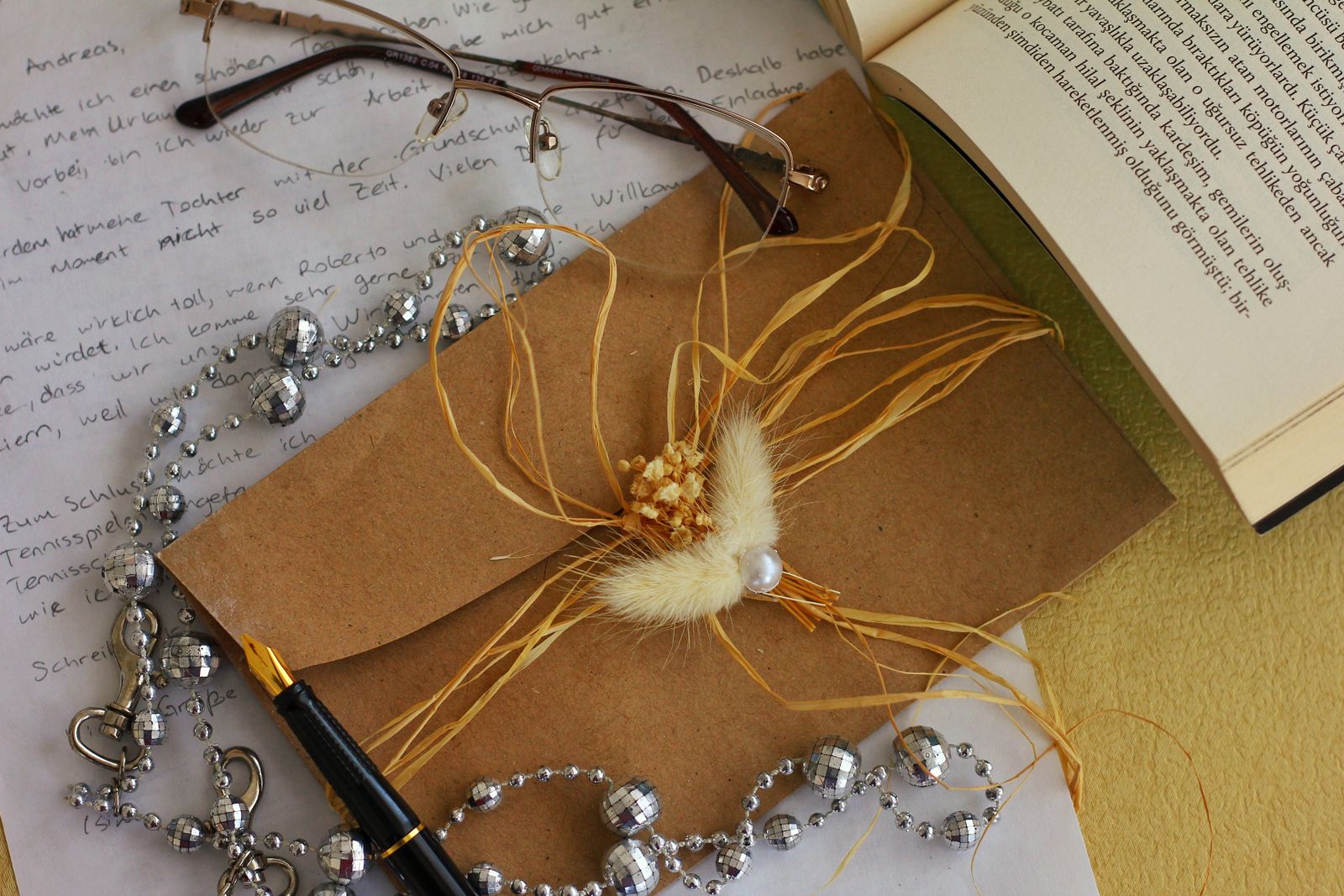
Store the closed kit where the usual writer can retrieve it easily, such as a home-office shelf or an existing personal drawer. Explore the home-office hub for the surrounding workspace and the Organization hub for other household belongings. The useful measure of this system is completed correspondence: a message that is written, properly prepared, and actually sent. A small working selection and an explicit departure can make that happen without giving stationery more room than the messages need.
