

A baking sheet can fit your oven perfectly and still be awkward to wash in a small sink. One end rests on the rim, water runs onto the counter, and a second dirty pan waits underneath it. Scrubbing harder does not solve that space problem. A better sequence starts with the pan’s finish, clears somewhere to handle it, and treats washing and drying as one job.
This guide covers an ordinary hand-washing setup for baking sheets. Your pan’s own care instructions take priority: bare aluminum, coated pans, insulated sheets, and other materials do not share every cleaning rule. The photographs show baking and sink situations, with captions identifying context rather than claiming every photographed pan uses the same method.
Identify the pan before choosing the cleaner
Look for the manufacturer’s name and product information. Determine whether you have uncoated metal or a nonstick finish, and whether its instructions allow soaking or dishwasher use. A dark cooking surface is not enough information to identify the coating. If the pan is older and its identity is uncertain, start by finding its paperwork or asking the maker instead of applying a dramatic online cleaning recipe.
For example, Nordic Ware’s Naturals care instructions recommend hand washing with warm, soapy water and advise against dishwasher use because detergent can discolor the aluminum. That is guidance for those pans. It does not establish the correct treatment for every sheet sold by another brand.
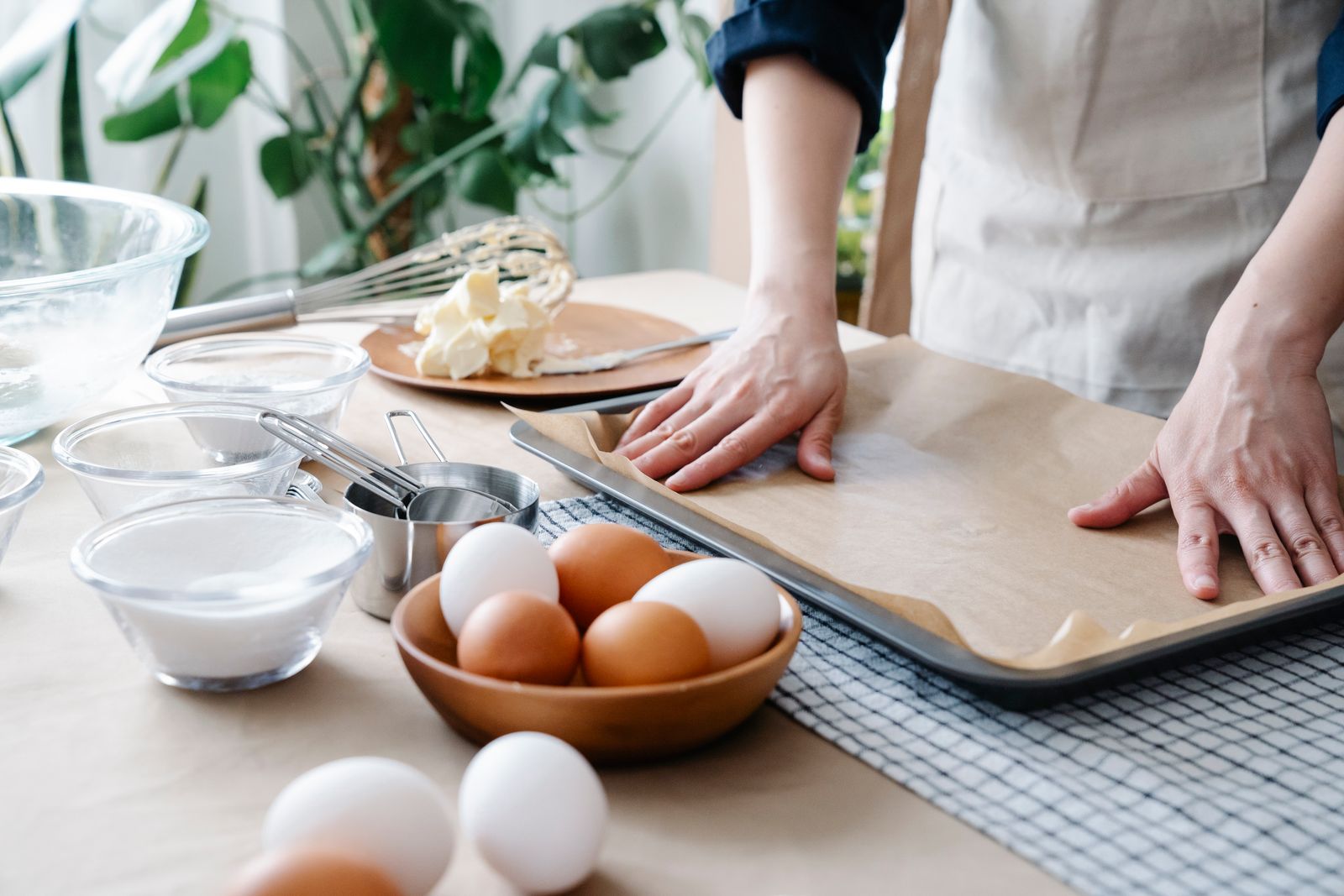
Let the sheet cool and clear a handling area
Wait until the pan is safe to handle and follow its directions about cooling before washing. Keep it away from the edge while it cools. Do not plunge a hot sheet into cold water to speed the process. Clear food, sharp utensils, and fragile dishes from the sink so they cannot become hidden under a large pan.
Prepare a nearby dry area for the cleaned sheet before you start. Check whether the pan will stand securely in your drying arrangement. If it cannot, use a suitable surface protected from water, with room for the sheet to rest without blocking the whole kitchen. A pan left precariously across the faucet is not a drying plan.
If dinner cleanup has filled the sink, wash smaller dishes first or move them to an appropriate temporary place. This is a sequencing choice, not a reason to purchase a bigger rack immediately. The daily small-kitchen cleaning guide explains how to keep tasks moving through a limited workspace.
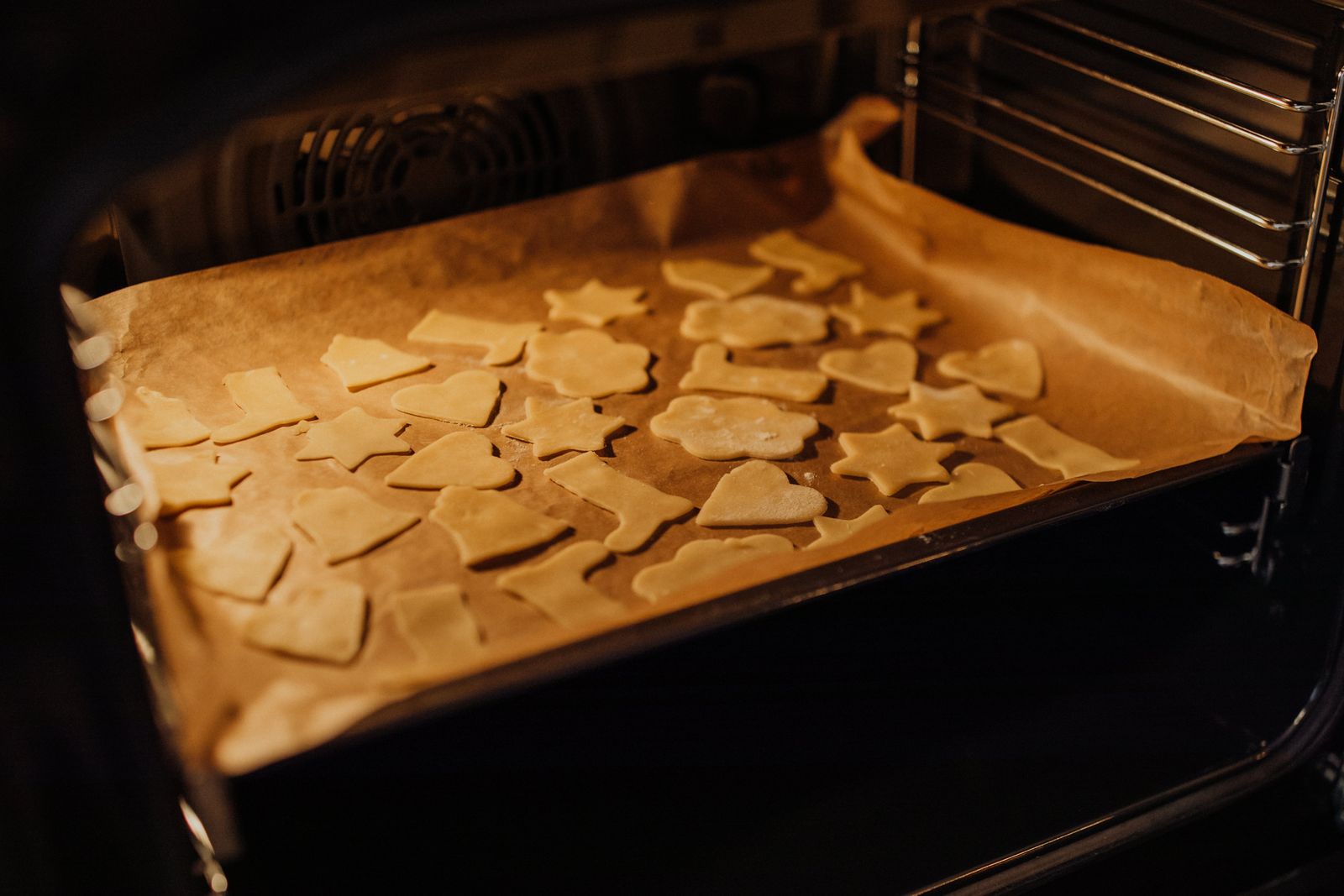
Remove loose food without scratching the surface
Discard loose crumbs and collect removable food residue before adding water. Use a tool the pan’s instructions permit. Do not reach for a knife because it happens to be nearby. A nonstick coating in particular needs utensils and cleaning tools that will not damage its surface.
Separate loose food from residue attached to the pan. The latter may need time with an approved cleaning method rather than extra pressure. Check any liner separately. Parchment belongs to a different disposal decision; a reusable silicone liner has its own care instructions and should not be treated as part of the metal sheet.
Keep the sink drain’s own care requirements in mind. Collecting substantial crumbs and food before rinsing avoids making the drain the destination for every leftover piece. Do not assume an unfamiliar disposal system can handle material simply because the pan contains it.

Work in sections when the pan does not fit flat
Use comfortably warm water and an appropriate dishwashing product according to both product directions and the pan’s instructions. Support the sheet securely while cleaning one section. Reposition it to reach the other end instead of leaning it against a fragile glass or balancing it on a pile of dishes.
Keep the working angle low enough that runoff goes into the sink. If your faucet cannot rinse the entire sheet without spraying surrounding surfaces, rinse in smaller sections using a controlled flow. Dry incidental water from the counter promptly. An oversized pan requires deliberate handling, but it does not require flooding the kitchen. If you are working on the same space, Clean a Silicone Baking Mat in a Small Kitchen Without Folding It Into the Sink covers the next decision in more detail.
Clean the reverse side and rim where appropriate. A sheet used for roasting may carry residue on places that are easy to overlook when you focus only on the cooking face. Avoid forcing water into openings on insulated or specially constructed bakeware; consult the manufacturer’s guidance for those designs.
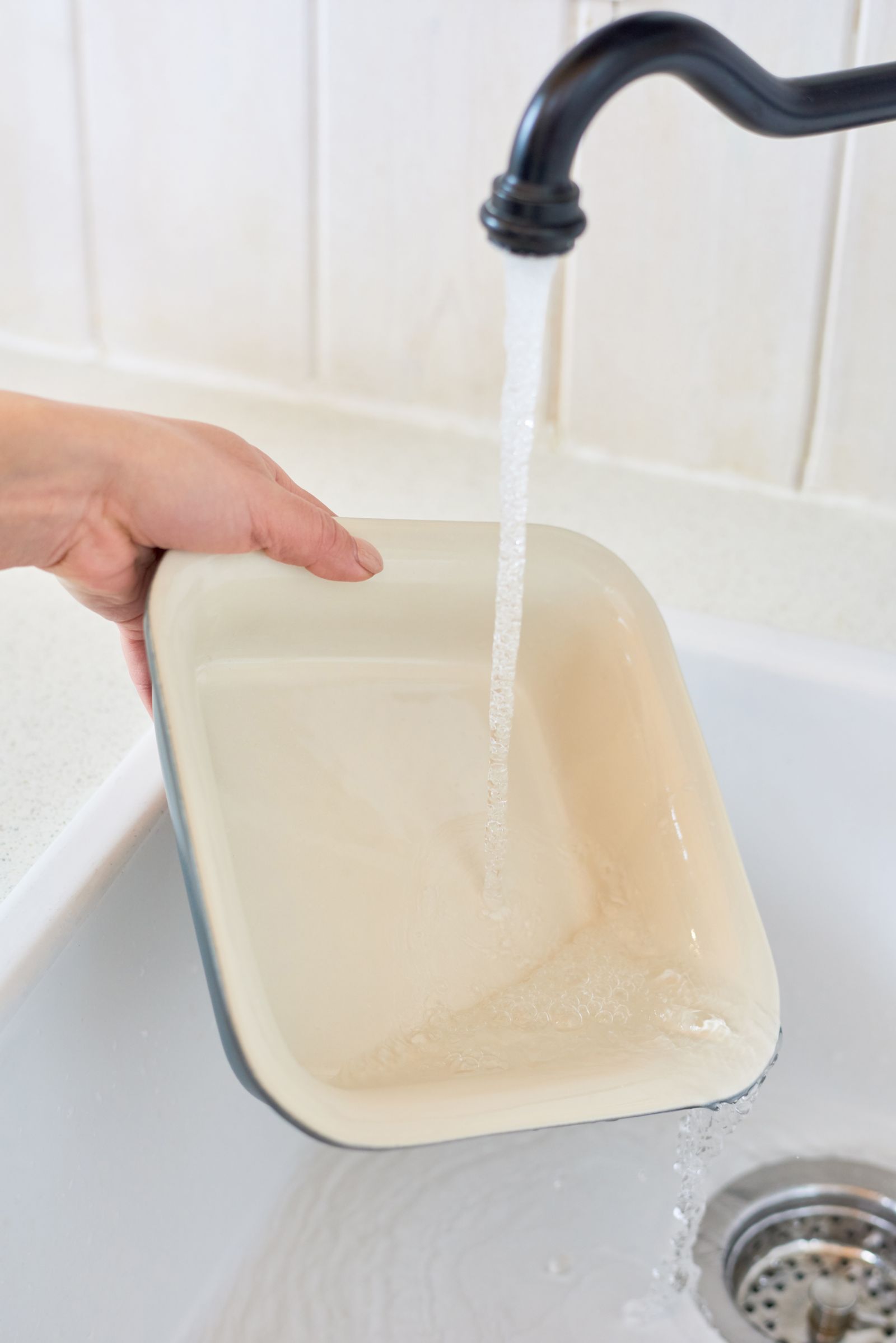
Stop before turning a stain into damage
A persistent mark needs identification. It might be remaining food, discoloration, or wear in the finish. Those are different problems. Do not keep escalating from detergent to abrasive powder to oven cleaner merely because the surface no longer looks new. Some products are unsuitable for the metal or coating beneath the mark.
Nordic Ware distinguishes cosmetic discoloration of its natural aluminum from effects on baking properties in its quarter-sheet care notes. Use the relevant maker’s assessment for your own pan. If a coating is peeling, the surface is damaged, or the construction raises concern, ask the manufacturer about continued use rather than disguising the condition with more scrubbing.
Never mix cleaning products to create a stronger solution. Avoid using a household degreaser or acidic treatment unless the pan’s maker specifically permits it. A general guide to kitchen grease buildup helps with the surrounding room, but cookware still needs its own compatible treatment.
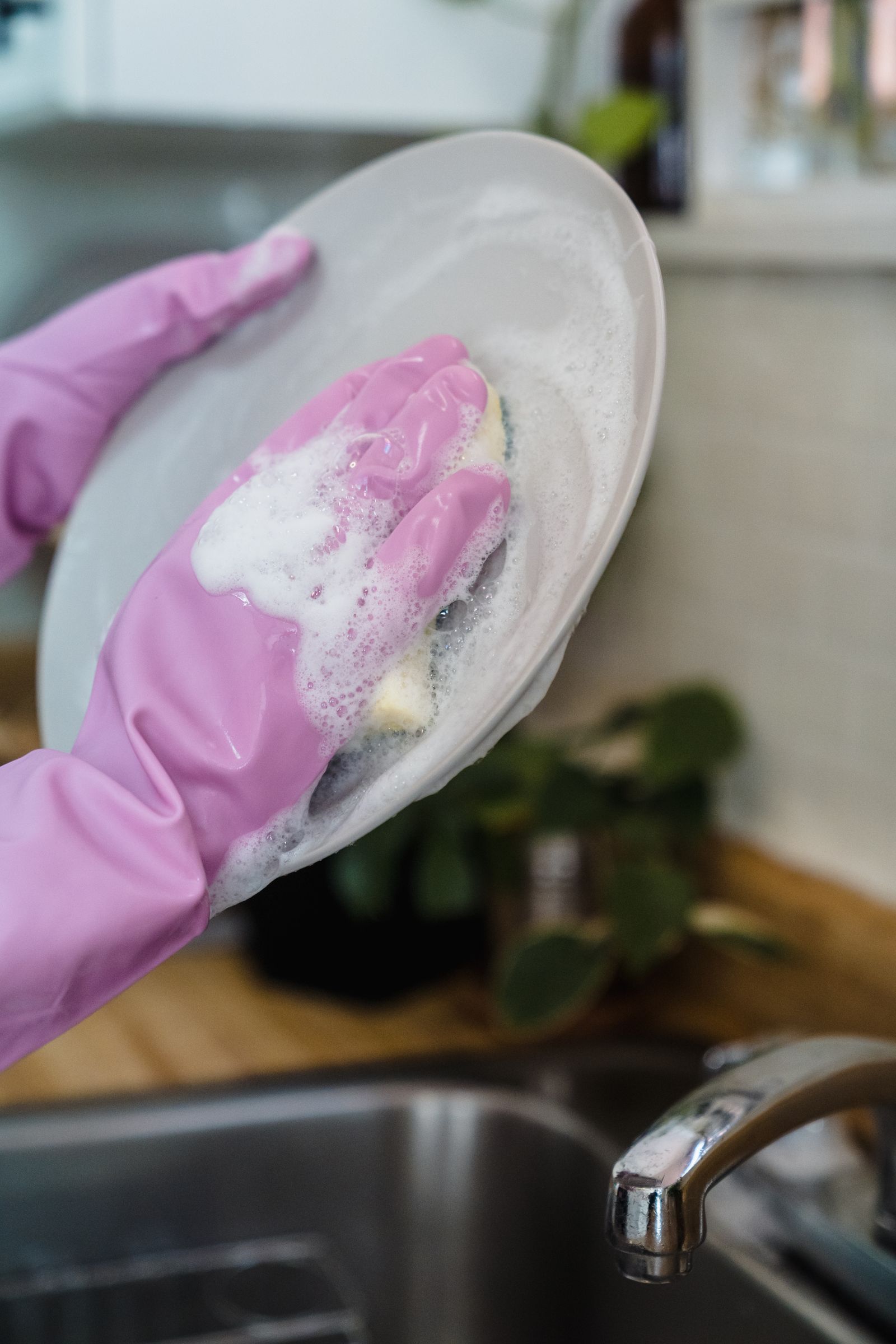
Rinse, dry, and inspect before stacking
Rinse away the cleaning product according to its directions, including the rim and corners. Inspect in good light for visible residue. Dry the sheet in a stable arrangement, following any material-specific instructions. Check the reverse side and edges before returning it to storage; a dry cooking face can conceal moisture beneath it.
Stack only when the pan is ready for storage. Protect a nonstick surface from contact with tools or other pans as the manufacturer recommends. Keep heavy cookware from pressing awkwardly against a thin sheet. Storage should let you retrieve the sheet without dragging its cooking surface across a rack or a rough edge.
A clean baking sheet also needs a reachable storage position. Our guide to storing pans without repeated restacking covers the surrounding cabinet arrangement without changing the sheet’s material-specific care instructions.
Adjust the next cooking session to the available sink
Keep a simple note if more than one person uses the pan: identify its material, the permitted cleaning tool, and the place it dries. This is especially helpful when similar-looking sheets have different finishes. Put the note with household care information rather than attaching something to a surface that enters the oven. The next person should be able to choose the correct method without remembering who last cooked with the pan.
If the same sheet creates a cleanup bottleneck every evening, look at the whole cooking sequence. Could you wash it before other dishes accumulate? Could an existing smaller pan handle the particular recipe without compromising the recipe’s needs? Could an approved liner simplify residue removal while still adding its own cleaning task?
Do not replace a sound pan solely because washing it takes planning. Try the revised sequence first. If you later need bakeware, measure storage, oven fit, and the sink handling space together. A sheet that is convenient to cook with but impossible to store or wash comfortably may not suit the household’s normal meals.
Finish by wiping the water left around the sink and returning the cleaning tool to its normal place. Explore Cleaning and the Kitchen hub for the surrounding routine. The useful result is a clean, properly cared-for pan and a kitchen ready for the next task, not a perfectly shiny sheet achieved by sacrificing its finish.
