

A small stack of fabric, paint, and flooring samples can be useful until nobody remembers which decision the pieces belong to. A square of green velvet might represent a chair you still want, a discontinued curtain, or a color you rejected three weeks ago. Sorting only by color makes the pile attractive without making the next purchase easier.
Give each active decorating decision its own small working group. Keep the physical sample with the product identity, intended location, and one unresolved question. When the decision closes, remove the rejected choices and retain only references that have a clear future use. That keeps a home-office desk available for ordinary work.
Houzz’s fall 2026 design report discusses personal, collected interiors. The practical application here is choosing materials deliberately rather than ordering an entire look at once. This is an editorial workflow for managing those choices, not evidence that sample organizers are trending products.
Name the decision before sorting the materials
Start with a sentence that describes an actual choice: curtain fabric for the bedroom’s existing rod, upholstery for one dining chair, or a wall color for an approved rental repaint. “House ideas” is too broad. It lets unrelated possibilities compete for the same attention and makes every sample feel unfinished.
Write the decision name on an existing envelope or folder. Add the room, the item being changed, and any fixed constraint. A landlord’s written paint restriction, an existing sofa color, or a chair’s upholstery requirements matters more than whether two samples photograph well together. Keep a link to the full instructions when the constraint needs more explanation.
For the supporting information, distinguish records worth retaining from inspiration you can revisit online. Our guide to physical and digital household records helps make that distinction. A tiny physical swatch can show texture; a saved product page can carry the detailed specifications without another printed packet.
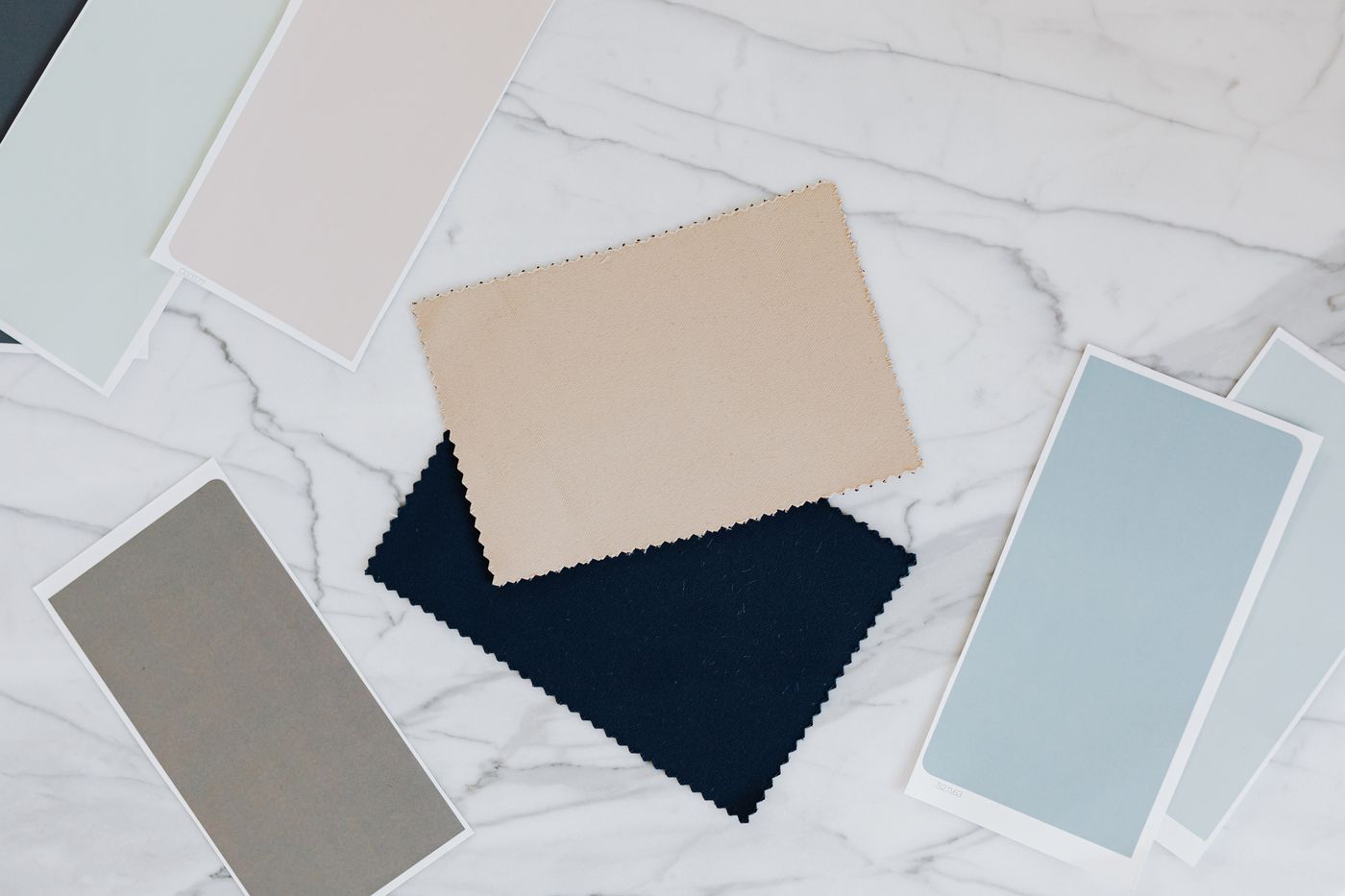
Separate exploring, deciding, and already purchased
Exploring means you are collecting possibilities without a planned purchase. Deciding means there is a specific item, constraint, and next action. Purchased means the sample represents something ordered or installed. These stages should not sit in one undifferentiated heap, because they require different follow-up.
An exploring group can be very small. Keep a few references that reveal a real preference, such as soft woven texture or a particular blue, and stop requesting near-identical alternatives. When an idea becomes a live decision, move its useful references into the working folder rather than ordering them again.
For an active choice, add a next step that somebody can complete: check the supplier’s care information, compare the fabric beside the sofa in evening light, or confirm whether the finish is available for the exact item. Avoid notes such as “research more.” They preserve the uncertainty without identifying what would resolve it.
For purchased items, keep the invoice or order reference separately from samples that might stain or shed. Record the exact variant and order date. A swatch from a product family does not necessarily prove the final supplied shade, and a later batch may differ. Photograph the installed item and keep its actual identification when matching matters.
Preserve the details that make a sample identifiable
Before removing packaging, copy the maker, collection, color name, product code, and source link. If the supplier identifies a lot or finish number that matters to the purchase, retain it. Do not label a material as linen, wool, solid wood, or stone solely because it looks that way in a small piece.
Put information on an accompanying card or removable sleeve when possible. Adhesive directly on a face you intend to compare may change how it looks or leave residue. Follow any return instructions for loaned sample books; they may need to go back intact, with the supplier’s labels and order preserved.
Include the sample’s limits. A paint chip is not a full wall. A small textile may show only part of a large repeat. A smooth finish piece may not reveal how the complete furniture joint is built. Record what remains unknown so the physical sample does not acquire authority it cannot support.

Compare a short list in the room where it will be used
Take only the relevant group to the room. Place samples beside the materials that will stay, then inspect them under the lighting you normally use. Keep the exercise manageable: compare two or three candidates, identify the difference, and return them to their folder. A desk covered with every sample tends to produce more combinations instead of a decision.
If daylight and evening light lead to different impressions, write that down as an observation rather than choosing a winner from one photograph. Camera processing and screens can alter color. Use pictures as memory aids and planning references, while relying on the physical material for the comparison it can reasonably provide.
For a patterned fabric, ask the supplier how much of the repeat the sample represents. For a floor finish, check the actual product’s suitability and installation information. For paint, use the manufacturer’s recommended sampling process where the property permits it. Do not transfer a material test from one surface to another merely because the colors seem related.
When two people share the office, give samples a defined return position before starting. The shared-desk handoff should still work after the decorating discussion. A folder that can close in one motion is more useful than a permanent arrangement that must be rebuilt every time someone needs the keyboard.
Use storage that respects the samples' shapes
Flat fabric squares can live together without being folded into hard creases. Thick finish blocks may need a small separate box so they do not emboss or damage paper references. Oversized loan books need a supported location that follows their return conditions. One container does not have to hold every kind of sample.
Keep a folder thin enough that each live decision can be retrieved without tipping the contents onto the floor. Do not force stiff pieces into a ring binder or punch supplier materials that must be returned. A reused mailer and a short index may solve the task before a specialized display case is needed.
Set the capacity from the space you can actually spare. The capacity ceiling method is helpful when sample collecting begins to crowd paid work or household paperwork. If the working box is full, close or pause a decision before requesting a new set. Buying a larger box should not be the automatic next step.

Close a decision instead of archiving the whole process
When an item arrives, compare its identifying information with the order. Keep the final product reference, relevant care information, and one useful sample if it has a plausible future job. A retained curtain swatch might help choose a later cushion; twelve rejected shades rarely need permanent desk space.
Return loan samples by their deadline. For owned samples, check whether the supplier offers a return or reuse scheme before discarding them. Avoid placing unknown mixed materials into a recycling stream simply because the backing looks like paper. If you pass pieces to a craft group, describe what you know and do not imply material properties you never verified.
Keep rejected options only when the reason remains useful: too sheer for the intended purpose, incompatible with the existing fitting, or discontinued in the required size. A short note usually preserves that lesson more efficiently than the object. Delete unnecessary duplicate screenshots when the physical decision folder closes.
Reopen only the question that actually changed
A delayed order or altered room layout may reopen one part of a decision. Retrieve that group and identify what changed. Do not automatically restart the entire room scheme because a single fabric became unavailable. The confirmed constraints and earlier observations should still reduce the work.
Use your regular weekly paper reset to check deadlines and unresolved supplier questions. This need not become a second project-management system. One live folder, one next action, and a clear closeout rule are enough for most modest decorating choices.

The measure of success is being able to explain what each retained sample is for and what happens next. If a piece cannot answer either question, it belongs in a small inspiration allowance, a return parcel, or an appropriate onward route. A useful collection supports a finished room while allowing the desk to return to everyday life.
Explore related household decisions in our Home Organization hub.
Sources and editorial scope
Editorial research checked October 16, 2026. Trend-report dates and limitations are stated in the article; these are editorial applications of published signals, not verified October keyword rankings. Practical household guidance; illustrations do not document a tested household or authenticate a pictured material.
