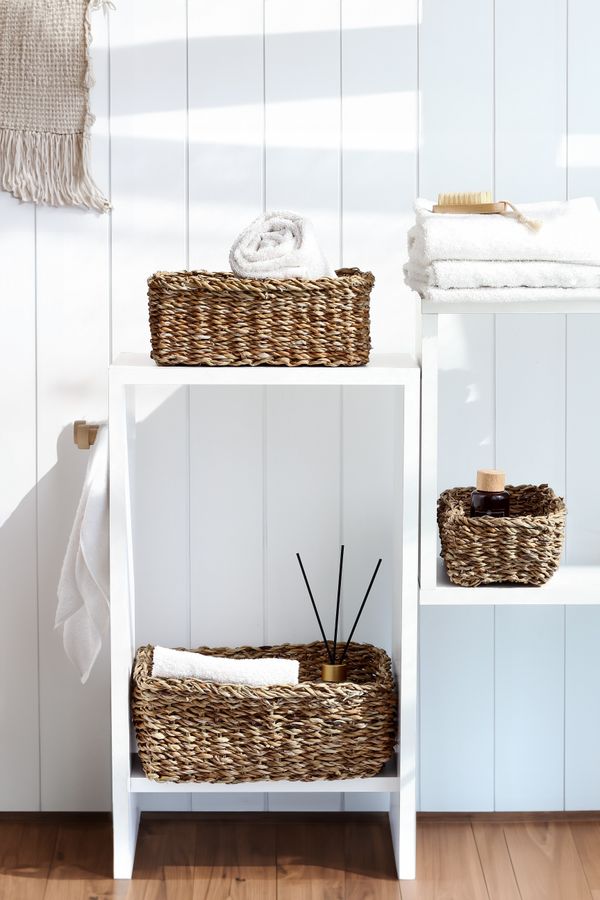
The reset basket is an appealing family-home trick: walk through the room, toss every out-of-place object into one basket, clear the surfaces, and restore visual calm quickly. Later, carry the basket around the house and return everything. If you are working on the same space, A Family Chore System for Small Homes That Doesn’t Need a Chart on Every Wall covers the next decision in more detail.
The first half works almost every time. The second half is where the method succeeds or fails.
What a reset basket is supposed to be
A reset basket is a transport tool. It temporarily collects objects that belong somewhere else so one person does not make twenty separate trips during cleanup. For a related step-by-step approach, see Does the One-In, One-Out Rule Actually Work in a Small Family Home?.
It is not a new storage category.

Why the method is genuinely useful in small homes
Small rooms show clutter quickly. Five unrelated objects on a coffee table can make the whole living room feel unfinished.
A reset basket compresses the travel time of cleanup. Instead of returning one charger, one sock, one toy, and one notebook individually, you collect them in one pass.
This can be especially useful during the realistic nightly reset for tired households.

The failure mode: the basket becomes a destination
If nobody empties it, tomorrow’s items land on top of yesterday’s items. Soon the basket contains mail, toys, hair ties, batteries, receipts, socks, and objects nobody remembers owning.
At that point the basket is no longer reducing clutter. It is hiding unresolved decisions.
Rule 1: one basket, one job
The basket’s job is “belongs somewhere else.” Do not mix donations, repairs, returns, incoming mail, or long-term storage into the same container.
Those categories have different next actions.
Rule 2: empty it on a trigger, not “later”
“Later” is not a system. Use a trigger:
- after dinner,
- before bedtime,
- when going upstairs,
- during the next morning launch,
- before the basket may be used again.
The exact trigger matters less than predictability.

Should every room have a reset basket?
Usually not. Too many baskets create permission to postpone putting things away everywhere.
I prefer one family reset basket or perhaps one per floor in a multi-level home. The tool should consolidate travel, not create a hidden-clutter network.
Should each person have a basket?
Personal baskets can work with older children or adults if each person is responsible for emptying their own. For young children, several personal baskets may be more complicated than one shared pickup routine.
Kids need simple destination storage
A reset basket only works if the final homes are easy. If returning a toy requires opening a high cabinet, sorting tiny categories, or moving another bin, the basket will stay full.
The guide to organizing a home so kids can put their own things away is therefore part of the method, not a separate issue.

Use it for cross-room clutter, not same-room clutter
If the book belongs on a shelf three feet away, put it on the shelf. The reset basket should collect items whose real homes require leaving the current zone.
Otherwise the basket adds an unnecessary step.
The stairs basket question
A basket near stairs can reduce repeated trips, but it must never obstruct the stairway or landing. Place it only where it is safe and does not narrow circulation.
Again, the basket needs a trigger: the next person going upstairs takes it and empties it.
What belongs in a reset basket?
Examples:
- a child’s sweater that belongs in the bedroom,
- a charging cable that belongs in the office,
- a hairbrush left in the living room,
- a book from another room,
- small toys that belong in the kids’ room.
What does not belong?
Mail that needs action, donations, broken objects, returns, dishes, damp laundry, trash, and anything with a time-sensitive or safety-related next step should follow their own workflows.
How the method fits an evening reset
I use the basket after trash and dishes are handled but before detailed tidying. First remove obvious exits. Then collect cross-room objects. Finally reset the current room.
This keeps the basket from becoming a container for things that should simply leave the home or go directly to the kitchen.

The 10-minute family version
One person carries the basket. Everyone identifies items that belong elsewhere. At the end, each household member takes responsibility for the items that belong in their zone.
This makes cleanup a routing problem rather than one person acting as the family’s delivery service.
The “basket must be empty” rule
The strongest rule is simple: the reset basket must return empty before the next reset begins.
If it cannot, ask why. The destination may be too difficult, the category may lack a home, or the item may need a decision rather than storage.

When a reset basket is the wrong tool
If the same five categories enter the basket every day, fix their homes instead. A recurring charger, backpack, shoe, mail pile, or toy may need a landing zone closer to where it is actually used. You may also find How to Keep a Small Home Clean With Pets Without Cleaning All Day useful for a closely related small-home problem.
The daily landing zone is a better solution for predictable repeated clutter.
Use the basket as a diagnostic
After a week, notice what appears repeatedly. Those objects are telling you where your home’s storage does not match behavior.
A reset basket can therefore reveal organization problems rather than merely hide them.
Explore this topic
Browse more practical guidance in the Family Home hub. Room focus: Small Rooms.

Expert conclusion
I like reset baskets because they make a fast visual reset possible without demanding dozens of trips. But they work only when the basket is understood as transportation. For the broader setup, How to Organize Pet Supplies in a Small Home Without Creating a Pet Closet is a useful next read.
Give it one job, one emptying trigger, and a hard rule that it returns empty. If the same objects keep cycling through it, redesign their permanent homes.
The method should shorten the path back to order—not create a prettier place for delayed decisions.