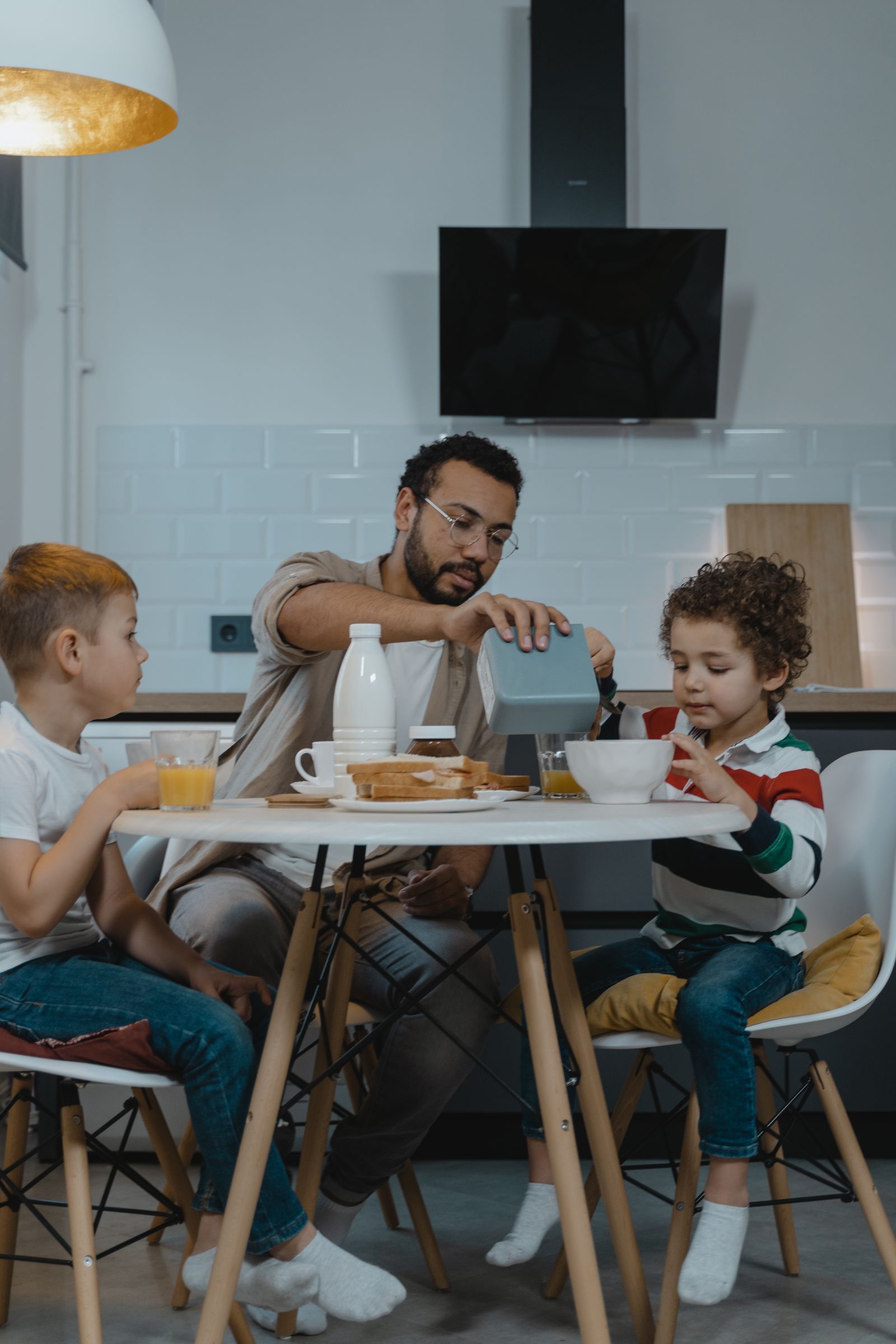
Breakfast becomes complicated when the household leaves in waves. One person eats before work, a child arrives at the table later, and someone else needs the kitchen after the first cleanup has begun. In a small home, yesterday’s bowl can occupy today’s only spare seat. For a related step-by-step approach, see The One-Basket Toy Cleanup System for a Small Living Room.
A staggered breakfast routine needs three decisions: who uses the eating space when, how food is served safely, and who completes the final reset. You can keep the arrangement simple without expecting everyone to eat at the same time or leaving the entire breakfast setup out all morning.
Map departure times before planning the menu
Write down the actual departure times for a typical weekday, including anyone who remains home. Work backward to identify realistic eating windows. Include dressing, school bags, transport, and the time needed to clear an individual’s place.
Do not start with an ideal shared breakfast if the household cannot use it. Two short rounds may be easier than one crowded sitting. A later eater may need a separate portion and a simple setup rather than a table preserved exactly as the early group left it.
Ask each person what regularly goes wrong. An adult may be searching for a mug while a child waits for a seat. Another person may arrive to find every clean spoon in use. Those details identify the bottleneck more precisely than �mornings are chaotic.�
Coordinate the eating plan with the family morning launch routine. Breakfast should connect to departure, not add a new collection of bags, reminders, and half-finished jobs around the kitchen.
Reserve usable seats, not a table covered with supplies
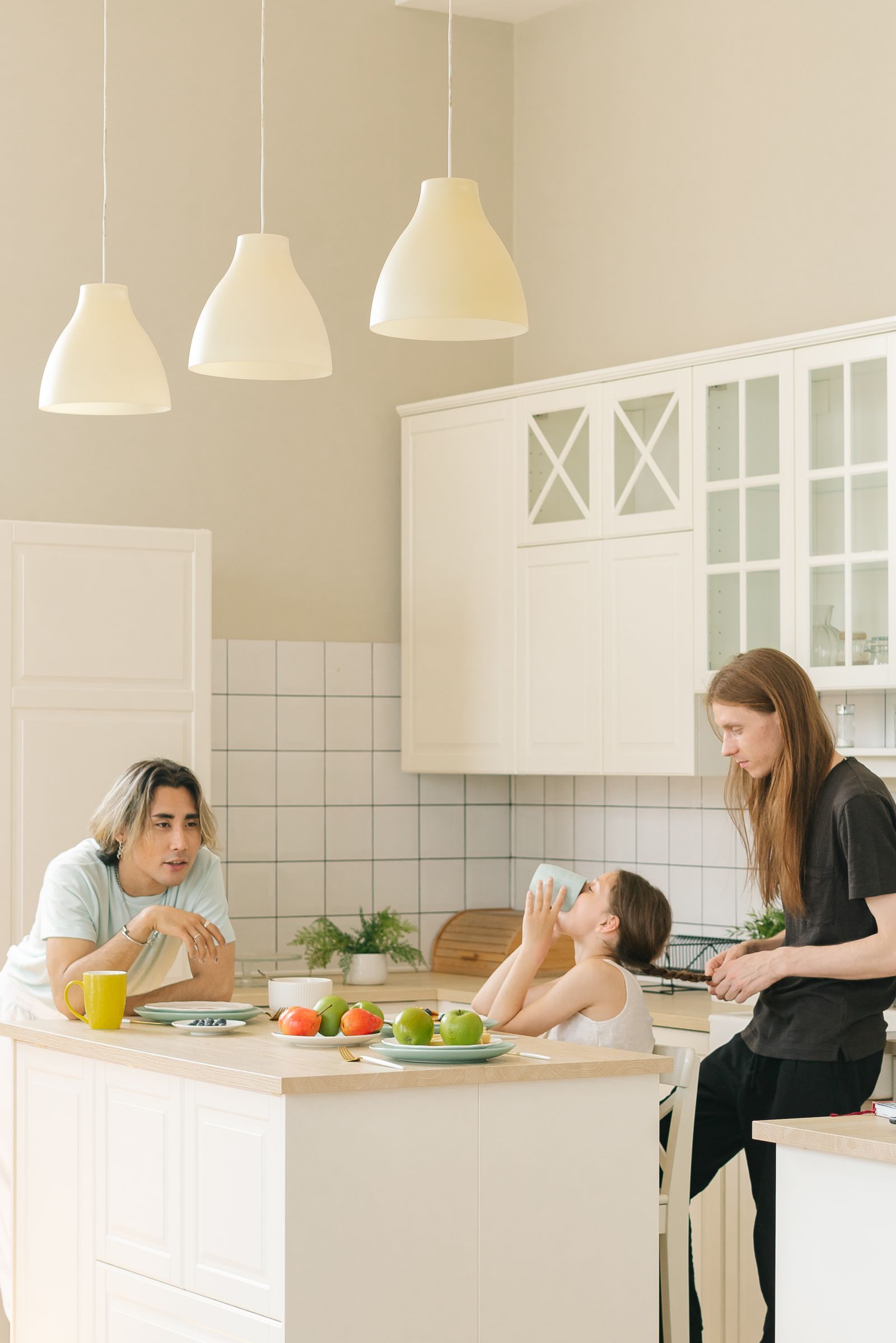
Count the eating positions available while someone is seated, with chairs in their normal used positions. Check the routes people need during breakfast. A chair tucked under the table after a photograph does not represent the space occupied by a diner.
Keep the place settings for the current round modest. Do not lay out four unused bowls and several cereal boxes if they consume the space the first two diners need. Store later-round supplies where they can be reached without displacing someone already eating.
Move school papers and household reminders away from the food-serving surface where possible. If the table also serves as a work area, agree on a brief changeover: personal items leave before eating begins and return only after the surface is ready for the next use.
Assign seats by practical need rather than appearance. A child who needs adult assistance should be in an appropriate supervised position, and an adult who leaves first should not have to climb around someone else’s occupied chair. Keep the arrangement suited to the actual family. If you are working on the same space, Family Movie Night in a Small Living Room: Seats, Shared Snacks, and the Finish covers the next decision in more detail.
Choose serving methods by food and supervision needs
Some foods can be portioned close to each person’s eating time. Others need adult preparation or a separate safe holding plan. Select the method for the actual food and its storage directions rather than leaving all breakfast ingredients on the counter for convenience.
Perishable food should not remain at room temperature throughout a long staggered morning. USDA’s food-safety guidance sets a two-hour limit at room temperature, reduced to one hour above 90�F. Follow food-specific storage requirements, keep cold items refrigerated as appropriate, and bring out what the current round needs.
Food suitability, allergies, and individual eating requirements remain household-specific. Use the family’s established guidance and keep items clearly identifiable where those distinctions matter. This routine is a space and handoff plan, not a menu or nutrition prescription.
Keep adult-controlled steps with an available adult. A child who can select a bowl may not be ready to use a hot appliance, handle a heavy container, or prepare a particular food. Do not turn a staggered schedule into unsupervised appliance use.

Separate preparation supplies from current diners’ supplies
Choose a modest preparation position for what is being used now. Keep the eating surface available for the people at that round. A shared serving item should have a reachable location that does not require someone to pass it over another person’s meal repeatedly.
For later diners, keep the necessary ready utensils in an existing accessible place. A small household may need only two bowls and two spoons available for the later round. That is different from displaying the entire breakfast collection permanently on the counter.
Decide where used utensils go after the early round. Keep them separate from ready supplies. If a bowl must be washed for another diner, name that dependency in the plan; otherwise the later person may discover the shortage only after food is ready.
A breakfast routine should not require a new counter organizer unless you have identified a specific unmet need. The guide to keeping kitchen counters clear can help you retain useful working space while giving the morning items a sensible home.
Use a handoff rather than resetting after every diner
The first person to finish should release their own place according to their ability. That might mean taking a suitable bowl to the agreed collection point, returning a chair to its intended position, and telling the next diner that the seat is available. Adults handle tasks that are unsuitable for children.
Do not require a complete kitchen reset after each departure if another round begins soon. Instead, identify what the next person needs immediately: a usable seat, a clean eating surface, ready utensils, and access to safely stored food.
Keep the handoff specific. �Breakfast is ready for you� should mean the relevant food and supplies are actually available, not that an earlier person’s leftovers remain on the table. A simple spoken update may be enough; a short note can help when people do not overlap.
Distinguish two messages: �this place is available� and �the kitchen is finished.� They are different endpoints. Making that distinction avoids a family member assuming that the last cleanup has happened merely because the early group left.
A two-round morning in practice
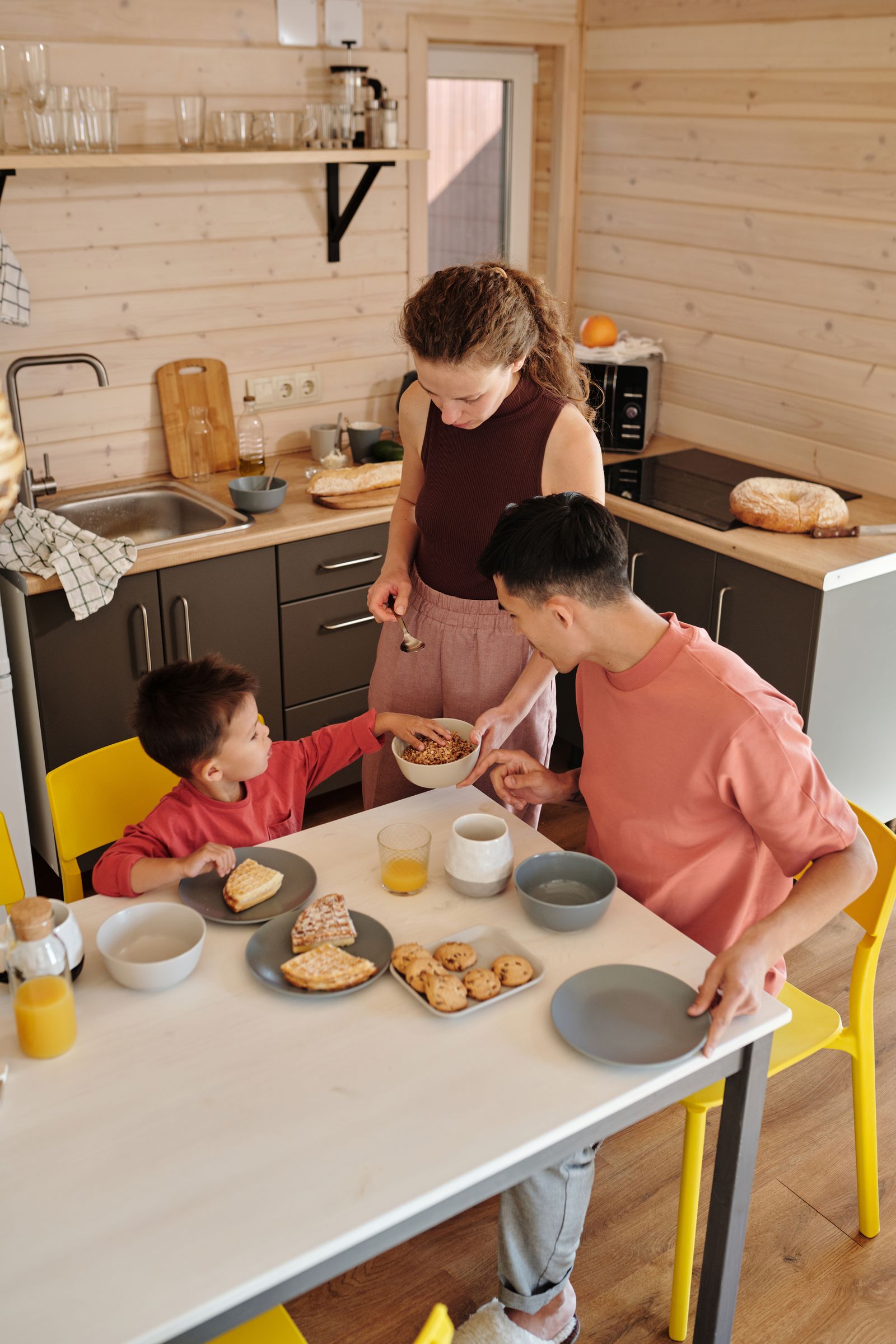
Consider a household with two seats in its kitchen eating area. One adult and an older child leave early. Another adult and a younger child eat later. They do not need a four-person table to make the morning work; they need a reliable transfer of the two usable positions.
| Stage | Space decision | Handoff |
|---|---|---|
| Before the first round | Set only the current two places; keep later utensils ready elsewhere | Confirm who is supervising and preparing food |
| Early diners finish | Move used items to their care route and release both seats | State what remains available and what needs replenishment |
| Later round begins | Bring out its food close to use; maintain the kitchen route | Use the ready utensils and clean eating positions |
| Last diner finishes | Release the table for its next household use | The assigned adult confirms food storage and final cleanup |
The family can adapt the times without changing the basic structure. On a day when the younger child eats earlier, they move the supervised place to that round. On a work-from-home day, the later adult still follows the final reset even without a departure deadline.
This example does not promise a particular number of minutes. The useful feature is that each stage has an owner and a visible finish. A family with different supervision needs or a different layout should design its rounds around those conditions.
Name the last cleanup owner in advance
The last person in the kitchen is not automatically the right person for every cleanup task. Assign the final responsibility according to ability and availability. An adult should confirm necessary food storage, appliance condition, and any tasks that require adult handling.
Define the finish: food is returned to its appropriate storage, used dishes are in their correct care route, spills are addressed appropriately, and the eating area is available for the next use. Avoid vague instructions such as �make it nice� that each person interprets differently.
If the last adult must leave quickly, shift some suitable tasks to an earlier person or simplify the breakfast setup. Do not leave a child with a task beyond their abilities simply because the schedule is tight.
The family chore system without a complicated chart can help establish responsibility. Breakfast needs only the few assignments that make this particular sequence work.
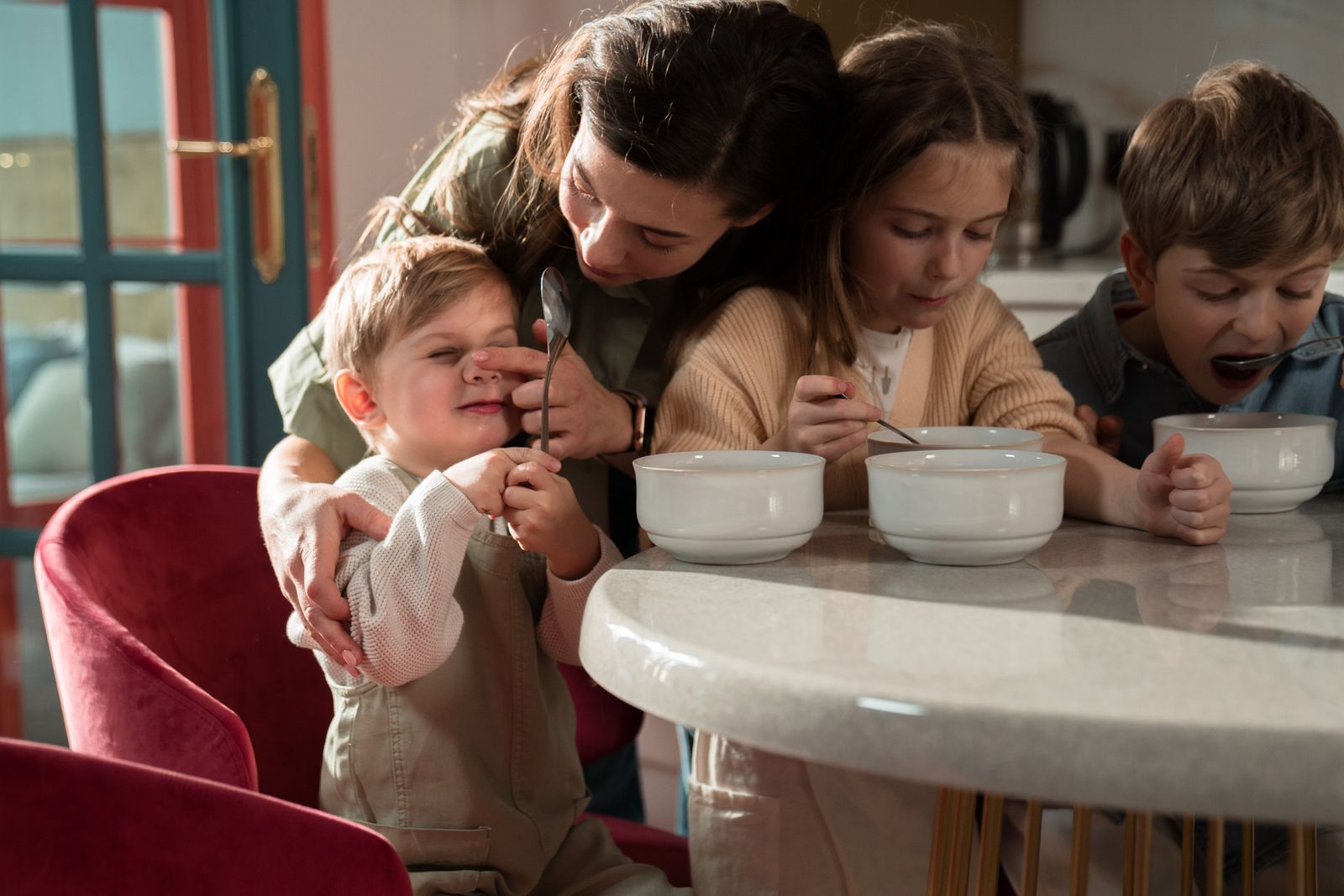
Prepare for the recurring exceptions
A missed bus, early meeting, or unexpected visitor can change the order. Decide which parts of the routine remain fixed: safe food storage, suitable supervision, necessary routes, and a clear final owner. The seat order and serving moment can change around those fixed needs.
Have a simple fallback that uses food and equipment already suitable for the household. The fallback should reduce the number of preparation steps, not introduce an unfamiliar appliance or another trip through the home.
If someone skips breakfast, update the plan rather than leaving their place and food waiting indefinitely. If someone eats much later, treat that as a separate safely prepared meal stage instead of preserving a perishable breakfast spread.
On weekends, decide whether the household wants a shared sitting or the same staggered routine. Neither arrangement needs to be permanent. What matters is communicating today’s plan before the kitchen fills with conflicting expectations.
Review the bottleneck after an ordinary week
Notice the repeated delay: unavailable seat, missing utensil, uncertain food location, or incomplete final cleanup. Change that specific part first. Buying a bigger tray will not solve an unassigned handoff, and a new chair will not create a usable route if the occupied layout is already crowded.
Ask children and adults whether their assigned steps are understandable. An item that is consistently returned to the wrong place may need a clearer location or a different instruction. Do not add a long morning checklist when one clear handoff could solve the problem.
Keep the successful version short enough to remember: current round, safe serving, released place, later round, final reset. Explore related routines in the Family Home collection and layout ideas in the Kitchen room guide. A small kitchen can support different departure times when the eating space and responsibility move forward together.
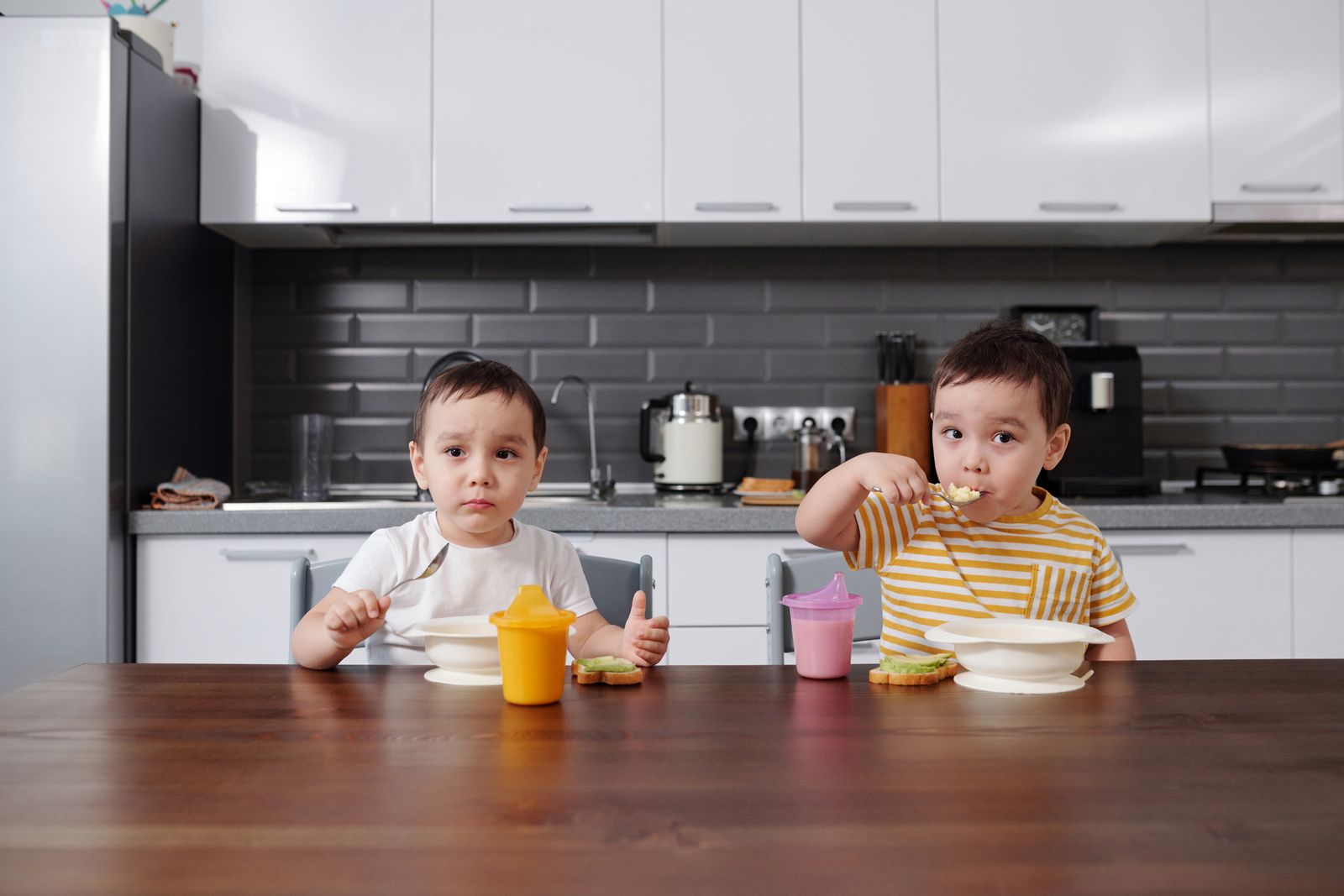
Let the routine fit the family as it changes
Revisit the plan when school hours, work schedules, or children’s abilities change. A task that once needed close adult help may become a suitable supervised contribution; another task may remain adult-only. Base that decision on the actual person and activity.
Keep a successful change even if it does not look like a traditional family breakfast. Two calm rounds with clear care and cleanup can be a useful arrangement for this home. The measure is whether everyone can eat in an appropriate setting and the kitchen is ready for what happens next. You may also find Sorting Surprise Picnic Baskets Review: A Small-Table Toy With a Clear Cleanup Job useful for a closely related small-home problem.