
Family movie night sounds like an easy living-room activity: choose something, sit down, and watch. In a small room, the actual evening includes a few more decisions. Who can see from their seat? Where will shared snacks go? What happens when someone wants a pause? And who clears the room when the credits end?
You do not need a home theater or a matching set of accessories. You need an evening that fits the people, the room, and the time available. A short plan before the screen comes on can preserve the relaxed feeling you wanted in the first place.
Agree on the evening’s finish before choosing the film
Start with the time the household needs the activity to end. Work backward through the likely viewing time, ordinary interruptions, and the return to the room’s next use. A late start can make a full-length film unsuitable even when everyone likes the title.
Choose between a complete film, a shorter appropriate program, or a clearly agreed two-part viewing. If you intend to stop halfway, choose a reasonable stopping point together rather than ending unexpectedly during an important scene. The next session should have a realistic place in the household schedule.
Include the transition after viewing. Children may need their ordinary bedtime routine, adults may need to prepare for tomorrow, and the living room may become someone else’s space. The screen turning off is one stage of the finish, not the whole finish. For the broader setup, A 10-Minute Evening Living Room Reset After the Kids Go to Bed is a useful next read.
Keep the schedule simple enough to remember. Start after dinner and finish before the usual evening handoff can be adequate. You do not need a minute-by-minute chart for a casual night at home. You do need everyone to understand whether the evening is a special late exception or part of the normal routine.

Make the choice from a small, suitable shortlist
An adult should assess the exact program for the household’s ages, preferences, and content needs. Check the information available for that title instead of assuming that animation, an old favorite, or a familiar character guarantees suitability.
Offer a few appropriate choices that fit the time. A shortlist gives children a meaningful say without leaving the household scrolling indefinitely. If preferences differ, use a simple rotation or let someone choose from the agreed options this time and another person next time.
Discuss what makes someone uncomfortable and how they can ask for a change. A family activity should allow a calm pause or alternative when the choice turns out not to suit everyone. You can adapt without making a child justify their reaction to the whole room.
Check that the exact program is accessible through the household’s existing arrangements before announcing it. Avoid making a promised evening depend on an unverified subscription, additional purchase, or availability assumption. The room plan works with an ordinary suitable choice already within reach.
Test seats with people in them
Choose seats before snacks and cushions fill the room. Check sightlines from the places people will actually occupy. A clear view from the center of an empty sofa does not establish a clear view from the corner beside a tall adult.
Use the room’s existing suitable seating first. Consider back support, household access needs, and whether the position is comfortable for the intended duration. Do not rely on a hard-to-maintain floor arrangement simply because it looks cozy in a photograph.

Keep necessary routes, doors, and access points available. A temporary seat placed in a doorway can make the room difficult to use when someone needs a bathroom break. The living room still has to function while the film is playing. If you are working on the same space, Make a Temporary Halloween Family Photo Corner in a Small Living Room covers the next decision in more detail.
For the surrounding layout, use our small-living-room furniture guide. On movie night, test the arrangement in its occupied state, with feet, nearby tables, and the household’s normal movement included.
Account for more than the television view. People need a place for their own drink if drinks are part of the evening, and a way to reach it without leaning across someone else. A clear aisle is not useful if everyone constantly reaches through it for a bowl on the opposite side.
Choose a modest snack arrangement
Decide whether snacks are necessary for this viewing. A film after a normal meal does not automatically need a large spread. If you do serve food, use the household’s existing guidance for age suitability, allergies, food handling, and eating arrangements.
A familiar snack that is easy for the family to manage can be more practical than a theme menu. Avoid promising a particular food merely because it appears in movie-night photographs. What works for the children and adults present matters more than a visual tradition. For a related step-by-step approach, see Sort Family Photographs for One Scanning Project You Can Finish.
Choose between individual portions and a shared serving based on the actual seating. A shared bowl works poorly when it requires repeated passing over people, drinks, or controls. Individual portions can reduce movement, but they also add serving pieces to the cleanup. For a related step-by-step approach, see Staggered Family Breakfast in a Small Kitchen: Seats, Serving, and the Last Cleanup.
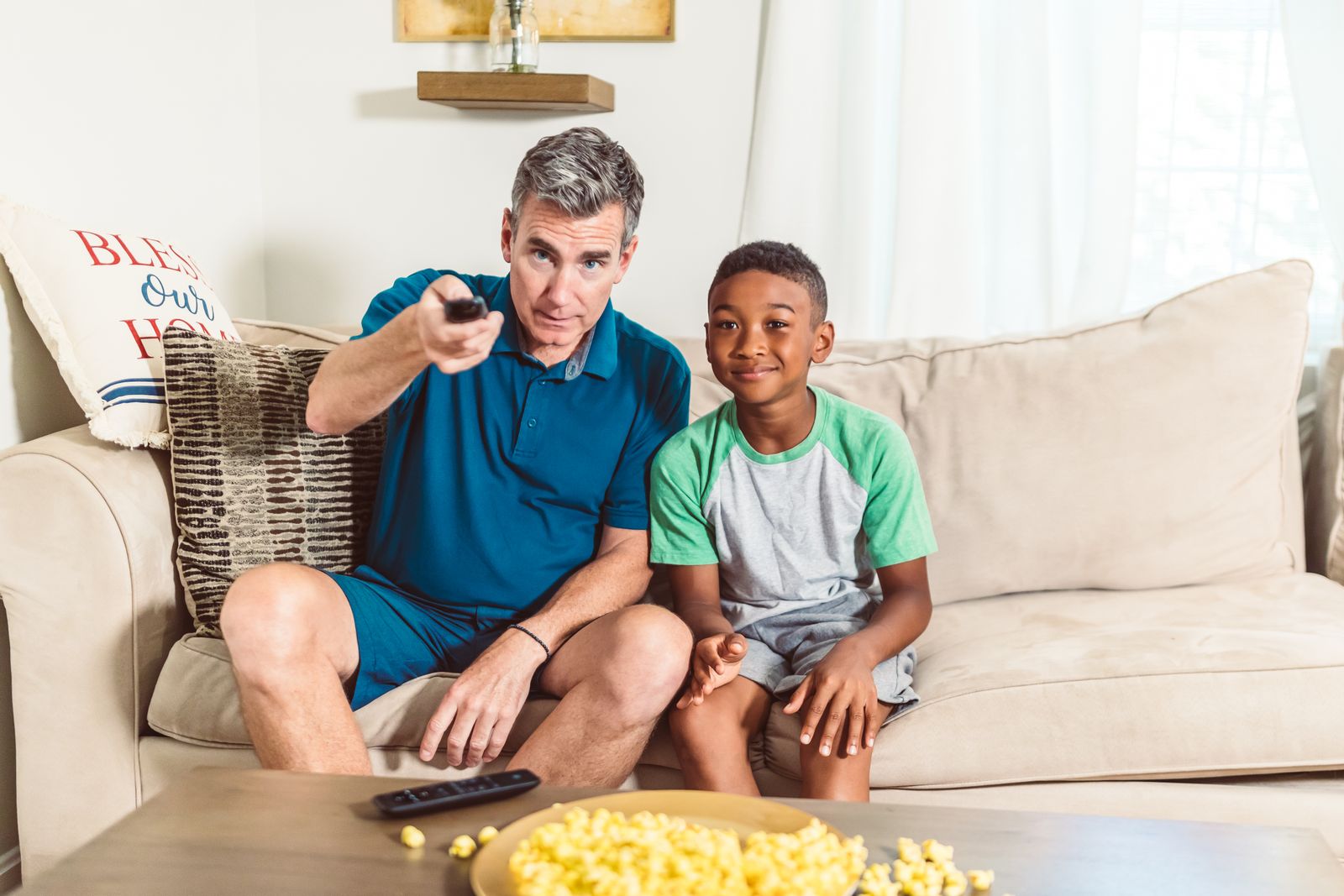
Use stable, suitable landing places for food and drinks. Check the furniture’s intended use and the children’s access. Do not create a crowded stack of trays at the edge of the sofa to avoid setting up an appropriate table.
Keep the initial serving small enough to manage, with any additional food in its proper kitchen storage. This avoids turning the living room into a buffet and preserves floor space. If food is served in the kitchen before viewing, the after-dinner kitchen reset can keep that first transition clear.
Settle sound and lighting together
Use a sound level appropriate to the household and people nearby. If another person is working, resting, or using an adjacent room, agree on the practical arrangement before the film begins. A movie night can be enjoyable without taking over the entire home.
Check dialogue clarity and available caption options using the exact program and equipment. A household may prefer captions even when the volume is comfortable. These are usability choices to try, not evidence that a new speaker system is needed.
Keep enough suitable lighting for movement, serving, and the room’s normal access needs. Total darkness is not a requirement. Use the room’s installed lighting and equipment as intended; avoid improvised lighting arrangements or new cables through the floor route.
Notice reflections or glare from the seats. A permitted adjustment to curtains or an existing lamp can help you judge the current setup. If the room does not support everyone’s needs, change the seating or choose another viewing time before shopping for theater equipment.
Agree on pauses and control of the remote
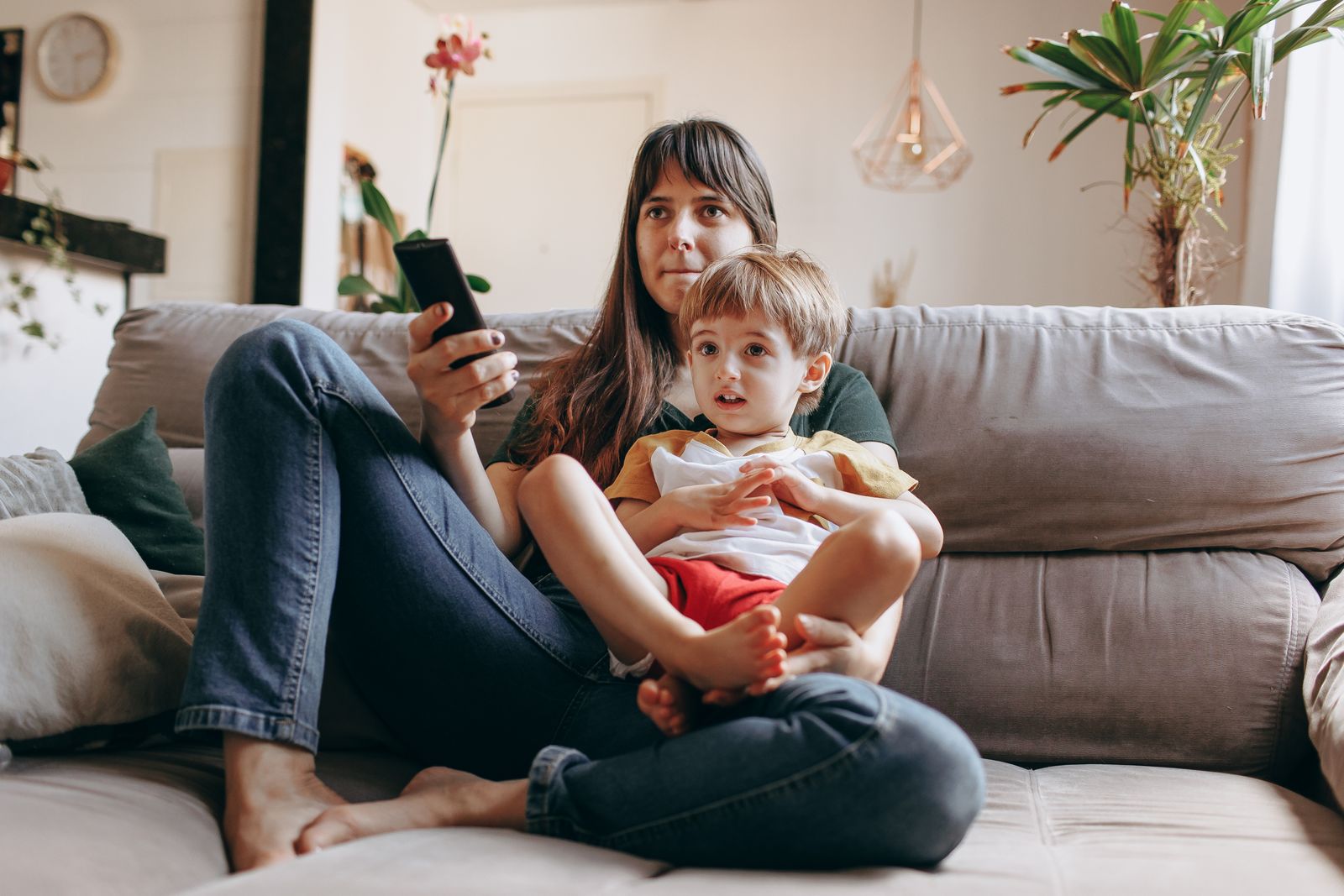
Choose where the remote will stay and who will manage the program. Appropriate adult control of services and settings can keep children from navigating content independently when that is not suitable for the household.
Agree that anyone can ask for an ordinary pause. A drink refill, a bathroom trip, or a question does not need to become a debate about whether the group is ruining the film. You can plan a pause at a reasonable point while still responding when someone needs one sooner.
Set expectations for other devices according to the household’s preferences. The practical issue is whether another screen distracts someone beside it or divides the shared activity. A clear agreement is easier than repeated reminders once the room is settled.
If different children need different arrangements, make those decisions before viewing. One child may watch only the first part and then follow their ordinary routine. Another may prefer a quiet alternative. Family time can accommodate different needs without requiring everyone to remain in the same seat until the end.
Make the ending a short shared handoff
Before the film starts, assign a few appropriate finishing jobs. Someone handles the controls, someone returns suitable serving pieces to the kitchen, and someone restores cushions or blankets. Children can help with tasks suited to their abilities while adults handle the items and decisions that require them.
Keep jobs connected to the room as it will be used next. If the next person needs the sofa and coffee table clear, restore those first. If the household is moving straight into bedtime, avoid launching a larger living-room cleaning project.

Use the principles in our simple family chore system to keep ownership understandable. A small agreed job is more useful here than a general instruction for everyone to clean up.
Check for cups, food, and small objects left where the next activity will happen. Follow the normal care for the room’s furnishings if anything needs attention. A spill on a cover or upholstered item needs its exact care guidance, not a rushed movie-night cleaning hack.
Keep what worked and change one point next time
Ask a practical question after the evening: what made it easier or harder to enjoy together? The answer may be the long selection process, one poor sightline, too many serving pieces, or an ending that arrived too late.
Change the relevant part for the next night. A shorter shortlist solves a choice problem. Moving one suitable seat can solve a view problem. Planning a smaller serving can solve a crowded-table problem. These changes are often more useful than buying a basket of movie-night accessories.
For everyday room sharing, read about keeping a family living room calm. The Living Room collection and Family Home guides cover the larger routine around an occasional evening.
A good movie night finishes with people who enjoyed the choice and a room that can move on to its next job. The comfortable part comes from making a few decisions early, then letting the activity itself take the household’s attention.