As an Amazon Associate, I earn from qualifying purchases.
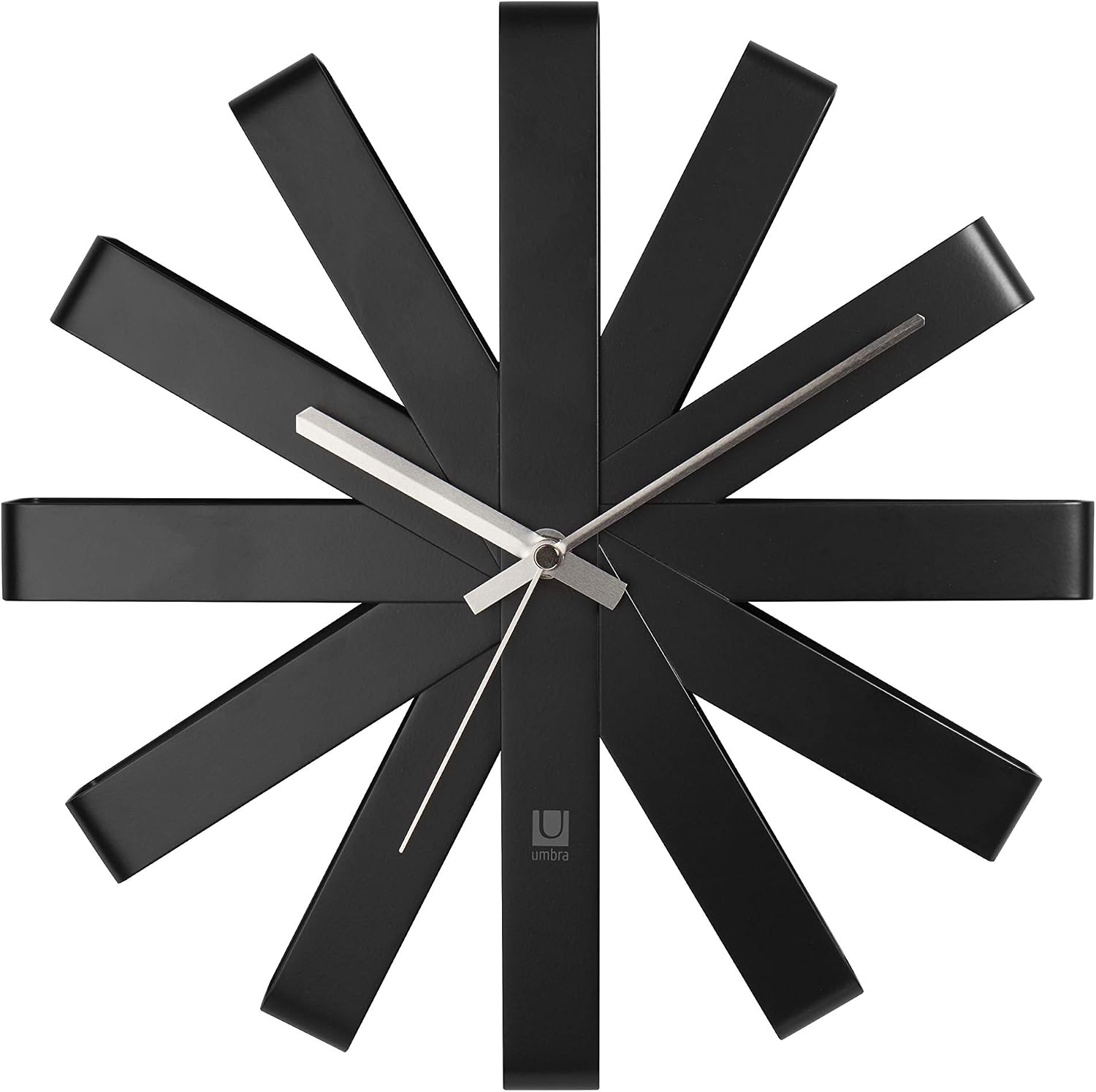
Umbra Ribbon combines an analog wall clock with a folded-metal form. For a home office, its practical value depends on whether you can read it from the position where you actually work. A sculptural clock can look effective above a desk while its hand positions remain difficult for a particular reader to recognize at a glance.
The Houzz fall 2026 report provides context for personal, expressive interiors. That makes a decorative timepiece a relevant design consideration, but it does not establish demand or performance for this exact model. This is a research-based assessment; we have not physically tested its movement, accuracy, sound, mounting, or readability.
Identify the black model before comparing offers
The Amazon listing linked in this review is B01ANF6UGO, identifying black model 118070-040. That model matches the SKU on the current Umbra Ribbon product page. Confirm the variation and model on the offer you actually select. A different finish can change the contrast you are evaluating, even when the clock has a similar overall form.
The maker lists a 12-inch diameter and one AA battery, not included. Its current specification gives a 2.75-inch depth, while the listing gallery shows 2.25 inches. Confirm the supplied unit’s full projection if clearance is important. Do not use a photograph’s apparent flatness as a substitute for the unresolved dimension.
Decide what you want the clock to tell you
Ask whether you need a quick sense of the hour, frequent precise minute checks, or a strong visible reminder of an appointment time. Ribbon does not provide prominent printed numerals around its face. Its sculptural arrangement and contrasting hands therefore need to suit the way you personally read an analog clock.
If bold numerals or another display type are essential, start with that requirement. The Bulova Heather clock review considers a different form and viewing arrangement. It is a comparison of household roles, not evidence that either product is universally easier to read. Match the information you need with the display you can comfortably interpret.
Check the working sightline
Sit in your ordinary desk position and look toward the proposed wall location. Include the monitor, shelving, and any objects that already belong on the desk. The clock should be evaluated from that occupied arrangement, rather than from an empty-room photograph taken at eye level directly in front of it.
Use an appropriately sized paper outline as a layout aid if helpful, without attaching anything in a way that damages the wall. The outline can show scale and obstruction; it cannot verify the real clock’s readability. For an online purchase, compare the product photographs carefully and retain a realistic return plan if you cannot assess the display in person.
Compare hand contrast at different positions
The contrasting hands are a visible design feature, but the background behind them changes as they move across the black ribbon shapes and open spaces. Consider the wall color and the light that reaches it during working hours. A pale wall and a dark wall may create different apparent edges around the same object.
We have not measured contrast, glare, or reading speed. Avoid interpreting the maker’s broad readability language as a verified result for your desk distance and vision. If you rely on a clearly marked minute scale, the absence of prominent printed numerals and conventional markings should be considered before the visual form persuades you to buy.
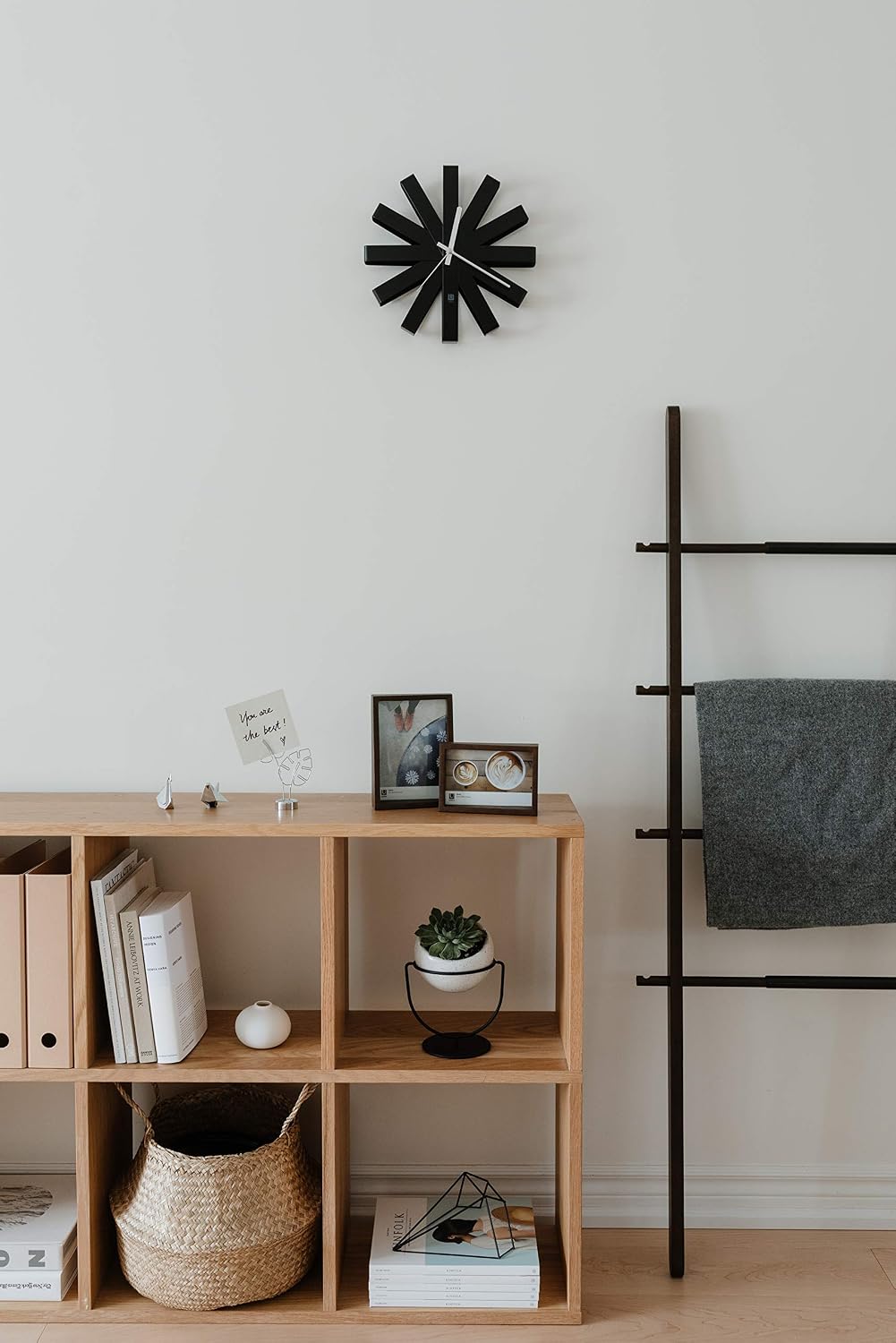
Include the clock’s full projection and nearby movement
Check the complete location in three dimensions, using confirmed dimensions where needed. Consider nearby cabinet doors, moving furniture, window coverings, and anything that may contact the object. A nominal 12-inch diameter says nothing about the reach needed to lift the clock off its mount or access the mechanism behind it.
The depth discrepancy between the records is a reason to obtain clarification for a tight location. It does not justify choosing whichever measurement makes the arrangement work. If the location offers generous appropriate space, the unresolved fraction may be less decisive, but the complete supplied product and intended mounting instructions still need checking.
Plan the actual mounting rather than assuming rental suitability
Follow the clock’s supplied installation directions and choose an appropriate wall location and mounting method for the actual wall and product. The maker describes included mounting hardware; that does not establish compatibility with every wall construction. This review does not prescribe a universal anchor, adhesive alternative, or load-bearing method.
For a rental, resolve relevant permissions and installation requirements before ordering. Do not assume an adhesive intended for another household object is an approved substitute. If appropriate mounting cannot be arranged, a suitable tabletop clock or an existing display may be the more practical way to meet the timekeeping need.
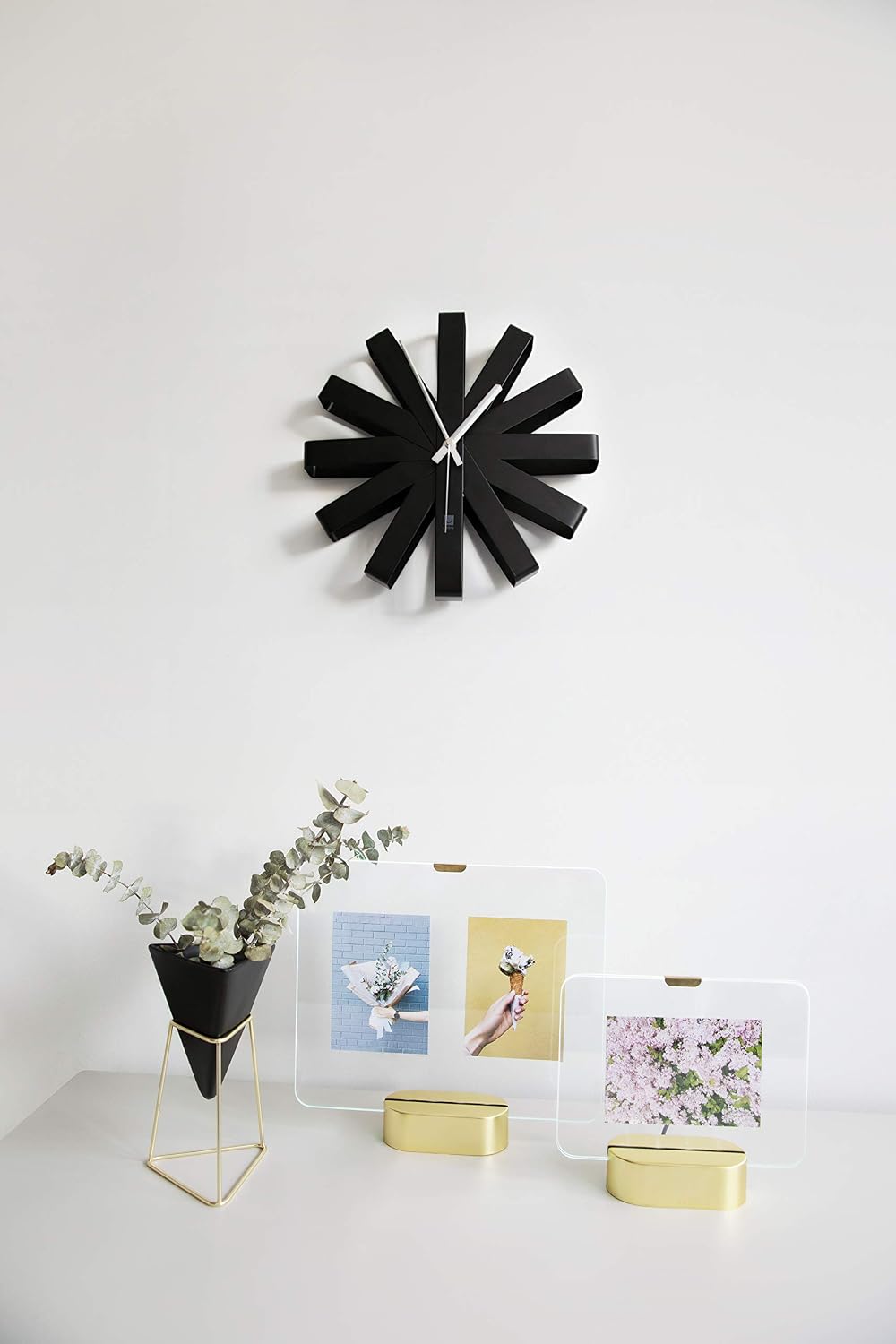
Keep the movement claim separate from a sound test
Umbra describes a sweeping, non-ticking quartz movement. We have not performed an acoustic test in a quiet office or compared sample units. The phrase should therefore remain a manufacturer description, not a promise that every person will hear nothing in every room.
If sound is decisive for you, look for an opportunity to assess the actual unit under suitable purchase or return terms. Do the same for accuracy requirements rather than treating general quality language as a documented independent test. A decorative wall clock is a different purchase from equipment needed for a precise timing task.
Include battery access in the maintenance routine
The stated AA power avoids a plug-in cable, but it leaves a battery replacement task. Check whether the chosen position allows appropriate access to the mechanism according to the supplied instructions. A clock above a crowded shelf may be visible while still being awkward to remove or maintain.
Store spare batteries according to their product instructions and household needs. The small maintenance-supply storage guide covers that separate organizing decision. Keep the clock’s instructions and model identification retrievable so a later replacement or care question does not depend on remembering which black Umbra design you bought.

Compare another decorative role before adding an object
A home office may benefit more from one meaningful photograph or another existing piece than from an additional clock. The Prisma frame review addresses a different tabletop display, while the solar radiometer review concerns an accent that depends on suitable light. Neither is a substitute for timekeeping; the comparison helps clarify whether the actual purchase goal is information or decoration.
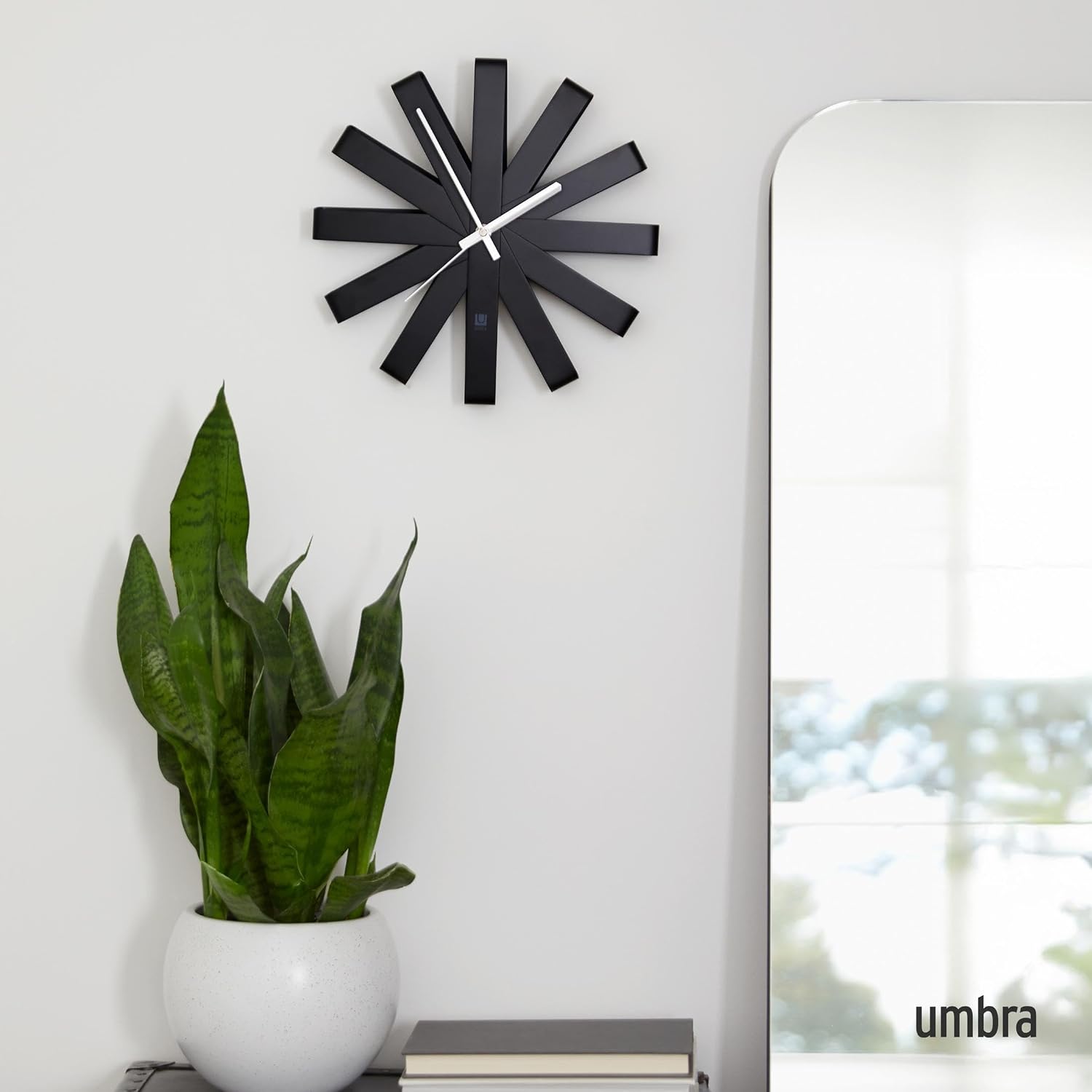
The conventional numbered clock in this article’s final photograph is context, not the reviewed Ribbon model. It illustrates the difference between a familiar dial and a sculptural display. The four other selected images come from the exact Amazon listing, and styling props are not assumed to be included.
Who should consider it
Consider Ribbon when you like its visible form, can read the hands from your actual working position, and can provide appropriate mounting and maintenance access. You can check the black 118070-040 offer on Amazon. Verify the selected variation, seller, current availability, and terms; this assessment does not promise a live price or stock position.
Skip or postpone it if prominent numerals are essential, an unresolved projection measurement controls the fit, or you need verified acoustic performance before purchase. Also pause if the proposed wall location depends on an unsupported mounting assumption. An attractive clock should not create a maintenance or installation problem that the desk did not previously have.
The practical verdict
Ribbon is a plausible choice for someone who wants a sculptural analog clock and has checked the actual sightline. Its strongest case combines a clear timekeeping role with a location where the form is enjoyable. Its weaker case begins with an empty wall and no confirmed need for another display.
Record the intended viewing position, confirmed clearance, appropriate mounting plan, and battery access before ordering. If those checks support the purchase, review the current Amazon variation and return conditions. Otherwise, keep the existing useful time display and revisit the choice when the missing information or room arrangement changes.
Explore related decisions in our Buying Guides hub.
Sources and editorial scope
Editorial research checked October 24, 2026. Published trend reports are context for these editorial applications, not verified live keyword rankings. Research-based product assessment; no hands-on testing, live price, availability, or customer-consensus claim.