Working in a bedroom saves space, but it can make the room feel like the workday never ends.
A laptop remains open beside the bed. Notes stay visible. Chargers cross the floor. Work bags sit on the chair. Even when you stop working, the room still looks like an office. For the broader setup, How to Keep a Small Home Office Tidy When You Work There Every Day is a useful next read.
The goal is to create a visible transition from work mode to sleep mode.
Give work one defined footprint
Keep the desk, chair, charging, active files, and daily tools inside one zone. Avoid letting work spread onto the bed, dresser, and nightstand. If you are working on the same space, How to Organize a Small Nightstand So Bedtime Clutter Doesn’t Build Up covers the next decision in more detail.
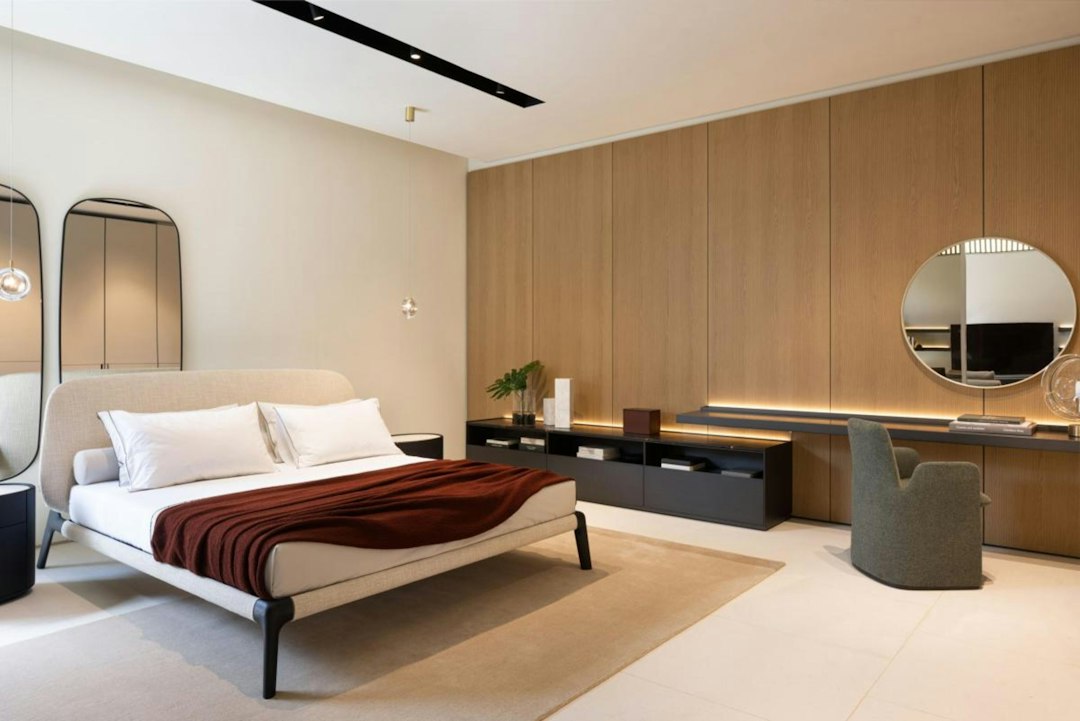
Protect the bed from work
If possible, do not use the bed as the main laptop or paperwork surface. Once work materials start living there, the room loses its clearest sleep boundary. If you are working on the same space, How to Store School Projects, Poster Boards, and Oversized Kids’ Work in a Small Home covers the next decision in more detail.
Keep the desk visually simple
Use only the equipment required for daily work. Archive files, office-supply backstock, packaging, and low-frequency tools should live elsewhere.
Create a shutdown container
At the end of work, put active papers, notebook, headphones, and small accessories into one tray, drawer, caddy, or box.
The point is not to hide work forever. It is to let the room look different after the workday ends.
Close the laptop and remove the first task
Write tomorrow’s first action down, then close the computer. That reduces the temptation to keep the desk visually “open” just so you remember where to restart.
Keep cables off the floor path
Route charging where it does not cross the path between bed, door, and closet. Store specialty cables elsewhere.
Use light to change the room’s mode
Work lighting can be brighter and more task-focused. In the evening, switch to the bedroom’s normal lighting pattern so the room signals a different function.
Keep work bags out of the sleep zone
Give the work bag a hook, floor footprint, or entryway location rather than letting it live on the bed or bedside chair.
Reduce visible paper
Use one active file holder or project folder. Completed paperwork should move into the filing system rather than staying in bedroom sightlines. For the broader setup, How to Set Up a Laundry Basket System for a Small Bedroom is a useful next read.
The five-minute work-to-sleep shutdown
- save and close work,
- put paper into active file,
- return headphones and tools,
- remove cups,
- park the work bag,
- clear the bed and bedside area,
- change the lighting.
If the desk has no drawers
Use How to Organize a Small Home Office When Your Desk Has No Drawers.
If the whole room feels visually full
Use How to Make a Small Bedroom Feel Less Cluttered Without Buying More Storage.
Frequently asked questions
Where should I put a desk in a small bedroom?
Choose a location that protects the main walking route and keeps work from taking over the bed or closet access.
Do I need a room divider?
No. A clear desk footprint and visible shutdown routine can create enough separation in many small rooms.
How do I stop thinking about work in the bedroom?
Physical cues such as closing the laptop, containing papers, moving the work bag, and changing lighting can help create a clearer end to the workday.
Let the room look different after work
A bedroom-workspace combination works best when the office can visibly close. Contain the active materials, protect the bed, and give the room a short transition back to sleep mode every evening.