A living-room bookcase should make books easier to retrieve without making the room harder to use. Start with the collection and the readers, then check seating, curtains, doors, and the actual furniture instructions. A narrow rectangle against a wall may look efficient on a floor plan while being awkward once a chair is occupied or someone reaches for a book.
Houzz’s fall 2026 report describes personal, collected interiors with more character and layering. A bookcase can support that direction when it contains things the household enjoys and can use. This guide concerns placement and access, rather than organizing every book by a new aesthetic or reproducing a full-wall library photograph.
Choose the books that need this location
Identify which books belong in the living room and why. Some may be read regularly, shared with visitors, or used for a particular hobby. Others may belong with work materials or in another appropriate household collection. Make that decision before choosing a tall unit whose empty shelves seem to require filling.
Separate owned books from borrowed copies while planning the space. Our borrowed-book return system helps keep a temporary loan recognizable. A library book can have a convenient place beside the reading chair without being absorbed into a permanent color-arranged display where its return date is forgotten.
Measure the actual range of book sizes and consider how they will sit appropriately on the shelves. A standard-looking paperback and a large art book create different depth and height needs. Use the unit’s usable shelf dimensions and load guidance, not just its external width or the number of books visible in a styled image.
Study the room with the seats occupied
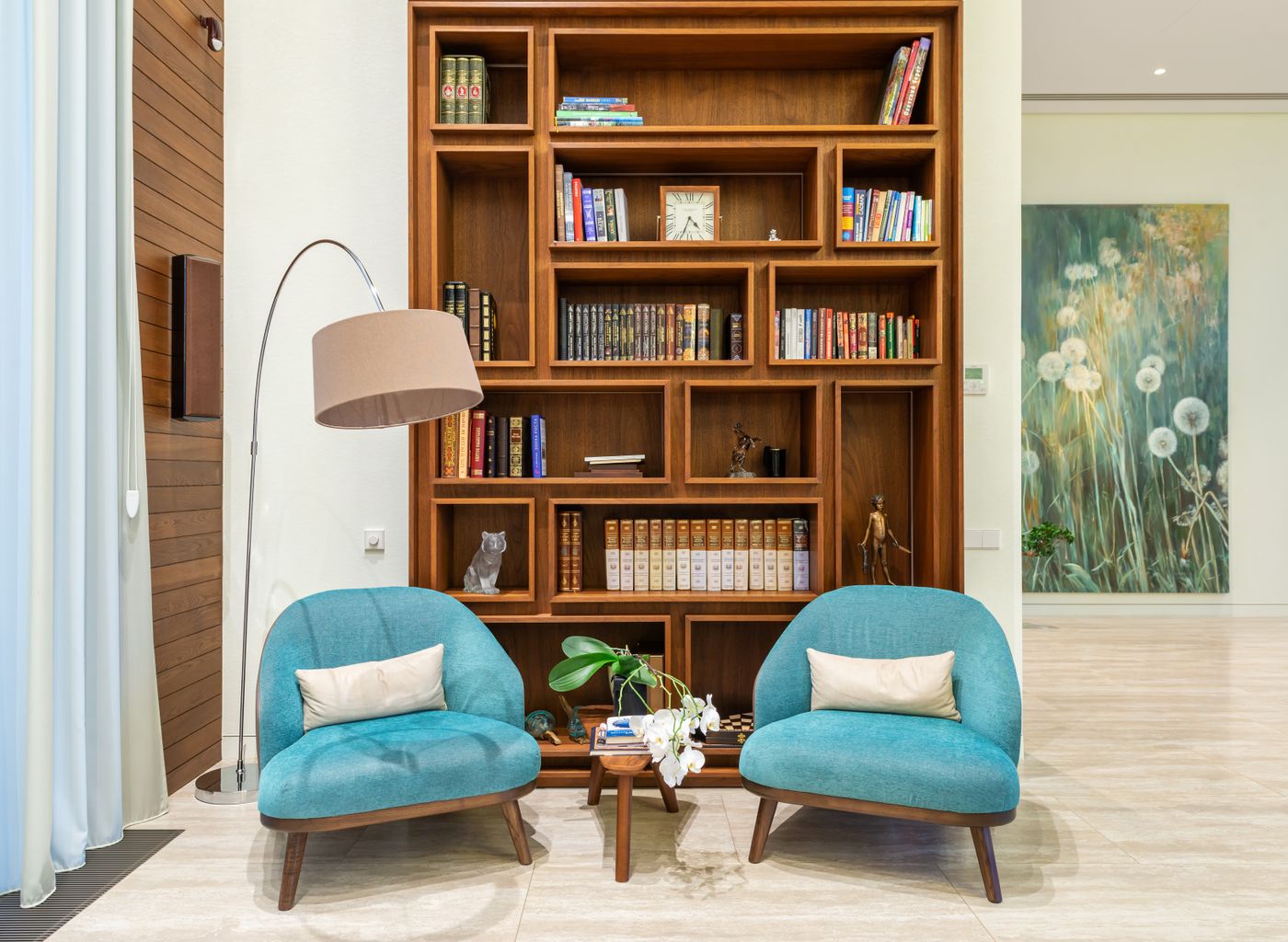
Look at the proposed bookcase position while people sit where they normally sit. Can someone reach the intended shelves without leaning across another person or moving the chair every time? Is the seat still comfortable to approach, and can someone carry a book back to it without negotiating a newly narrowed route?
Our coffee-table and ottoman comparison helps assess the other furniture competing for the same living-room area. A bookcase may fit only after moving a table into a less useful position. Consider the complete arrangement rather than assigning each piece its own isolated rectangle and assuming those rectangles work well together.
Use harmless measurements or a simple paper plan to compare positions before bringing in new furniture. Do not balance books on an improvised tall structure to simulate a loaded unit. A planning outline can show where a case might sit, but it cannot establish stability, loading, or comfortable retrieval from the actual product.
Check curtains and doors in normal operation
Open the relevant doors and use the curtains as the household normally does. Include the curtain’s movement and the space needed to reach it, rather than checking only its neatly gathered position. A bookcase should not make opening the window dressing a daily task of moving decorative objects or pulling fabric from behind furniture.

Keep the actual room conditions suitable for the books and furniture, following appropriate care guidance. Do not assume that moving a case close to a window is beneficial because the photograph looks bright. Sunlight, moisture, heat sources, and ordinary use can affect the suitability of a location. Resolve those details for your situation before treating a corner as unused space.
If a rug and chair sit beside the proposed unit, our reading-chair rug-fit guide can help check their combined footprint. The case should not force a chair into an awkward position merely to preserve a symmetrical photograph. Sometimes a smaller suitable case or an existing shelf serves the reading task better.
Treat installation as part of the placement
Read the maker’s assembly, loading, leveling, and securing instructions before deciding a unit is suitable. Follow any required anchoring or other installation steps. A product described as freestanding is not automatically a product that may be used unsecured in every room or household. A loaded furniture photograph does not replace those instructions.
Establish whether the required installation is appropriate for the property and the intended wall or location. In a rental, obtain any necessary permission rather than omitting a required securing step. If the installation cannot be completed appropriately, choose a different solution. Keeping a wall untouched is not a reason to use a product contrary to its directions.
Check the delivery route with our furniture-access guide. Include packaging, assembly location, and the actual finished dimensions. Do not assume that shelves, legs, or a fixed back can be removed just because doing so would make a difficult turn easier. Resolve the transport plan before the living room is full of a partly assembled case.
Give retrieval space the same attention as shelf space
Think about how a book will move off the shelf and into someone’s hands. Avoid placing frequently used books in positions that require climbing on inappropriate furniture or stretching beyond comfortable reach. Choose an arrangement suitable for the actual readers, with appropriate access equipment only where needed and used as intended.

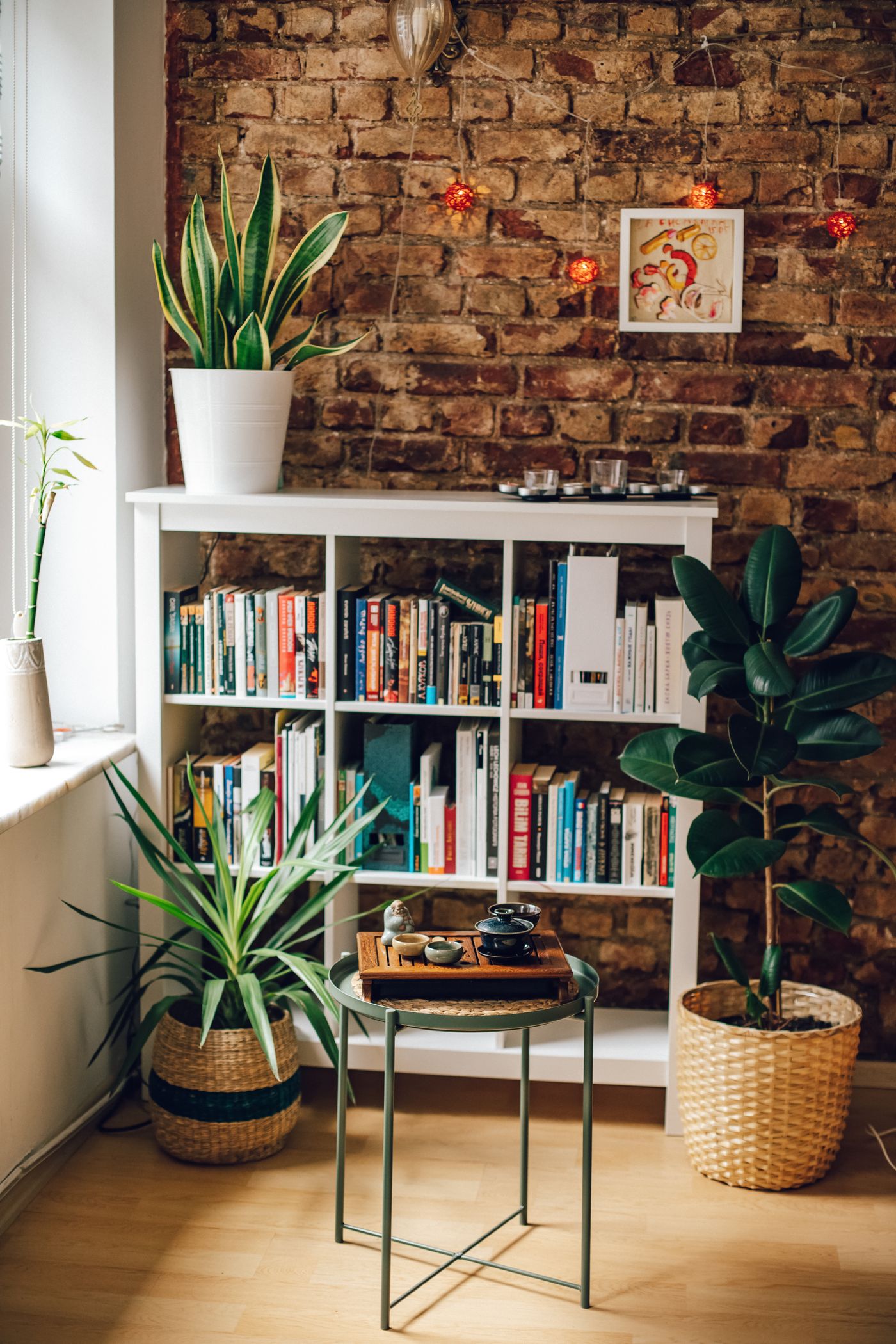
Leave books and decorative objects appropriately supported without forcing them into every gap. A styled shelf may contain leaning stacks and loosely placed objects that do not suit your household. Display only what can be arranged and maintained appropriately on the actual unit. The photograph is inspiration for a collected room, not an instruction to reproduce an unverified load.
Keep the books used together within practical reach of each other when that helps the task. There is no need to rearrange the whole collection into a new filing method. Placement can improve use while the familiar subject groups, favorite authors, or existing order remain understandable to the people who read them.
Allow for assembly and ordinary cleaning
Our living-room assembly-space guide helps plan the temporary working area before the case is loaded. Keep the appropriate access route and required assembly space clear, retain the instructions, and complete the installation before treating the shelves as ready storage. Loading a unit early is not a substitute for finishing it.
Consider how the surrounding floor and the case will receive ordinary care. Follow the furniture’s directions for cleaning and any movement. Do not assume a loaded case can be pulled out by one shelf to reach a dropped object. If the proposed position makes basic access difficult, revise it while the arrangement is still a plan.

Leave modest room for changes within the unit’s permitted use. A collection can grow, shrink, or move between rooms, but every new book should not require placing a heavy stack on top of the case. Revisit the actual capacity and reading purpose when the arrangement stops working instead of adding another temporary pile beside it.
Choose a case that supports the living room
Compare the proposed purchase with using an appropriate existing shelf, choosing a smaller unit, or keeping fewer books in this room. The most impressive library photograph is not necessarily the best arrangement for an ordinary evening with several people sharing seats and space.
The bookcase earns its position when readers can find and return the books they want, the room’s openings and seating remain usable, and the furniture is installed and maintained as directed. That is enough. It does not need to stretch to the ceiling, display every object the household owns, or turn the living room into a permanent shelving project.
Explore related decisions in our Small-Space Living hub.
Sources and editorial scope
Editorial research checked October 21, 2026. Published trend reports are context for these editorial applications, not verified live keyword rankings. Practical household guidance; photographs do not document a tested household or authenticate pictured materials.