
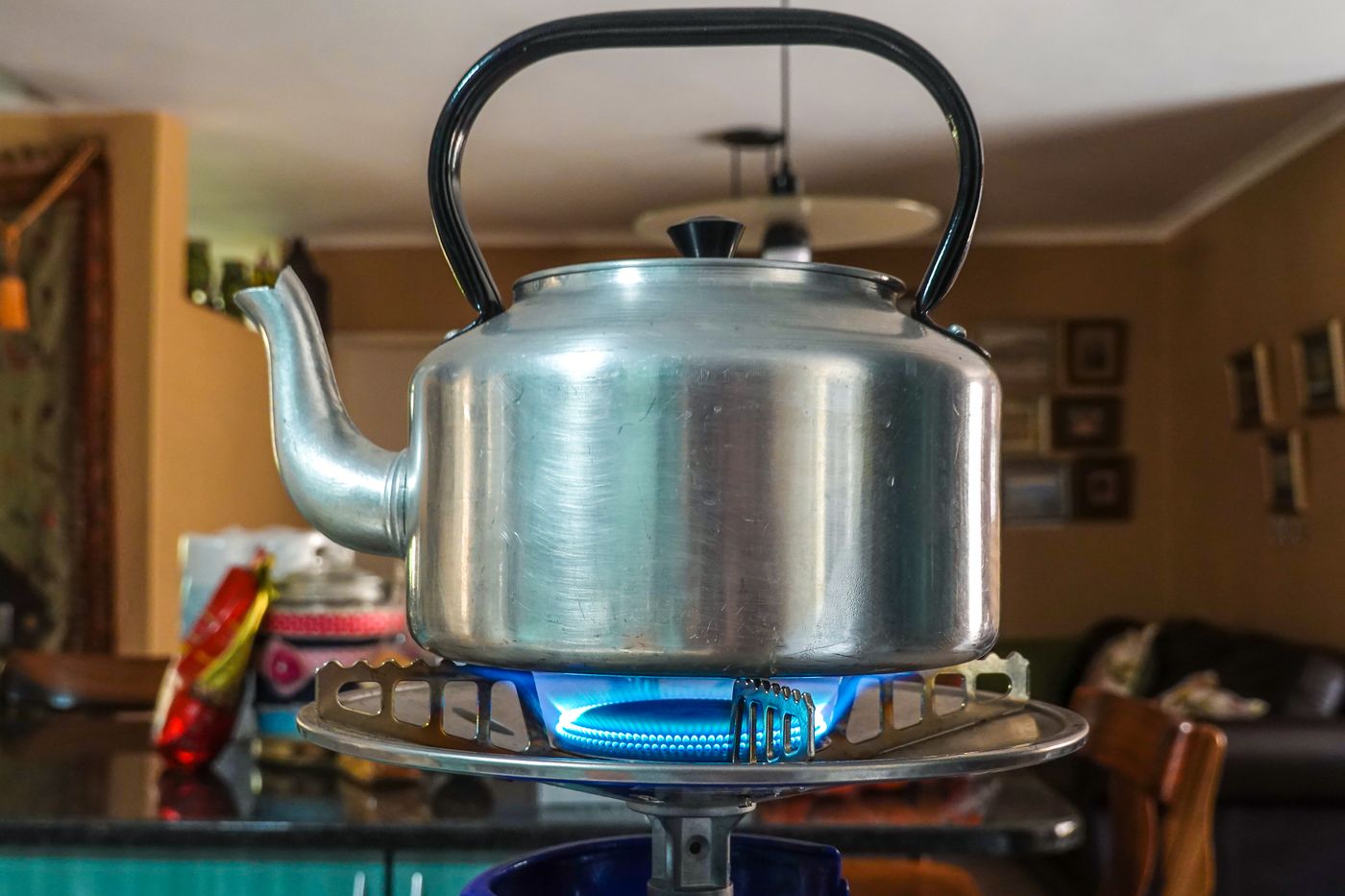
A stovetop kettle may be compact enough to fit on the stove and still be inconvenient everywhere else. It must be filled, heated, lifted, poured, set down while hot, allowed to cool, and eventually cleaned or stored. In a small kitchen, planning only its display position leaves most of that routine unresolved.
Work through those movements with the actual kettle, its instructions, and your existing kitchen surfaces. Start with a cold, empty placement check. Keep all heating, filling, and handling within the product maker’s directions; a layout experiment is not a reason to test an unsuitable hob or improvise a hot resting surface.
Treat the kettle as working equipment
Pinterest’s current seasonal trend context includes home-cafe interest. A kettle can be part of that personal ritual, but the styling idea does not specify the right heat source, capacity, or location for your kitchen. Choose the routine first and let the appearance follow.
This guide concerns a kettle explicitly made for stovetop use. An electric kettle’s jug, base, or other appliance should not be placed on a hob. Likewise, a decorative teapot is not a stovetop kettle merely because it has a handle and spout.
Find the exact product’s instructions before rearranging the kitchen. Confirm compatible heat sources, filling limits, handle and whistle operation, heat precautions, and care. If you are considering a purchase, missing instructions are a reason to investigate further rather than infer suitability from the listing photos.
For one manufacturer example, Le Creuset's kettle guidance discusses burner sizing, hot handling, and moving its enamel-on-steel kettle off the burner before pouring. Those instructions concern that product family. Your kettle may have different components and directions, so use its own information as the deciding source.
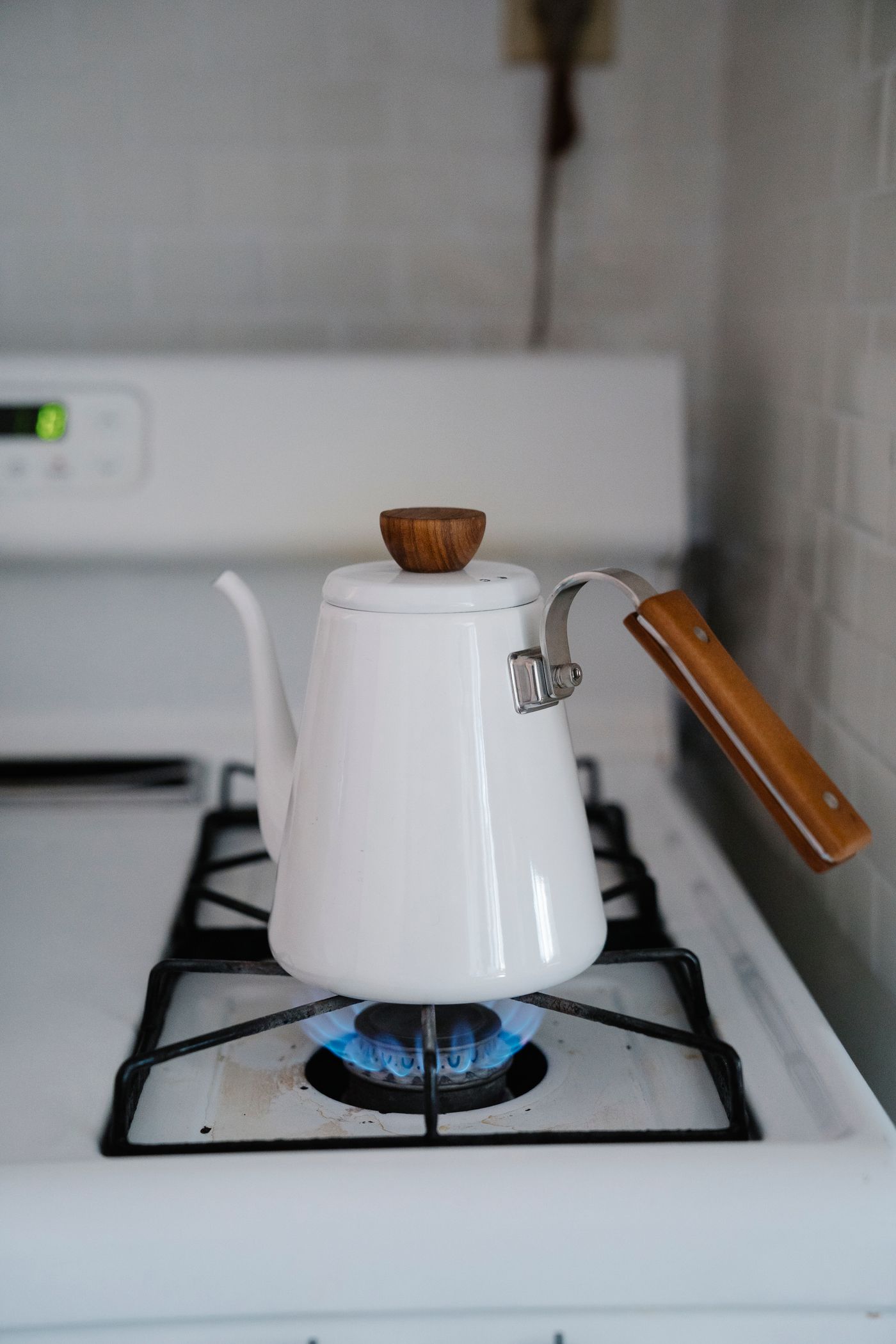
Begin with the filling route
Look at the route from the kettle’s normal cold position to the water source. Can you carry and position it without moving unrelated objects first? Is there enough room to operate its lid or filling opening as intended? Check the handle’s actual movement rather than only the kettle body.
For a cold, empty trial, move the kettle through the route without adding heat. Notice whether the tap, sink edge, or overhead cupboard makes the intended action awkward. Do not force the kettle beneath a fitting or tilt it in a way that contradicts its filling instructions.
Consider the weight when appropriately filled, without using an unsafe lift to prove a point. A kettle that is easy to carry empty may not suit the person who normally makes tea. A larger capacity is not automatically helpful if smaller, manageable batches are what the household actually needs.
If the kettle cannot be filled directly in your sink, investigate only alternatives permitted for it and suitable for your household. Do not create a complicated transfer routine simply to keep a decorative object. A different kettle or use of existing equipment may be the more practical decision.
Check the heating position against both sets of instructions
The kettle and the hob each have requirements. Verify their compatibility together, including the appropriate burner or heating area and any restrictions. Do not choose a burner because it makes the kettle look centered in the room.
Place the cold kettle where it would be used and check adjacent cookware, controls, and the intended handle position. Keep the surrounding space consistent with the appliance instructions. This article does not prescribe one clearance distance for every kitchen, kettle, cabinet, and heat source.
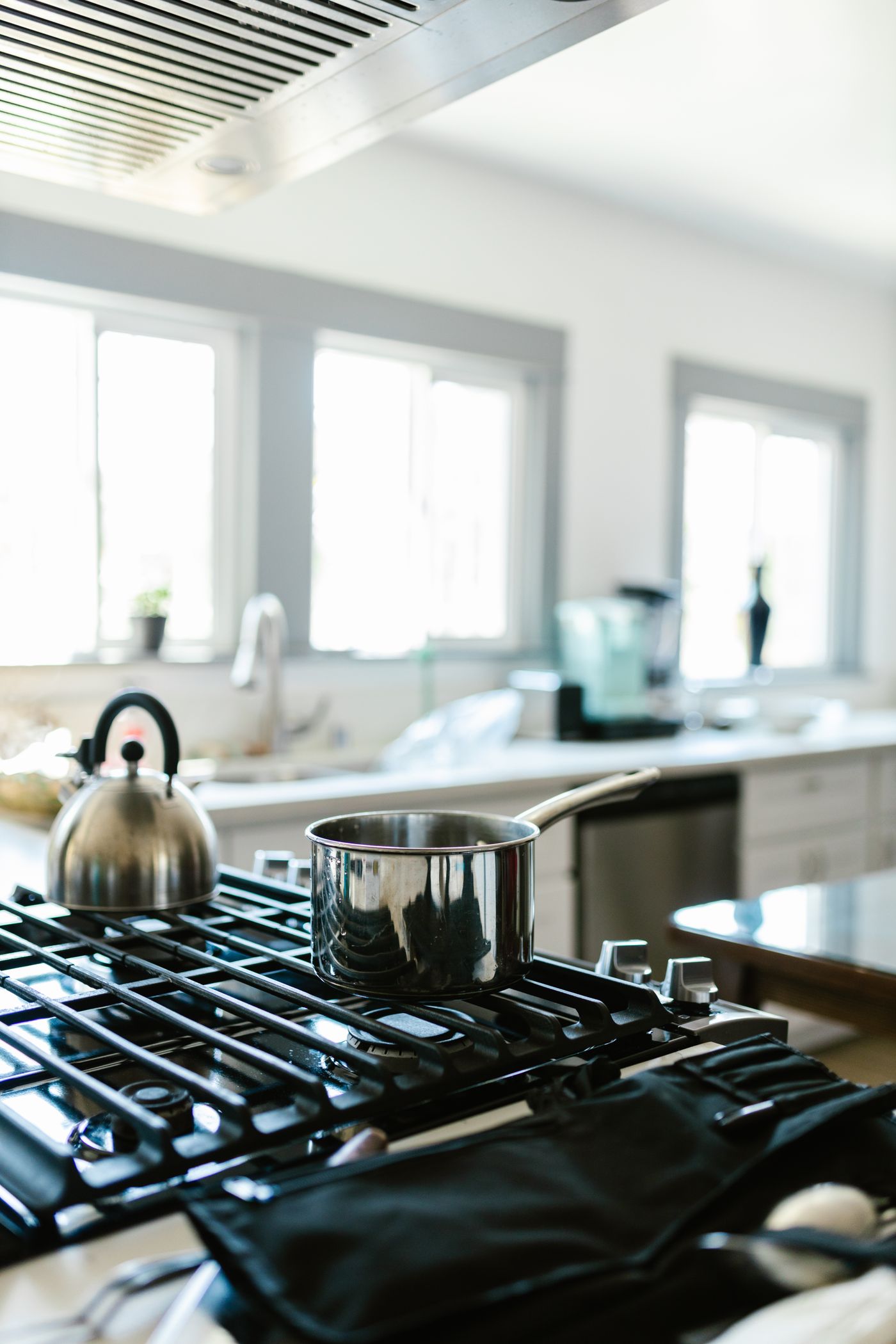
A display shelf above a stove can complicate access and expose nearby objects to heat or steam. Evaluate it against the relevant instructions instead of copying a photographed kitchen. An image of a kettle heating is an illustration of a setting, not evidence that every visible arrangement meets your appliance’s requirements.
Remember that the stove remains cooking equipment. A kettle should not prevent the household from using another necessary pan or reaching a control. If it must be moved whenever someone cooks, include that move in the routine rather than pretending the kettle has permanent parking.
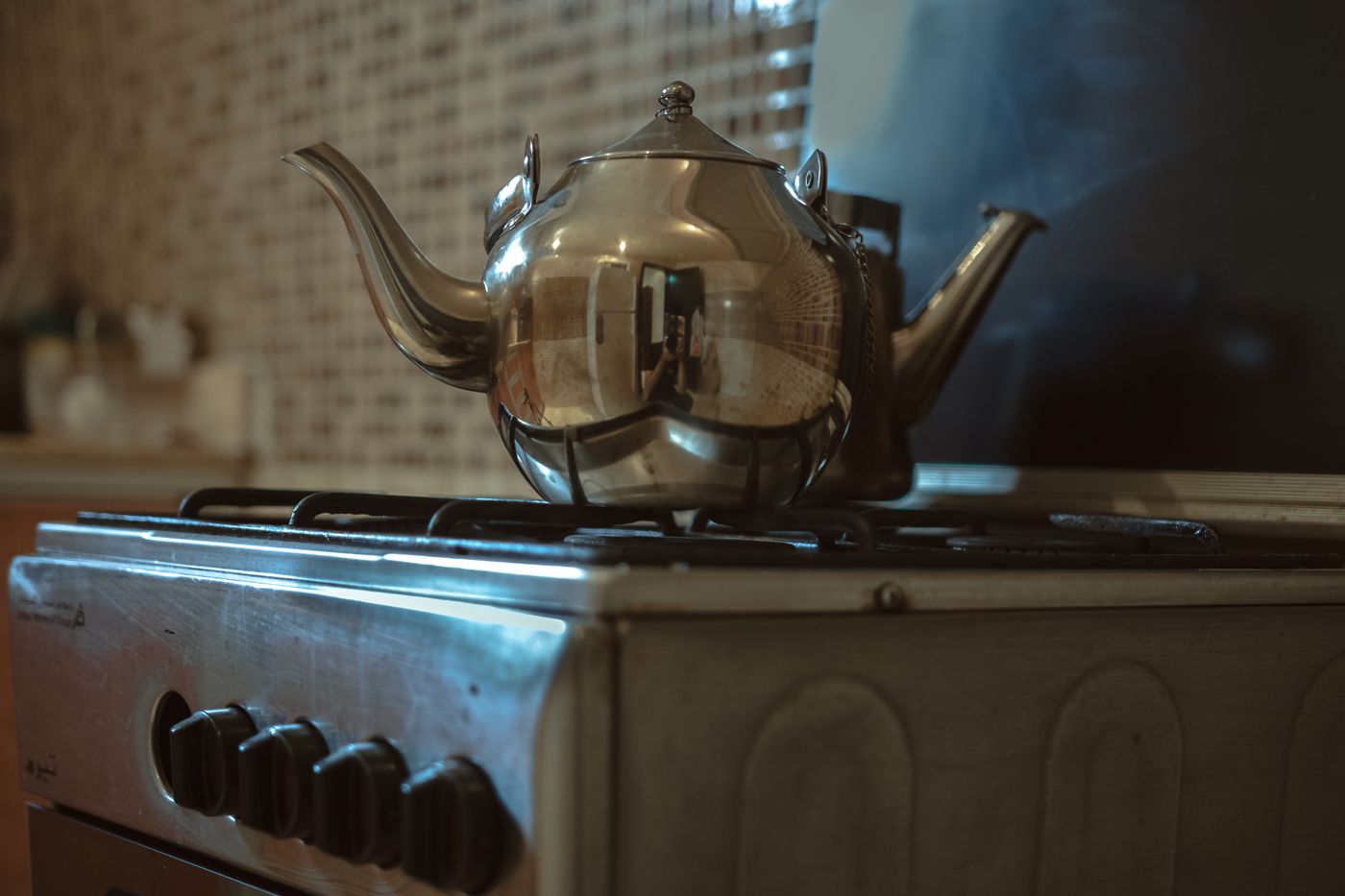
Choose a suitable hot resting position
Decide where the kettle can be put down when removed from heat, following its maker’s guidance and the surface’s heat requirements. An ordinary decorative tray, placemat, or bare worktop should not be assumed suitable. The resting position needs appropriate support and any specified protection.
Check this location before heating anything. It should be available when needed, rather than occupied by post, a draining dish, or a breakfast plate. If the resting space exists only after clearing several objects, adjust the arrangement while the kettle is still cold.
Avoid relying on an unused burner as universal storage. It can be switched on accidentally or become needed for cooking, and the kettle’s instructions may impose other limits. Choose an arrangement that remains clear about which parts of the stove are in use.
The wider small home-cafe counter guide helps allocate a limited preparation area. Here the specific question is what happens to the kettle after it leaves the heat. Solve that movement before adding jars, display cups, or a shelf of accessories.
Put the receiving cup where pouring makes sense
Consider the cup, teapot, or other permitted receiving vessel as part of the route. It needs a stable, suitable place where you can pour according to the kettle’s instructions without reaching across other people or carrying hot water unnecessarily far.
Keep the pour location out of a busy passing route. A kitchen can look quiet while being used by several people at breakfast. Plan around the actual moment someone needs a drawer, the refrigerator, or the sink, and do not let the kettle become a reason to reach across them.
If pouring requires two hands or a particular handle position, allow for that exact operation. Do not assume the handle stays cool or that the whistle opens in the same way as another kettle. Read the directions and use the specified protective equipment where required.
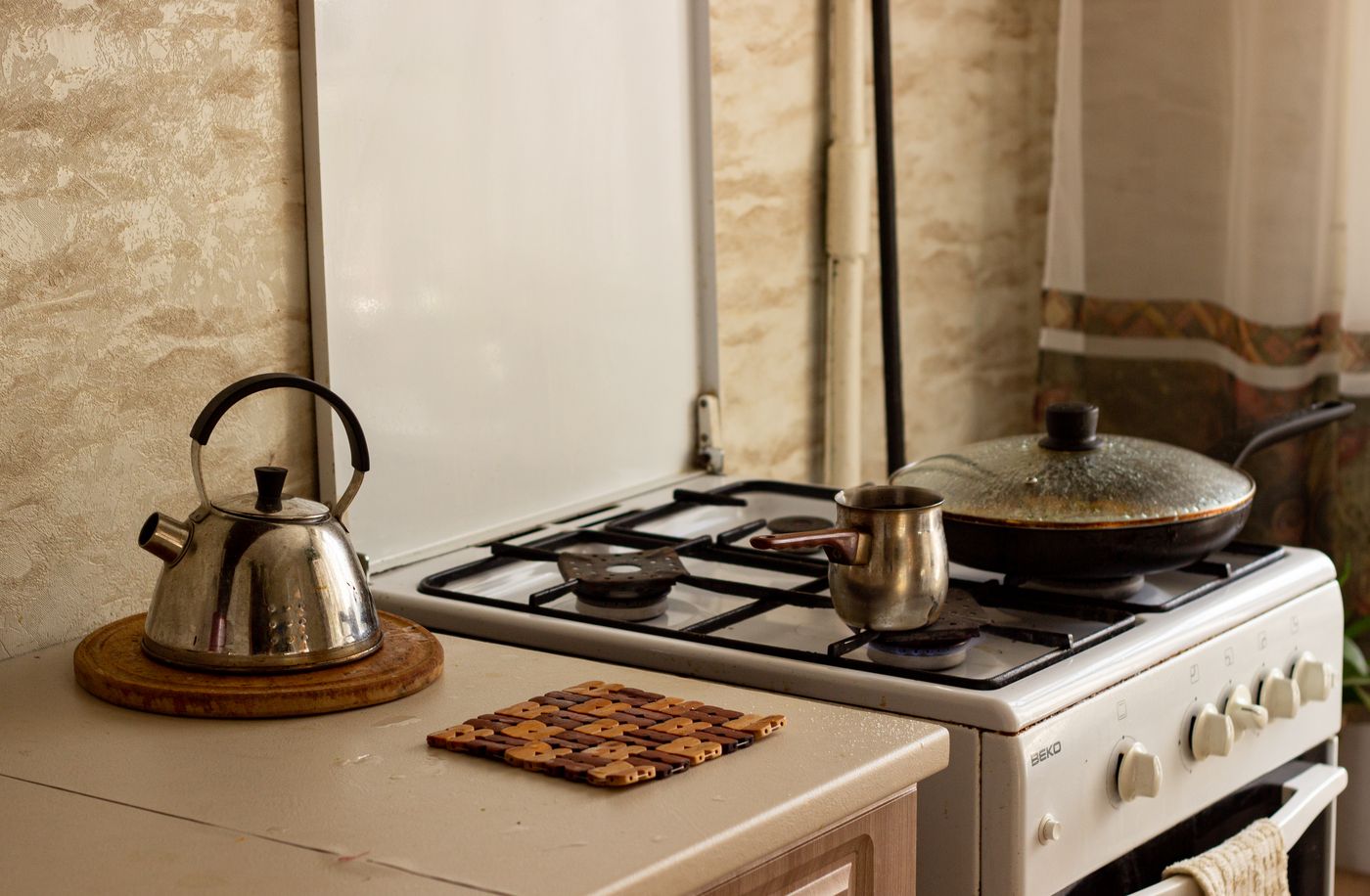
Nearby appliance doors matter too. Our small-kitchen dishwasher access guide explains why a closed-door footprint is only part of the usable space. Check the kettle’s resting and pouring locations while imagining those normal door movements, without opening a door into a hot setup.
Keep cooling separate from putting away
After use, the kettle still needs an appropriate cooling and care period. Follow its instructions about remaining water and drying. Do not place it in a cupboard while hot simply because the kitchen needs to look clear.
Choose a cold-storage position only after measuring the complete object. Include the handle, spout, lid, and any non-removable fitting. A cupboard that accepts the round body but catches the spout or requires the handle to be forced down is not a convenient home.
Check whether you can remove the kettle without lifting it over delicate items or dragging it along a shelf. The shelf and its contents should support the actual weight safely. Store it in the condition required by its maker, with components present and ready for the next use.
If it lives on a visible surface when cool, give it only the space its routine justifies. The aim is not to keep every tea-related object permanently within reach. Cups, tea, and the kettle can have different appropriate storage positions.
Plan cleaning without blocking the sink
Read the care instructions for the kettle’s actual material and construction. A permitted hand-wash does not imply dishwasher compatibility, and a general descaling suggestion does not establish the right chemical or method for every product.
Leave enough room to complete the allowed cleaning and drying process. If a large drying rack would be needed only for this one object, check what you already have and compare the actual footprint before adding another item. Our compact dish-rack comparison addresses that broader counter-space choice.
Keep food-preparation tools and kettle care separate where their instructions differ. The moka-pot cleaning guide concerns another drink-making item, but its specific disassembly and care steps are not interchangeable with a kettle’s. The useful habit is reading the right directions for each object.
Try the routine before buying accessories
Run through the cold arrangement again after making one small change. Can the kettle reach the water source, the permitted heating position, and its appropriate resting area without several objects moving? Is there a sensible place for the cup and a route that remains usable during normal kitchen activity?
The best correction may be moving one mug, clearing one surface, or choosing a different cupboard. If the layout cannot support the kettle’s actual requirements, a new trivet or decorative tray will not resolve the whole problem.
A successful small-kitchen kettle setup supports every stage of use, including the unphotogenic ones after the drink is made. Keep that complete routine in view, and the kettle can earn its place without taking over the rest of the kitchen.
Explore related decisions in our Small-Space Living hub.
Sources and editorial scope
Editorial research checked October 24, 2026. Published trend reports are context for these editorial applications, not verified live keyword rankings. Practical household guidance; photographs do not document a tested household or authenticate pictured materials.
