

A small family bathroom usually fails in the morning because several routines need the same sink, mirror, toilet, and doorway at the same time. Adding storage can help, but the bigger improvement often comes from moving tasks out of the room and staggering the tasks that must stay.
Map the task, fixture and next user
Observe a normal morning before assigning time slots. Two people needing the toilet is a different conflict from one person using a mirror while another needs the sink. Record the actual sequence and any privacy, supervision or support requirements.
| Task conflict | Question to settle | First change to test |
|---|---|---|
| Same fixture needed together | Which departure or support need determines the order? | Agree realistic turns without assuming equal task lengths |
| Mirror use occupies the sink area | Can that task work in another appropriate location? | Test the actual mirror, user position and equipment requirements |
| Someone searches through shared storage | Is the correct daily item identifiable and reachable? | Make its home clearer before buying another caddy |
| Wet textiles or products block the next person | Which return step is unfinished? | Assign the suitable towel, product or care destination |
Moving a task out does not remove its space or support requirements. Check the real alternative rather than placing equipment on the nearest available surface. The bedroom mirror placement guide shows how to include the occupied viewing position.
Give each person one portable kit
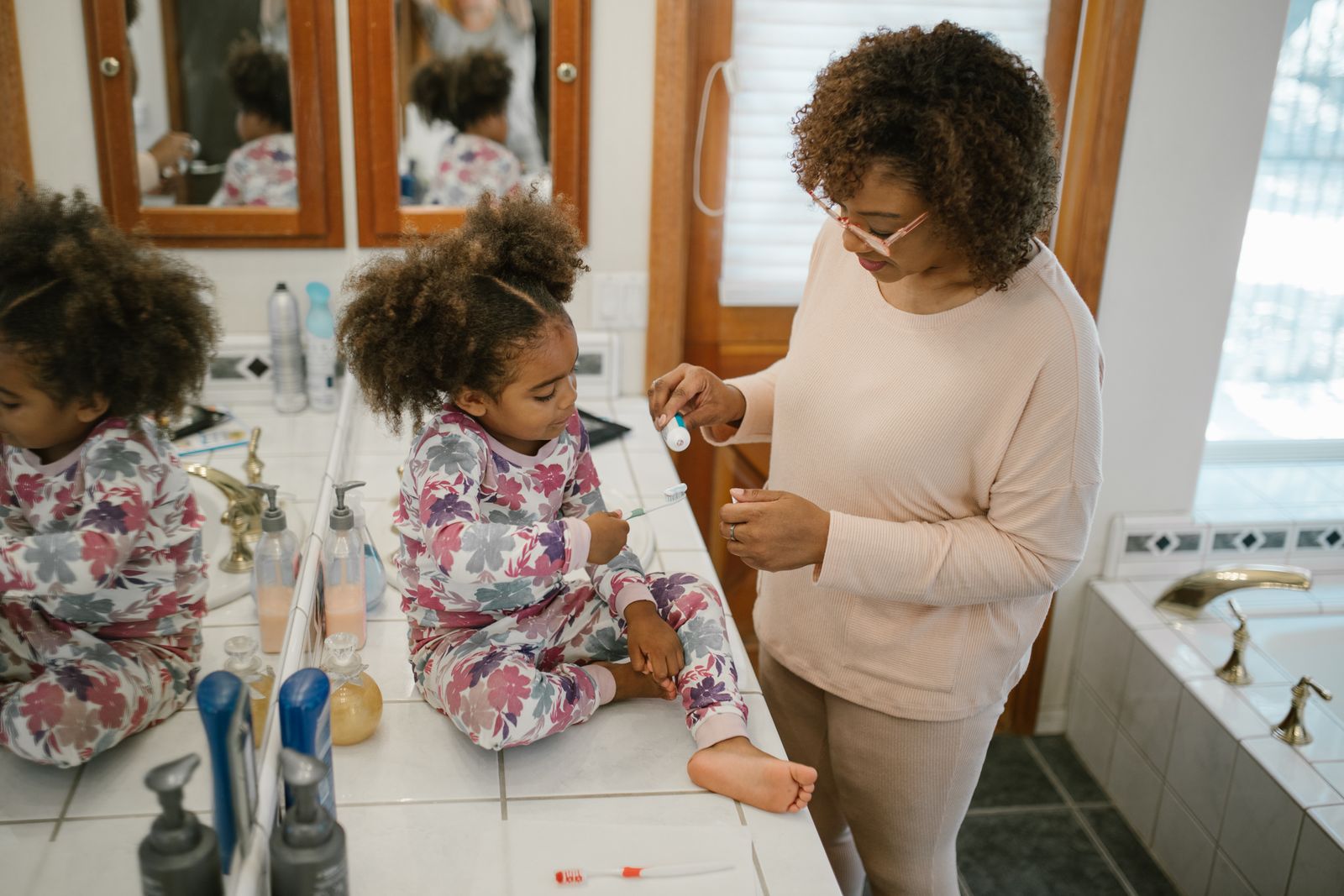
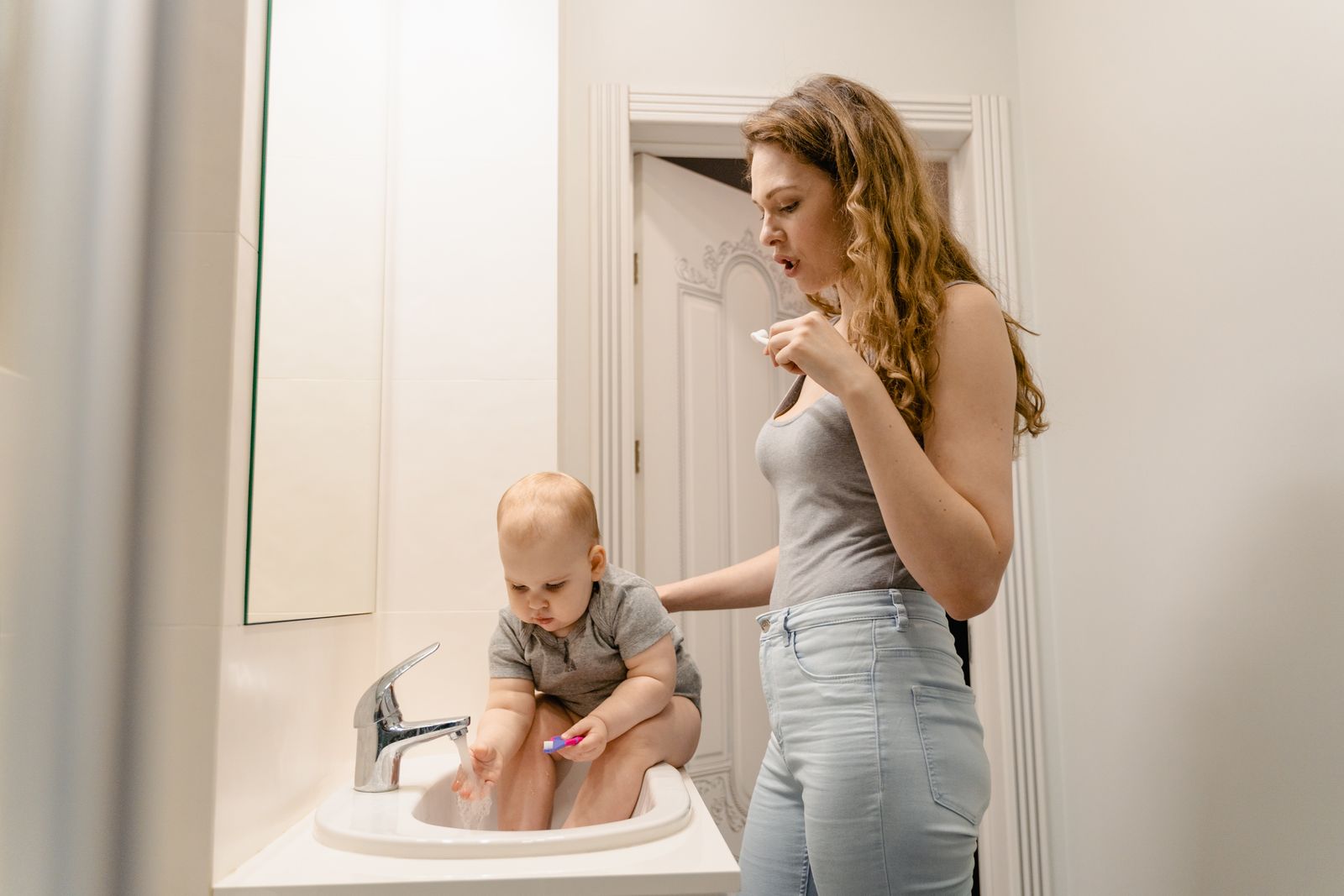
A small caddy for toothbrush, basic grooming items, and daily essentials keeps people from digging through shared drawers. Adult-controlled products, medicines, razors, and hazardous items stay secured separately.
Protect the sink from permanent parking
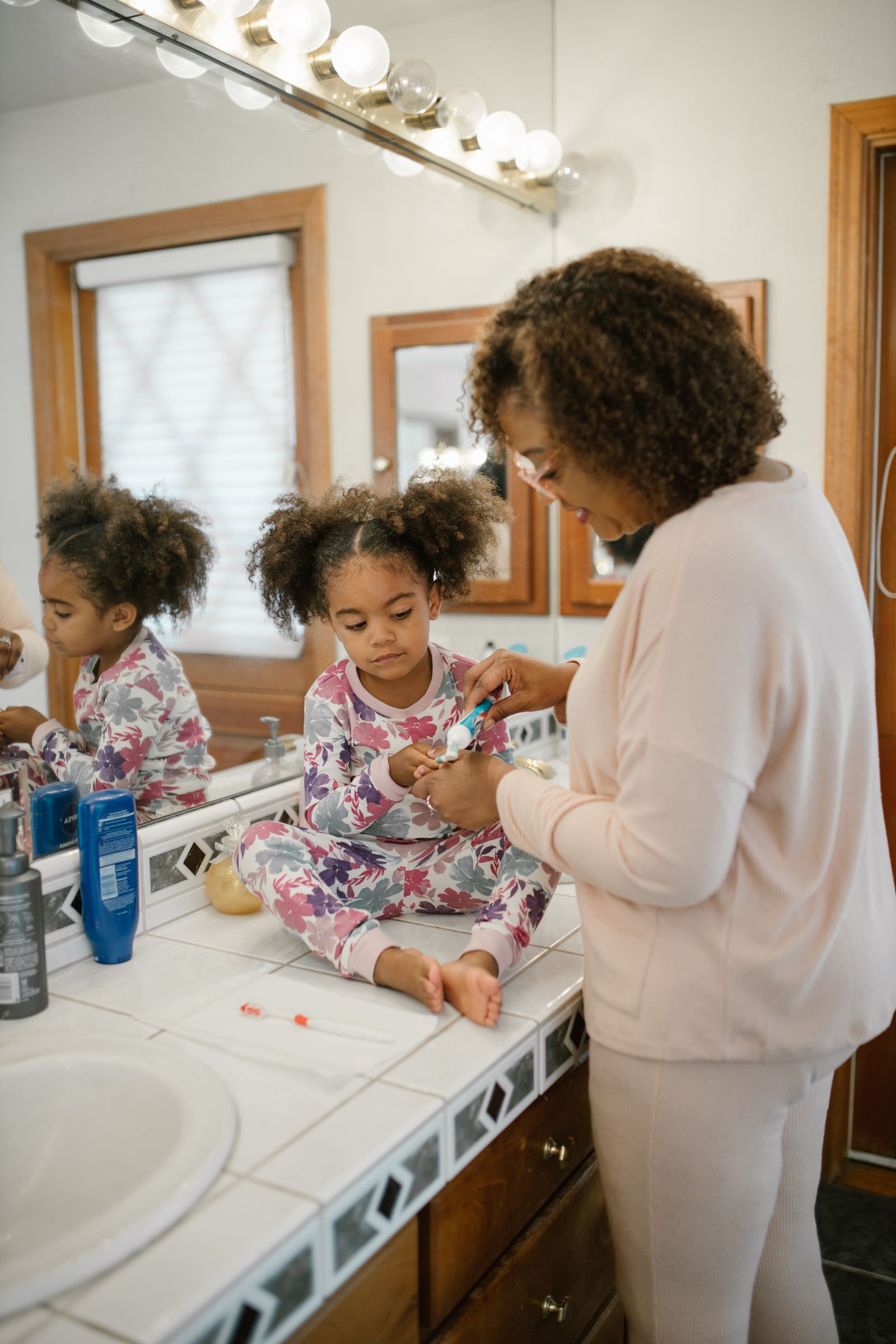
The countertop should return to a usable state after each person leaves. If five bottles live beside the faucet, the next user starts with less space and more cleanup.
Assign peak-time priority by schedule
The person leaving first may get the first bathroom window. A younger child who needs supervision may overlap with an adult. The sequence should follow real departure times, not a rigid age hierarchy.

Create a mirror alternative
A safe mirror outside the bathroom can move hair, makeup, and final appearance checks out of the bottleneck. Avoid placing mirrors where they create unsafe congestion or fragile obstacles.
Keep towels and dirty clothes from blocking the floor
Hooks, hamper access, and a clear floor route matter more during rush hour than decorative storage. A floor that collects damp textiles becomes both clutter and a slip concern.

Hand the bathroom over in a usable state
Each user returns the appropriate personal items and leaves the working area ready for the next person, with adult help where needed. Keep products or equipment still completing their required care distinguishable from ready storage; speed does not override their instructions.
Check the planned sequence through several ordinary mornings. Note the first repeated delay and change that point. If the queue is resolved but people still search for bags, use the separate departure check.
Keep bathroom traffic and counter storage separate
This article plans shared access. The morning counter routine covers bringing out and returning the working items. Explore more household routines in Family Home.

My conclusion
A one-bathroom morning works when the room is treated like shared infrastructure: move optional tasks out, use portable kits, stagger the true bathroom tasks, and reset the sink between users.
