Research note: This is a comparison of current product documentation and listings. We have not used either product or measured its performance in a lab or home. Product availability, bundles and prices can change, so check the selected variant at checkout.
One wet pair and four wet items are different problems
A shoe dryer is easier to justify when damp footwear is a regular part of life, not a once-a-year inconvenience. The first question is how many items arrive wet at the same time. Capacity and the time before the next use should guide the choice.
I would shortlist the PEET Original for a single-pair overnight routine. I would favor the DryGuy Force Dry DX when several compatible items need a timed forced-air session. These are design-based recommendations. We have not measured drying times, temperature at the footwear or sound levels for either product.
PEET Original: a simple single-pair station
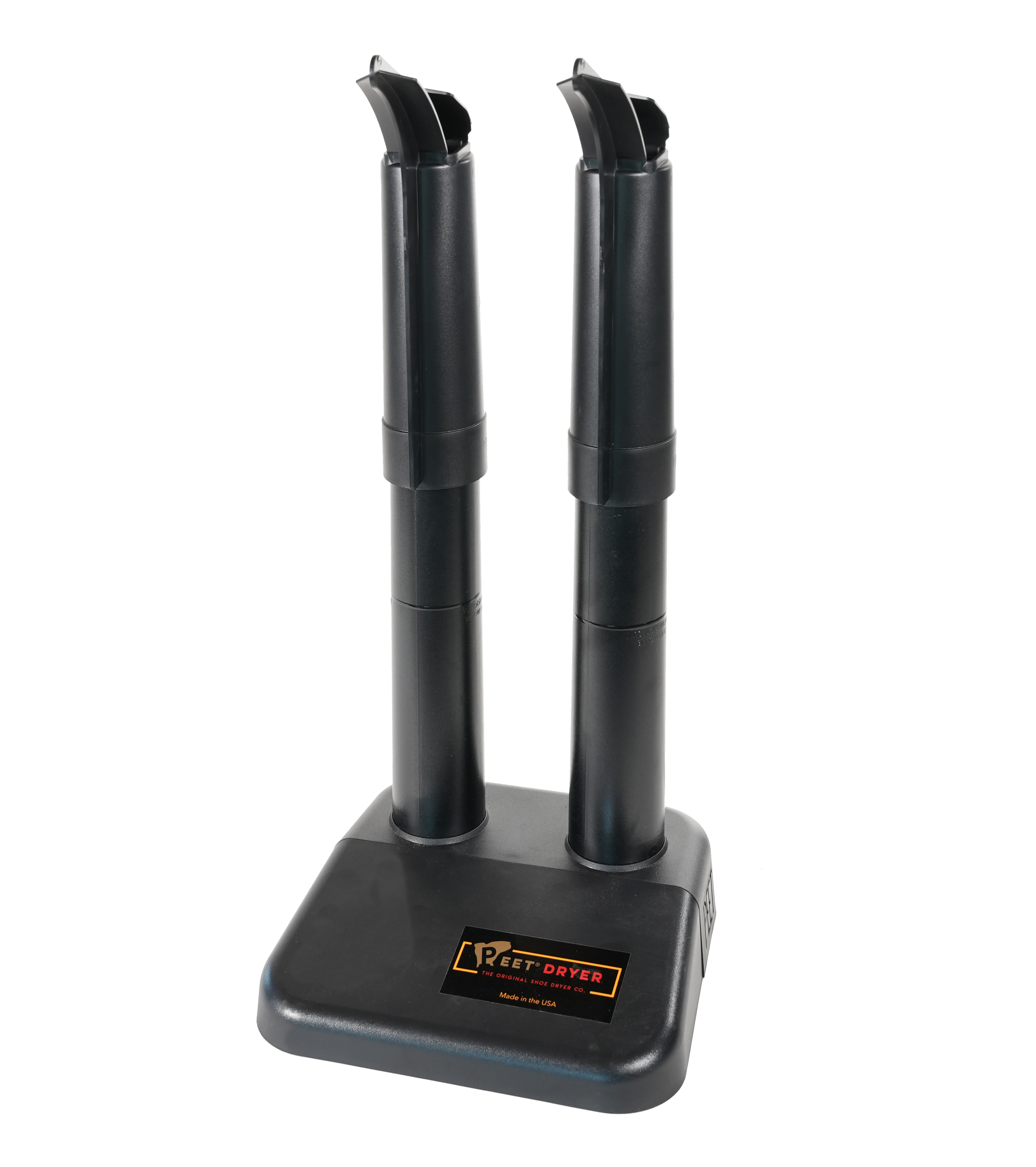
The Original PEET is a two-port shoe and boot dryer built around warm-air convection. Its appeal is a consistent place for one pair at the end of the day, without the forced-air blower used by the DryGuy. The manufacturer presents it as a quiet, gradual drying approach. If you are working on the same space, How to Organize Kids’ Sports Gear in a Small Home Without Living Around Equipment covers the next decision in more detail.
The constraint is throughput. A household that brings home several wet pairs cannot treat a single-pair unit as unlimited family capacity. Decide who uses it first and what happens to the other shoes. If the answer is a queue that never clears before morning, the smaller product is not necessarily the more space-efficient purchase. For the broader setup, Sunday Reset vs. Nightly Prep vs. Morning Launch: What Keeps a School Week Running? is a useful next read.
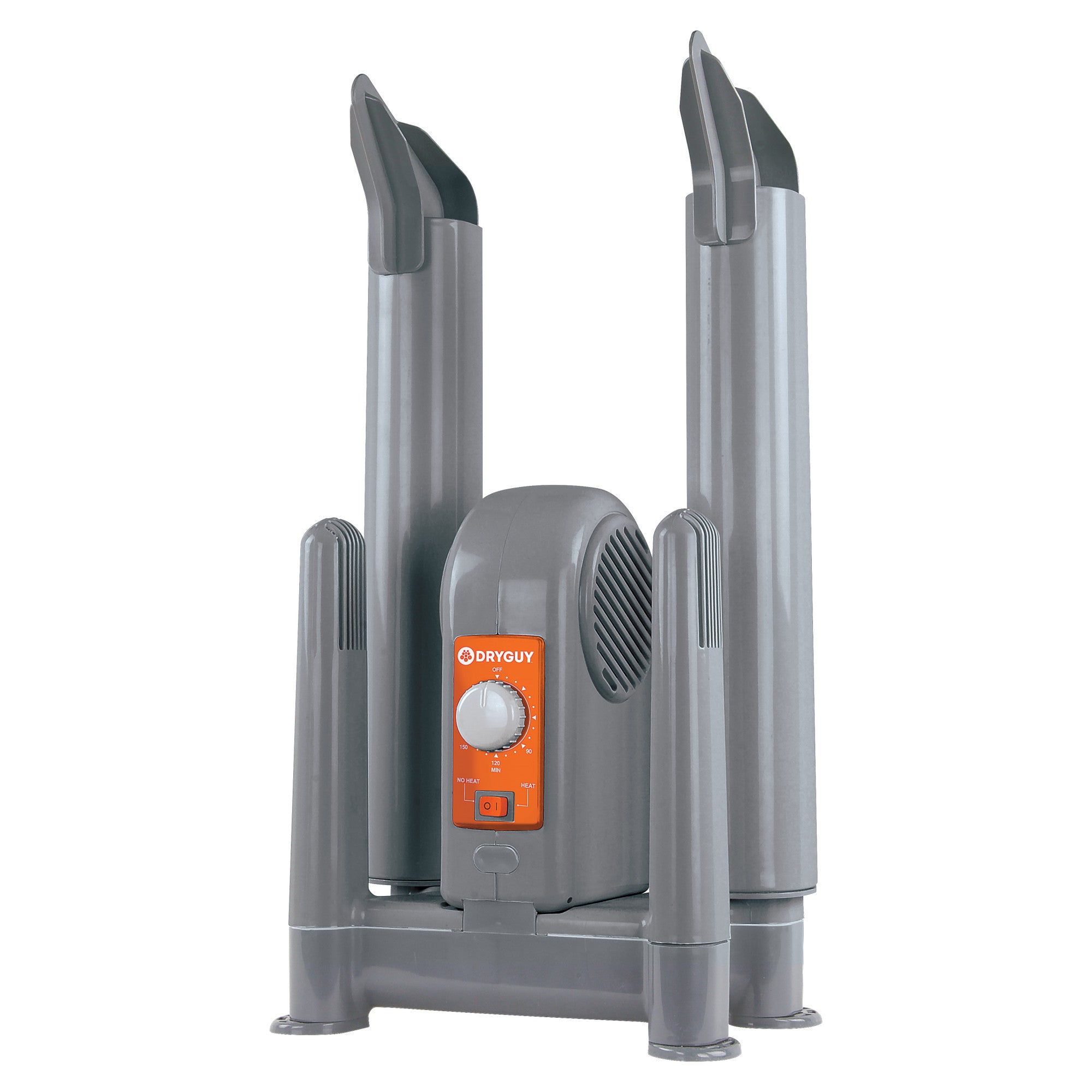
DryGuy Force Dry DX: more ports and more controls
DryGuy documents four drying ports, a three-hour timer, a heat/no-heat switch and two extension tubes for taller boots. Its forced-air design can handle several compatible items in one session. The manufacturer publishes drying-time estimates, but we do not treat those as a guarantee for saturated footwear in your entryway. You may also find Wall Hooks vs. Entryway Bench vs. Narrow Cabinet: What Earns Its Footprint? useful for a closely related small-home problem.
The extra capacity has a spatial cost. Measure the unit with the shoes or boots loaded, not only the bare base. Tall footwear and extension tubes can project into a nearby shelf or coat area. Powered airflow also introduces sound, so consider whether the entryway opens directly into a bedroom or quiet workspace. For a related step-by-step approach, see Lifetime 28241 vs cosco personal table small dining room.
Footwear compatibility comes before speed
Check both the dryer instructions and the footwear maker’s care guidance. A heat setting suitable for one boot may not be suitable for another material, construction or liner. The no-heat option on DryGuy is useful flexibility, not proof that every item is approved for the device.
Do not use a dryer as a shortcut around draining obvious standing water or removing debris according to the footwear instructions. Keep the electrical base and connections dry and follow the required placement and clearance guidance. This comparison makes no claim that either unit sanitizes shoes or treats a skin condition.
Design the entryway around a loaded dryer
Put the intended shoes where the loaded dryer would stand and open the front door fully. Walk past while carrying a bag. If the footwear or cord sits in the path, find another location before buying. A narrow passage is a poor place to discover that a compact base becomes a wide object when loaded.
The dryer also needs access to a suitable outlet without an improvised cable route across the floor. Keep it away from hanging coats and other objects that could obstruct it, following the manual. The broader arrangement in A Rainy-Day Entryway System for Wet Shoes, Umbrellas, Coats, and Kids’ Gear can help separate arriving wet gear from the dry items ready to leave.
Compare the routine you can maintain
For one person’s regular boots, an overnight single-pair habit may be simpler than managing timers and multiple ports. For a family returning from an activity, four ports may reduce the queue. Count items carefully: four ports does not mean four pairs of boots.
Decide where dry shoes go afterward so the dryer remains available for the next use. It should be a temporary station rather than permanent storage for the favorite pair. Use How to Store Family Shoes in a Small Entryway Without Building a Shoe Wall to give the dry footwear its own limited space. That keeps a useful appliance from becoming another blocked corner.
Ongoing cost and sound should stay honest
Without your local electricity rate, actual operating duration and verified power figures for the exact model, a precise running-cost promise would be misleading. Compare current documentation and your expected schedule if this is a daily-use purchase. We do not claim a specific number of cents per night.
Likewise, we have not independently compared noise. PEET’s convection approach and DryGuy’s blower are a real design distinction, but the experience depends on location and your tolerance. If the dryer will sit beside a sleeping area, consider that placement as carefully as the capacity.
My purchase choice
Choose the Original PEET when one pair at a time and a gradual overnight routine fit the household. Choose the Force Dry DX when its four ports, timer and heat choice address a recurring multi-item need. Skip both if ordinary drying following the footwear maker’s instructions already works and damp shoes are only an occasional event.
Before ordering, verify the exact electrical version, included extensions, seller terms and the loaded space requirement. Build the station into the departure routine described in A Small Entryway System for Backpacks, Shoes, Coats, and School Papers, so dry footwear moves back into circulation rather than living on the appliance.
Compare the fit before buying
| Decision point | PEET Original Shoe and Boot Dryer | DryGuy Force Dry DX |
|---|---|---|
| Most useful when | For one pair on an overnight routine | For several items with timed forced air |
| What helps | Simple single-pair routine | Several items can share a session |
| What to plan for | One pair can become a family bottleneck | Larger loaded footprint |
How to use this comparison: Measure the spot where the item will be stored and used. Check the selected Amazon variant, package contents and current return terms on the listing before paying. The products solve adjacent jobs, so a feature you will use weekly matters more than a specification that looks impressive on paper.
Browse more choices in our Buying Guides. Editorial photographs illustrate context and are not pictures of our testing. Product photographs, where available, identify the named model or line.
Sources
- www.peetdryer.com
- dryguy.com
- dryguy.com
- Amazon model B001J4HQ76 — https://www.amazon.com/dp/B001J4HQ76
- Amazon model B010A5J5FU — https://www.amazon.com/dp/B010A5J5FU