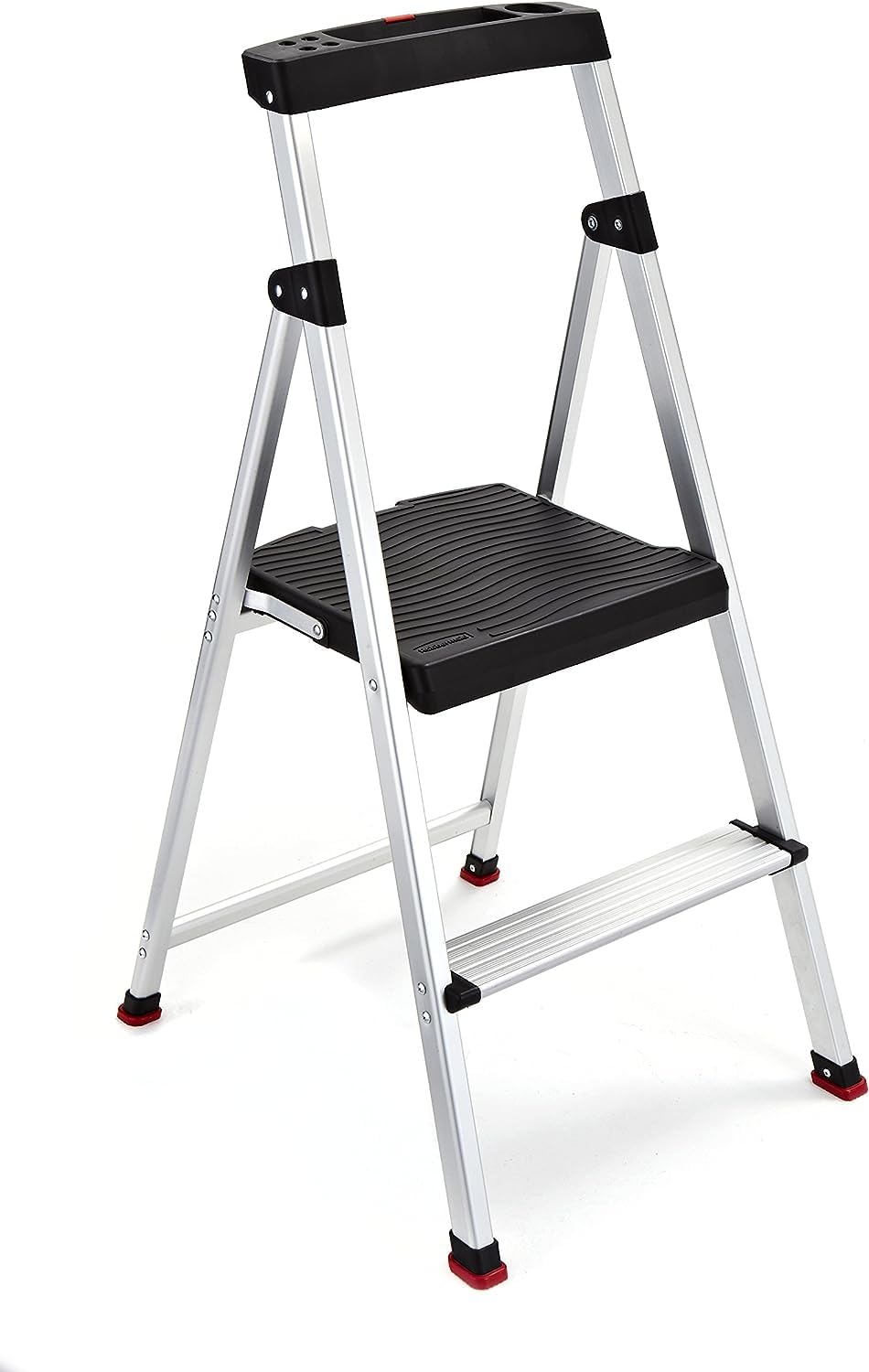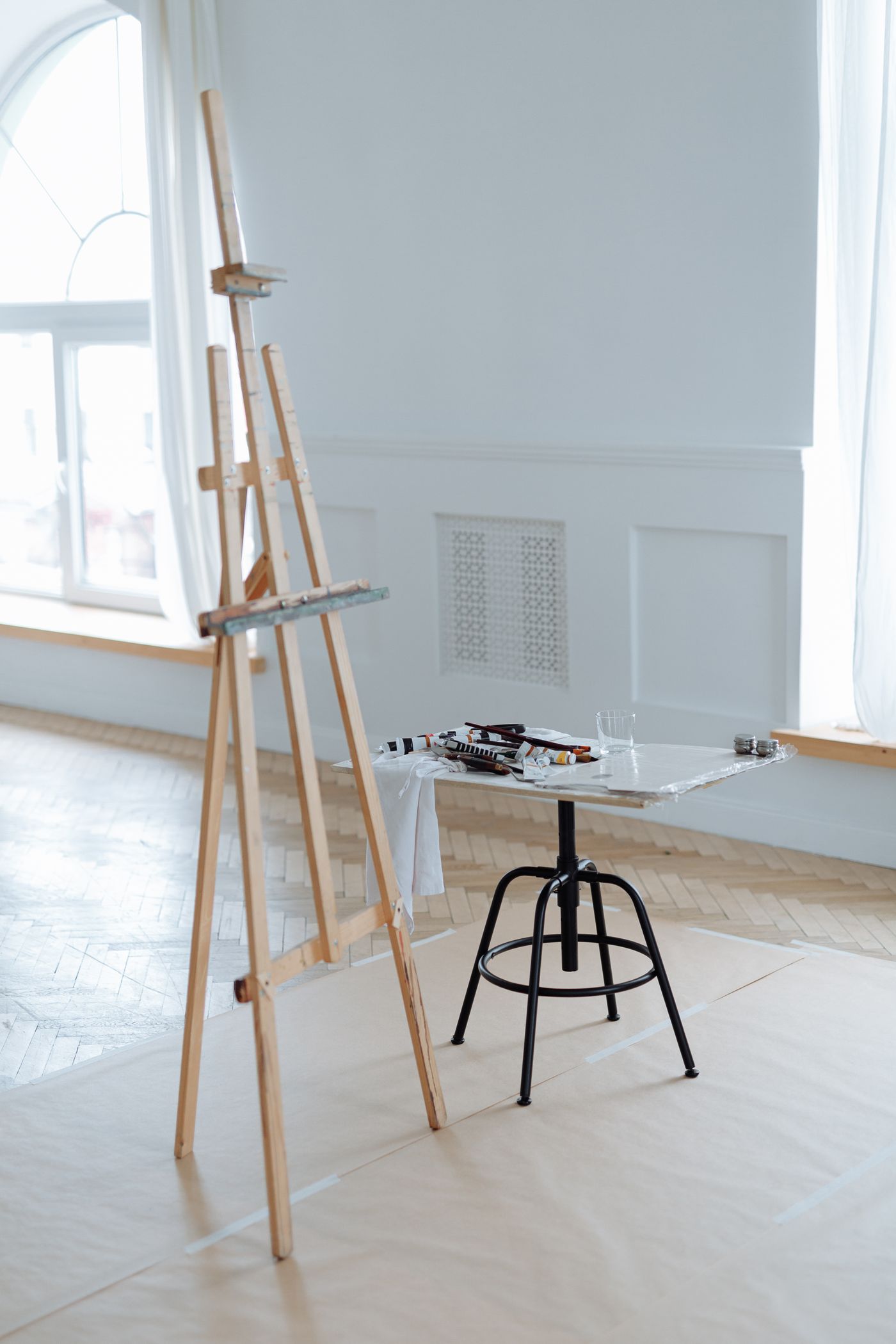
An easel changes the shape of a room more than its folded frame suggests. Once the legs are open, a person stands or sits in front, supplies occupy a nearby surface, and a wet painting needs somewhere to remain. A temporary painting session can fit a small room, but the whole activity must fit, including the part after you stop painting.
Plan one working position and one pack-away position before bringing out materials. Test the opened frame with the intended support and your normal movement around it. If the room cannot accommodate the task comfortably, change the session or use a suitable tabletop setup instead of squeezing a full easel into the remaining gap.
Pinterest’s fall 2026 report highlights screen-free creative hobbies. A temporary easel is one way to make space for that interest. The report does not establish a universal easel footprint, and the photographs show examples of painting spaces rather than measured plans for your room.
Choose the kind of session before choosing the position
Decide whether you want a short seated sketch, a standing painting session, or a work period on a larger surface. These require different reach, viewing distance, and tools. A small board used for drawing is not the same spatial problem as a large wet canvas that needs to remain upright afterward.
Identify the medium and follow its own use, ventilation, surface-protection, and cleanup instructions. A room that suits dry drawing may not suit a particular paint or solvent. Do not assume that an open window makes every art material appropriate for a bedroom or shared living space.
Keep the first setup modest. Use an easel and support you already own or can appropriately borrow, following the maker’s assembly and load instructions. If you are considering a purchase, the furniture delivery-route check is useful for larger frames or supports that must pass through narrow stairs and doorways.
Write down when the room needs to return to its ordinary use. That time determines whether a wet project can reasonably begin. Starting a painting ten minutes before the room becomes a guest sleeping area creates a conflict that better storage cannot solve.
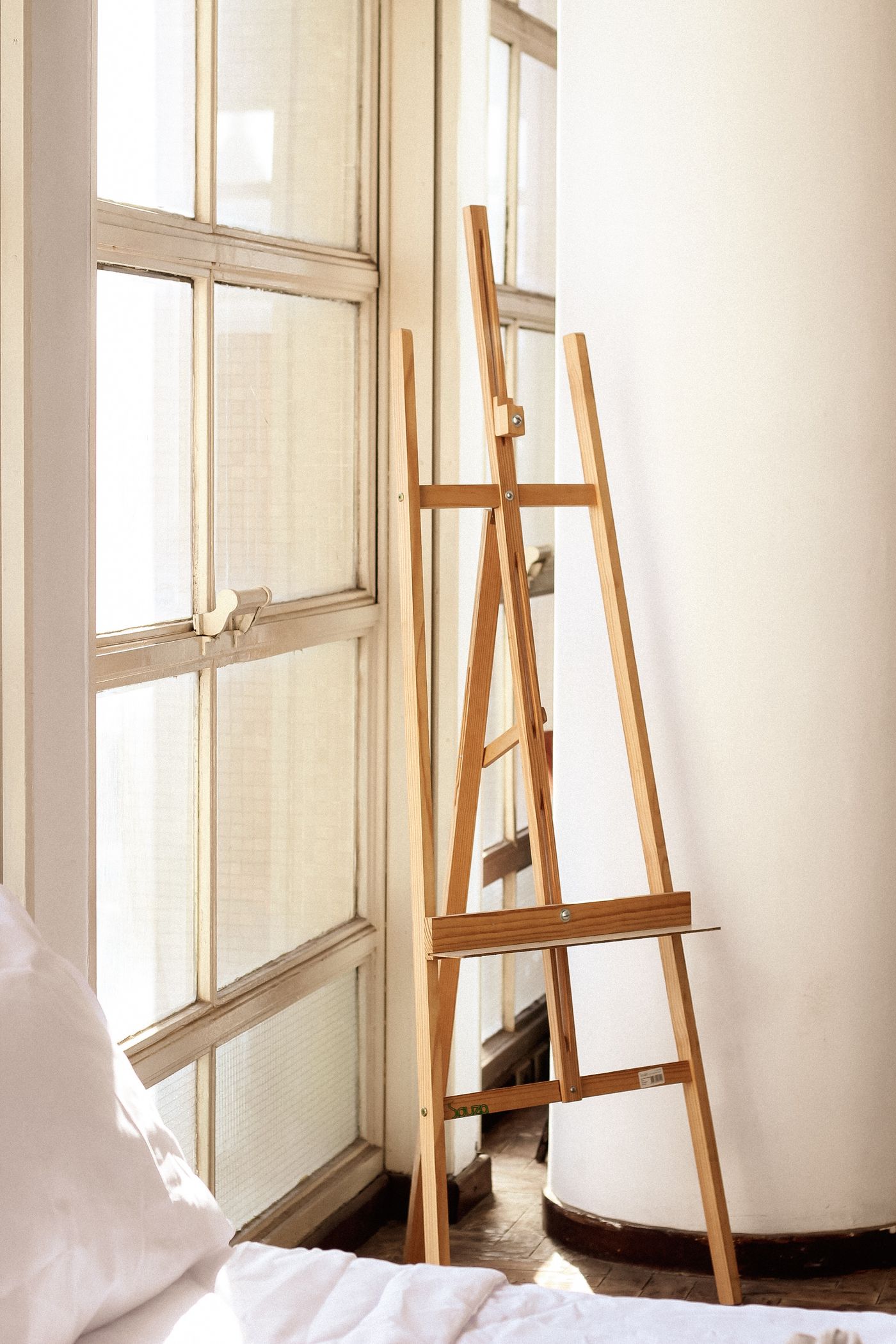
Measure the opened support, not the folded package
Open the easel according to its instructions in a suitable clear location. Check every leg, brace, tray, and adjustment that extends beyond the front frame. Look at floor contact points and the height at which the support will sit. Do not close a required brace to make the frame appear narrower.
Compare that actual configuration with the intended room position. Include any wall clearance required by the frame or artwork. If you cannot identify a safe, stable configuration for your support, consult the maker instead of balancing the canvas differently to save a few inches.
The folded footprint is useful for storage, but it cannot describe the working setup. A frame that slips behind a cupboard when closed may project far into the route when opened. Record both states so a purchase or borrowing decision accounts for the full cycle of use.
Do not infer load capacity from a photograph of a similar easel. A display stand, tabletop easel, and working artist’s easel can have different purposes and limits. Use the exact product’s instructions, especially for a heavy board or an unusually shaped support.
Add the painter and the movements the session requires
Stand or sit in the planned position without paint open. Move your arm through the range you expect to use. Step back to view the work if that is part of your practice. Check whether the easel can remain stable while your own position changes, without forcing you toward a doorway or loose floor covering.
For seated use, consider the chair pulled out as well as pushed in. Our chair-clearance planning guide explains why the occupied chair and the route behind it need separate attention. Do not count the same strip of floor as both the painter’s active space and the household’s only passage.
Test access to the window, door, storage, and any appliance or fitting that must remain usable. Keep exits and necessary circulation clear. A temporary hobby still has to coexist with the home. If the setup works only while nobody else enters the room, agree on that limitation before starting or choose another position.
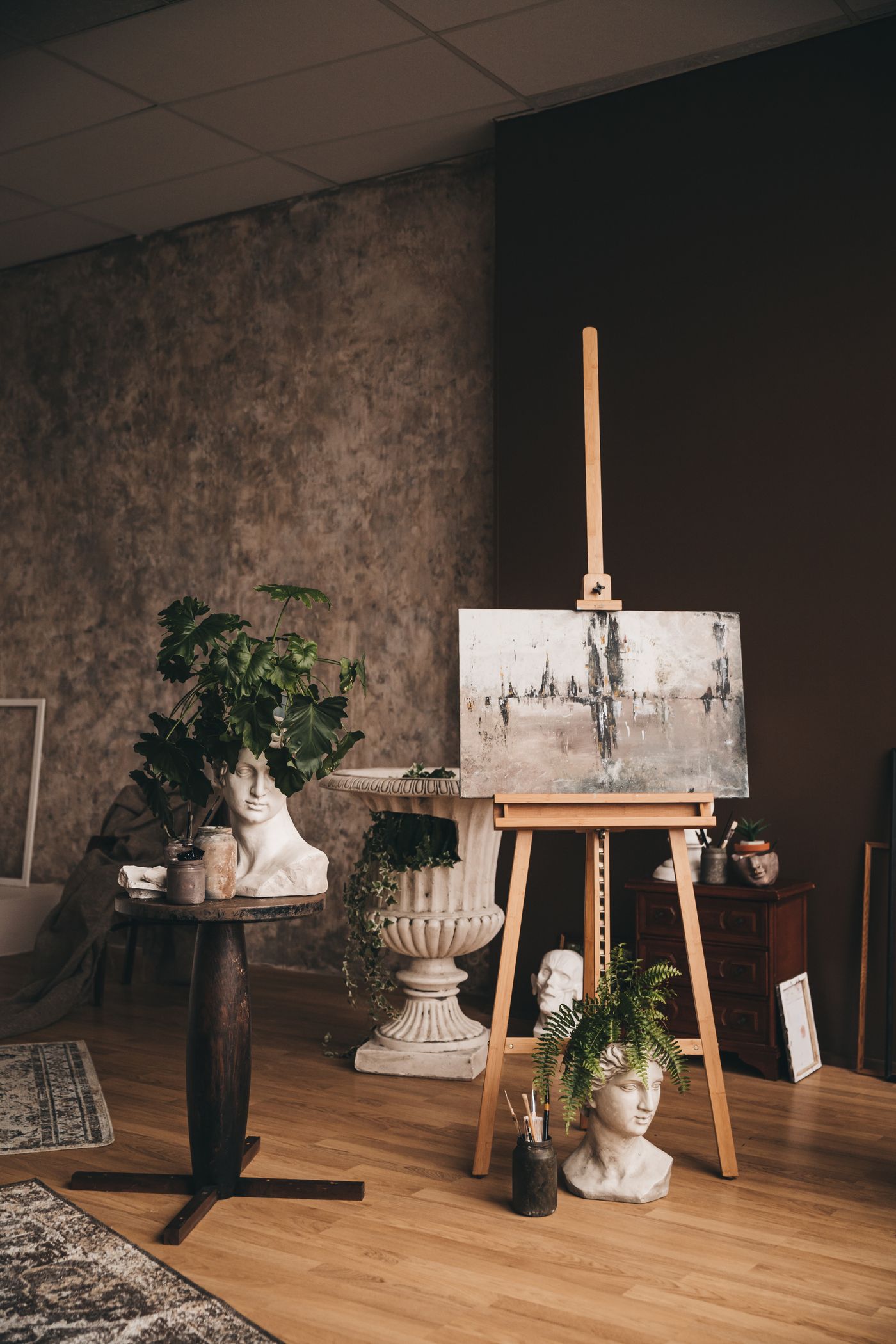
Give supplies a reachable position without surrounding the frame
Choose one suitable nearby surface for the materials needed in that session. Keep it within controlled reach, following material instructions and protecting the household surface appropriately. Do not stack containers on the easel’s tray unless the exact frame is intended to support them there.
Separate clean reference material from wet tools and media. Position containers so you do not need to reach across a wet painting to pick them up. Keep packaging and unused colors elsewhere rather than bringing the entire art collection into the room just because the session has started.
For a small shared room, a contained supply selection is easier to remove than several satellite piles. Our pack-away hobby-zone guide covers the broader kit; this setup adds the particular space needed by an open easel and an unfinished support.
Check lighting during the time you intend to work. Avoid a position that produces persistent glare on the support or places your own shadow over the work. If you use a task light, arrange it according to its instructions and keep its base and cable out of the active route. Do not improvise with hot or unsuitable lighting beside materials.
Decide where unfinished work will remain
The largest storage question may be the painting itself. Before opening materials, identify a stable place where the support can remain for the drying or curing conditions specified by the medium. It should not depend on leaning the work where people dress, sleep, open a door, or retrieve everyday supplies.
Do not place wet work in a closed cupboard merely to make the room look finished. Follow the material’s requirements and keep it away from inappropriate contact. If the only acceptable location is the easel itself, include that extended occupation in the room plan rather than calling the setup a one-hour activity.
An existing room with a clear guest or household handoff can still support the task if the timing works. The temporary guest-zone plan is useful when another use must follow. A project that cannot be safely moved by the handoff time should begin on a different day or in another suitable space.
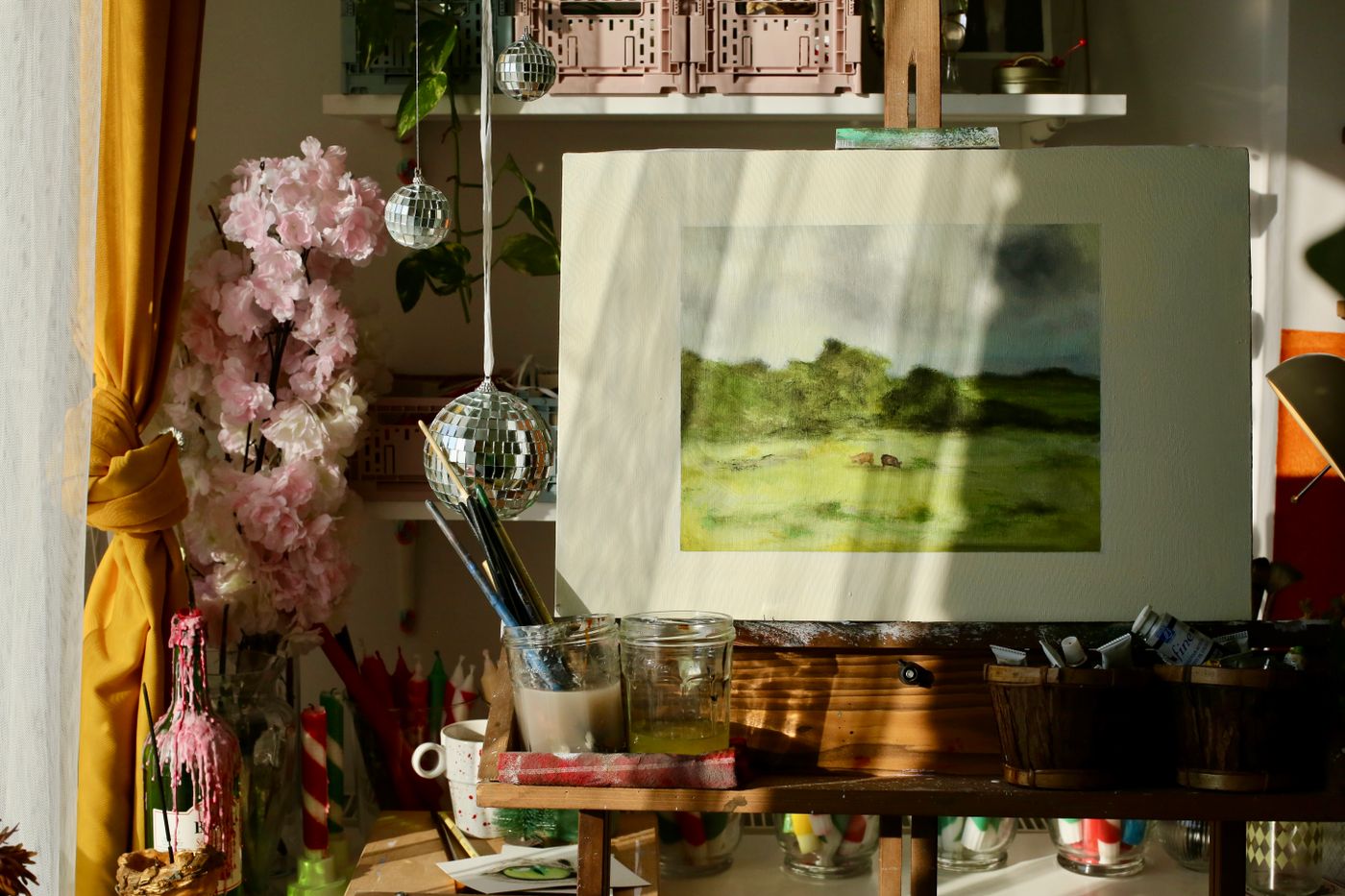
Rehearse the pack-away sequence before the first session
With no wet materials involved, move through the return routine once. Remove the support as instructed, return tools, close the frame correctly, and place it in the storage position. Check whether this requires two people, a cleared doorway, or access to a shelf that is normally blocked.
Store the folded frame in a stable position appropriate to its construction, without loading it with unrelated objects. Do not rely on a loose gap behind a door if the frame can fall or interfere with the door’s movement. Keep adjustments and small parts together in the way the maker recommends.
Notice whether the cleanup route passes through a food-preparation or child-play area. Follow the medium’s disposal instructions and keep tools appropriately separated. The practical room plan includes the movement between painting and cleanup, not only the pleasant view of the easel beside the window.
Judge the first attempt by how the room returns
After the session, record only the useful observations: the supply surface was too far away, the chair obstructed a drawer, or the support needed to stay longer than expected. Change one thing before the next attempt. Do not buy a permanent studio’s worth of equipment to solve a problem that a smaller session would avoid.
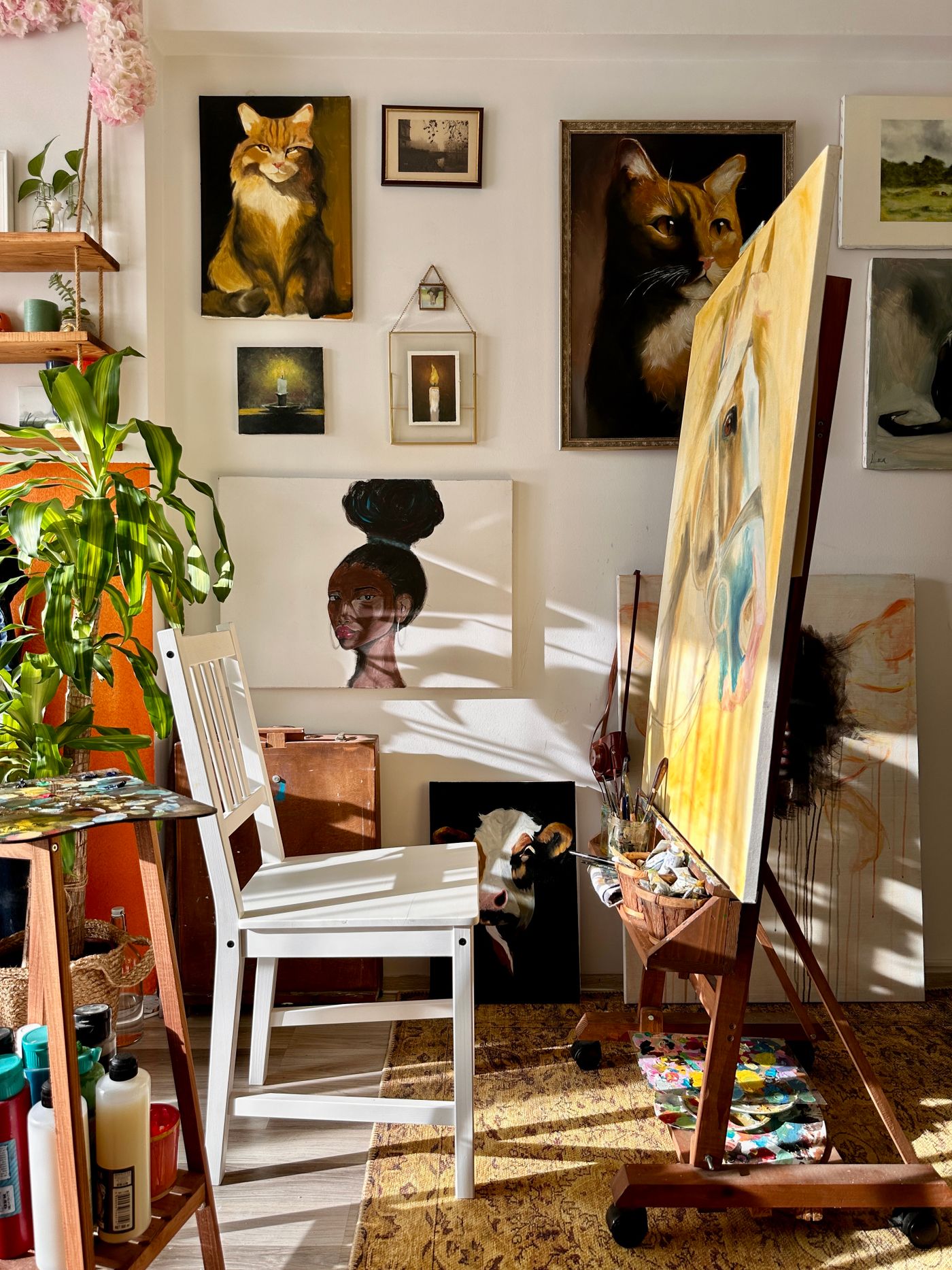
A successful temporary painting space lets you work without making ordinary household movement difficult, then returns through a predictable sequence. If the setup repeatedly leaves wet work in a sleeping or circulation area, the activity needs a different location or format. The easel should make a hobby easier to practice, with a room that still works around it.
Explore related household decisions in our Small-Space Living hub.
Sources and editorial scope
Editorial research checked October 16, 2026. Trend-report dates and limitations are stated in the article; these are editorial applications of published signals, not verified October keyword rankings. Practical household guidance; illustrations do not document a tested household or authenticate a pictured material.