
A Friendsmas potluck becomes easier in a small living room when every arriving dish has a destination and every borrowed container has an owner. Coordinate the food before the event, keep receiving separate from serving, and decide how leftovers will leave. More party furniture is rarely the first missing piece.
Etsy’s October 14, 2026 Family Reimagined direction includes Friendsmas. This guide develops the practical handoff between several households. The room plan is original editorial guidance, not a measured trend in potluck equipment.
The gathering can be casual without leaving the host responsible for discovering every dish’s storage, heating, and serving needs on arrival. A short conversation beforehand usually saves more room than an extra folding table bought after the guest list is already settled.
Ask what the dish needs, not only what it is called
When a guest offers to bring food, ask about its container size, arrival time, serving utensils, and any required refrigeration or heating. A casserole name alone does not tell you whether it will arrive ready to serve, need the oven, or occupy a refrigerator shelf while everyone waits.
Keep a simple shared list of agreed contributions. Include practical information the contributor can confirm, and ask for ingredient details relevant to your guests’ needs. Do not guarantee an allergen-free dish or serving area unless you can actually establish that claim. Let guests make informed choices from reliable information supplied by the preparer.
Avoid a plan in which several people expect the same limited appliance or shelf at once. Resolve that before the day: change the dish, choose a different preparation arrangement, or reduce the menu. The small room cannot compensate for an impossible sequence in the kitchen.
Choose a meal format that matches the seats
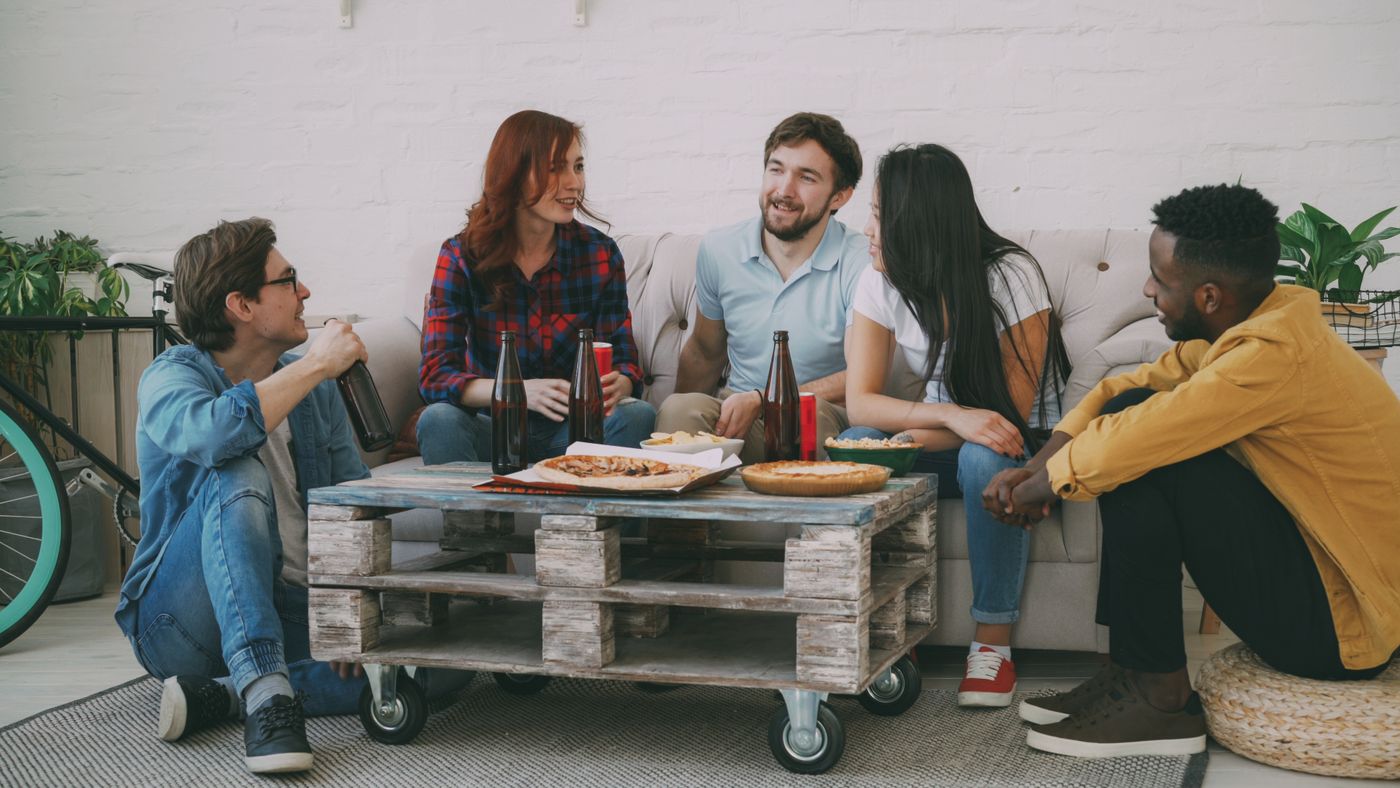
Try the living room with the actual number of people expected. Check where each person will sit, hold a plate, and put a drink. A sofa seat may be comfortable for conversation yet awkward for a meal requiring cutting or several separate dishes. Choose food and serving arrangements accordingly.
Keep passage through the room usable. A plate on a narrow windowsill is not a suitable substitute for a missing surface merely because a guest can reach it. Borrow appropriate seating or simplify the gathering when needed, rather than asking everyone to balance food around a cramped display.
Our guide to making a small living room guest-ready addresses the general room setup. For a potluck, add the specific journey of a dish from the door to its appropriate holding place and then to the meal. That route should work before decorative extras claim the available surfaces.

Give arrivals a receiving point
Choose a stable, suitable place where the host can briefly receive a covered container. It should allow a quick check of what needs to happen next. This is a handoff point, not a place where perishable dishes wait indefinitely while everyone greets one another.
Keep the receiving surface separate from coats, bags, and ordinary living-room clutter. Ask one person to handle arriving dishes when possible, so a contributor can explain the contents and any handling instructions once. Another helper can welcome people and deal with belongings without also directing food they have not checked.
Move each dish promptly to its planned place. Keep a clean route to the kitchen and avoid passing containers over seated guests. If arrivals overlap, ask guests to wait a moment with their own covered dish rather than stacking containers on an unsuitable surface.
Verify that cold storage has real space
Before guests arrive, make the appropriate refrigerator space available for the agreed contributions. Our small-family-fridge organization guide can help with the ordinary arrangement, but do not overfill shelves or treat a packed shelf as adequate simply because the door closes.
FDA’s home-buffet guidance recommends keeping cold food at 40°F or below and hot food at 140°F or above. It also advises keeping serving portions small. Use suitable equipment and a food thermometer where required to maintain the food’s safe conditions; a decorative stand or covered dish does not establish temperature control.
Do not assign heating or cooling performance to a container based on appearance. If a contributor expects you to use a special warmer, confirm the equipment, its instructions, and its actual capability before the event. Change the menu or timing if the household cannot provide the needed arrangement.
Serve in manageable rounds
Keep the active serving selection within the surfaces and temperature-control arrangements you can actually manage. A smaller selection brought out appropriately can be easier to access than every dish displayed at once. Explain the plan so contributors do not interpret an item still in proper storage as being forgotten.
Give each dish its intended serving utensil and avoid casually swapping utensils between foods. Keep public dish information separate from private guest notes. If someone asks a question the host cannot answer, ask the preparer rather than guessing from the dish’s appearance.
FDA advises replacing a nearly empty serving dish with a fresh one instead of adding new food to it. Plan enough suitable serving pieces for the method you choose, or simplify the number of dishes. A small living room benefits from fewer active containers and a clear sequence rather than a crowded continuous refill display.
Keep personal containers identifiable
Ask contributors to mark their reusable containers and lids in a way suitable for those items. A removable label applied to an appropriate dry exterior can help, but follow the container’s directions and avoid adhesive on surfaces where it could cause damage or contact food.
Take a quick private reference photo of an unusual container-and-lid pairing if the owner agrees and it will help the return. Keep lids together after they are removed. An unlabeled stack of similar lids is a small problem early in the evening and a much larger one when several guests are leaving at once.

Do not automatically transfer a guest’s dish into a new serving vessel. Ask whether the change is appropriate for the food and container, and whether doing it adds unnecessary handling. Presentation is useful only when it works with the actual serving plan.
Protect the ordinary shared surfaces
Keep a clear distinction between the eating area, the receiving point, and the place where used dishes collect. Use suitable protection where the surface and serving vessel require it. A coffee table finish may have different limits from a kitchen counter, so follow the relevant care instructions rather than assuming all hard surfaces handle hot or wet containers alike.
Our dining-table handoff guide can help when a shared table changes roles during the evening. Clear and clean the surface appropriately between uses rather than layering serving dishes over paperwork or children’s projects. Move the displaced items to their real temporary home, not into the nearest doorway.
Keep decorations modest enough that everyone can identify where a glass or plate belongs. The room can feel festive through conversation, a shared playlist, and a few suitable existing details. You do not need to occupy every horizontal surface to make the event feel intentional.
Make the leftover decision before departures become busy
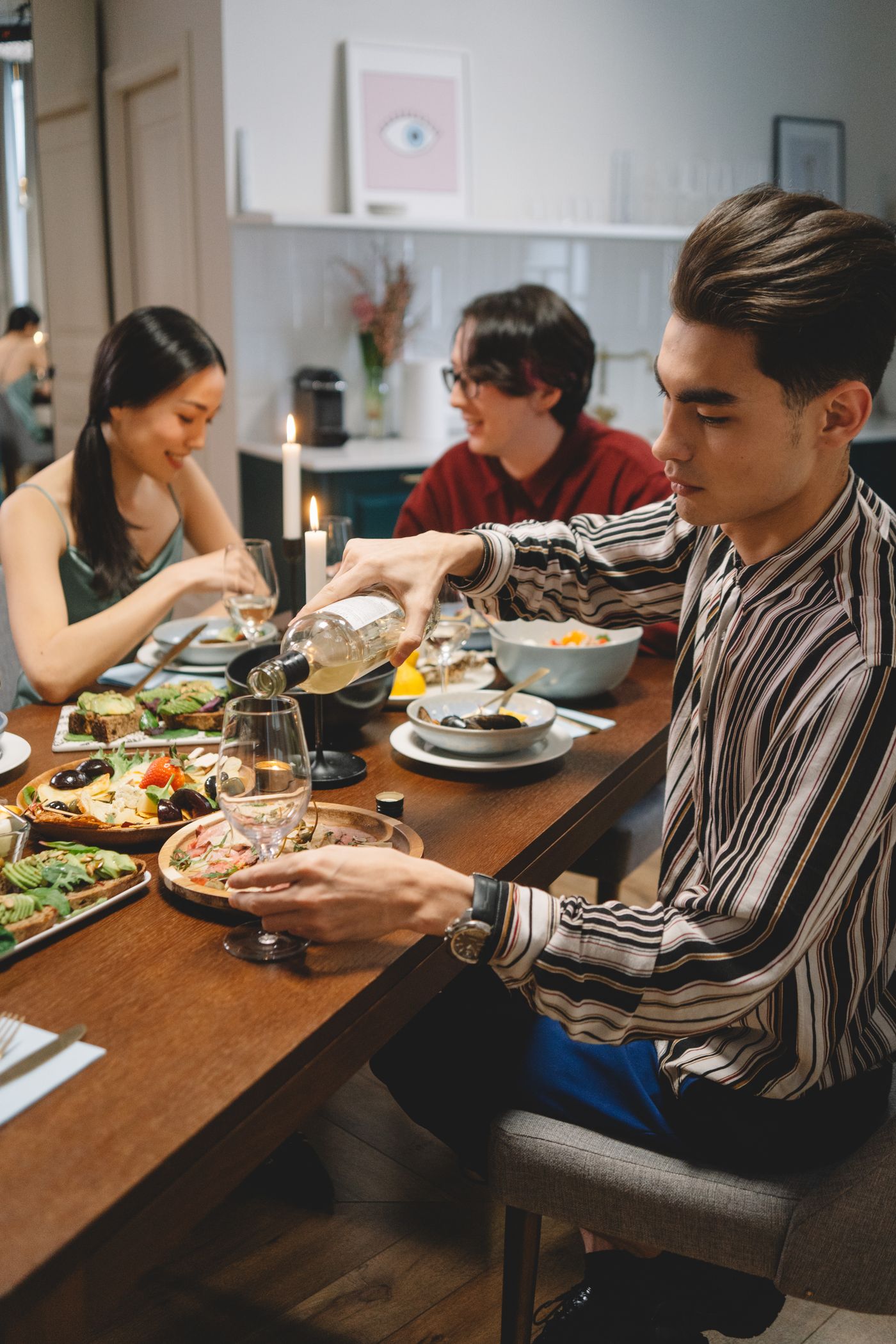
Decide who is responsible for checking food holding time and temperature. FDA advises discarding perishables left at room temperature for more than two hours unless properly kept hot or cold; the limit is one hour above 90°F. Do not reset that clock by moving food into a take-home box or deciding it still looks appealing.
For food that can appropriately be kept, arrange suitable containers and timely refrigeration. FDA also stresses prompt refrigeration of take-home leftovers within its safe time guidance. Consider the journey home when making the plan. A guest with a long onward trip may be better leaving without a perishable portion.
Offer leftovers without turning them into an obligation. Confirm the recipient wants the food and understands any information the preparer has supplied. Do not combine uncertain leftovers into a mystery mixed container to reduce washing up.
Return dishes without creating a new storage collection
Where practical, return each clean or appropriately contained vessel with its matching lid before the owner leaves. Agree another handoff for pieces that cannot be returned immediately. Write the owner’s name and a simple return plan on your own working note so the item does not become an anonymous permanent resident.
If hosting preparations exposed a broader accumulation problem, use a focused declutter before overnight guests for that separate task. Do not use the potluck as a reason to buy storage for dishes that are only waiting to go back to their owners.

After the gathering, record one improvement for next time: fewer dishes requiring heat, earlier cold-food arrivals, or a clearer lid-return point. Keep the lesson brief and discard personal planning notes you no longer need. The room should return to daily use with the shared meal remembered and the borrowed containers already on their way home.
Explore related household decisions in our Family Home hub.
Sources and editorial scope
Editorial research checked October 15, 2026. Trend-report dates and limitations are stated in the article; these are editorial applications of published signals, not verified October keyword rankings. Practical household guidance; illustrations do not document a tested household or authenticate a pictured material.