Some small homes are not just short on square footage. They are short on hidden storage. There may be one shallow closet, no coat closet, no pantry, and nowhere to push everyday life out of sight. For a related step-by-step approach, see How to Store Extra Bedding in a Small Home With No Linen Closet.
The answer is not to pretend everything can disappear. It is to build visible storage that behaves like a system.
Start by deciding what deserves hidden space
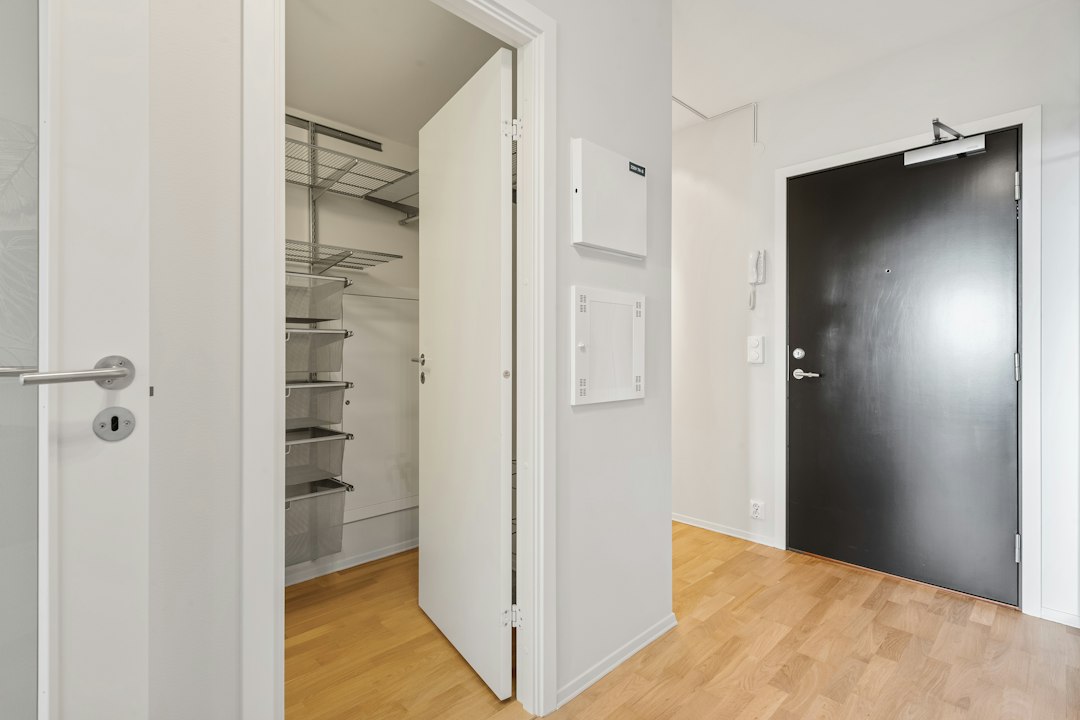
If you have one real closet, reserve it for categories that benefit most from being enclosed: coats, clothing, cleaning tools, luggage, or household backstock. Do not let low-value miscellaneous storage consume the best hidden area.
Turn rooms into small storage territories
Instead of one central closet, assign storage by use:
- entryway: shoes and active bags,
- living room: toys, blankets, media,
- bedroom: clothing and personal items,
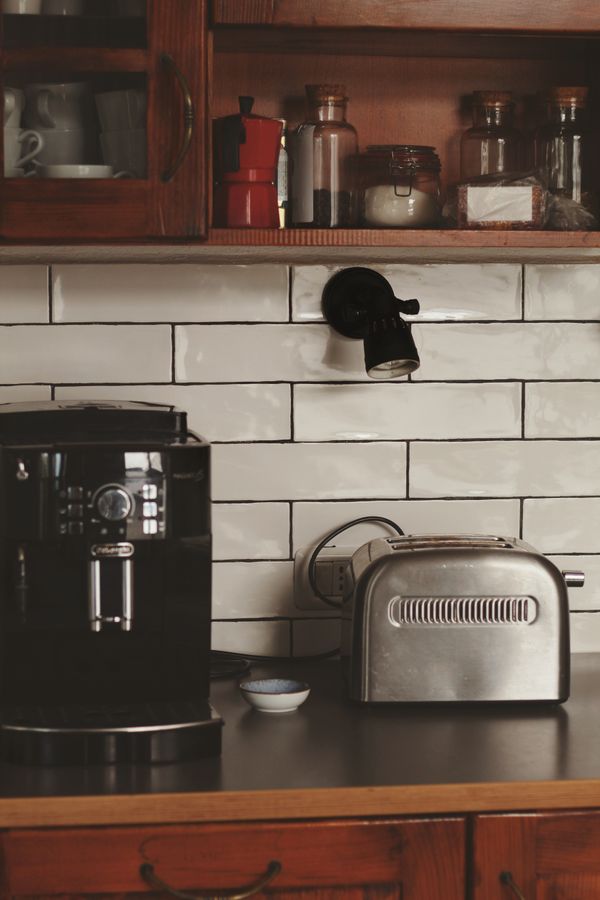
- kitchen: food and cooking tools,
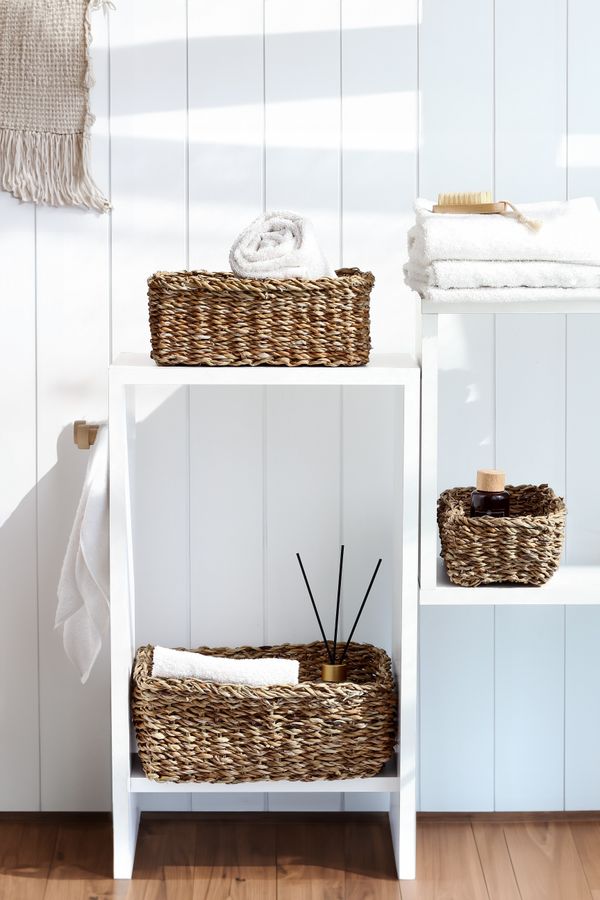
- bathroom: daily toiletries,
- under-bed: one low-frequency category.
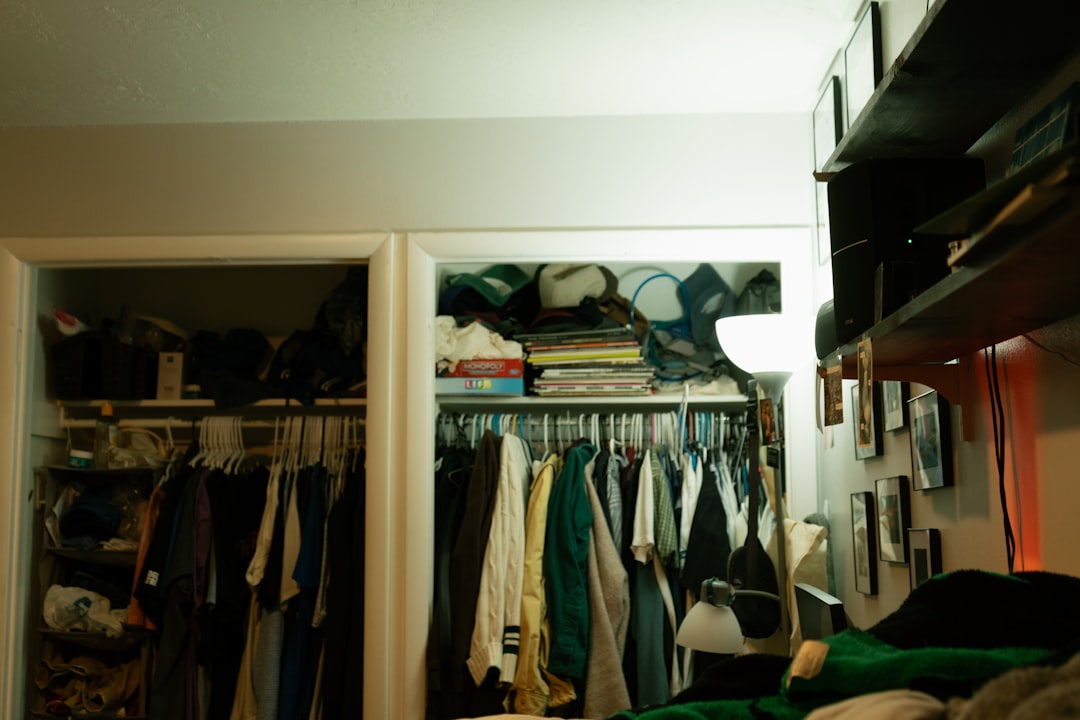
Visible storage needs fewer categories
An open shelf showing ten unrelated categories looks cluttered even when everything is “organized.” Group visible storage into broader, cleaner zones. For the broader setup, How to Move Into a Smaller Home Without Re-Creating Your Old Clutter is a useful next read.
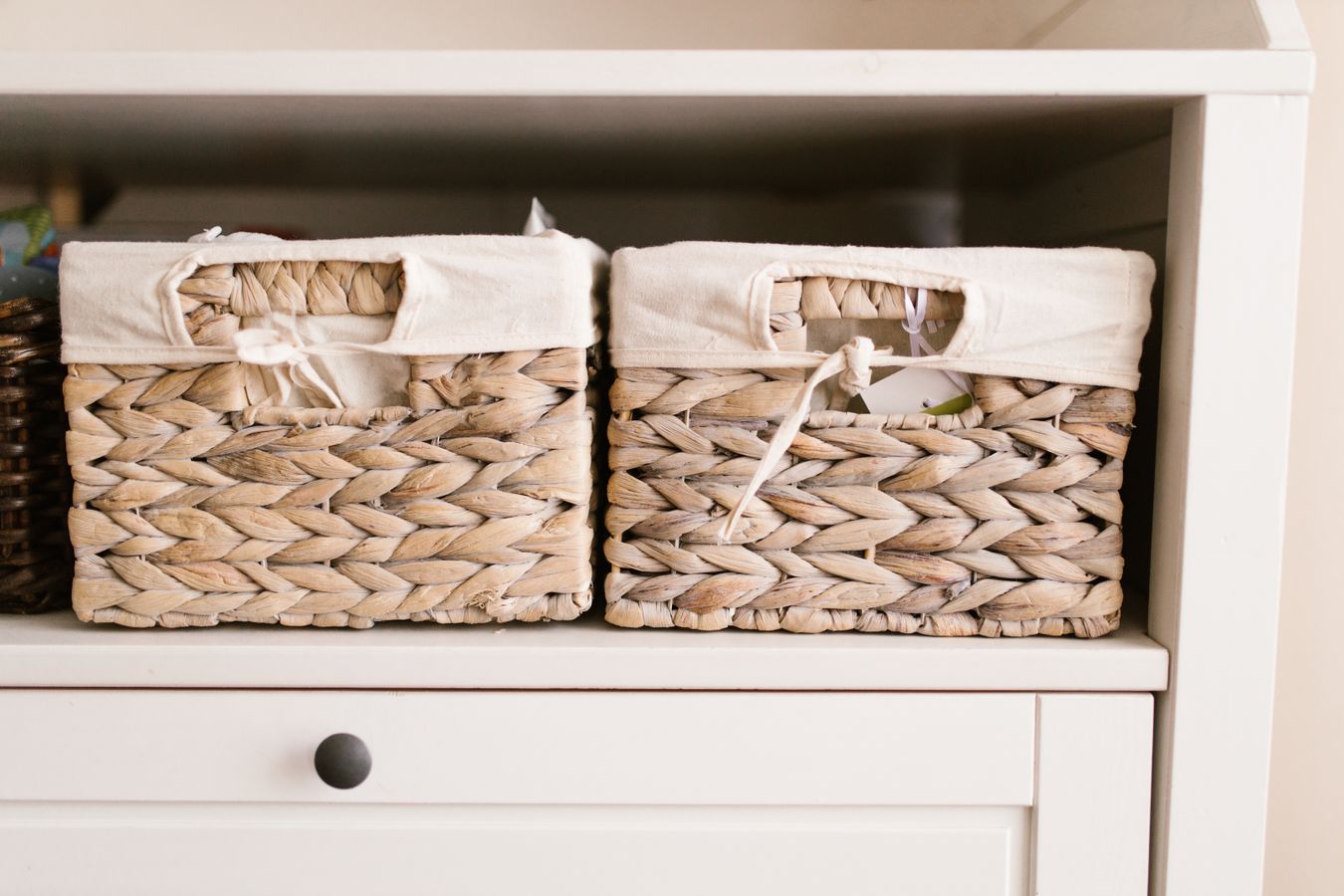
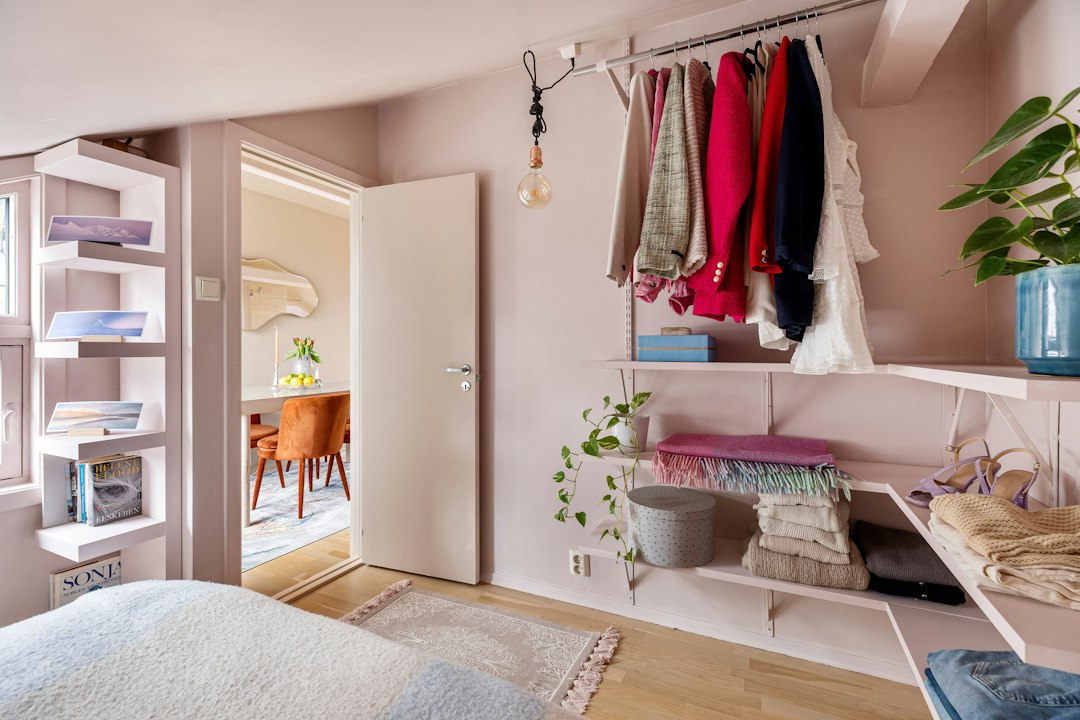
Use baskets or boxes for visually noisy small items and leave some shelf space open.
Make furniture earn its footprint
A storage bench, bed with drawers, closed media cabinet, or nightstand with drawers can help when you already need the furniture for another reason.
Do not add bulky storage furniture simply because the home lacks closets. It can solve hidden storage while making the room harder to move through.
Backstock is expensive in a closet-poor home
Bulk buying uses storage volume before the product is needed. Set smaller backup limits for toiletries, paper goods, pantry items, and cleaning supplies when space is scarce. For the broader setup, How to Store Seasonal Items in a Small Apartment Without Losing Everyday Space is a useful next read.
The best bargain is not a bargain if six months of extras make daily storage unusable.
Use under-bed space deliberately
Choose one or two low-frequency categories, such as seasonal bedding or off-season clothing. Label containers and avoid turning the entire area into mixed overflow.
Keep the floor as free as possible
Visible bins on the floor quickly make a small home feel like a storage unit. Use floor storage only where it has a clear parking spot and does not narrow circulation.
Store daily things near daily actions
Keys near the door. Towels near the bathroom. Cleaning basics near the most frequent cleaning zone. Laundry hamper where clothes come off. If you are working on the same space, How to Create a Landing Zone in a Small Apartment With No Entryway covers the next decision in more detail.
Without closets, convenience matters even more because every category is competing for visible space.
Create “closed visual zones” inside open rooms
A low cabinet, lidded basket, drawer, or opaque bin can provide visual rest. You do not need to hide everything; you need enough closed zones that the room is not displaying every category simultaneously.
Do not create storage above every surface
Vertical storage is useful, but filling every wall with shelves can make a tiny room feel even busier. Add vertical storage only where a real category needs it.
Run a monthly overflow check
Look for categories that are escaping their boundaries: shoes beside the rack, pantry goods on counters, clothes on chairs, toys beyond their bins.
Overflow is information. Edit the category before expanding the system.
Use no-drill solutions thoughtfully
Renters may rely on freestanding racks, over-door options, tension systems, or removable solutions where appropriate. See Small Apartment Storage Ideas That Don’t Require Drilling.
A closet-poor home reset
- return floor items to room-specific zones,
- reduce visible backstock,
- clear one horizontal surface per room,
- move off-season items out of prime storage,
- check that open shelves still have breathing room.
Frequently asked questions
Should I buy wardrobes or freestanding closets?
Only when you need the clothing capacity and have a realistic footprint. Measure circulation first.
How do I hide clutter without closets?
Use a mix of closed furniture, lidded or opaque containers, and broad visible categories rather than trying to hide everything.
What should I declutter first?
Start with bulky low-use items, duplicates, backstock, and categories that currently spill onto the floor or counters.
A tidy home does not require invisible storage
When closets are scarce, the goal is to make visible storage intentional: fewer categories, clear room territories, limited backstock, and furniture that earns its footprint. A home can look calm even when some storage is on display.