
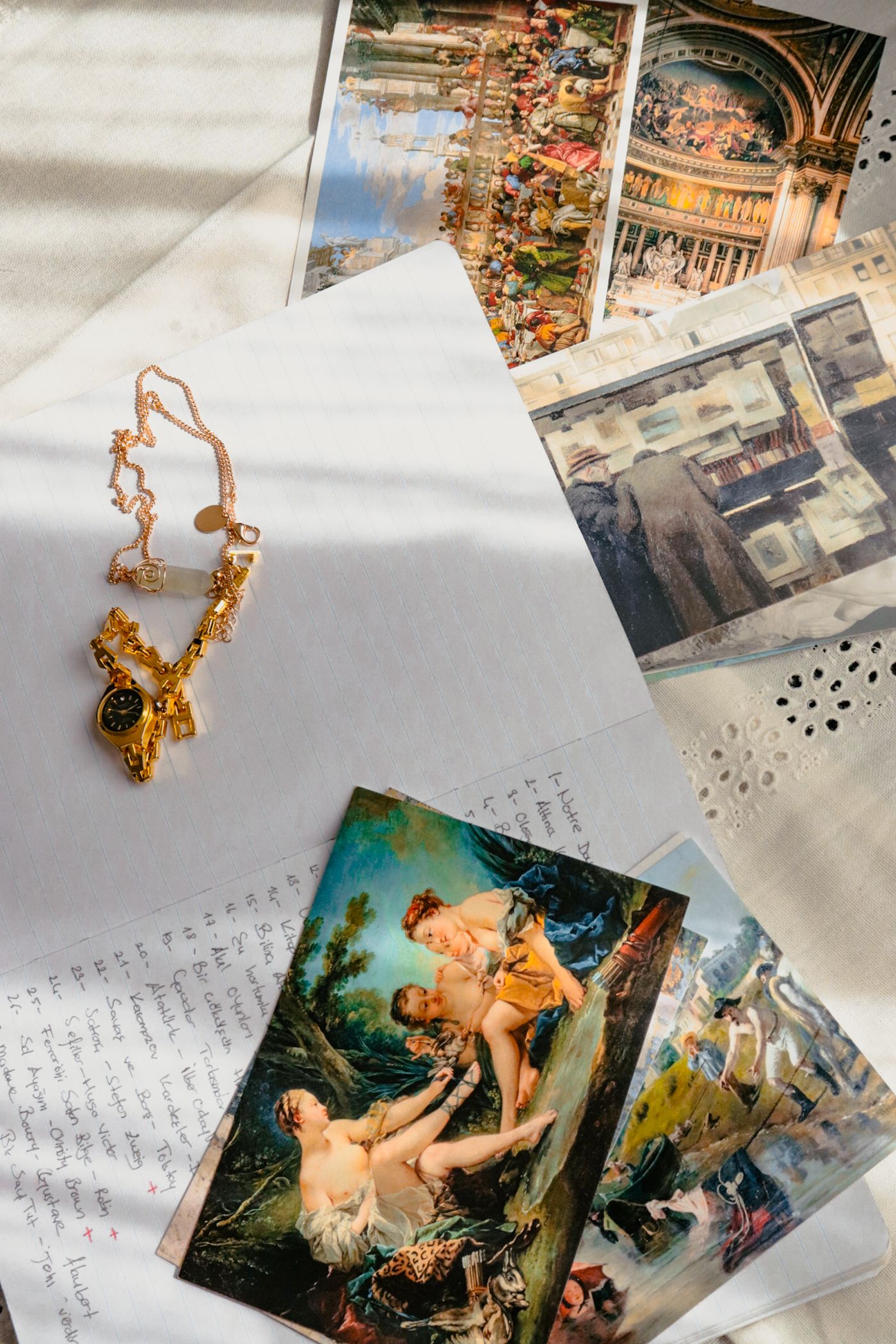
A postcard collection becomes useful when you can find more than the prettiest front. You may want the card your sister sent from Lisbon, the hotel where you stayed on your first solo trip, or the handwritten detail that explains an otherwise anonymous street scene. A box arranged only by color makes those questions surprisingly hard to answer.
Houzz’s Fall 2026 report describes homes shaped by personal stories and collected objects. Keeping postcards understandable is one modest application of that direction. This guide concerns retrieval and everyday display, rather than conservation treatment or the monetary value of old paper. Fragile, valuable, mold-affected, or historically significant material deserves advice from a qualified paper conservator before cleaning, repair, or mounting.
Begin with the question you actually ask
Choose one ordinary retrieval question before spreading the collection across your desk. For a travel collection, it might be “Where did we go in 2019?” For correspondence, it could be “Which cards did Grandma send?” These suggest different arrangements. The first favors trip and date; the second favors sender. Neither requires a complicated catalog or a separate storage product for every destination.
Write your chosen question on a temporary sheet. When a tempting new sorting scheme appears, compare it with that question. A collection that changes between country, art style, holiday, and sender halfway through sorting becomes four partial collections. You can add an index later without rearranging every card again.
Clear only enough desk space for a small working group. Keep business papers and current mail elsewhere; a separate system for household paper and digital records helps keep keepsakes from becoming mixed with documents that still require action.
Give sent cards and blank souvenirs different meanings
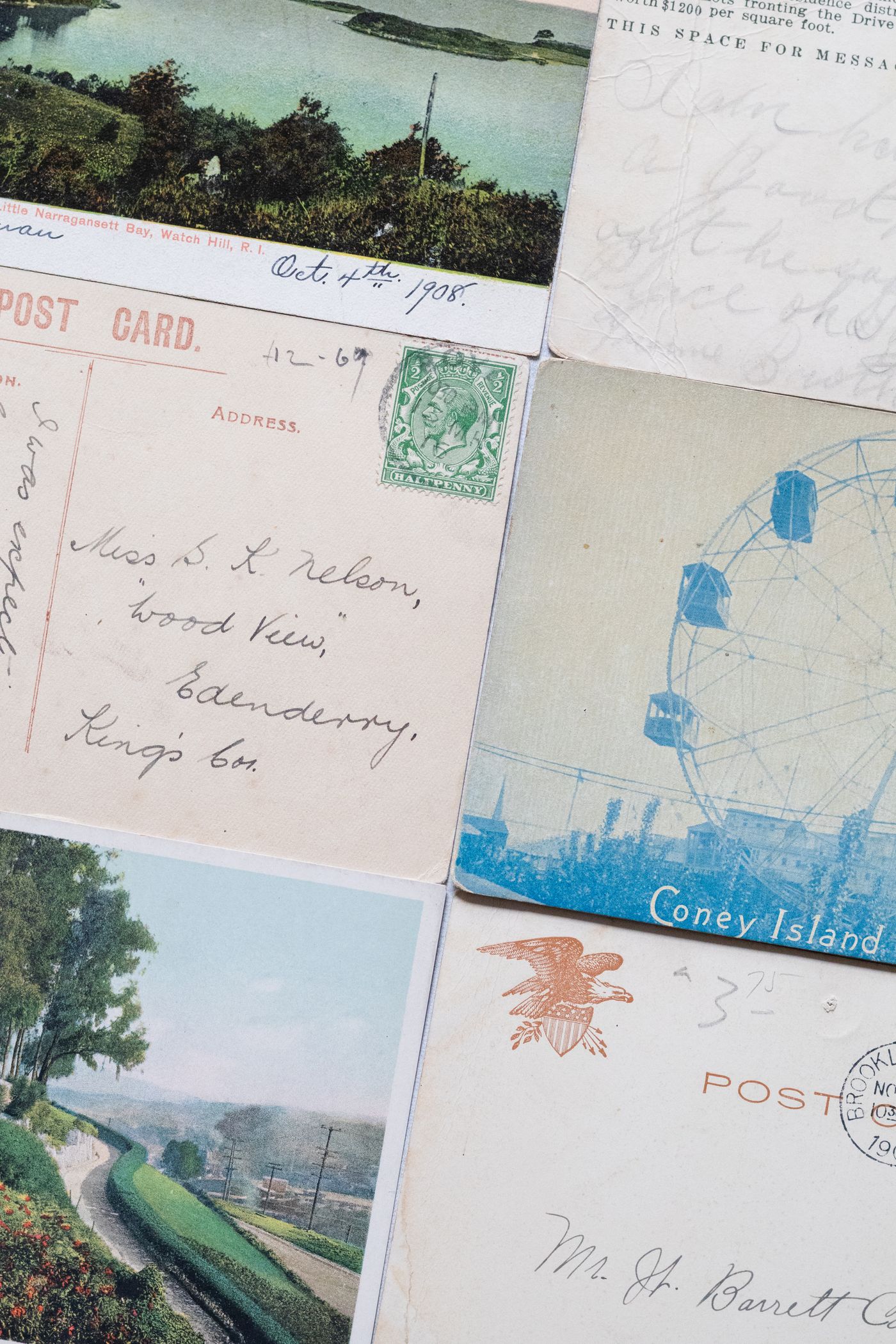
A blank postcard bought at a museum is a souvenir or possible writing supply. A card addressed to someone is correspondence, even if nobody remembers when it arrived. Make those two groups first. Add a third temporary group for uncertain items, such as an unsigned card with a date that might be a trip note rather than a postal date.
Do not interpret every blank card as an obligation to write. You may keep one because its picture represents a place you loved. Equally, do not move a sent card into the stationery pile because there is a little unused space beside the message. Its purpose in your collection has already changed.
Keep envelopes with the cards they explain when that connection matters. An envelope can contain a return address or date absent from the card. Use a separate enclosure or divider to preserve the relationship instead of stapling the two together. For ordinary modern keepsakes, choose a storage format whose material and dimensions are appropriate for the paper; a product described as decorative does not automatically meet preservation needs.
Record what is known without filling in the gaps
For a small collection, a plain index can contain a short identifier, place shown, sender or purchaser, approximate date, and one sentence of context. “TR-014, Porto waterfront, bought by Ana, May 2022, afternoon before the train” is more useful than a long description of the printed colors. Put the identifier on a separate slip or enclosure, rather than automatically writing on the original.
Use uncertainty openly. “Possibly 1980s” and “sender not yet identified” are legitimate records. A postmark does not necessarily establish when a photograph was taken, and a printed copyright date does not prove when a traveler bought the card. Keep those dates in separate notes when they differ.
If two people remember an event differently, record both recollections with names rather than choosing the more confident account. The index is a way to retain context, not a reason to invent a single polished family story. You can revise a note later when another letter or photograph supplies better evidence.

Build a browsing order that works without the index
Within your main arrangement, use a simple sequence people can see. Trips might run from oldest to newest, with cards from the same trip kept together. Correspondence might have a divider for each sender, then a date order within that group. An upright browsing box can work for sturdy everyday cards if it supports them without bending; an appropriately sized album offers another option.
Oversized cards should not be folded to fit the standard group. Give them a suitable separate place and leave a cross-reference where a person would expect to find them. Otherwise, “organized elsewhere” becomes indistinguishable from missing. Keep the cross-reference brief enough to maintain when the collection grows.
Check the actual usable space before buying anything. Sleeves, dividers, and card thickness all consume capacity. The capacity-first approach to choosing storage is especially helpful when a lovely box has room for the existing cards but none for the supports you intend to add.
Make duplicates a deliberate choice
Two identical printed fronts can carry different meanings. One may have a message; another may be a blank copy bought for writing. Compare the backs before deciding they are duplicates. If both are ordinary blank copies with no distinct story, decide whether one belongs in usable stationery, a gift, or an appropriate donation route.
Avoid creating a permanent “sort later” stack for cards you do not especially want. Give that temporary group a specific next action: ask a relative, compare it with the trip journal, or decide whether the image matters without further information. Once the question is answered, return the card to the main sequence or release it through a suitable route.
People sharing a collection should agree before another person’s cards are discarded. Your wish for fewer papers is not evidence that their message has no value. The questions to ask before buying an organizer also help here: decide what belongs before choosing another container to hide indecision.
Rotate a small display while keeping the back accessible
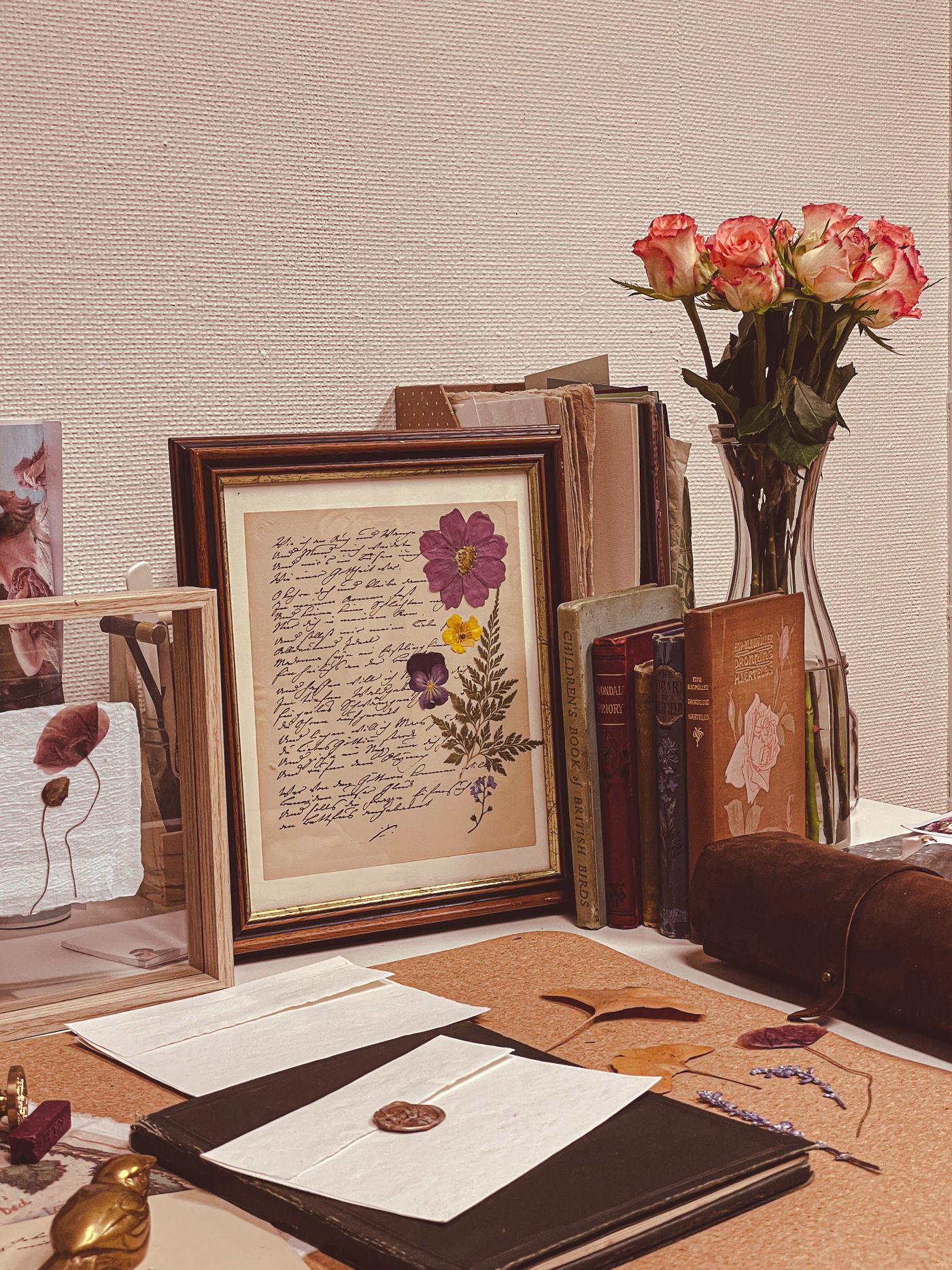
Select a few ordinary, nonfragile cards for a temporary display rather than exposing the whole collection. Consider the stand, glazing, light, humidity, and contact materials appropriate to those particular cards. A display that grips hard, uses adhesive, or bends an edge is a different commitment from simply browsing a box.
When the message matters, keep a separate short display note or an authorized digital reference so the card does not become just an anonymous picture. Do not assume that turning the front outward makes the written side unimportant. If you photograph both sides, use a consistent identifier in the filenames so the images remain paired.
Record which cards have left the main sequence. A plain placeholder can say “TR-014, displayed on office shelf.” This is useful when someone searches the box while the card is elsewhere. Return it to its recorded position when you change the display, instead of starting a second unindexed collection beside the frame.
Protect other people’s privacy when sharing
A postcard may show an address, family news, a signature, or travel dates. Read both sides before posting a photograph online or placing a card where visitors can inspect it. Ask living correspondents before sharing personal messages publicly. A private record and a public room display can contain different levels of detail.
Crop or obscure personal information in a separate sharing copy when appropriate, keeping the original reference intact. Do not edit the only digital image and then forget what was removed. If family members want different access, store the private group separately and explain the boundary without making it a mysterious forbidden pile.
Add the next card without restarting the project
When another postcard arrives, decide whether it is correspondence, a souvenir, or usable stationery. Add the minimum context while the story is fresh, then place it in the established order. A new country does not require redesigning every divider if your main order is by sender.
Review the arrangement after a few additions. If you repeatedly look under a different heading, add a small index entry rather than physically duplicating cards in several places. If the box is approaching its practical limit, reassess the collection before expanding. The container limit and one-in, one-out discussion can support that decision without imposing an arbitrary number on meaningful correspondence.
The finished system should let you retrieve a particular story, browse comfortably, and put a displayed card back where it belongs. Those are better measures of success than perfectly matched sleeves or a collection that looks impressive only when every card is spread across the desk.
Explore related household decisions in our Home Organization hub.
Sources and editorial scope
Editorial research checked October 17, 2026. Trend-report dates and limitations are stated in the article; these are editorial applications of published signals, not verified October keyword rankings. Practical household guidance; illustrations do not document a tested household or authenticate a pictured material.
