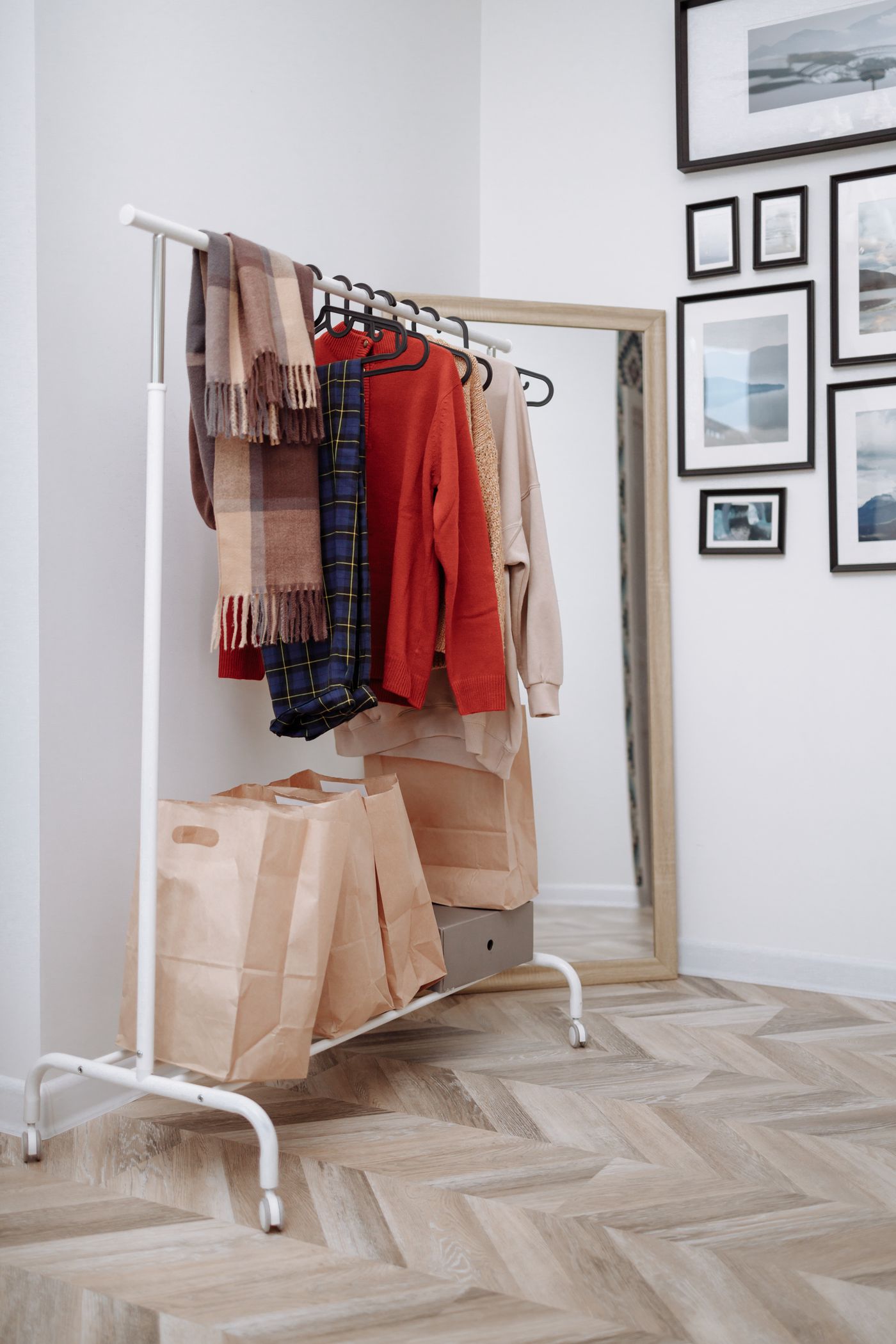
A guest-coat rail can solve a gathering problem while creating a circulation problem. It may look narrow when empty, then spread into the room once winter coats, sleeves, and bags hang from it. If it sits beside the only exit or requires people to squeeze past loaded hangers, it has not earned its temporary footprint.
Use an existing suitable rail only after checking its instructions, loaded shape, and arrival-and-departure routine. Plan where it stands, what it is allowed to hold, and where it returns afterward. In a rental, a freestanding solution should still respect the property, household access, and the furniture’s intended use.
Etsy’s October 2026 seasonal report recognizes gatherings with friends and chosen family. A workable coat handoff is an editorial response to hosting at home. It is not a claim that garment rails are trending or that every small apartment needs another piece of furniture.
Start with the number of coats you can realistically accommodate
Estimate the people attending and ask about bulky items when that will affect the plan. A few lightweight jackets and several long insulated coats take different amounts of room. Use the rail’s stated capacity and intended purpose rather than treating the available hanger count as permission to load it fully.
If the rail has no readable instructions or reliable capacity information, do not make it the support for a heavy guest load. Use another appropriate existing storage option, reduce what it holds, or agree on a different coat arrangement. A temporary solution should not depend on guessing structural limits.
Separate coats from shoes, drinks, parcels, and anything else guests bring. A rail advertised or designed for hanging clothing is not automatically a support for bags, umbrellas, or a tray. Keep the plan small enough that you can explain it in one sentence at the door.
For general space planning, the small-room furniture assessment helps decide what can temporarily move and what must stay accessible. Do not create a second pile of displaced household belongings just to clear a photo-ready corner for coats.

Test the full loaded outline, including sleeves
Set up the rail according to the maker’s instructions, including braces or locks. Use a representative existing coat on a suitable hanger to see how far the garment extends forward, backward, and below the bar. The base dimensions alone do not describe this loaded outline.
Check long hems and sleeves near the floor, especially where guests might step while removing footwear. Do not allow clothing to rest on heaters, lighting, wet floors, or household equipment. Follow required clearances for the surrounding appliances and fittings rather than assuming fabric can hang in any unused-looking gap.
Look at the base from the approach direction. A projecting foot can be easy to overlook behind a long coat. Keep the frame visible enough to understand the route, and avoid concealing its supports beneath decorative fabric. Good presentation should not make the physical obstacle harder to notice.
If the rail has wheels, use and secure them as directed. Do not assume the loaded unit is designed to be rolled between rooms. A location that requires moving a full rail halfway through the event adds handling and stability questions that a stationary arrangement might avoid.
Keep the exit and essential household access clear
Open the entrance and nearby interior doors through their normal movement with the rail in place. Check the loaded garments as well as the frame. Guests should not need to push coats aside to operate a latch, reach a switch, or get to the exit.
Walk the actual route while another person stands at the rail, where practical. Someone searching for a coat occupies space too. A passage that works with the rail unattended may become blocked when a guest turns with a bag or pulls a long sleeve off a hanger.
Use the occupied-space and walkway check to distinguish the storage footprint from the space needed to use it. Avoid inventing a universal minimum clearance from the rail’s dimensions; the home layout, occupants, and applicable requirements determine what must remain clear.
Place the rail where arrival does not stop the doorway
The best position is not necessarily directly beside the door. A suitable spot a little farther into the home may let one person enter while another hangs a coat, provided the whole route remains unobstructed. Explain the location clearly and offer help to anyone who needs it.
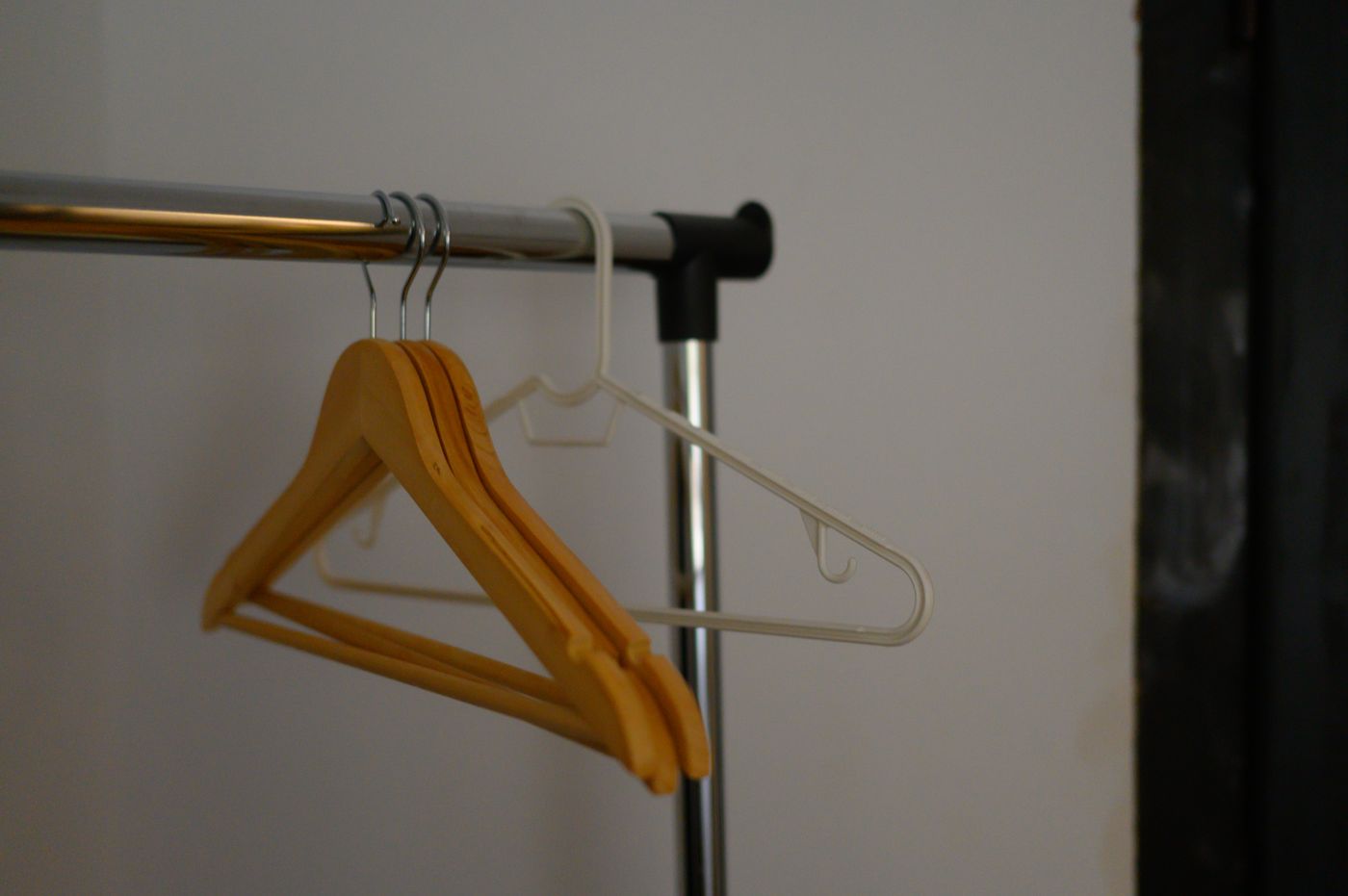
Keep a few appropriate empty hangers ready without packing them so tightly that guests must fight the group to remove one. Leave enough practical room for ordinary handling within the rail’s capacity. Do not build a dense row of heavy coats merely because the bar can physically accept another hanger.
Decide what happens to wet outerwear. Use a care-appropriate drying location and protect suitable surfaces as needed; do not hang dripping garments over other people’s dry clothing. If the temporary rail cannot manage the expected weather and clothing, arrange a different plan before guests arrive.
For very small rentals, an over-the-door organizer is another configuration to assess, but it carries its own fit and door-movement limits. It should not become an untested extra support for overflow simply because the rail is full.
Keep ownership understandable without elaborate labels
Ask guests to retain valuables and items they do not want to leave with communal coats. If several coats look alike, let people choose a recognizable position or keep a simple identifying detail with their own hanger. Do not promise secure storage, theft prevention, or damage protection from an open rail.
Treat delicate or special-care garments separately when their owners request it and the home can accommodate them appropriately. Do not fold a coat onto a shelf or use an unsuitable hanger just to make the shared rail look uniform. The owner’s handling preference matters more than visual consistency.
Keep household clothing distinct from guest coats so a routine trip to the bedroom does not redistribute the collection. If a shared room also serves another temporary purpose, the guest-ready living-room routine can help establish which surfaces and routes remain available throughout the visit.

Plan departures, especially when several people leave together
Leave a clear position where one guest can retrieve and put on a coat without standing across the doorway. Help locate garments when the group is leaving at once rather than letting everyone crowd the rail. Keep the exit usable while coats move off the bar.
Check each departing guest’s belongings with them without making assumptions about ownership. A scarf resting on a coat does not prove both belong to the same person. If something remains after the event, keep it secure and ask the group through the normal agreed contact method rather than distributing it as leftover household storage.
Do not move a loaded rail to clear the exit at the final moment. The plan should already accommodate departures. If experience shows that the location becomes congested, change the position or reduce its role before the next gathering.
Return the rail without keeping a new permanent coat pile
Once coats have left, inspect the frame and return it according to the maker’s instructions. Fold or disassemble it only as intended. Store loose parts together, keep the return location accessible, and resolve any wet floor or garment issue before the ordinary room arrangement resumes.
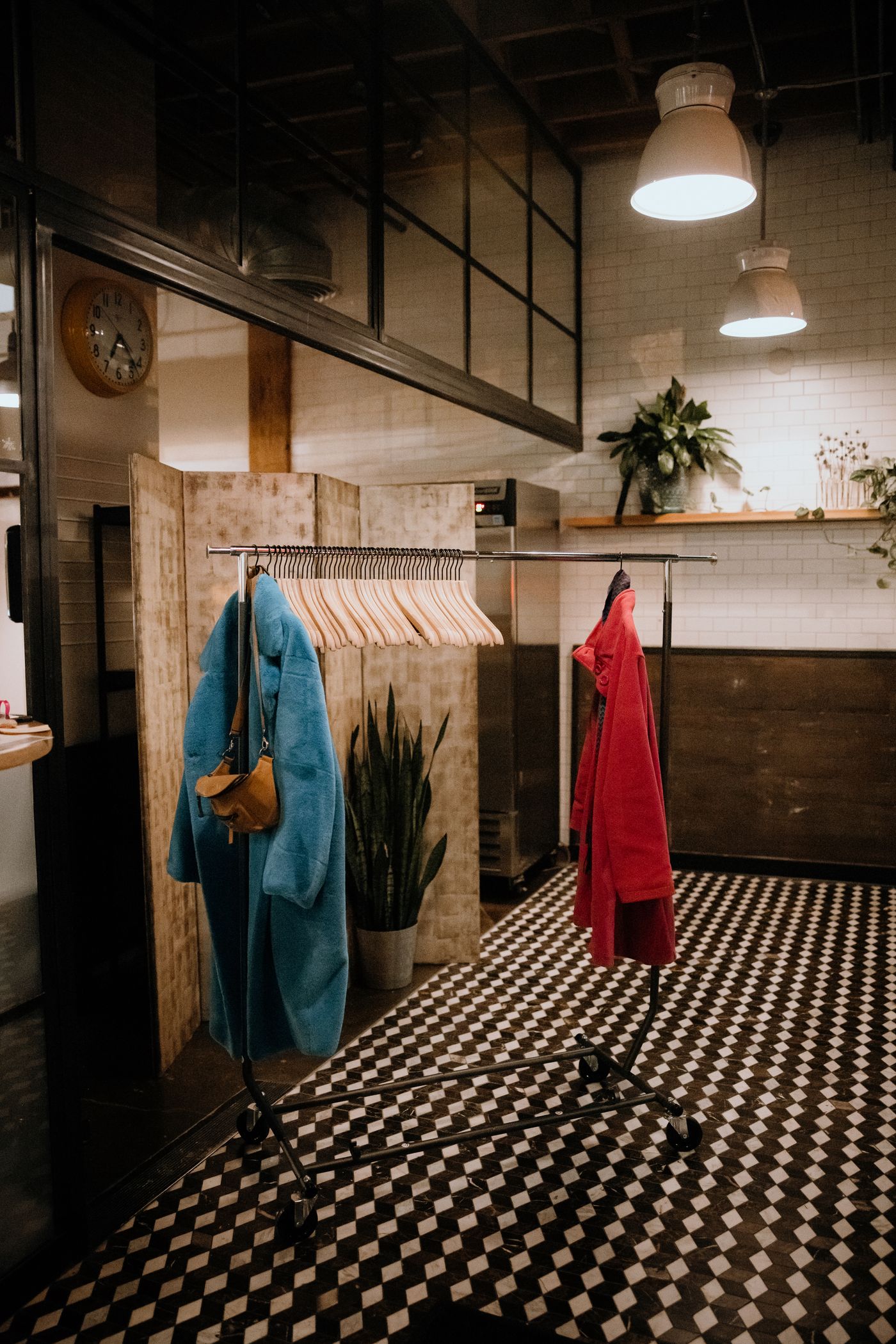
The useful test is whether guests can arrive, find their belongings, and leave without negotiating a furniture obstacle. A rail that needs constant relocation or turns into permanent overflow may be the wrong approach for that rental. The best hosting aid fits the gathering and then releases the room again.
Explore related household decisions in our Small-Space Living hub.
Sources and editorial scope
Editorial research checked October 16, 2026. Trend-report dates and limitations are stated in the article; these are editorial applications of published signals, not verified October keyword rankings. Practical household guidance; illustrations do not document a tested household or authenticate a pictured material.