Moving into a smaller home is easier when the downsizing happens before the moving truck arrives.
If you pack everything from the old home and plan to decide later, the new home begins with boxes in hallways, furniture that does not fit, and storage filled before daily life even starts. You may also find How to Declutter a Small Home When You Don’t Know Where to Start useful for a closely related small-home problem.
A better plan is to use the new home as a capacity budget.
Step 1: measure the new home before deciding what moves
Record:
- room dimensions,
- closet widths and depths,
- door openings,
- kitchen cabinet capacity,
- bathroom storage,
- parking/storage unit limits,
- furniture wall lengths.
Photographs and a simple floor sketch can help you compare the old and new spaces.
Step 2: choose furniture before small objects
Furniture consumes the largest volume and determines the remaining floor plan.
For each large piece, ask:
- Does it physically fit?
- Does it block circulation?
- Does the new home already provide this function?
- Would a smaller or multifunctional piece replace it better?
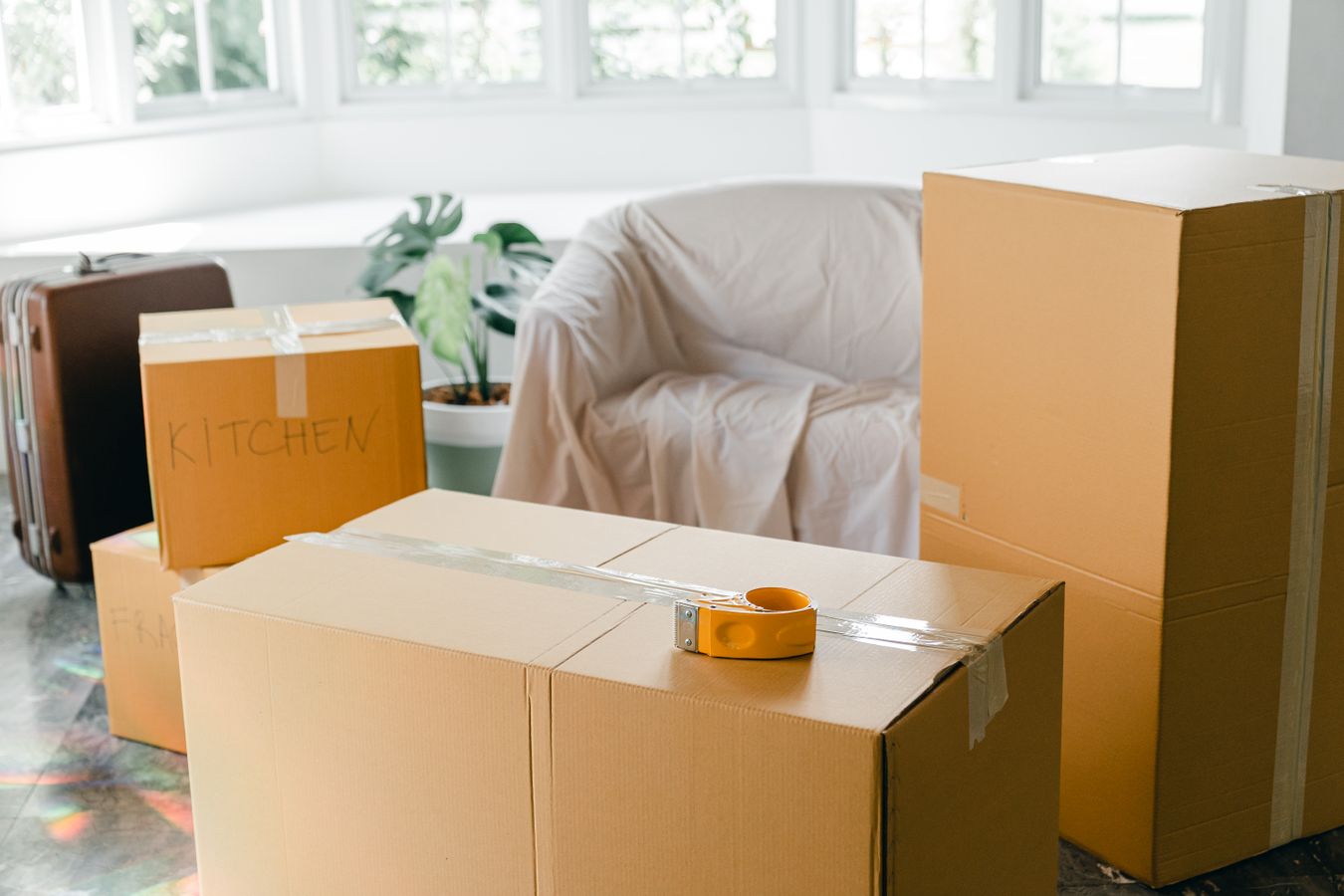
Step 3: create a box budget by category
Instead of packing until everything is gone, set a rough limit based on the new storage.
Example:
| Category | Budget |
|---|---|
| Everyday kitchen | 6 boxes |
| Books | 4 boxes |
| Linens | 3 boxes |
| Decor | 2 boxes |
| Hobby supplies | 2 boxes |
The numbers are personal. The point is to create a stopping boundary before the truck becomes the boundary.
Step 4: remove the easiest volume first
Use the same relief-first order as What to Get Rid of First When Your Small Home Feels Too Full:
- trash and expired items,
- empty packaging,
- broken items,
- duplicates,
- wrong-size clothing,
- bulky low-use belongings.
Step 5: compare categories to the new storage
If the new home has one small linen closet, the current linen category cannot simply be packed unchanged.
Match possessions to the storage that will actually receive them.

Step 6: use the “cost to move” question
Every item has a moving cost: packing material, box space, carrying effort, truck volume, unpacking time, and storage in the new home. If you are working on the same space, Where to Store Important Documents in a Small Apartment covers the next decision in more detail.
Ask whether you would pay that cost to bring the item into the smaller home today.
Step 7: decide on duplicates before packing
Moving is a good time to compare duplicates side by side:
- pots and pans,
- tools,
- towels,
- lamps,
- chairs,
- small appliances,
- cleaning supplies.
Pack the preferred versions first.
Step 8: handle sentimental items separately
Do not mix memory decisions into a rushed packing day.
Give sentimental belongings a defined container budget and a separate session. Keep the items that tell the story best.
Step 9: reduce storage furniture if the new home has built-ins
A bookshelf, dresser, cabinet, or rack that was necessary in the old home may duplicate built-in storage in the new one. For the broader setup, Small Apartment Paper Organization: A Simple System That Stays Tidy is a useful next read.
Do not automatically move storage furniture just because it holds things now.
Step 10: pack by destination, not by old room
If the new home uses rooms differently, label boxes for their new destination.
For example, old guest-room office supplies may move to a dining-area desk nook in the new home.
Step 11: create an unpack-first group
Pack one clearly marked group for:
- bedding,
- basic toiletries,
- coffee/breakfast essentials,
- chargers,
- medications,
- cleaning basics,
- school/work necessities.
This prevents opening ten boxes the first night.
Step 12: set a deadline for selling
Selling large items can be worthwhile before a move, but the listing pile cannot remain until moving day.
Choose a date when unsold items switch to donation, lower price, or another exit route.
Do not rent storage automatically
External storage can be useful for genuine transitions, but it can also postpone downsizing.
If you use storage, define what is going there, why, and the date you will reassess it.
A four-week downsizing timeline
Week 4
Measure new home, choose large furniture, remove obvious volume.
Week 3
Kitchen, linens, books, hobby supplies.
Week 2
Clothing, decor, sentimental container, sell/donate large items.
Week 1
Pack daily essentials last, finalize exits, prepare unpack-first boxes.
The new-home test
Before taping a box, imagine opening it in the new home. Can you name where the contents will live?
If not, the box may contain postponed decisions.
Frequently asked questions
How much should I get rid of when downsizing?
There is no universal percentage. Use the new home’s actual furniture and storage capacity to set limits by category.
Should I move first and declutter later?
Some decisions can wait, but large furniture, obvious duplicates, and categories that clearly exceed new storage are easier to handle before paying to move them. For the broader setup, Small Apartment Storage Ideas That Don’t Require Drilling is a useful next read.
What should I pack first?
Pack low-frequency items first. Keep daily essentials and your unpack-first group accessible until the end.
Move into the home you are actually going to have
Downsizing works best when the new floor plan—not the old inventory—sets the rules.
Measure, choose furniture, set category limits, remove easy volume, and pack only what has a realistic destination. The reward is not just fewer boxes. It is a smaller home that feels usable from the first week.