
A family rhythm session can begin with one short sound and someone answering it. Clapping, a gentle suitable body-percussion action, or an age-appropriate instrument can be enough. The useful structure is clear turns and a shared way to stop, so the group can enjoy making sound together without the room becoming an uncontrolled collection of competing performances.
Etsy’s seasonal 2026 report gives context for shared experiences and time with loved ones. This session is our household application of that direction. It is an informal activity, with no claim that it provides a measured educational, therapeutic, or developmental outcome.
Agree on the room and the sound level
Choose a time and place that works for the household and any relevant building expectations. Ask the participants what sounds feel comfortable to them. Someone should be able to request a quieter version or stop participating without having to justify the choice. A session can include people listening as well as people making the sounds.
Arrange ordinary suitable seating or standing space according to the people taking part. Keep enough personal room for the chosen actions and retain a usable household route. The pack-away floor-space guide describes a different activity, but its emphasis on leaving the room usable is relevant when you borrow the same multipurpose area.
Start with sounds you can control
Clapping can be the starting point when it suits the group. If instruments are included, choose age-appropriate items in sound condition and follow their makers’ instructions. An adult should manage access and supervision where needed. There is no need to distribute an instrument to every person before discovering whether the group enjoys a simple shared beat.
Avoid turning fragile furniture, cookware, or decorative objects into instruments merely because they are nearby. The household does not need new objects or improvised striking tools for this session. Use a suitable familiar instrument or a comfortable permitted action, and keep the range of sounds small enough that everyone can hear the person whose turn it is.

Establish the stop signal before the first pattern
Choose a visible signal that participants understand, such as a raised open hand, paired with an ordinary spoken cue if useful. Practice starting and stopping together once before adding a rhythm. A participant who does not reliably notice a visual signal may need another agreed cue. Use what works for the actual people present.
Stopping is part of the activity, not a penalty for a mistake. Demonstrate that everyone can pause, listen, and begin again. If the signal cannot be noticed comfortably in the chosen arrangement, change the arrangement or the sounds before continuing. Making the cue louder and louder should not become the main feature of the session.
Offer one short call and response
One person makes a brief pattern using the chosen sound, then the others answer with an agreed response. Begin with something simple enough to remember after hearing it once. For example, the leader might make two evenly spaced claps, pause, and invite two answering claps. The group can use another comfortable sound or movement instead where appropriate.
Explain whether the response is intended to copy the call or simply answer with its own agreed pattern. These are different games, and confusion can make someone feel they failed a rule that was never stated. Keep the first round straightforward. A clear small exchange is more useful than a long complicated pattern that only its inventor remembers.
Let the leader role move around the group
Offer each person a turn to lead, with permission to pass. A younger or less confident participant might choose between two short examples rather than inventing something immediately. An adult can help set the beginning and end without taking over the sound. Keep the offered turn small enough to feel manageable.
Ask the rest of the group to listen during that turn. Avoid correcting someone’s rhythm in the middle unless a practical issue requires the session to stop. If the pattern is difficult to follow, ask whether the leader would like to demonstrate again or shorten it. The activity can accommodate different abilities without pretending that every pattern was reproduced exactly.
Add a steady shared beat only when it helps
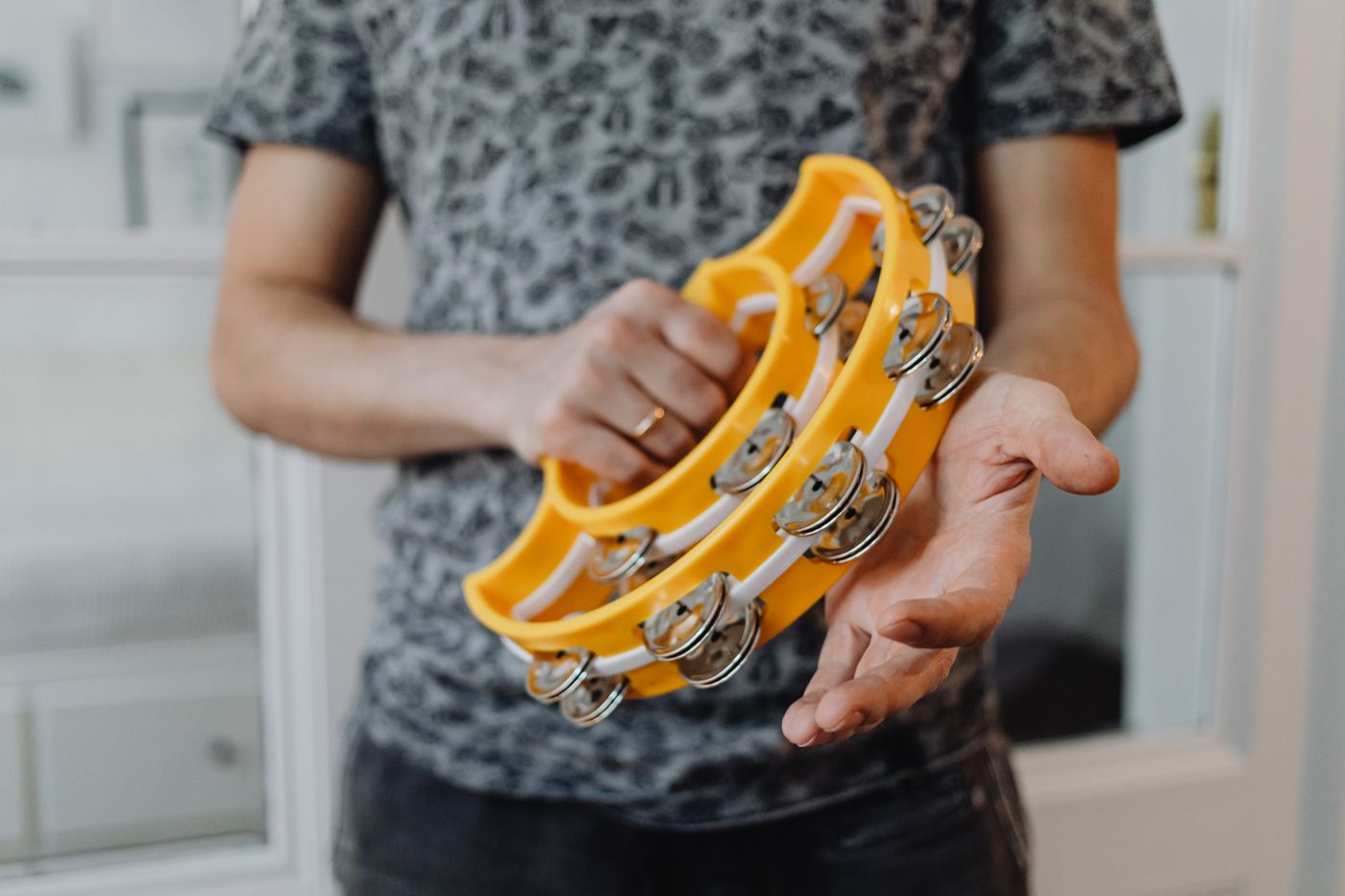
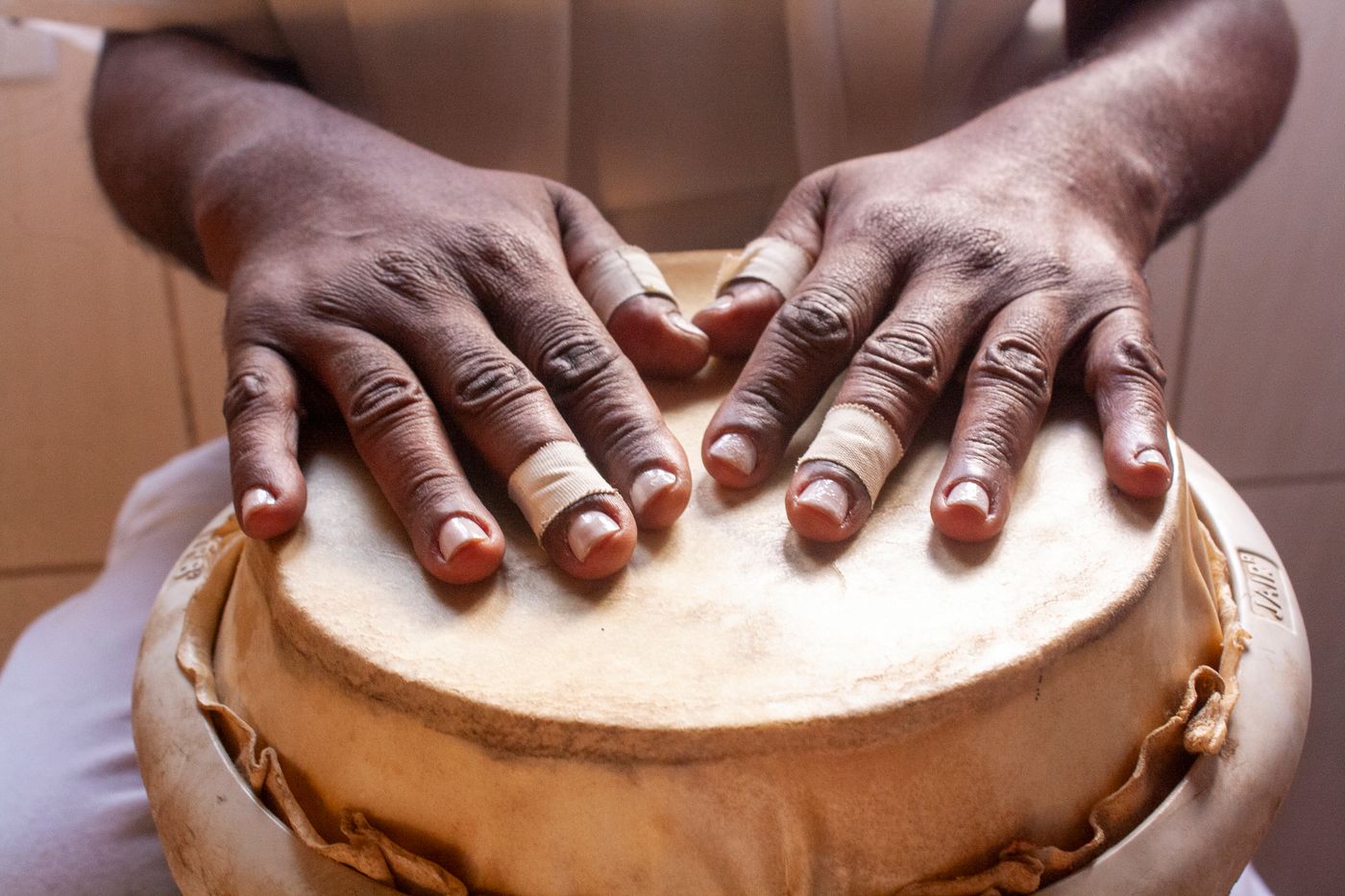
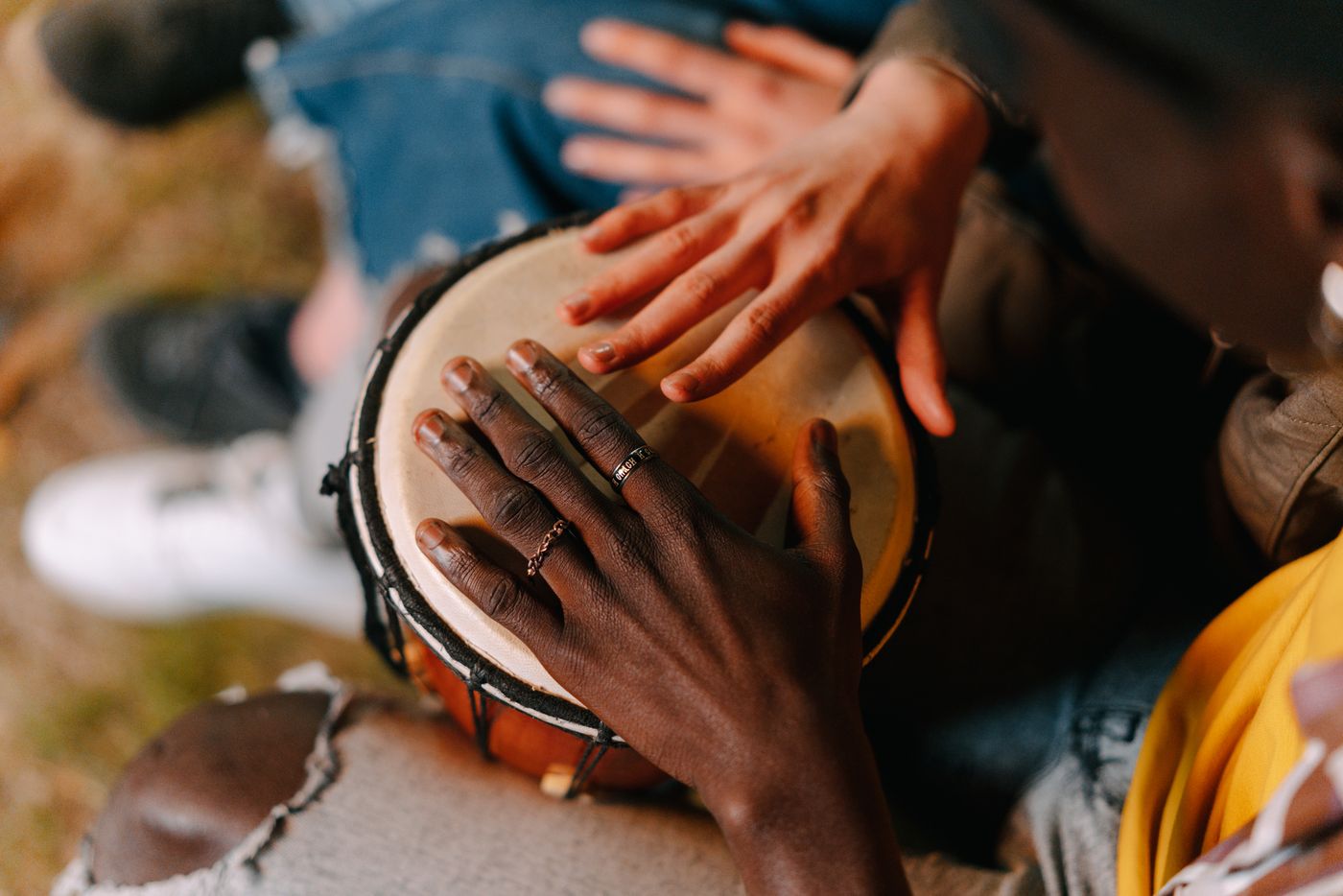
If the group wants another stage, try a comfortable steady pulse while one person adds a short response. Choose the sounds and roles so they remain easy to hear. A suitable hand drum or tambourine can join only if its actual sound and handling suit the people and setting. The photographs illustrate rhythm-making; they do not document this particular family session.
Keep the number of simultaneous parts limited. If the group loses the shared beat, use the stop signal and restart with a simpler arrangement. Do not treat increased complexity as the only sign that the activity is succeeding. A brief repeated pattern can be enjoyable precisely because participants understand their place in it.
Include a way to participate without making sound
Someone may prefer to mark a turn with a small comfortable movement, point to the leader, or simply observe. Ask what they would like to do rather than assigning them a helper role without agreement. A participant can also take a break and rejoin at a clear point. The session belongs to the people present, not to a preset performance plan.
If the activity is not working for the group that day, choose another shared experience. The one-track-each listening session offers a different way to share music interests with fewer simultaneous sounds. Keep the distinction clear: listening together and making a shared rhythm are separate activities with different demands on the room and participants.
Decide on a short ending sequence
Agree on one final round while people still have attention for it. Each willing participant can lead a short call, followed by the shared stop signal. End there rather than repeatedly promising one more turn until the group becomes tired. A satisfying finish makes it easier to choose the activity again.
You can also end with one quiet listening pause if that suits everyone. Do not require a long reflective discussion. One comment about a sound someone enjoyed is enough, and passing remains acceptable. The point is to finish with clear ownership of the experience, rather than asking every person to describe a benefit they may not have felt.
Keep recording optional and specific
A recording is not necessary for the session to count. If participants want one, obtain the appropriate agreement before recording and decide how it will be used and shared. Do not assume that joining an informal family activity gives permission to publish someone’s voice or image. Keep any chosen recording within the agreed purpose.
The family audio-greeting guide covers another recording activity with explicit contributions and sharing choices. Apply that clarity here only if recording is genuinely wanted. Otherwise, let the rhythm exist as an enjoyable event in the room without adding an editing and distribution project afterward.
Return instruments and the shared room
Check any instruments before putting them back according to their instructions. Keep small detachable parts appropriately managed and return the seating to its ordinary arrangement where needed. Do not leave a fragile instrument on the floor as a reminder that the activity might resume later. Give the next session an actual retrieval destination.
For another turn-based evening, the learn-one-game guide addresses explaining rules and letting new players participate. The rhythm session succeeds when the people could notice the cues, take or decline a turn, and finish comfortably. A few minutes of clear shared sound can serve the household better than a longer performance that nobody intended to rehearse.
Explore related decisions in our Family Home hub.
Sources and editorial scope
Editorial research checked October 24, 2026. Published trend reports are context for these editorial applications, not verified live keyword rankings. Practical household guidance; photographs do not document a tested household or authenticate pictured materials.