A multipurpose room fails when every purpose is active at the same time. The guest bed is permanently open, the desk is covered with craft supplies, exercise equipment blocks the closet, and the room becomes bad at all four jobs. For a related step-by-step approach, see How to Organize Deep Kitchen Cabinets So Nothing Gets Lost.
The solution is not squeezing more furniture into the room. It is designing room modes: one primary purpose that stays active, one secondary purpose that can appear quickly, and an occasional purpose that stores almost completely when not in use. If you are working on the same space, How to Arrange Furniture in a Small Living Room With Kids covers the next decision in more detail.
Choose the hierarchy before choosing furniture
Label the room’s purposes:
- Primary: used most days,
- Secondary: used several times a week,
- Occasional: used monthly or for guests.
The primary purpose gets the best light, easiest reach, and most permanent floor space.
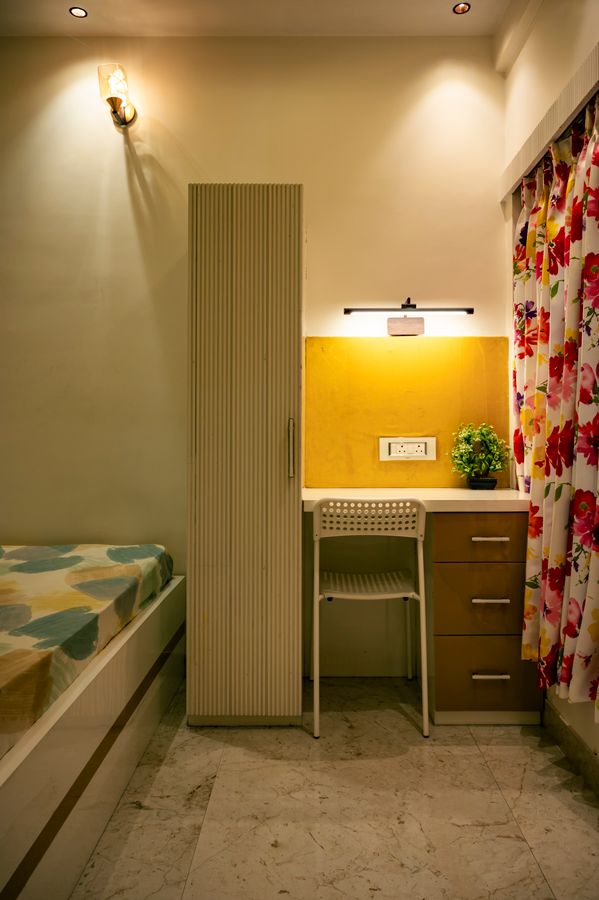
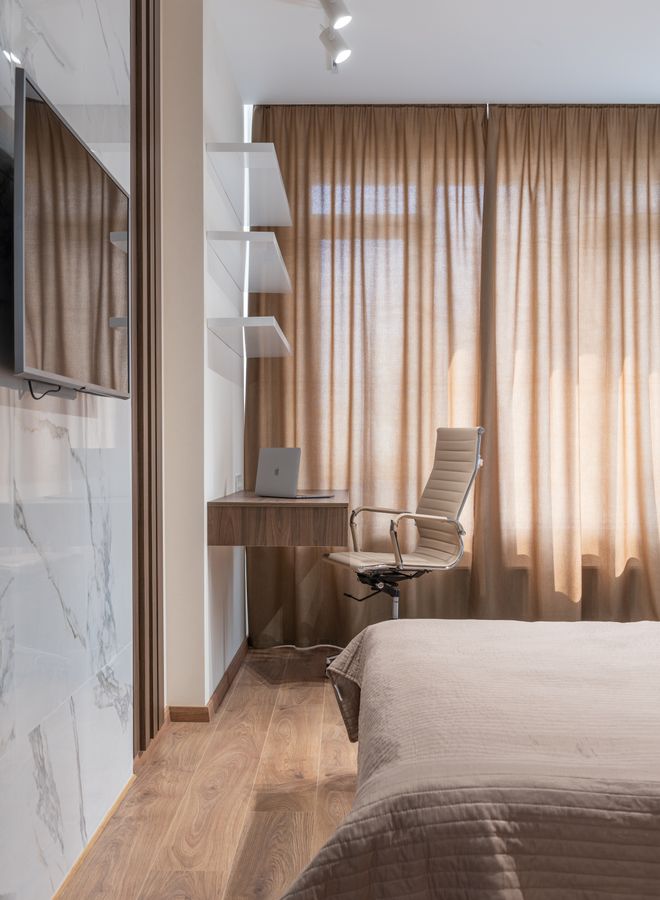
Example: office + guest room
Primary = office. Secondary/occasional = guest sleep.
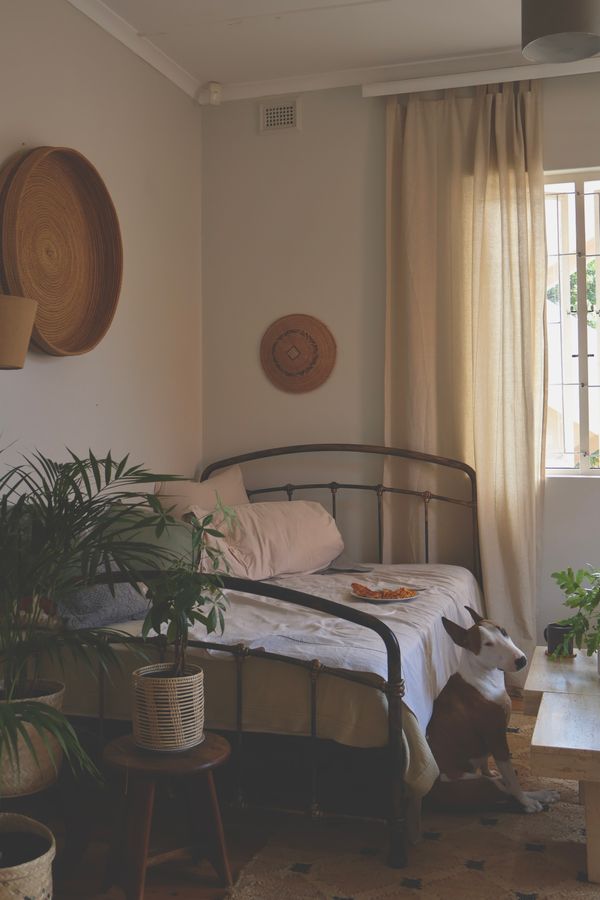
The desk stays ready every day. Guest bedding stays stored. A sleeper sofa, daybed, folding mattress, or other appropriate sleep solution changes the room only when guests arrive.
Example: living room + playroom
Primary = family living. Secondary = play.
Seating stays permanent. Current toys occupy one contained zone that can reset quickly. The room should not require moving the sofa every night. You may also find A Toy Rotation System for Small Homes That Parents Can Actually Maintain useful for a closely related small-home problem.
Example: dining room + homework + crafts
The table is shared, so the storage must carry the mode change.
Use one portable homework container and one craft container. When the activity ends, the table returns to dining mode.
Use furniture edges to define zones
A rug, bookcase edge, desk orientation, lighting, or wall color can visually separate functions without building walls.
Keep circulation open between zones.
Store the transition, not just the stuff
Ask what has to happen when the room changes modes.
If guests arrive, where does office paperwork go? If crafts begin, where do dining items move? If children finish playing, where do toys reset?
A multipurpose room needs a transition plan.
The 5-minute mode-change rule
A secondary purpose should ideally activate or disappear in about five minutes.
If changing modes requires moving six pieces of furniture, emptying a closet, or relocating household clutter, the system is too complicated.
Protect one surface per purpose
When possible, give each function one surface:
- desk for work,
- table for meals/crafts,
- floor zone for play/exercise.
If surfaces must be shared, use portable containers that move the entire activity together.
Do not let occasional functions dominate daily life
A guest room used ten nights a year should not make home-office work uncomfortable 355 days a year.
Occasional functions should receive compact or transformable solutions, not prime permanent space.
Use closed storage for the visually incompatible purpose
If work equipment makes a guest room feel like an office, hide the work category during guest mode. If toys dominate a living room, contain them in closed or visually simple storage when play ends. If you are working on the same space, How to Organize Toys in a Small Living Room Without Making It Look Like a Playroom covers the next decision in more detail.
Lighting should follow mode
One ceiling light rarely serves every purpose well. Use task lighting for work, softer ambient light for rest, and portable or adjustable lighting when zones share a room.
Keep the floor plan reversible
A room works better when the transition does not depend on one exact sequence.
Lightweight side tables, nesting pieces, stackable chairs, or furniture on appropriate glides can make transitions easier. Avoid adding transformable furniture that is difficult enough to move that nobody transforms it.
Three-purpose rooms need stricter storage
If a room is office + guest + craft, each purpose cannot own unlimited supplies.
Give each function a fixed storage footprint. When that footprint is full, edit the category before expanding into another mode’s zone.
A multipurpose room planning worksheet
| Question | Answer |
|---|---|
| Primary purpose | What happens here most days? |
| Secondary purpose | What happens weekly? |
| Occasional purpose | What happens only sometimes? |
| Permanent furniture | What must always stay? |
| Transition storage | Where does one mode go when another begins? |
| Reset time | Can the room change modes in 5 minutes? |
What if the room is extremely small?
Reduce the number of simultaneous functions. A 7-by-9 room may realistically support office + guest sleep, but adding gym equipment, crafts, and bulk storage can make every function frustrating.
Multipurpose does not mean unlimited-purpose.
Use the door test
When the room is in its most common mode, can you open the door fully, access storage, walk to the main furniture, and use the room without moving an object first?
If not, reduce permanent floor items.
Frequently asked questions
What furniture is best for multipurpose rooms?
Furniture that supports the primary use comfortably and allows secondary uses without requiring major rearrangement. Multifunction is helpful only when the transformation is easy enough to happen regularly.
Should a guest bed stay open?
If the room is used daily for another purpose, usually not. The guest function should respect how rarely it is needed.
How many purposes can one room handle?
Two is usually straightforward. Three can work when at least one function is occasional and each purpose has a strict storage footprint.
Design the transitions and the room will feel bigger
The best multipurpose room is not one with the most clever furniture. It is one that can change jobs quickly and return to its primary job just as easily.
Choose a hierarchy, keep one purpose dominant, contain the others, and make every transition simple enough to repeat in real life.