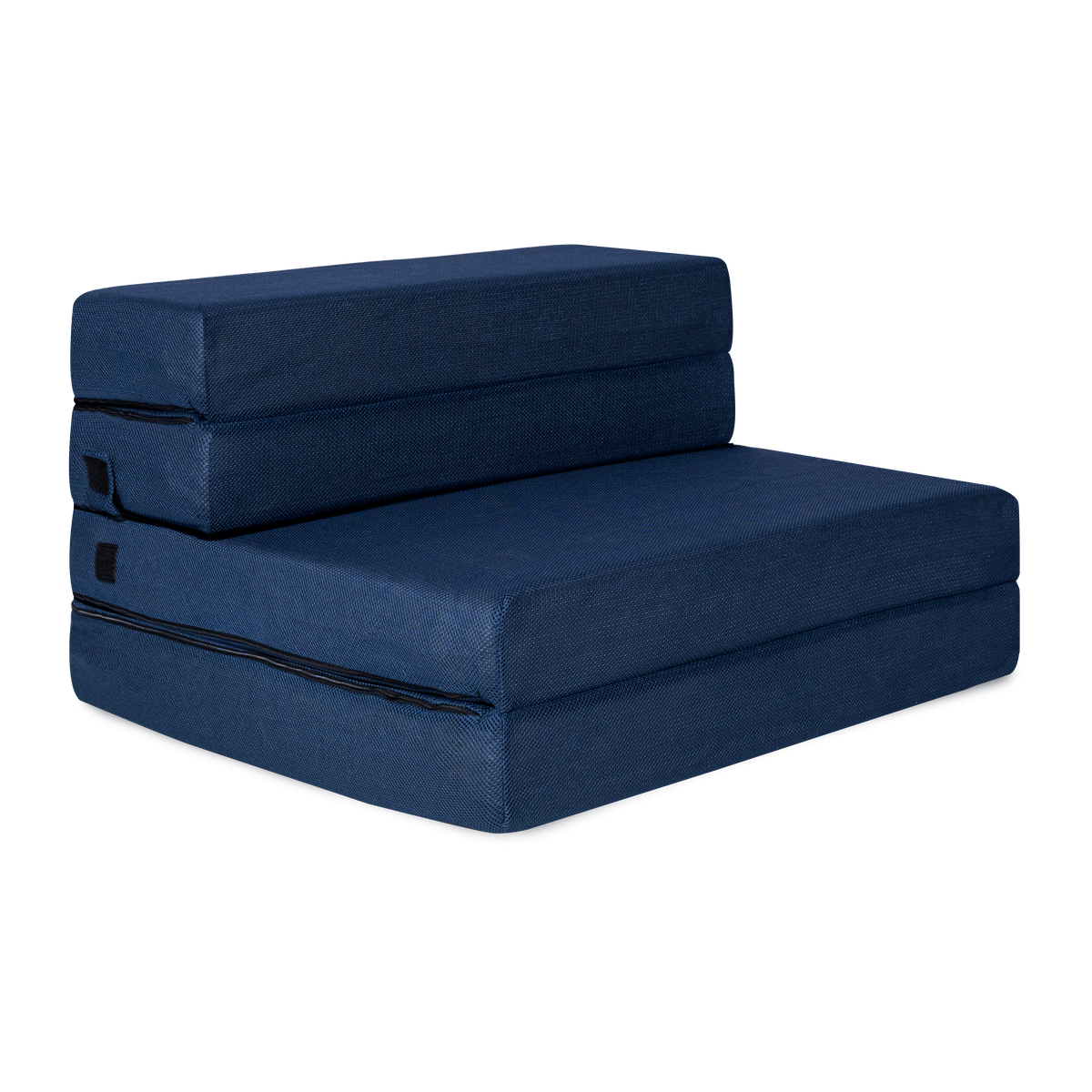
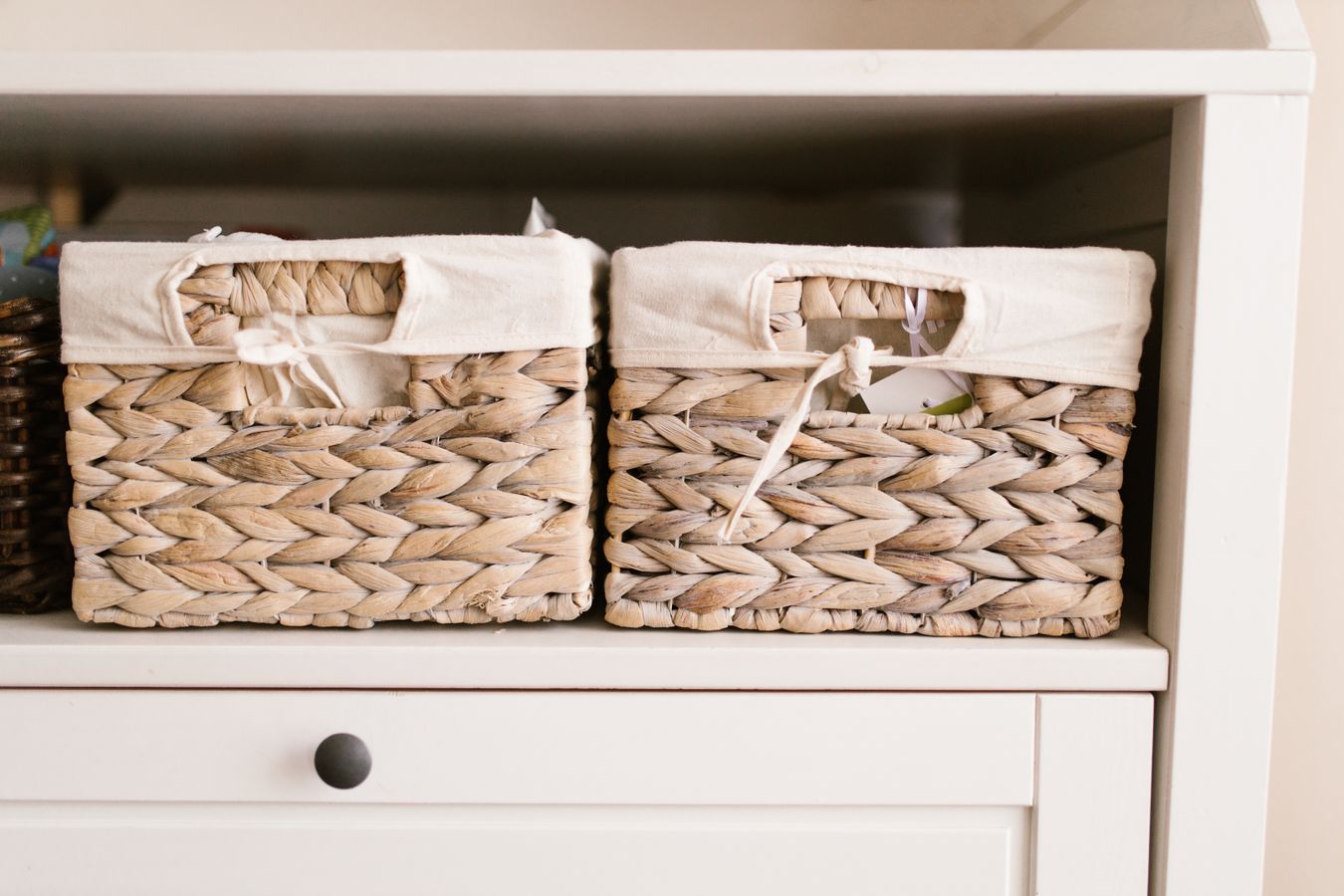
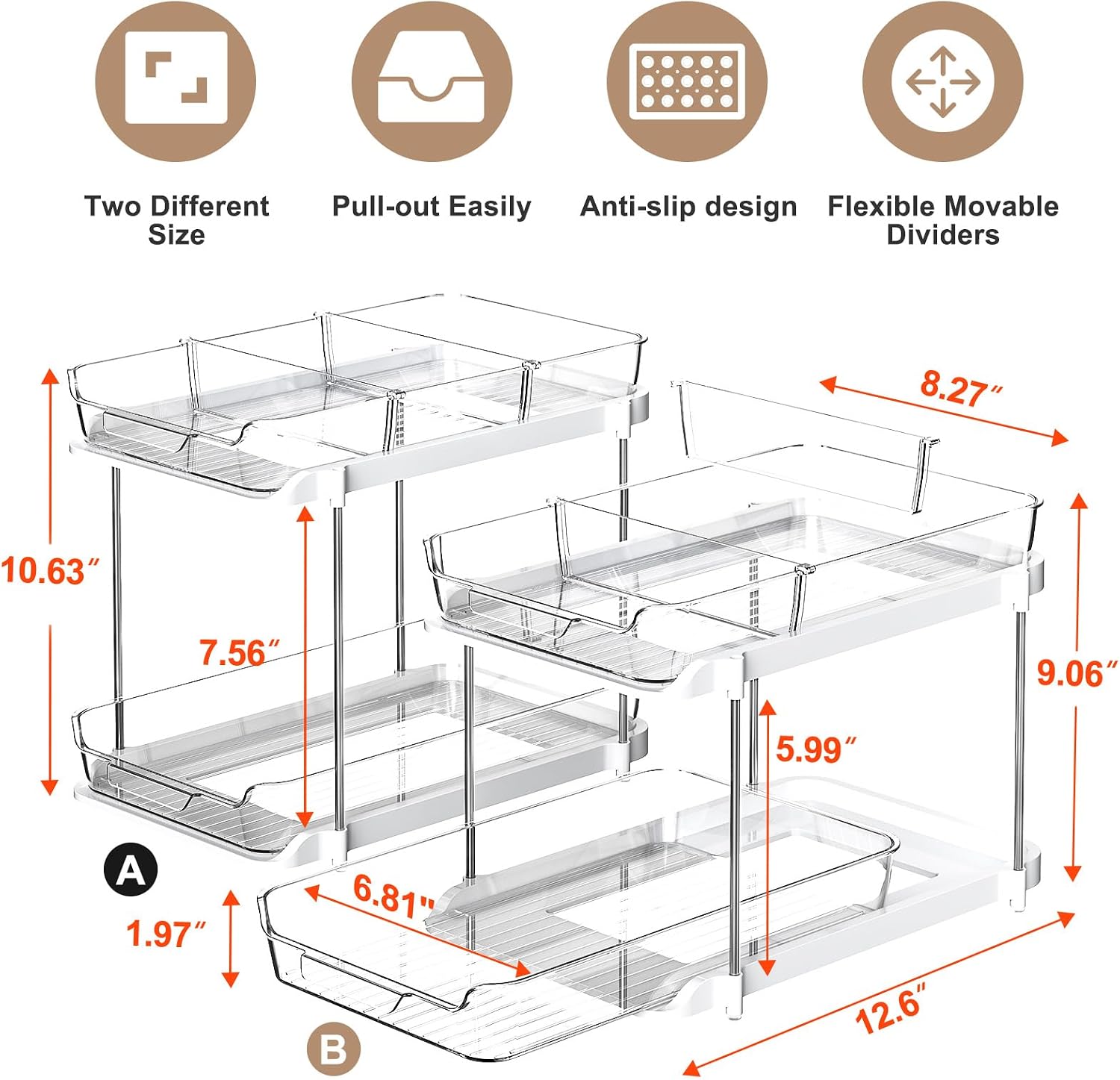
A small guest room often has two identities. Most of the year it is tempting storage space. A few times a year, someone actually needs to sleep there.
The room works when those two roles are planned together. The goal is not to keep it empty for hypothetical guests, and it is not to fill every wall with household overflow. It is to create storage that can disappear visually and functionally when guest mode begins. For the broader setup, How to Create a Small Hobby or Craft Zone That Packs Away When You’re Done is a useful next read.
Start with the guest footprint
Before adding storage, protect the things a guest actually needs:
- a usable bed or sleep surface,
- a clear path from the door,
- one place for a bag,
- a small surface for a phone or water,
- access to an outlet,
- enough privacy and floor space to change clothes.
Whatever storage you add has to respect that footprint.
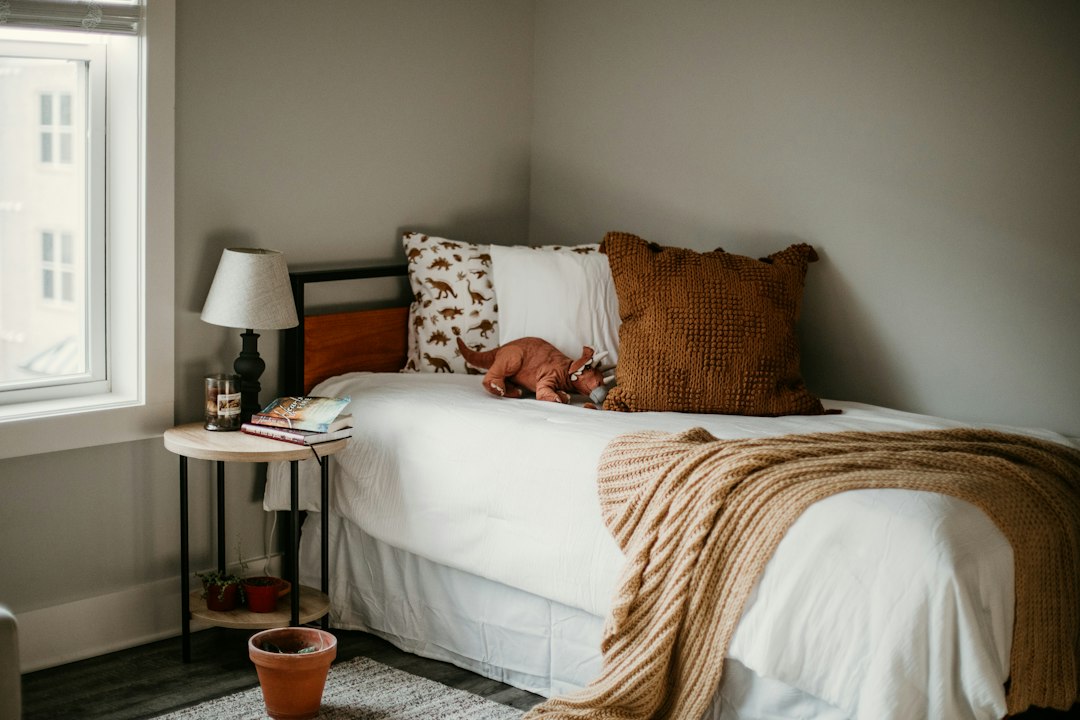
Store low-frequency categories here—not daily overflow
A guest room is a reasonable place for seasonal bedding, luggage, gift wrap, archived hobby supplies, or infrequently used household items. It is a poor place for the things you need every morning. You may also find How to Do a Seasonal Closet Switch in a Small Home Without Making a Bigger Mess useful for a closely related small-home problem.
If you are opening guest-room bins several times per week, the category probably belongs closer to daily life.
Use closed storage for visually noisy categories
Open shelves full of mixed household items make the room feel like a storage room even when everything is neat. Closed cabinets, drawers, lidded bins, or storage furniture can create visual calm. You may also find How to Make a Small Dining Area Work for Meals, Homework, and Crafts useful for a closely related small-home problem.
You do not have to hide everything. You only need to avoid displaying ten unrelated categories at once.
Give the bed one job during guest mode
Do not store permanent piles on top of the bed. If the bed becomes a folding station or package staging area, set a hard rule that everything leaves the surface at the end of the session.
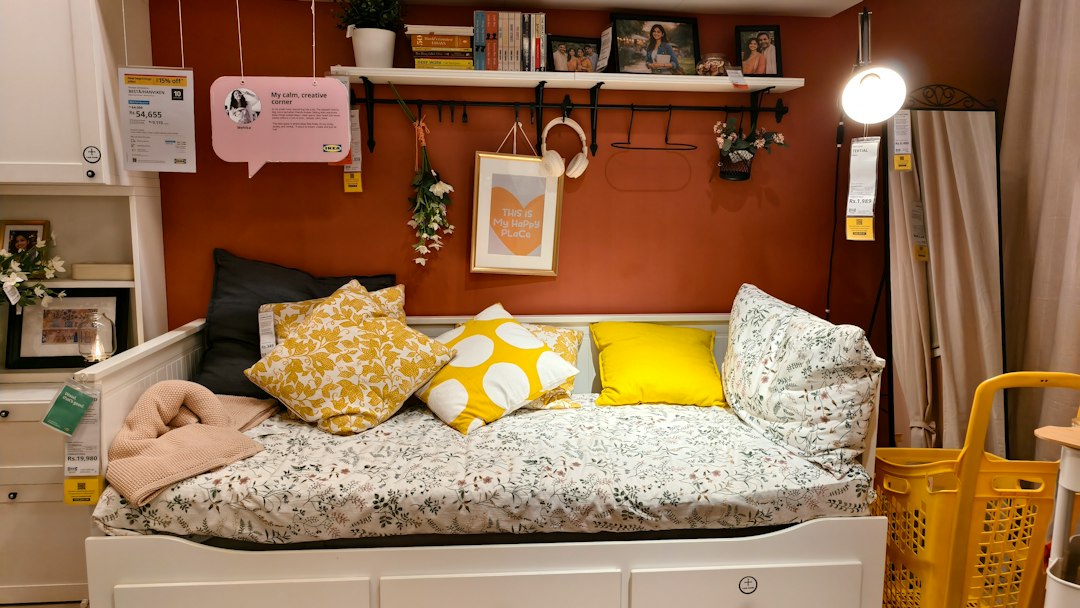
Use under-bed storage for predictable categories
Under-bed space works well for extra bedding, seasonal textiles, or one clearly defined low-frequency category. Label the containers and keep retrieval simple.
See How to Use Under-Bed Storage Without Creating a Hidden Clutter Zone.
Keep one guest-ready kit together
Instead of searching the house before every visit, keep a small kit with:
- clean guest sheets,
- pillowcases,
- one towel set,
- a spare charging cable if appropriate,
- basic information guests may need.
The kit can live in the room or nearby. The key is that it is complete.
Protect one empty drawer, shelf, or hook
Guests do not need a full closet, but a little temporary ownership changes how the room feels. One empty drawer, several hangers, or one hook is enough to make the space feel intentional. If you are working on the same space, How to Make One Small Room Work for Two or Three Purposes covers the next decision in more detail.
Do not let donations and “sort later” boxes move in permanently
A guest room can become the waiting room for undecided objects. Donation boxes, returns, hand-me-downs, and random “deal with later” containers should have deadlines.
Storage is for things you have decided to keep. Decision piles are a different category.
Create a 20-minute guest conversion routine
- clear the bed,
- remove temporary work or hobby supplies,
- open the floor path,
- bring out the guest bedding kit,
- clear one drawer/shelf/hook,
- wipe the main surface,
- check lighting and charging access.
If the room also functions as an office
Keep work supplies in one portable or closable zone. Guest mode should not require unplugging an entire workstation or moving paperwork across the house.
For a room that changes functions regularly, see How to Reset a Multipurpose Room Between Work, Play, and Guests.
If the room also stores seasonal items
Use the highest, lowest, or least convenient storage for seasonal categories. Keep guest essentials easier to reach than holiday decor or off-season clothing.
What should never happen
A guest should not have to sleep beside open donation bags, step around boxes, move household supplies off the mattress, or wonder whether the visible belongings are meant to be touched.
The storage can stay. It simply needs to look contained and intentional.
Frequently asked questions
Is it okay to use a guest room for storage?
Yes. The room can serve both purposes if the guest footprint remains usable and storage categories are controlled.
How much space should I leave empty for guests?
Leave enough for a bag, a few hanging or folded items, and clear circulation. You do not need to keep half the room empty all year.
What should I store there?
Low-frequency categories are the best fit: seasonal textiles, luggage, archives, and items you do not need in daily routines.
The best guest room is ready to change modes
A small guest room does not have to sit empty, and it does not have to become a storage unit. Keep the bed usable, contain household categories, protect one guest zone, and make the conversion simple enough that you can do it without a full-room overhaul.