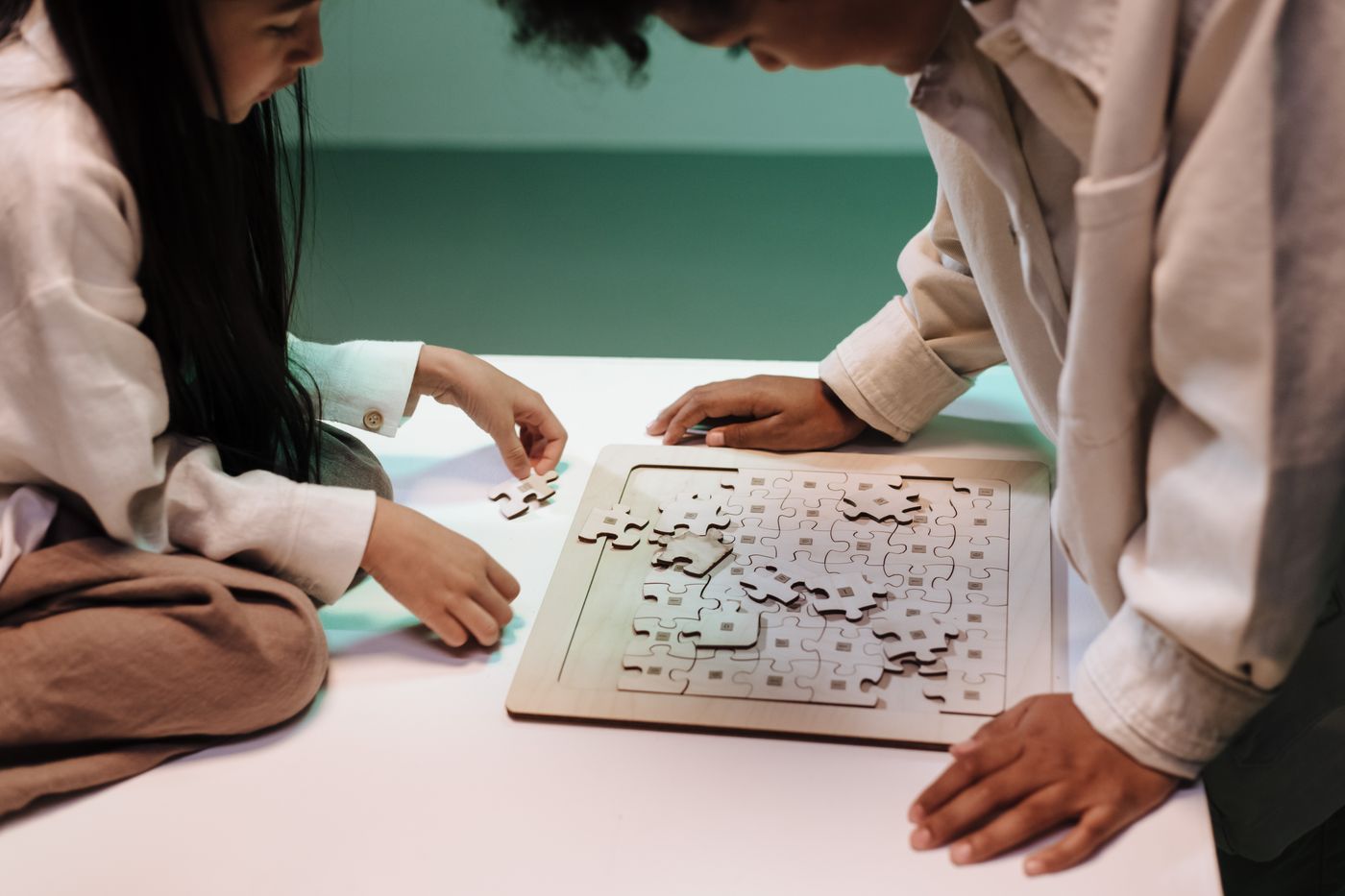
Keep a home puzzle swap small, label completeness honestly, and make ownership clear before a box changes hands. A permanent exchange and a loan are different agreements. With those decisions settled, one shared table can host the event without leaving a pile of unclaimed puzzles in the multipurpose room afterward.
Pinterest’s fall 2026 creator report highlights screen-free hobbies. A modest puzzle exchange is an editorial application of that direction: it lets a group find a different activity to try without each household necessarily buying another box. It is not a claim about the popularity of a particular puzzle brand or a guarantee of environmental savings.
This guide concerns complete boxed activities that their owners are entitled to give or lend. Check that children are not offering someone else’s set or a family keepsake without agreement. A cheerful invitation can still be specific about what will happen to the objects people bring.
Decide whether this event is a swap or a lending session
Choose one main format and state it plainly. In a permanent swap, the new owner keeps the puzzle. In a lending session, the original owner expects the same set back under agreed conditions. Mixing the two without clear labels creates a problem that surface tidying cannot solve.
If a guest wants to arrange a separate loan, keep it separate from the main exchange and let the two households agree the details. Our guide to borrowing toys between families is useful for those return agreements. A loan should not be inferred from a guest casually saying they would like to try a puzzle.
Do not promise an equal one-for-one exchange unless the group has agreed what equality means. Piece count, condition, size, and interest differ. A simple “bring a few suitable puzzles and choose what you would enjoy” format may suit friends better than assigning an artificial value to every box.
Ask people to check their boxes before arriving
Request a quick condition check at home. The box should close appropriately, pieces should be contained, and any included poster or reference sheet should stay with the set. Keep parts from different puzzles separated even when the artwork or brand looks similar.
Ask the owner to describe what they actually know about completeness. “Completed last month with no missing pieces noticed” is different from “bought secondhand and not checked.” The label should communicate the level of confidence rather than quietly turn an unverified box into a complete set.
If pieces are known to be missing, disclose that clearly before someone chooses it. The puzzle may still interest a person who enjoys the image or wants a casual challenge, but they should make that decision knowingly. Do not hide the note under the box or rely on remembering to mention it later.

Limit the number of boxes to the table you have
Choose a maximum contribution based on the actual display area and the number of guests. A small swap does not need every puzzle from every household. Keep boxes in a position where titles and condition labels can be read without dismantling a tall stack.
Use the room’s existing table if it provides a suitable surface. Our shared-table handoff guide can help clear the previous activity and restore the table afterward. Do not spread schoolwork or work papers onto the floor simply to make the exchange display look generous.
Keep the route around the display usable. Boxes on the floor invite accidental mixing and make inspection awkward. If the invited quantity exceeds the surface, reduce the quantity before the event rather than solving it with another temporary pile beside a door.
Use a small, consistent condition label
A useful label can state the title, the printed piece count, the owner’s completeness information, and any known box or piece damage. Keep the language factual and brief. A note saying “all pieces counted” should only appear if someone actually counted them and can identify the set being described.
Do not attach adhesive directly to delicate packaging or pieces if that could cause damage. Use an appropriate removable label or a separate note kept with the box, following the item’s care requirements. The note should remain associated with that puzzle throughout the event.
Avoid ratings such as “easy for everyone” or “perfect for children” unless the maker’s age and use directions support the intended use. Printed piece count is useful information, but it does not alone determine suitability for every participant. Keep the manufacturer’s information available where possible.

Let guests inspect without opening every bag
Offer a clear place for looking at box size, image, labels, and condition. A person can decide whether a puzzle interests them without spreading hundreds of loose pieces onto the table. If someone wants a closer check, contain that task to one set at a time with the owner or host’s agreement.
Keep open pieces separate from the exchange stock. A demonstration puzzle or an activity for children can occupy a different clearly defined area if the room genuinely has space. Otherwise, keep the event to choosing boxes and let people assemble them at home.
Our board-game and puzzle storage guide addresses the ordinary collection after the gathering. Use it to judge whether your own choice has an appropriate home. A swap can refresh a hobby while still making clutter if you take more boxes than your household intends to use.
Give children a real but bounded choice
Let children help choose within the household’s agreed limits, using sets appropriate to them and their supervision needs. Explain whether a choice belongs to the child or is a shared family activity. Do not let one excited selection silently commit another family member to hours of sorting or storage.
Allow a child to keep a treasured puzzle instead of offering it for exchange. A swap is not an opportunity to remove possessions behind their back. Likewise, ask before making a permanent agreement about a puzzle another household member is still using.
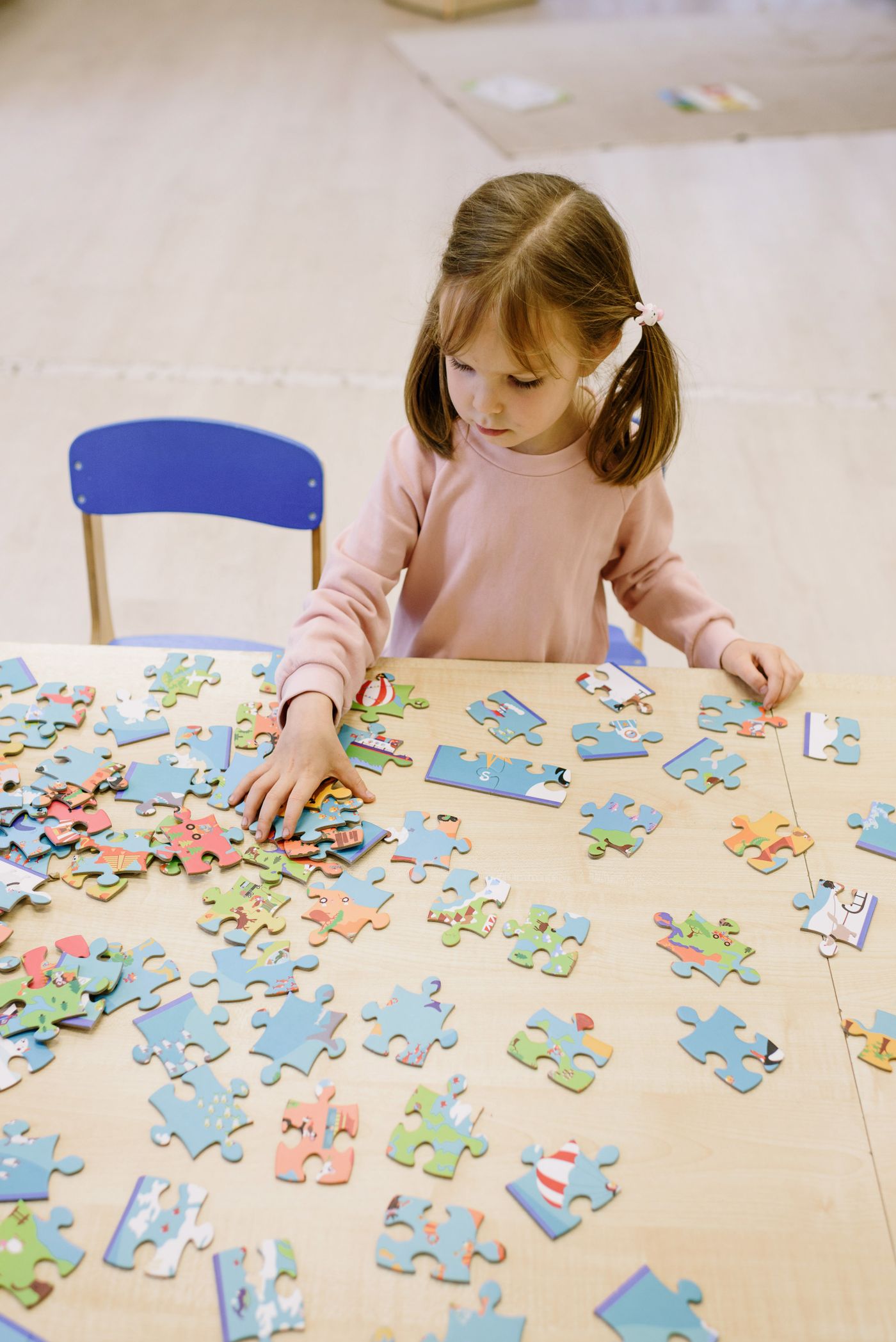
If waiting is difficult for younger guests, plan a suitable ordinary activity away from the exchange pieces rather than using open boxes as entertainment. Keep the number of guests within what the room and adults can manage. Our small-home birthday-party guide can help with the general scale decision, while this event has its own simpler purpose.
Complete the handoff at the table
When someone chooses a puzzle, keep its box, contained pieces, reference material, and condition note together. Confirm whether it is a gift, exchange, or separately agreed loan before it goes into a bag. A quick spoken confirmation prevents a surprising message a week later.
Check that the outgoing household has not left a lid or insert behind. Similar boxes can make those small errors easy. Do not combine loose accessories on a communal “sort later” corner, especially when their ownership is not obvious.
Give people room to decline an offered set. Interest in puzzles does not mean every image or format suits the recipient. A useful exchange leaves people with something they want to use, rather than an obligation to accept a box because the host is trying to clear the table.
Decide what happens to unchosen puzzles
State the ending before guests arrive. The simplest option is for each owner to take unchosen boxes home. If the host offers a donation route, confirm the destination’s actual acceptance rules and agree which owners want that option. Do not assume every incomplete set is suitable to donate.

Keep the host’s responsibility modest. A small swap should not turn the multipurpose room into an indefinite collection point for other households’ unwanted boxes. If one item is left behind accidentally, identify its owner and arrange a specific return rather than absorbing it into household storage.
Bring the room back to its normal purpose
Check under the table and around the chairs for stray pieces before ordinary activity resumes. Keep any unidentified piece with the event note until its owner can be established, rather than dropping it into the nearest puzzle box. A well-meant guess can leave two sets with a new problem.
Take your own selected puzzle to its planned storage position and keep any completeness note with it until you have checked it through use. If information later proves inaccurate, communicate with the other household calmly and specifically. The goal is a straightforward hobby exchange among people who trust one another, supported by labels and an ending that make that trust easier to maintain.
Explore related household decisions in our Family Home hub.
Sources and editorial scope
Editorial research checked October 15, 2026. Trend-report dates and limitations are stated in the article; these are editorial applications of published signals, not verified October keyword rankings. Practical household guidance; illustrations do not document a tested household or authenticate a pictured material.