A greasy range-hood filter is awkward in any kitchen. In a small one, drips cross the counter, oily water coats the sink, and the panel has nowhere to dry without blocking meal preparation. You may also find How to Keep a Small Kitchen Floor Clean When You Cook Every Day useful for a closely related small-home problem.
Begin by identifying the filter type and checking the appliance manual. Reusable metal mesh can often be cleaned; charcoal or combination filters may require replacement.
Shut down and cool the cooking area
Turn the hood and lights off and let the cooktop, lamps, filter, and metal housing cool completely. Follow any instruction to disconnect power before service and never work above an active burner.
Clear the sink and one nearby counter before removal so you are not carrying a greasy panel while searching for space.
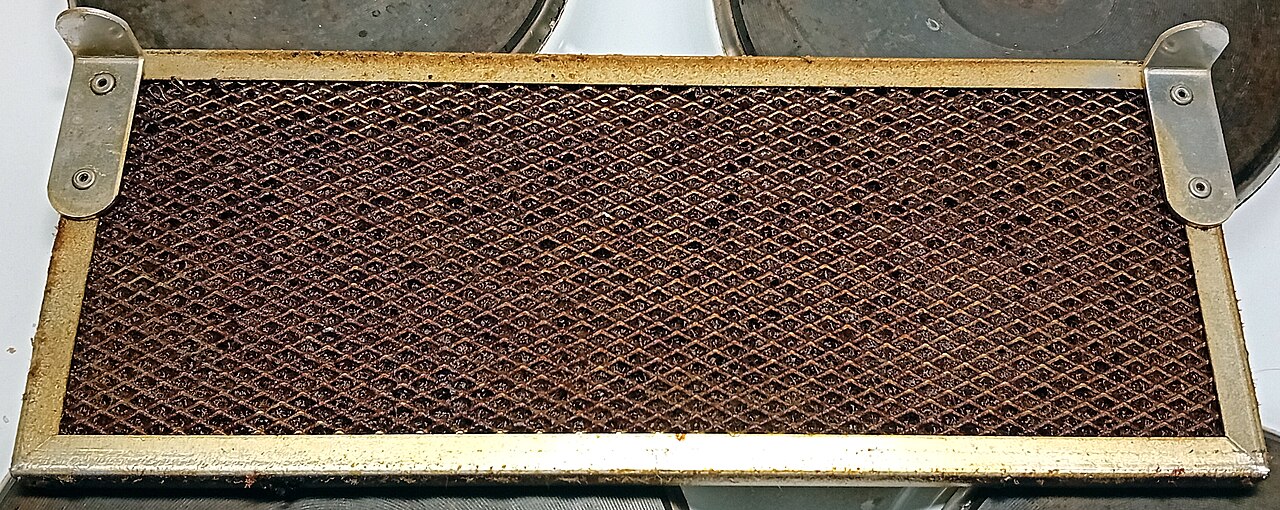
Identify washable versus replaceable filters
Metal mesh and baffle filters are commonly washable, but methods vary. Charcoal filters in recirculating hoods are often replaceable. Some systems combine layers or use proprietary cartridges.
Do not assume dishwasher-safe because a filter is metal. Heat, detergent, aluminum discoloration, and model-specific restrictions matter.
Build a containment zone
Place an old towel or washable tray below the removal route and prepare a basin large enough for the panel. Support the filter with both hands and keep drips over the protected area.
Wipe the latch and frame before grease transfers to handles or cabinet fronts.
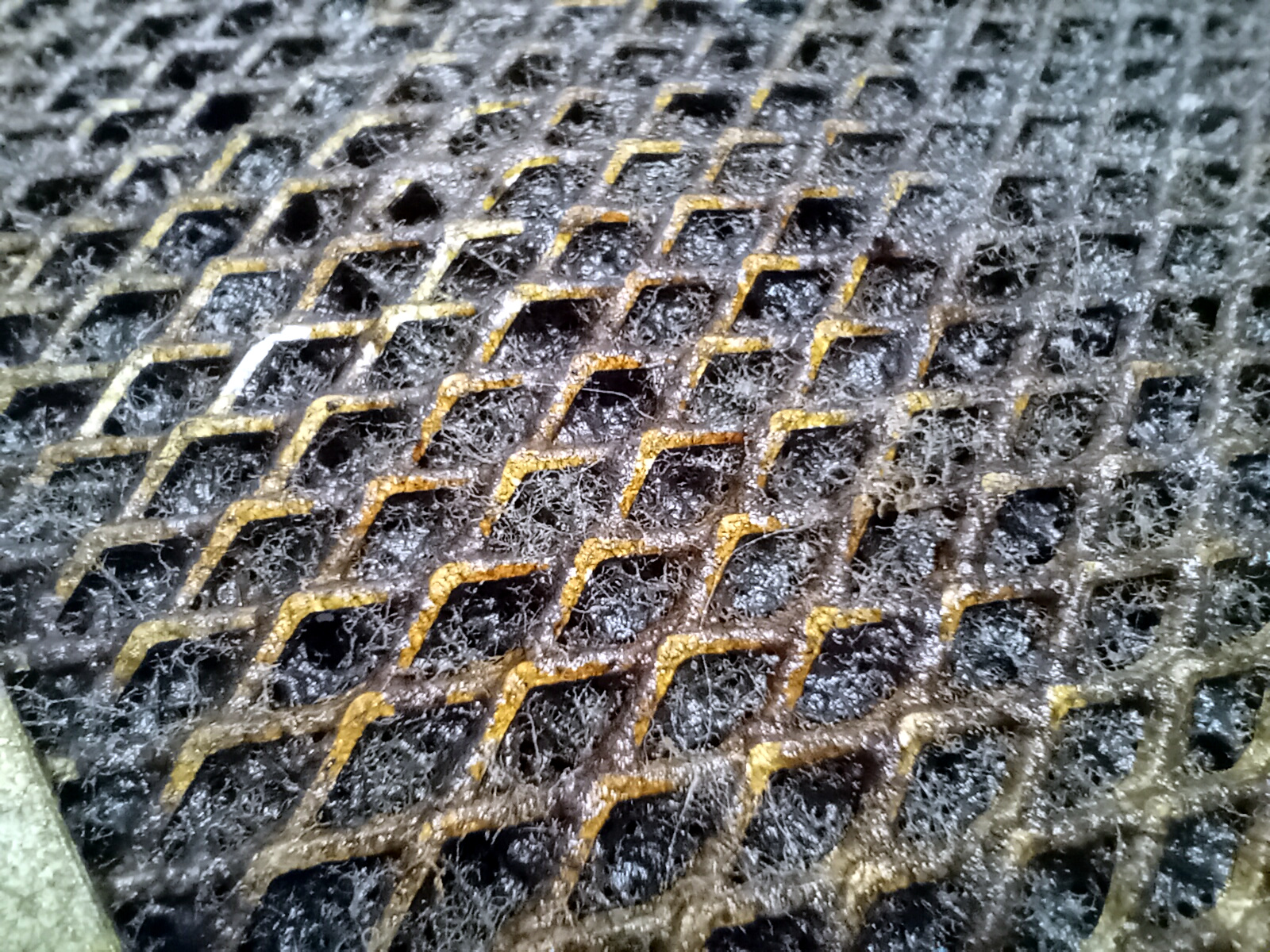
Remove surface grease before water
Wipe thick residue with a disposable or dedicated grease cloth. Dispose of collected grease according to local household-waste guidance rather than pouring it down the drain.
Dry removal keeps wash water manageable and helps detergent reach the mesh.
Soak with an approved cleaner
Use water temperature and cleaner allowed by the manual. A small amount of grease-cutting dish detergent may suit many washable filters; extra soap only extends rinsing.
Soak long enough to soften residue and rotate the panel if the basin is smaller than the filter.
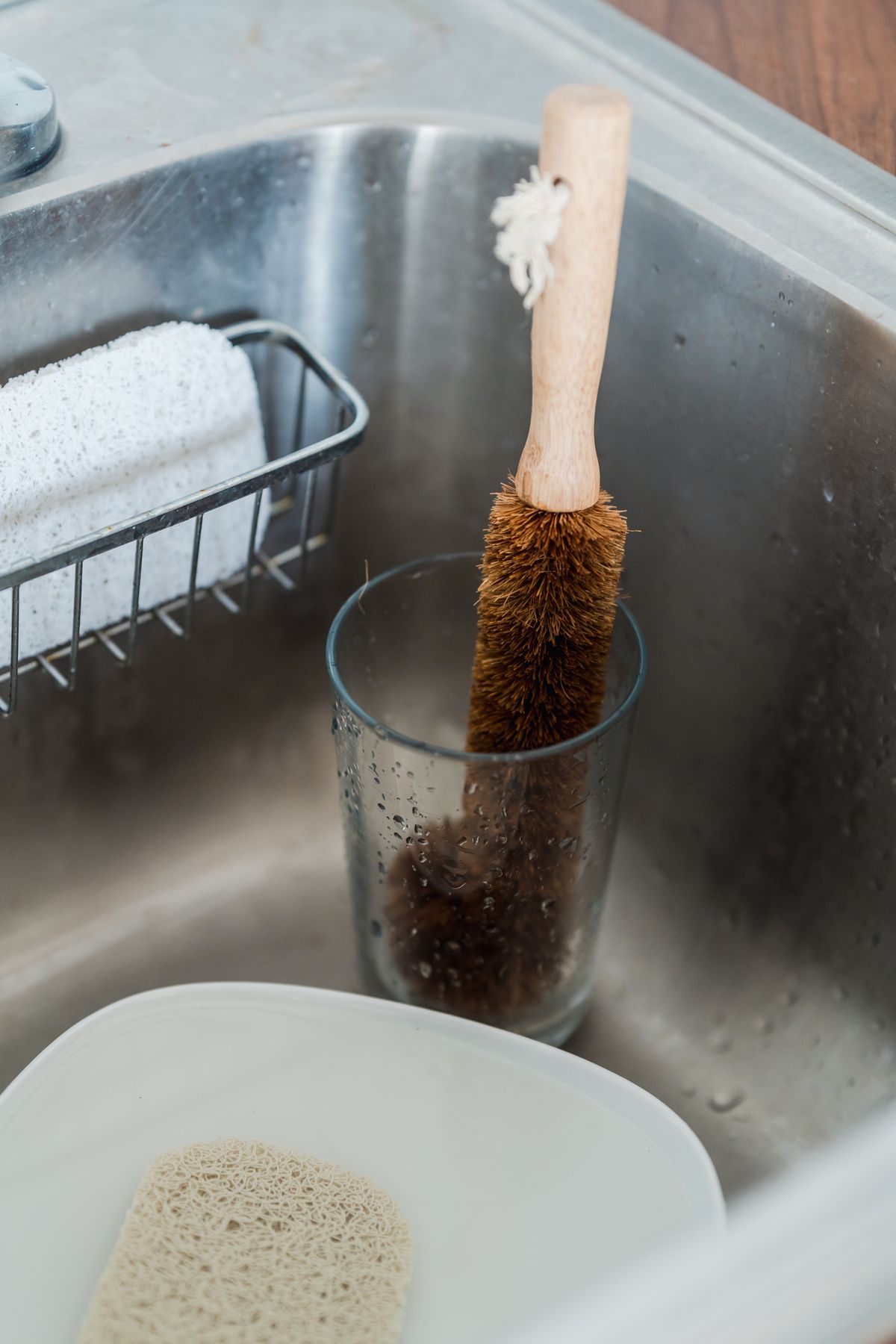
Brush without distorting the frame
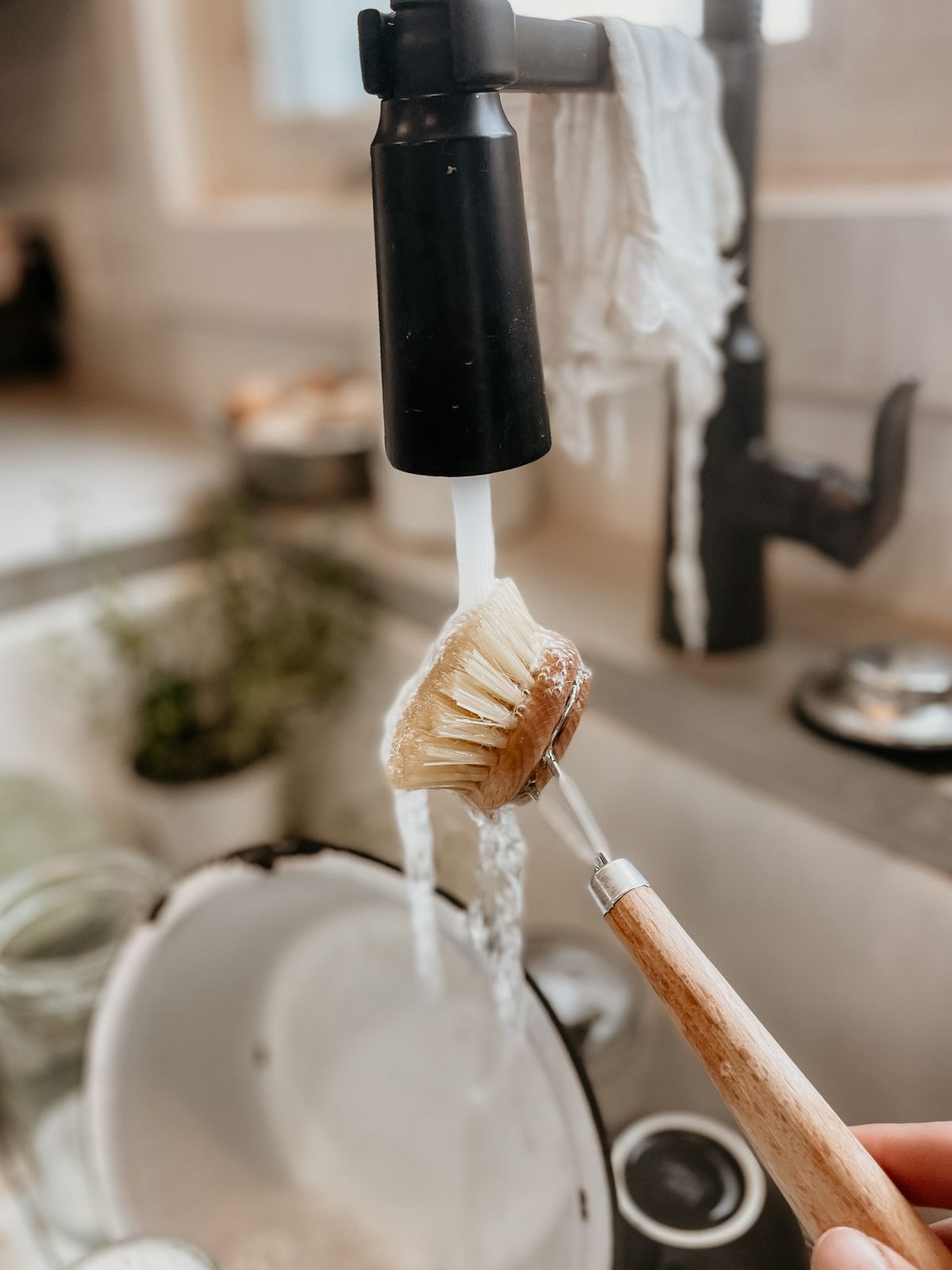
Use a non-damaging brush, support the filter, and work both sides plus the greasy perimeter. Several controlled passes are safer than aggressive force.
Avoid sharp tools and metal picks. A bent filter may no longer seat correctly.
Rinse and dry deliberately
Drain greasy water carefully, rinse in a controlled direction, and clean the basin immediately. Shake off water, blot the frame, and dry it on a stable protected surface with airflow. You may also find How to Clean a Small Kitchen Without Moving Everything Off the Counters useful for a closely related small-home problem.
Do not reinstall a visibly wet panel unless the manufacturer explicitly permits it.
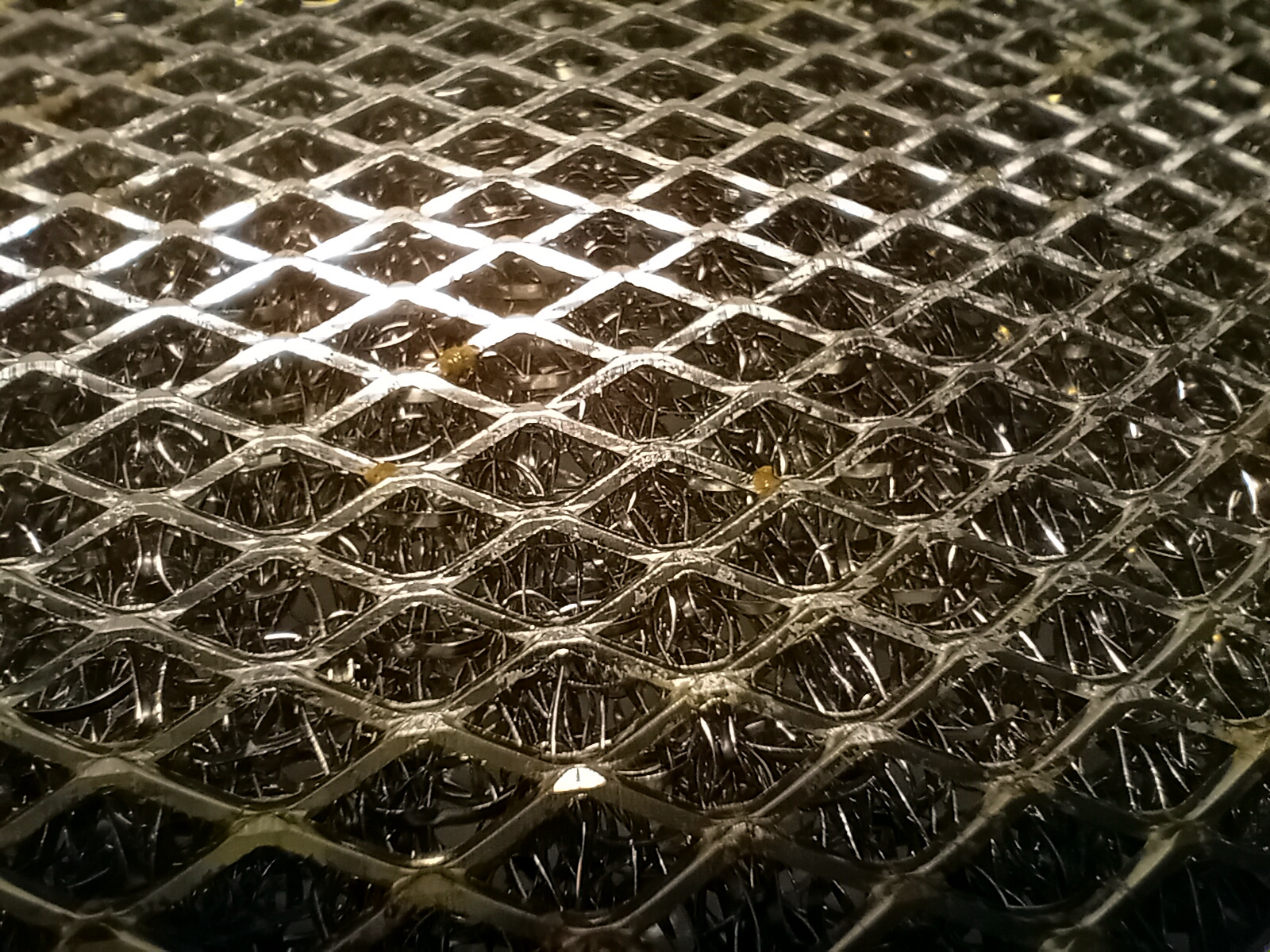
Inspect performance after cleaning
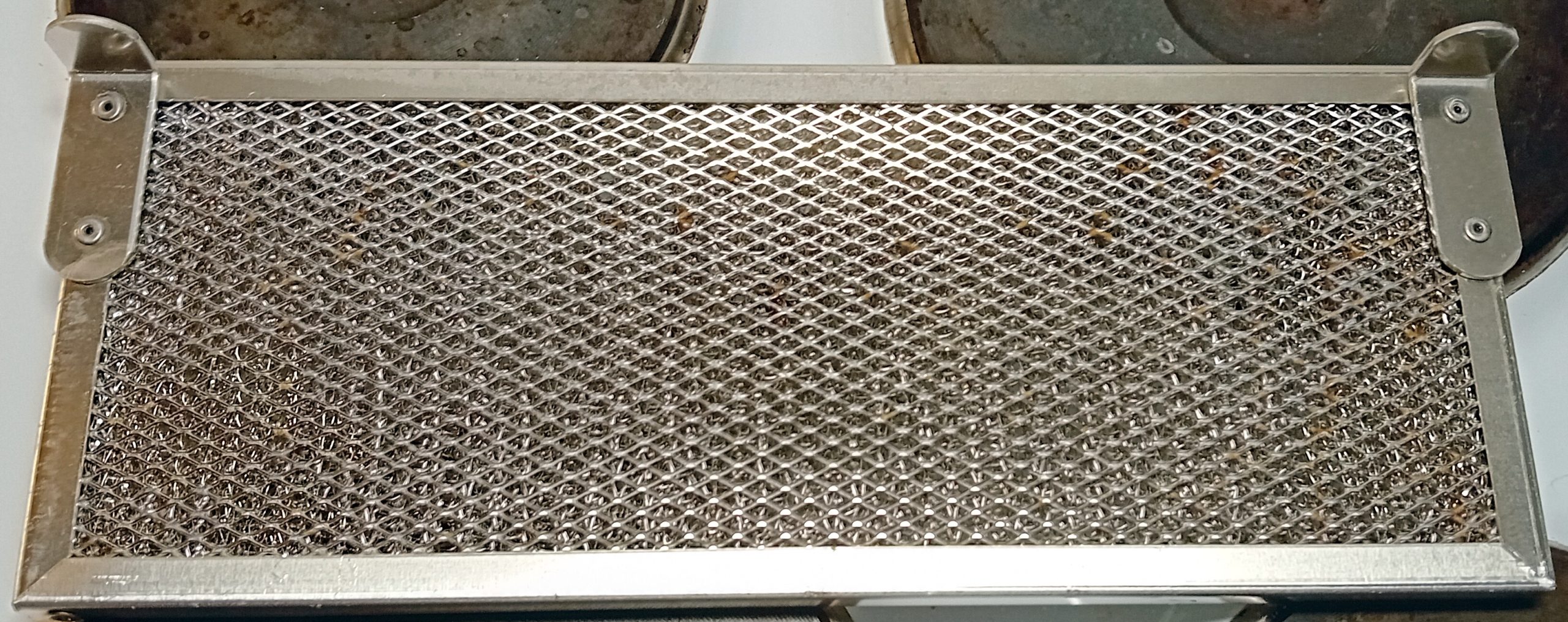
Check for normal seating, airflow, odor, and sound. Visible film, persistent odor, reduced airflow, or grease around the frame suggest the maintenance interval was too long.
Replace damaged or designated disposable filters. Seek appropriate service for poor airflow, unusual noise, or inaccessible internal grease.
Connect it to the wider kitchen routine
Wipe only accessible exterior surfaces with a finish-appropriate method. Do not reach into electrical or fan components. If nearby cabinets are tacky, use the small-kitchen grease guide.
How to choose a realistic cleaning interval
Start with the manufacturer’s guidance, then observe the filter after several typical cooking weeks. A household that sautés lightly will load the filter differently from one that fries often. Record the inspection date rather than waiting for smell or dripping grease. You may also find The After-Dinner Kitchen Reset: A 15-Minute Routine That Makes Tomorrow Easier useful for a closely related small-home problem.
If cleaning repeatedly becomes a large rescue job, shorten the interval. A quicker wash performed earlier usually creates less mess than a long soak after heavy buildup. For the broader setup, How to Clean Entryway Mud, Road Salt, and Wet-Shoe Mess Without Spreading It is a useful next read.
What not to combine
Do not improvise mixtures of degreasers, bleach, acids, ammonia, or other cleaners. Product interactions can create dangerous fumes or damage finishes. Use one approved method, rinse as directed, and keep the room ventilated appropriately.
Protect hands and eyes according to the cleaner label. Keep children and pets away from the work area and never leave a soaking filter where it can tip.
Check the whole airflow route
A clean removable filter cannot compensate for a fan problem, blocked exterior termination, poorly functioning recirculation setup, or neglected replaceable media. If performance does not improve after correct filter care, the next step is diagnosis—not stronger chemicals.
Continue through the right silos
Browse Cleaning and the verified Kitchen hub.
My conclusion
Confirm the filter type, protect the removal route, soften rather than scatter grease, rinse deliberately, and dry completely. In a compact kitchen, controlling the mess is half the maintenance job.
Frequently asked questions
Can every metal filter go in the dishwasher?
No. Construction and manufacturer guidance differ.
Can a charcoal filter be washed?
Many are designed for replacement, not washing.
Why does odor remain?
Grease may remain nearby or internally, or a replaceable filter may be saturated. Seek service if unclear.