“Use vertical space” may be the most repeated small-home organizing advice on the internet. It sounds almost universally correct: floors are limited, walls are empty, so build upward.
But height is not free. High storage can increase capacity while reducing access. It can clear the floor while making the room visually heavier. It can solve adult storage and make a child’s routine impossible. It can turn a neglected corner into useful space—or turn a wall into a permanent display of everything the home owns. For a related step-by-step approach, see A Simple Seasonal Declutter Before Bringing Holiday Decor Into a Small Home.
My rule is simple: vertical storage is successful only when it puts the right frequency at the right height.
Why vertical storage works so well on paper
Most homes underuse the volume above eye level. A narrow shelf rising upward can hold more than a low basket using the same floor footprint. Wall hooks can replace a coat rack. A second closet rail can double hanging capacity in the right wardrobe.
That is genuine efficiency. The problem begins when every available inch is treated as a storage opportunity.
The three vertical zones
I divide height into three functional bands:
- Prime reach: comfortable daily access without stretching, climbing, or moving another object.
- Secondary reach: accessible but slightly less convenient; appropriate for weekly or monthly use.
- Archive reach: high or awkward zones that require deliberate retrieval.
The exact heights differ by person. A five-foot-two adult, a six-foot adult, a child, and a wheelchair user do not share the same prime zone. Storage design has to reflect the actual users.
When vertical storage is excellent: entryway hooks
Hooks are one of the strongest vertical tools because they turn shallow wall depth into active storage. Bags, coats, hats, and umbrellas can leave the floor without needing a deep cabinet. You may also find How to Organize Pots, Pans, and Lids in a Small Kitchen Without Restacking Everything useful for a closely related small-home problem.
The catch is quantity. Ten hooks can become a wall of twenty bags. The wall solves floor clutter only if each hook has a capacity rule.
If the entry is already overloaded, the more complete small entryway system for backpacks, shoes, coats, and school papers can help separate categories rather than stacking all of them vertically.

When vertical storage is excellent: narrow shelving for low-frequency categories
High shelves are ideal for items that are light, known, and predictably infrequent: seasonal textiles, labeled memory boxes, guest linens, or a travel kit.
The category should be coherent enough that you know exactly what you are retrieving. “Miscellaneous household items” is a poor high-shelf category because every retrieval becomes a search.
When vertical storage is excellent: kitchen categories with short containers
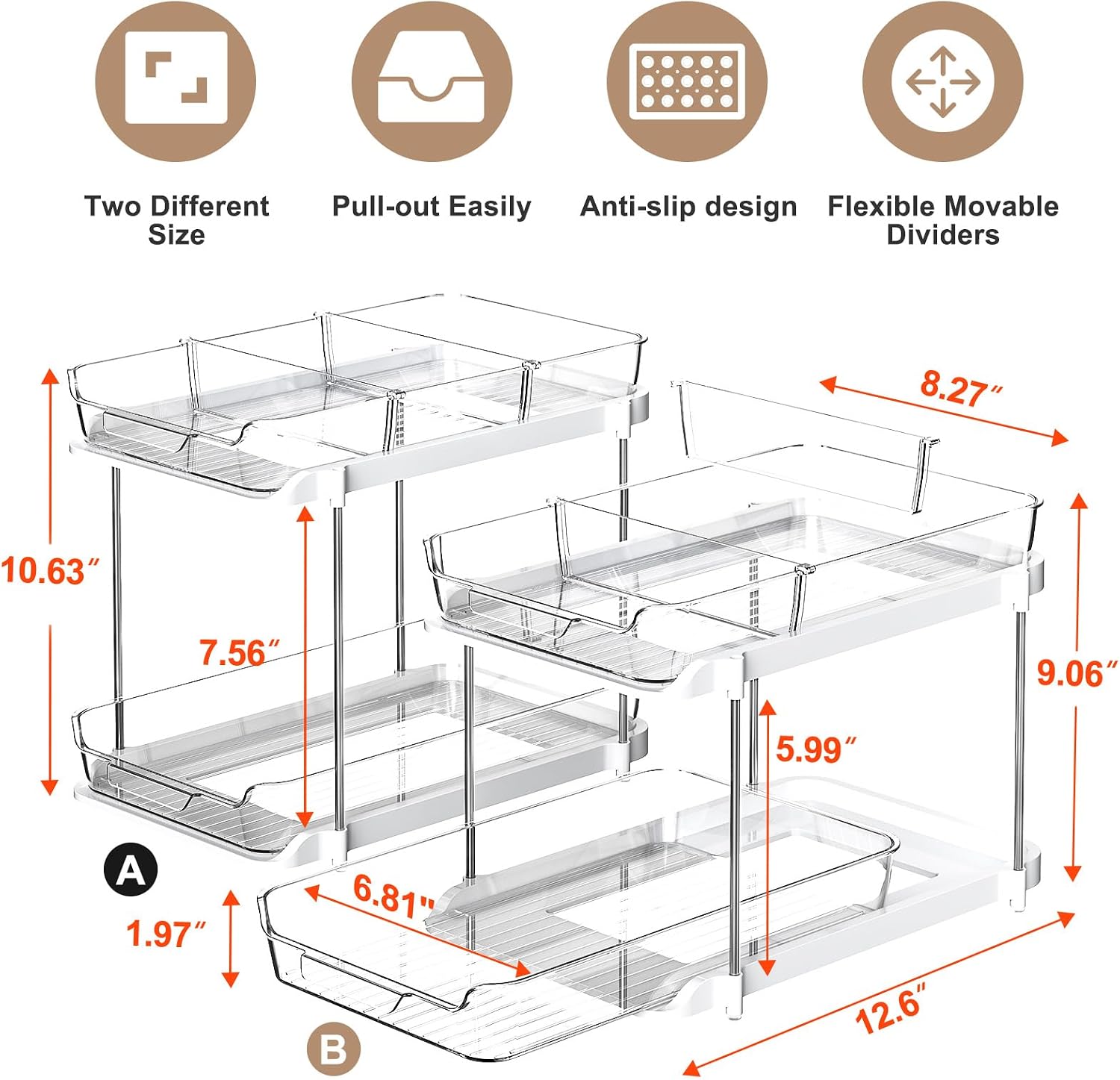
Adjustable shelves and shelf risers can reclaim unused height above plates, mugs, spices, or small pantry goods. This is especially useful when a cabinet has generous vertical clearance but the objects themselves are short. You may also find How to Organize Spices in a Small Kitchen Without Buying Matching Jars useful for a closely related small-home problem.
However, adding a shelf layer is useful only if both levels remain visible. If the lower level must be emptied to reach the upper one, you traded wasted space for access friction.
When it fails: daily items stored above comfortable reach
A system can be technically organized and still be wrong if the user needs a stool every day. Daily breakfast bowls, children’s cups, medication where appropriately stored, or frequently used cleaning tools should not automatically move upward just because a shelf exists.
Frequency should beat storage density.
When it fails: the wall becomes visual clutter
Open vertical storage is visually powerful because the eye reads the entire wall. A narrow floor may feel clearer, but a wall covered from floor to ceiling with colorful bins, cables, tools, and toys can make the room feel busier.
Closed tall storage reduces visual noise but adds physical mass. This is why a small room often benefits from a mixture: some vertical capacity, some blank wall, and some concealed categories.
When it fails: stacked bins create a retrieval tax
Stacking identical bins is efficient until you need the bottom one twice a week. Every retrieval becomes an unload-and-rebuild process.
I use stacked bins only for low-frequency categories or where each container can slide independently. For active categories, drawers or shelves usually outperform towers of boxes.
When it fails: over-door organizers become overflow zones
Over-door systems are excellent for shallow categories: shoes, accessories, toiletries, cleaning cloths, or craft materials depending on the room. They become problematic when every pocket holds an unrelated “might need this” object.
A door organizer needs a single job. If it becomes vertical junk storage, it has only moved the junk off a horizontal surface.
When it fails: vertical storage ignores children
A beautifully organized kids’ room can fail if toys, pajamas, or school supplies are stored above the child’s reach. Then every routine still depends on an adult.
Place child-managed categories low enough for independent use, and adult-controlled or refill inventory higher. This supports the same principle used in organizing a home so kids can put their own things away.

What should go high?
I prefer high zones for items with all or most of these traits:
- used monthly or seasonally,
- light enough to retrieve safely,
- clearly labeled,
- not needed by children independently,
- not time-sensitive,
- not so fragile that overhead retrieval is risky.
What should stay low or mid-height?
Daily clothing, routine dishes, everyday cleaning tools, school supplies, frequently used pantry foods, current bags, and other high-turnover items should remain in the easiest practical reach zone for the person using them.
Vertical storage in rentals
Renters face an extra trade-off: many wall systems require holes, anchors, or structural changes. Before installation, check lease rules, wall type, load requirements, and repair expectations.
Freestanding tall shelves, tension-based systems where appropriate, and existing cabinet interiors may create vertical capacity without permanent modification. For broader renter-safe ideas, see small apartment storage ideas that do not require drilling.

Safety is part of storage efficiency
Tall furniture must be used and secured according to manufacturer instructions and household safety requirements. Heavy items belong where retrieval and load are appropriate. Frequently climbing on unstable chairs is a sign the category is stored at the wrong height.
A system that fits more but makes everyday retrieval unsafe is not efficient.
The visual test
Stand at the doorway and look at the room without focusing on individual objects. Does the vertical storage create one organized zone, or does it make every wall feel occupied? For a related step-by-step approach, see The Small-Home Storage Audit: 12 Places That Look Organized but Waste Space.
Small rooms benefit from visual rest. Leave some surfaces and wall areas intentionally unused.
The frequency test
For any high shelf, ask: “How often did we retrieve something from here in the last month?”
If the answer is weekly, the shelf may be too high. If the answer is never, the issue may be the category itself rather than the shelf height.
The movement test
Watch what happens when someone uses the storage. Do they remove one item and return it easily? Or do they move a chair, lift two boxes, open a door, and then forget to rebuild the stack?
Movement reveals the true cost of vertical density.

Room-by-room: where I would spend vertical space first
Kitchen: interior cabinet height and narrow wall rails before adding large freestanding towers. Kitchen vertical storage should protect counters, not crowd them.
Entryway: hooks and a shallow upper shelf are often high-value because the categories are naturally vertical—coats, bags, umbrellas. Keep the number of active items limited.
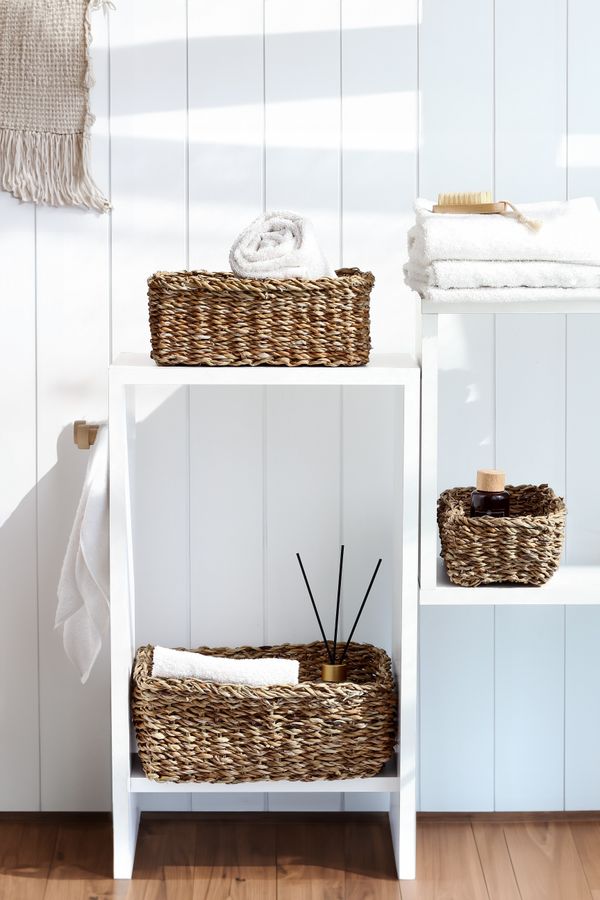
Bathroom: one high shelf can hold backstock, but daily grooming items should remain reachable. Above-toilet storage is useful only if it does not become a display of every bottle the household owns.
Bedroom: upper closet shelves are excellent for seasonal boxes; tall open shelving beside the bed is less compelling if it creates visual heaviness around the sleep zone.
Kids’ room: reserve low zones for child-managed categories and high zones for adult-controlled rotation or keepsakes.
When a shorter piece of furniture is actually better
Vertical storage is often promoted as automatically space-saving, but a low dresser or bench can preserve wall openness, support a second function, and keep every drawer accessible. A tall unit is worthwhile when height is genuinely needed; it is not a virtue by itself.
If the room already has strong upper storage, another tall tower may duplicate capacity while reducing visual breathing room.
The “one reach, one return” standard
For daily categories, I aim for one reach to retrieve and one motion to return. If a vertical system requires opening a ladder, moving another bin, and lifting a heavy box, that category belongs in a lower zone or should be used less frequently.
Explore this topic
Browse more practical guidance in the Small-Space Living hub. Room focus: Small Rooms.
Related published guides
My expert conclusion
Vertical storage is one of the most useful tools in a small home, but it is not a command to fill every wall. Height should be assigned by frequency, user, weight, and visibility.
Use the upper zones to protect low-frequency categories and free prime storage. Use hooks and narrow shelves where they remove floor clutter. Keep everyday items within easy reach. And be willing to leave some wall space empty.
The best vertical system does not make you notice how much the wall can hold. It makes the floor easier to use while keeping daily routines simple.